
Trichomyrmex muticus
- Nom. cient.
- Trichomyrmex muticus
- Tribu
- Crematogastrini
- Subfamilia
- Myrmicinae
- Autor
- Emery, 1887
- Distribución
- Encontrado en 0 países
Introducción
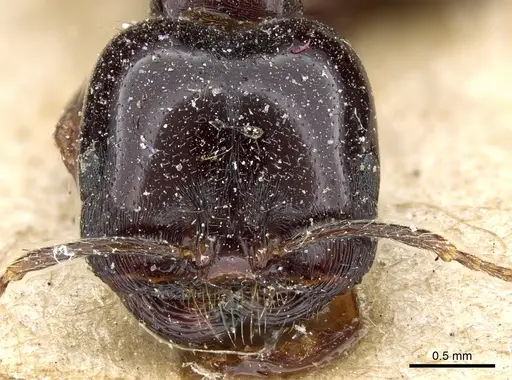
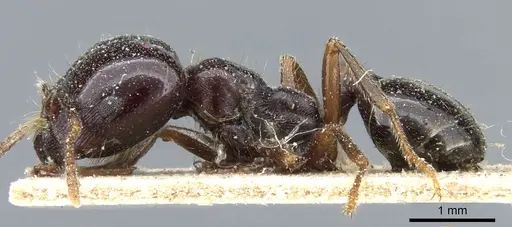
Trichomyrmex muticus is a medium-sized ant recorded only from Burma (Myanmar), in the Minhla region . Major workers are dark brownish-black (piceous) with rust-colored mandibles and feet, and paler antennae and tibiae. Their bodies are sparsely covered with erect hairs, especially on the legs, giving them a somewhat fuzzy look. The head is mostly smooth but has fine grooves on the forehead, cheeks, and back of the head. Unlike many related species, the clypeus (plate over the mouth) is smooth and lacks teeth, and the metanotum (the back part of the thorax) has no bumps or tooth-like projections. As a member of the Myrmicinae subfamily (tribe Crematogastrini), these ants have a modified, flattened stinger used to smear venom onto enemies rather than piercing them.
Quick Summary
- Difficulty: Medium
- Origin & Habitat: Southeast Asia, specifically recorded from Burma (Myanmar) in the Minhla region [1]. No habitat details are available for this species, related Trichomyrmex are often found in tropical and subtropical environments, but this is unconfirmed.
- Colony Type: Unconfirmed. No colony structure data exists for Trichomyrmex muticus.
- Size & Growth:
- Queen: Unknown, no queens have been described in available literature [1].
- Worker: Major workers: 5-6mm [1]. Minor workers have not been described.
- Colony: Unknown, no colony size data available.
- Growth: Unknown
- Development: Estimated 6-8 weeks, based on typical Myrmicinae development at tropical temperatures (inferred). (Development timeline is inferred from related species, direct observations for this species are lacking.)
- Antkeeping:
- Temperature: Keep at 24-28°C. These are tropical ants from Burma and require warm conditions (inferred from geographic range).
- Humidity: Keep the nest substrate consistently moist but not waterlogged. Provide a humidity gradient so ants can choose their preferred zone.
- Diapause: Unlikely, as a tropical species, they probably do not require a true diapause. However, activity may slow during cooler periods (inferred).
- Nesting: No specific nesting data for this species. Related Trichomyrmex nest in soil, under stones, or in decaying wood. For captivity, a Y-tong (AAC) or plaster nest works well. Provide dark, humid conditions with a moisture gradient.
- Behavior: As a Myrmicinae with a modified stinger for smearing venom, defense likely involves wiping venom onto attackers. Workers are active foragers and may be defensive. Escape risk is moderate for ~5-6mm workers, standard barriers (e.g., fluon) are sufficient. Temperament is unconfirmed, but related species are moderately aggressive.
- Common Issues: tropical temperature needs require consistent warmth, cool temperatures can slow or kill the colony., limited species-specific data means some trial and error is needed to find optimal conditions., wild-caught colonies may carry parasites or diseases., as with all ants, ensure proper escape prevention as they will explore gaps.
Temperature and Heating
As a tropical species from Burma, Trichomyrmex muticus requires warm conditions. Maintain temperatures between 24-28°C in the nest area to support normal activity and brood development. Use a heating cable or mat on one side to create a gentle gradient so workers can move to their preferred zone. Avoid prolonged temperatures below 20°C, which can slow development or weaken the colony.
Humidity and Water
These ants need consistently moist conditions, typical of tropical habitats. Keep the nest substrate damp but not waterlogged, standing water can drown brood and encourage mold. A test tube setup with a water reservoir works well, as the cotton slowly releases moisture. Some condensation is normal, but too much can cause problems. Always provide a dry area within the nest so ants can choose their preferred humidity.
Feeding and Diet
No specific dietary data exists for Trichomyrmex muticus. Based on related Myrmicinae, they are likely omnivorous. Offer protein sources like small insects (fruit flies, small crickets, mealworms) 2-3 times per week, and provide a constant sugar source such as sugar water or honey. Remove uneaten food after 24-48 hours to prevent mold and pests. Observe what your colony accepts best and adjust accordingly.
Nesting Preferences
No nesting data is available for this species. Related Trichomyrmex nest in soil, under stones, or in rotting wood. For captive care, a Y-tong (AAC) or plaster nest provides appropriate dark, humid conditions with good moisture control. If using a naturalistic setup, include moist substrate and hiding places like flat stones or bark. Place the nest in a quiet, dark area away from direct sunlight and vibrations. Secure all connections, these ants will find and exploit gaps.
Behavior and Temperament
Trichomyrmex muticus workers belong to the Myrmicinae subfamily, tribe Crematogastrini, which is known for a unique defense: a flattened, spatulate stinger used to wipe or smear venom onto opponents instead of piercing. They are active foragers and likely use chemical trails to recruit nestmates. Temperament is unconfirmed, but related species are moderately aggressive when the colony is disturbed. Standard escape barriers (e.g., fluon) work for ants of this size. Observe your colony to learn their activity patterns.
Colony Establishment
Founding behavior is unconfirmed for this species. Assuming typical Myrmicinae claustral founding, a new queen would seal herself in a chamber and raise her first brood using stored reserves. During this phase she needs darkness, humidity, and quiet, avoid disturbance for at least 4-6 weeks. Once the first workers (nanitics) appear, gradually introduce food and light. Growth rate is unknown, but based on related small colonies, they may take time to establish.
Frequently Asked Questions
How long does it take for Trichomyrmex muticus to produce first workers?
The egg-to-worker timeline is unconfirmed for this species but is estimated at 6-8 weeks based on typical Myrmicinae development at tropical temperatures (24-28°C). Temperature and humidity will affect speed.
Do Trichomyrmex muticus ants sting?
They have a modified stinger typical of the tribe Crematogastrini, which is used to smear venom onto enemies rather than piercing. They will use this venom if threatened, but the effect on humans is not documented. Handle with care.
What temperature do Trichomyrmex muticus ants need?
Keep them at 24-28°C. These are tropical ants from Burma and require warm conditions. A heating cable on one side of the nest helps maintain a gradient.
Can I keep multiple queens of Trichomyrmex muticus together?
Colony structure (monogyne vs polygyne) is unconfirmed for this species. It is not recommended to combine unrelated queens unless you have evidence they accept multiple foundresses. House them separately until more is known.
What do Trichomyrmex muticus ants eat?
They are likely omnivorous. Offer protein sources like small insects 2-3 times per week, and provide constant access to sugar water or honey. Remove uneaten food promptly.
Are Trichomyrmex muticus good for beginners?
This species is rated Medium difficulty. While not extremely challenging, the lack of species-specific data means keepers should have basic antkeeping experience. Their tropical temperature requirements and potential defensive behavior make them better for intermediate keepers.
Do Trichomyrmex muticus need hibernation?
Unlikely. As a tropical species from Burma, they probably do not require a true diapause. However, they may show reduced activity during cooler periods. Maintain consistent warm temperatures year-round.
How big do Trichomyrmex muticus colonies get?
Colony size is unconfirmed. Related Trichomyrmex species can reach several hundred to a few thousand workers, but this is speculative. Growth rate is unknown.
What size are Trichomyrmex muticus workers?
Major workers measure 5-6mm [1]. Minor workers have not been described.
What nest type is best for Trichomyrmex muticus?
A Y-tong (AAC) or plaster nest works well. These provide the dark, humid conditions these ants likely prefer, while allowing moisture control. Include both moist and dry areas.
Why are my Trichomyrmex muticus dying?
Common causes include: temperatures dropping below 20°C (tropical ants need warmth), incorrect humidity (too dry or waterlogged), mold from uneaten food, or stress during founding. Wild-caught colonies may also carry parasites. Check temperature, moisture, and feeding practices.
Report an Issue
The current care sheet is based fully on literature. See inconsistencies, or something that's incorrect? Please , it will be resolved after review from an admin. Contributing to the blogs tab also helps providing information, to make us be able to further improve the caresheets. Thank you for your support!
References

Esta ficha de cuidados está bajo licencia CC BY-SA 4.0 .
Blogs de la comunidad
CASENT0904582
Ver en AntWeb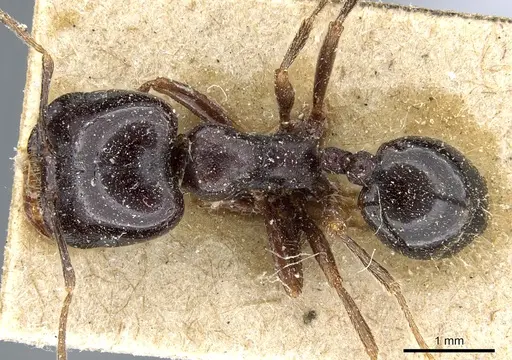
Literatura
Cargando mapa de distribución...Cargando productos...