
Trichomyrmex evansi
- Nom. cient.
- Trichomyrmex evansi
- Tribu
- Crematogastrini
- Subfamilia
- Myrmicinae
- Autor
- Donisthorpe, 1918
- Distribución
- Encontrado en 0 países
Introducción
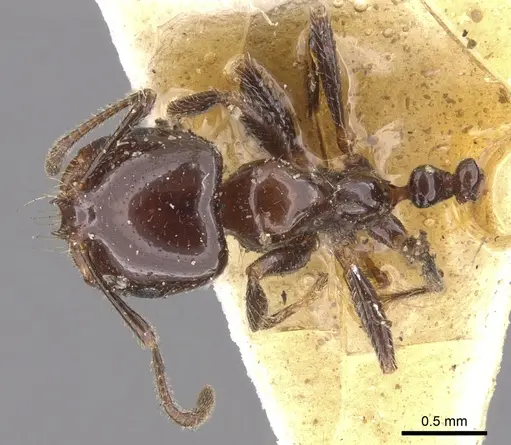
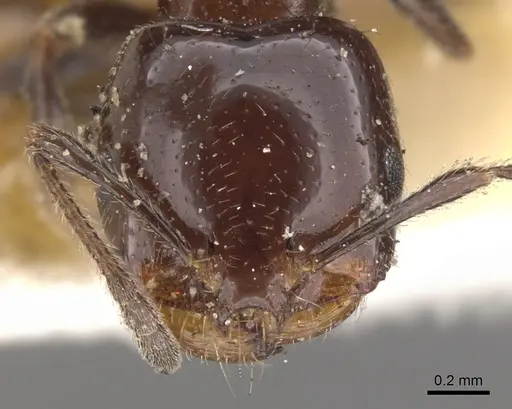
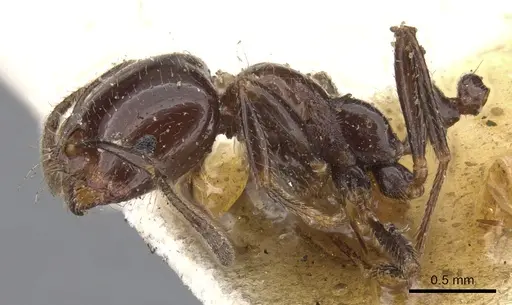
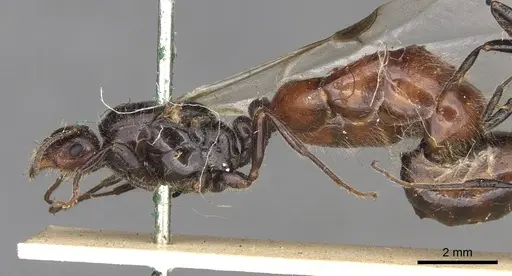
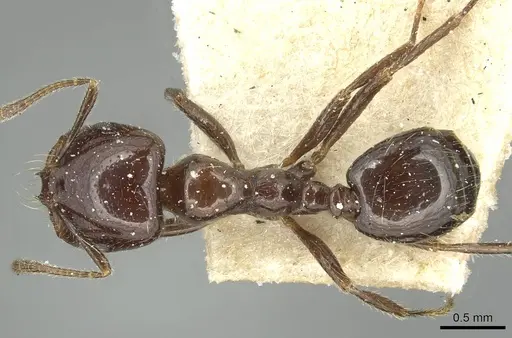
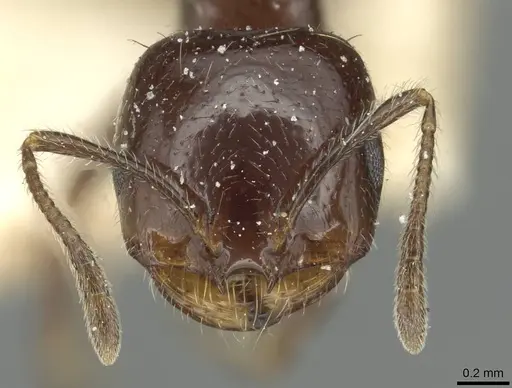
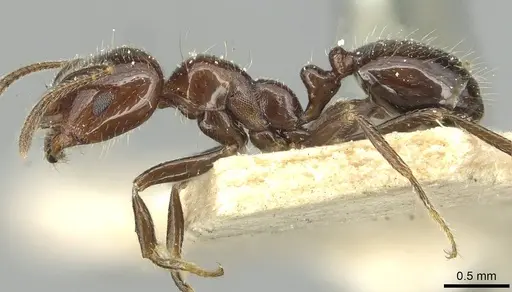
Trichomyrmex evansi is a small ant species originally described as Monomorium evansi, now placed in the genus Trichomyrmex . It is only known from Iraq, placing it in the Middle Eastern region with arid to semi-arid habitats . Because so little is known about this specific species, most care details are inferred from related Trichomyrmex or similar Myrmicinae. They are generalist foragers and likely build nests in soil or under rocks in dry environments. As a member of tribe Crematogastrini, their defense mechanism involves a flattened stinger used to wipe or smear venom onto enemies rather than piercing.
Quick Summary
- Difficulty: Medium
- Origin & Habitat: Iraq, Middle Eastern region with hot, dry summers and mild winters [1]. They inhabit arid to semi-arid environments.
- Colony Type: Colony structure is unconfirmed for this specific species. Based on related Trichomyrmex species, likely monogyne (single queen), but polygyny cannot be ruled out.
- Size & Growth:
- Queen: Size data unavailable (no published measurements for this species). Inferred from related Trichomyrmex species: likely around 5-7 mm.
- Worker: Size data unavailable (no published measurements for this species). Inferred from related Trichomyrmex species: likely around 2-4 mm.
- Colony: Unknown. Based on related Trichomyrmex species, colonies may reach several hundred workers at maturity.
- Growth: Moderate (inferred from typical small Myrmicinae with similar body size).
- Development: Estimated 6-10 weeks at optimal temperature based on related Myrmicinae species. Not confirmed for this species. (Development time is inferred from related species, specific data for T. evansi is unavailable.)
- Antkeeping:
- Temperature: Unknown but inferred from Iraq's climate: likely warm temperatures around 24-28°C. Provide a temperature gradient using a heating cable on one side of the nest.
- Humidity: Unknown but inferred from arid habitat: low to moderate moisture. Keep nest substrate mostly dry with a small moist area. Avoid waterlogging.
- Diapause: Unknown. Based on Iraq's mild winter, a short period of cooler temperatures (15-18°C for 2-3 months) may be beneficial, but exact requirements are unconfirmed.
- Nesting: Y-tong (AAC) or plaster nests work well for small species. Also test tube setups for founding. Keep chambers narrow and avoid excessive moisture.
- Behavior: General temperament is unknown but inferred from genus: likely peaceful, active foragers that will defend their nest if disturbed. Due to their very small size, escape prevention is critical, use fine mesh, fluon, and tight seals. Their defense is a 'smear' venom, not a typical sting.
- Common Issues: escape prevention is critical due to their tiny size, they can squeeze through standard cotton plugs and tiny cracks., lack of published data means most care is inferred, monitor colony and adjust conditions as needed., colonies may fail if kept too damp, keep nesting area relatively dry., slow initial growth is common for small Myrmicinae, be patient., test tube water supply can dry out quickly in heated setups, check regularly.
Temperature and Heating
Because Trichomyrmex evansi is only known from Iraq [1], it likely prefers warm temperatures around 24-28°C during the active season. Use a heating cable or mat on one side of the nest to create a temperature gradient. Place the heating element on top of the nest to avoid evaporating moisture too quickly. During winter, a mild cool-down to 15-18°C may be beneficial, but this is speculative. Monitor your colony's activity and adjust if they seem sluggish or too active.
Feeding and Diet
No specific feeding data exists for this species, but related Trichomyrmex are generalist scavengers. Offer small protein sources like fruit flies, pinhead crickets, or small mealworm pieces. Provide sugar water, honey water, or small drops of honey. Feed protein 2-3 times per week and keep sugar available at all times. Remove uneaten prey after 24-48 hours to prevent mold. Since workers are very small, make sure prey items are appropriately sized.
Nesting and Housing
Y-tong (AAC) nests work well for small ants. Test tube setups are also suitable, especially for founding colonies. The nest should have narrow chambers and passages scaled to their small size. Keep the nest relatively dry with a small moist area, these ants come from an arid environment [1]. Avoid over-humidifying the nest. Use fluon or PTFE on outworld edges to prevent escapes.
Winter Care and Seasonal Changes
Based on Iraq's climate [1], winter temperatures are mild, so a deep hibernation is unlikely. However, a period of cooler conditions (15-18°C) for 2-3 months (e.g., November to February) may help maintain natural colony cycles. Reduce feeding during this time, but ensure some moisture is always available. This is inferred, if your colony remains active year-round, you may not need a cooling period.
Behavior and Temperament
Trichomyrmex evansi workers are likely active foragers, always searching for food. They are not expected to be aggressive, but they will defend their nest if disturbed. As a member of tribe Crematogastrini, they have a modified flattened stinger used to smear venom onto threats rather than sting. This venom can be irritating but is not dangerous to humans. Their small size makes escape a major concern, use very fine mesh or fluon barriers to prevent them from finding tiny gaps.
Frequently Asked Questions
How long does it take for Trichomyrmex evansi to produce first workers?
Based on typical small Myrmicinae, expect 6-10 weeks from egg to first worker at optimal temperatures (24-28°C). This is an estimate, no specific data exists for this species.
What temperature do Trichomyrmex evansi ants need?
Likely warm temperatures around 24-28°C based on their Iraqi origin [1]. Provide a gradient using a heating cable. No specific studies confirm the exact range.
Do Trichomyrmex evansi ants sting?
They have a stinger, but it is modified for smearing venom rather than piercing (typical of tribe Crematogastrini). They may 'smear' venom on attackers. For humans, this is mild and not dangerous.
How big do Trichomyrmex evansi colonies get?
Unknown. Based on related Trichomyrmex species, colonies may reach several hundred workers at maturity. No specific data for this species.
Can I keep Trichomyrmex evansi in a test tube?
Yes, test tubes are suitable for founding colonies. Ensure the cotton plug is tight and use a small water chamber. Watch for escapes, these tiny ants can squeeze through gaps.
What do Trichomyrmex evansi ants eat?
They are generalist feeders. Offer small protein (fruit flies, pinhead crickets, mealworm pieces) and sugar (honey water, sugar water). Feed protein 2-3 times per week with sugar always available.
Do Trichomyrmex evansi need hibernation?
Based on their Iraqi climate [1], they likely experience a mild winter slowdown. A cooling period to 15-18°C for 2-3 months may be beneficial, but this is not confirmed. If your colony is doing fine without it, you may skip it.
Are Trichomyrmex evansi good for beginners?
Rated Medium difficulty. Their small size requires careful escape-proofing, and the lack of specific care data means you'll need to observe and adapt. Not ideal for complete beginners, but manageable with basic antkeeping experience.
Why are my Trichomyrmex evansi escaping?
Their tiny size (2-4 mm) allows them to slip through very small gaps. Use fluon on outworld walls, fine mesh on ventilation holes, and check the seal of test tube cotton plugs. Even standard cotton plugs may have gaps, wrap with PTFE tape if needed.
How often should I feed Trichomyrmex evansi?
Offer protein 2-3 times per week. Remove uneaten food after 24-48 hours. Keep sugar water available at all times. Adjust based on colony size and consumption.
Report an Issue
The current care sheet is based fully on literature. See inconsistencies, or something that's incorrect? Please , it will be resolved after review from an admin. Contributing to the blogs tab also helps providing information, to make us be able to further improve the caresheets. Thank you for your support!
References

Esta ficha de cuidados está bajo licencia CC BY-SA 4.0 .
Blogs de la comunidad
Literatura
Cargando mapa de distribución...Cargando productos...