
Tetramorium salvatum
- Nom. cient.
- Tetramorium salvatum
- Tribu
- Crematogastrini
- Subfamilia
- Myrmicinae
- Autor
- Forel, 1902
- Distribución
- Encontrado en 0 países
Introducción
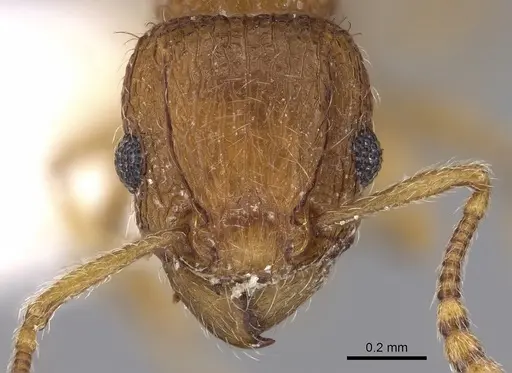
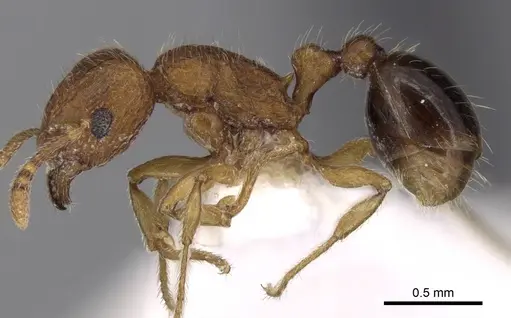
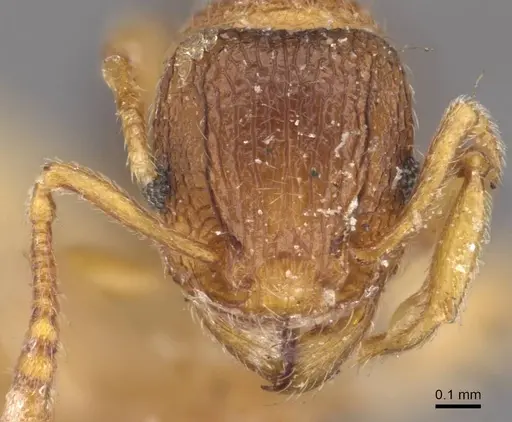
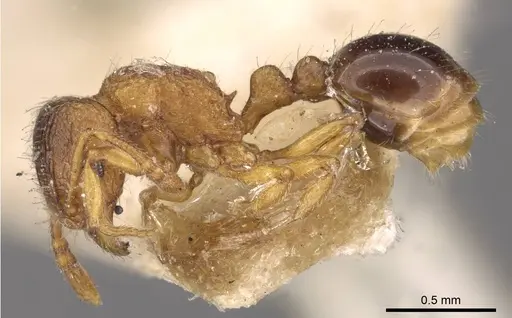
Tetramorium salvatum is a small ant with workers measuring 2.8-2.9 mm in total length, colored yellow-brown with a dark brown gaster (the rear section) . It belongs to the Tetramorium tonganum species group and is closely related to Tetramorium difficile, but can be told apart by its shorter, straighter petiolar peduncle (the stalk connecting the waist segments) and more rounded propodeal lobes . These ants are found across the Himalayan region, including parts of India (Gujarat, Himachal Pradesh, Rajasthan) and Pakistan, typically in montane and humid subtropical areas up to 2000 meters elevation .
Quick Summary
- Difficulty: Easy
- Origin & Habitat: Himalayan region of India and Pakistan, in montane and humid subtropical areas up to 2000 meters elevation [3][2]
- Colony Type: Colony structure is not documented for this species. Based on typical Tetramorium patterns, it is likely single-queen (monogyne), but this is unconfirmed.
- Size & Growth:
- Queen: Size data unavailable for queens. Only head and mesosomal measurements are known, not total body length.
- Worker: 2.8-2.9 mm total length [1]
- Colony: Unknown, no data available for this species
- Growth: Unknown, inferred from related Tetramorium species as moderate, but unconfirmed
- Development: Unknown, estimated 6-10 weeks based on related species, but no specific data (Development time is inferred from other Tetramorium species. Actual time for T. salvatum is unknown.)
- Antkeeping:
- Temperature: No specific data. Based on Himalayan origin, room temperature (20-26°C) is likely suitable. They may tolerate cooler conditions. Avoid overheating.
- Humidity: No specific data. Based on humid subtropical habitat, moderate humidity with slightly moist substrate is likely preferred. Provide a gradient so ants can choose.
- Diapause: Unknown, they come from a temperate region with seasonal cold, so a winter rest (3-4 months at 10-15°C) may be beneficial, but this is unconfirmed for this exact species.
- Nesting: Test tube setups work for founding. For larger colonies, Y-tong (AAC) or soil nests with small chambers are suitable. Ensure tight connections to prevent escapes.
- Behavior: These ants belong to the Myrmicinae subfamily and tribe Crematogastrini, which use a smear defense: they have a flattened stinger that wipes venom onto enemies rather than piercing. Workers are small (under 3 mm) and likely peaceful, but escape prevention is critical, they can squeeze through tiny gaps. They probably forage actively and tend honeydew sources.
- Common Issues: small size makes escape prevention critical, use fine mesh and barriers like fluon, lack of species-specific care data means you must observe and adjust conditions carefully, mold growth in overly humid nests, use ventilation and avoid waterlogging, dehydration if humidity drops too low, monitor substrate moisture regularly, unknown diapause requirements, if colony slows down in winter, reduce temperature gradually
Housing and Nest Setup
For a founding queen, a test tube setup with a water reservoir sealed by a cotton plug works well. Make sure the reservoir is not too large to prevent flooding, use a small plug to hold water. Once the colony has around 10-20 workers, you can move them to a small Y-tong (AAC) formicarium. These ants are tiny (under 3 mm), so all nest connections must be tight, even 1 mm gaps can be an escape route. Use a small outworld (10x10 cm is enough) with fine mesh on ventilation holes. Avoid overly high humidity that causes mold, provide a gradient by moistening one part of the nest while keeping the other dry. [1][2]
Feeding and Diet
These ants are omnivorous, like most Tetramorium. They accept small protein sources such as fruit flies, pinhead crickets, and other tiny insects. Provide sugar water or honey water continuously (apply a drop on a small dish to avoid drowning). Feed protein items every 2-3 days, removing leftovers after 24 hours to prevent mold. In the wild, they likely forage for small arthropods and tend aphids for honeydew. A varied diet helps colony health. [1]
Temperature and Seasonal Care
No specific temperature requirements are known. Based on their Himalayan origin, room temperatures (20-26°C) are a good starting point. They likely experience winter cold in nature, so a winter rest period of 3-4 months at 10-15°C may be beneficial, but this is not confirmed for this exact species. During the active season, keep them warm (around 22-25°C). If you observe decreased activity in autumn, gradually reduce temperature and feeding to simulate winter. [3]
Colony Growth and Development
Queens are thought to found colonies independently (claustral), but this is unconfirmed for this species. If claustral, the queen will seal herself in and raise the first workers on stored reserves without feeding. Development time from egg to worker is unknown, based on other Tetramorium species, expect around 6-10 weeks at room temperature. The first workers (nanitics) will be smaller than mature workers. Colony growth rate is unknown but likely moderate. Maximum colony size is undocumented. [1]
Behavior and Temperament
These ants are likely peaceful and not aggressive. Their defense relies on smearing venom (smear defense typical of the tribe Crematogastrini) rather than stinging. The main concern is their small size, workers are under 3 mm and can escape through tiny cracks. Use fluon on container rims and ensure all openings have fine mesh (less than 0.5 mm). They are probably active foragers that search for food and tend honeydew sources. Observations of behavior in captivity are limited. [1]
Frequently Asked Questions
How long does it take for Tetramorium salvatum to raise first workers?
Specific data is not available. Based on other Tetramorium species, roughly 6-10 weeks from egg to first worker at room temperature, but this is an estimate. The first workers (nanitics) will be smaller than mature workers.
Do Tetramorium salvatum ants sting?
No, they do not sting. As members of the Myrmicinae subfamily (tribe Crematogastrini), they have a modified stinger that smears venom on attackers rather than injecting it. Any bite is harmless to humans.
What temperature do Tetramorium salvatum need?
No specific data exists. Based on their Himalayan origin, room temperature (20-26°C) is likely suitable. They may tolerate cooler conditions and could benefit from a winter rest at 10-15°C for 3-4 months, but this is unconfirmed. Observe your colony and adjust gradually.
Can I keep multiple Tetramorium salvatum queens together?
Colony structure is unknown. Most Tetramorium species are monogyne (single-queen), so keeping multiple queens together is not recommended unless you are sure they are polygyne. Introduce queens only if you have confirmed they are a polygyne species.
How big do Tetramorium salvatum colonies get?
Colony size is undocumented. No data available. Based on related Tetramorium, some reach several hundred workers, but this is speculative.
Do Tetramorium salvatum need hibernation?
Likely yes, based on their temperate Himalayan habitat, but it is not confirmed. If you want to try a winter rest, gradually reduce temperature to 10-15°C for 3-4 months and decrease feeding. Monitor the colony, if they seem stressed, warm them up gradually.
What do Tetramorium salvatum eat?
They are omnivorous. Offer small protein sources (fruit flies, small crickets) every 2-3 days and provide sugar water or honey water continuously. Remove uneaten protein to prevent mold.
Are Tetramorium salvatum good for beginners?
Yes, they are rated easy due to small size and likely hardy nature. The main challenge is escape prevention because workers are under 3 mm. If you can provide secure housing, they are a good beginner species. Note that species-specific care data is limited.
When should I move Tetramorium salvatum from a test tube to a formicarium?
Move them when the colony outgrows the test tube (typically 10-20 workers). A small Y-tong (AAC) nest with fine chambers works well. Ensure all connections are tight to prevent escapes.
Why are my Tetramorium salvatum escaping?
Their small size (under 3 mm) allows them to squeeze through tiny gaps. Apply fluon to container rims, use fine mesh on ventilation (less than 0.5 mm openings), and check all connections regularly. Even a 1 mm gap can be an escape route.
Report an Issue
The current care sheet is based fully on literature. See inconsistencies, or something that's incorrect? Please , it will be resolved after review from an admin. Contributing to the blogs tab also helps providing information, to make us be able to further improve the caresheets. Thank you for your support!
References

Esta ficha de cuidados está bajo licencia CC BY-SA 4.0 .
Blogs de la comunidad
CASENT0280890
Ver en AntWeb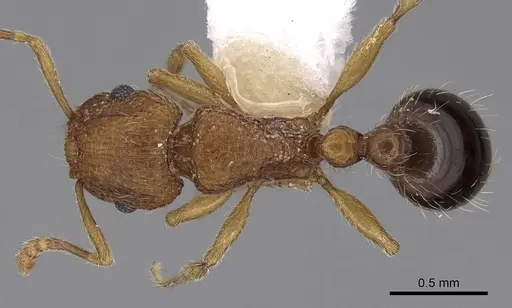
CASENT0909173
Ver en AntWeb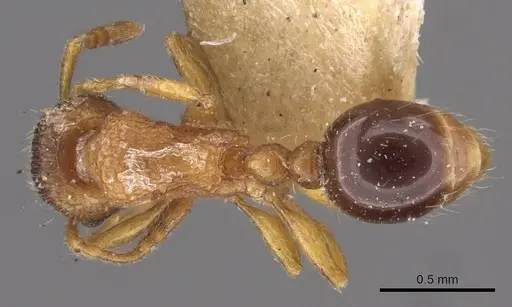
Literatura
Cargando mapa de distribución...Cargando productos...