
Tetramorium parvum
- Nom. cient.
- Tetramorium parvum
- Tribu
- Crematogastrini
- Subfamilia
- Myrmicinae
- Autor
- Bolton, 1977
- Distribución
- Encontrado en 0 países
Introducción
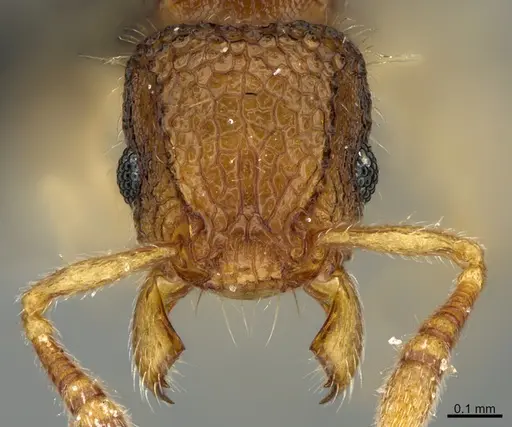
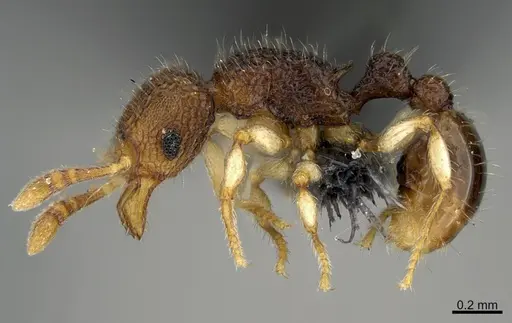
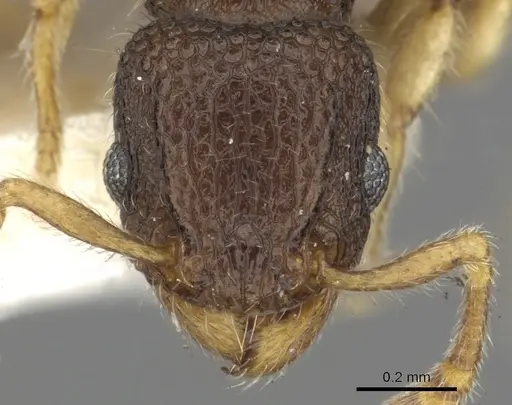
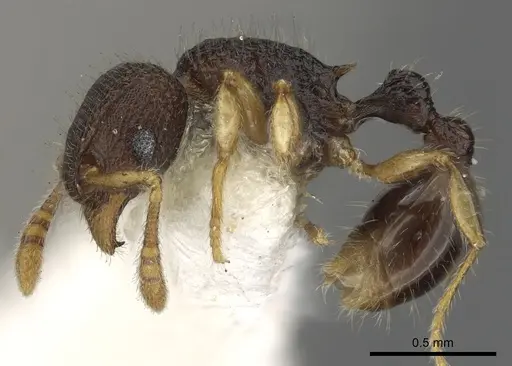
Tetramorium parvum is a tiny ant species native to Southeast Asia, with workers measuring 2.6-2.7 mm in total length . Workers are dark blackish-brown with yellowish-brown legs, featuring short propodeal spines and a downcurved petiole with a node that narrows from base to apex . This species belongs to the Tetramorium scabrosum species group and is closely related to Tetramorium kraepelini, from which it is distinguished by its darker color and weaker, more disorganized sculpture . It has been documented across the Indomalaya region, including Borneo, Indonesia (Java), Malaysia, and Thailand . Despite this wide distribution, absolutely nothing is known about the biology of Tetramorium parvum - no information exists on colony structure, founding behavior, diet, or seasonal patterns . This makes T. parvum an extremely challenging species to keep, as all care recommendations must be purely speculative.
Quick Summary
- Difficulty: Hard
- Origin & Habitat: Tropical Southeast Asia, found in Borneo, Indonesia (Java), Malaysia, and Thailand at various forest locations including lowland and mountain forests [2][3]. Collected from undisturbed forest plots in Borneo, suggesting a preference for shaded, humid microhabitats [3].
- Colony Type: Unconfirmed, no colony structure data exists for this species.
- Size & Growth:
- Queen: Unknown, no queen has been described for Tetramorium parvum.
- Worker: 2.6-2.7 mm [1]
- Colony: Unknown, no colony size data exists.
- Growth: Unknown
- Development: Unknown, no development data exists for this species. (All development estimates are purely speculative. No timeline has been confirmed even for related species in the genus.)
- Antkeeping:
- Temperature: Based on its tropical distribution, maintain warm conditions around 24-28°C. Provide a gentle gradient so workers can self-regulate. No specific temperature data exists.
- Humidity: Based on its forest-floor habitat, keep the nest substrate consistently moist but not waterlogged. Aim for high humidity (around 60-80%). No specific data exists.
- Diapause: Unknown, as a tropical species, true diapause is unlikely, but no studies exist. Maintain stable warm temperatures year-round.
- Nesting: Likely ground-nesting (based on typical Tetramorium habits, but unconfirmed). In captivity, a Y-tong (AAC) nest or plaster nest with tightly scaled chambers and good moisture retention may work.
- Behavior: Temperament is unknown, but like most Tetramorium, workers may bite when disturbed. Their tiny size (2.6-2.7 mm) makes escape prevention critical, they can fit through extremely small gaps. Use fine mesh barriers and tight-fitting lids.
- Common Issues: tiny size makes escape likely without excellent barriers, no species-specific biology data exists, all care is inferred and speculative, wild-caught colonies may carry parasites or be stressed from unknown habitat requirements, humidity control is challenging, too wet causes drowning, too dry causes desiccation, lack of queen description means founding and colony growth are complete unknowns
Housing and Nest Setup
Since nothing is known about the biology of Tetramorium parvum, all housing advice is speculative. Workers are very small (2.6-2.7 mm), so escape prevention must be excellent, even tiny gaps allow escape. A Y-tong (AAC) or plaster nest with very tight chambers may work, as might a test tube for small groups. Based on typical Tetramorium habits, they likely nest in soil, but this is unconfirmed. Provide an outworld with fine-mesh ventilation. Apply fluon to rims of test tubes and use tight-fitting lids. [1]
Feeding and Diet
The diet of Tetramorium parvum is undocumented. Based on typical Tetramorium feeding habits (which may not apply), offer small protein sources such as fruit flies, pinhead crickets, or small mealworms. Also offer sugar water or honey water. Since nothing is known, experiment with different foods and observe acceptance. Remove uneaten prey within 24 hours to prevent mold. There is no confirmed dietary preference.
Temperature and Humidity
As a tropical species from Southeast Asia, Tetramorium parvum likely requires warm, humid conditions. Keep the nest area around 24-28°C, using a heating cable in cooler climates if needed. Provide a temperature gradient. Humidity should be high, keep the substrate damp but not waterlogged. Mist occasionally or use a water reservoir. These suggestions are inferred from its forest habitat, no specific requirements are known [3].
Colony Founding and Growth
The founding behavior of Tetramorium parvum is completely unknown. No queens have been described for this species, so any advice on founding is speculative. If you obtain a queen, treat her as claustral (enclosed in a small chamber) as a starting point, but this is not confirmed. Growth rate and development timeline are unknown. Be extremely cautious and avoid disturbing any captured queen.
Behavior and Temperament
Behavior of Tetramorium parvum has not been documented. Workers are small (2.6-2.7 mm) and likely active foragers based on the genus pattern. When threatened, they may bite. Their primary defense mechanism (as a member of Crematogastrini tribe) involves smearing venom using a modified stinger, rather than piercing. Escape prevention is critical due to their tiny size. No specific temperament data exists. [1]
Seasonal Care
As a tropical species from Southeast Asia, Tetramorium parvum likely does not require a hibernation period. Maintain stable warm temperatures year-round. If activity slows during cooler months, slightly reduce feeding but do not cool dramatically. This is inferred from its tropical distribution, no seasonal data exists.
Frequently Asked Questions
How long does it take for Tetramorium parvum to raise first workers?
This has not been studied. No timeline is known, and any estimate would be purely speculative. It is not recommended to attempt keeping this species until more data becomes available.
What do Tetramorium parvum ants eat?
Undocumented. In captivity, you can offer tiny insects (fruit flies, small crickets) and sugar water, but there are no confirmed preferences. Observe and adjust.
Can I keep Tetramorium parvum in a test tube?
Since no founding biology is known, it's unclear if test tube setups are appropriate. If you attempt to keep this species, provide a small-diameter test tube with a water reservoir and excellent escape prevention. Use fluon on the rim.
Do Tetramorium parvum ants sting?
As a member of the subfamily Myrmicinae, they have a stinger. However, their primary defense mechanism is smearing venom (smear defense) rather than stinging. The sting is not medically significant to humans.
Are Tetramorium parvum good for beginners?
No. This species has no documented biology, making all care speculative. Their tiny size also adds difficulty. Beginners should start with well-documented species.
How big do Tetramorium parvum colonies get?
Unknown, no colony size data exists for this species. Any estimate would be pure speculation.
Do Tetramorium parvum need hibernation?
No, as a tropical Southeast Asian species, they likely do not require hibernation. Maintain warm temperatures (24-28°C) year-round. Do not cool dramatically.
Why are my Tetramorium parvum dying?
Common causes include: escape (check for tiny gaps), improper humidity (too dry or too wet), temperature stress, and disturbance. Since biology is unconfirmed, any die-off is hard to diagnose. Wild-caught colonies may also carry parasites.
When should I move Tetramorium parvum to a formicarium?
Move them when the test tube becomes crowded or the water reservoir runs low. For such tiny ants, this may happen at relatively low worker counts. Provide a nest with appropriately scaled chambers and good moisture retention.
Can I keep multiple Tetramorium parvum queens together?
Unknown, colony structure has not been documented. Do not attempt combining unrelated queens, single-queen setups are safest until more is known.
Report an Issue
The current care sheet is based fully on literature. See inconsistencies, or something that's incorrect? Please , it will be resolved after review from an admin. Contributing to the blogs tab also helps providing information, to make us be able to further improve the caresheets. Thank you for your support!
References

Esta ficha de cuidados está bajo licencia CC BY-SA 4.0 .
Blogs de la comunidad
CASENT0201375
Ver en AntWeb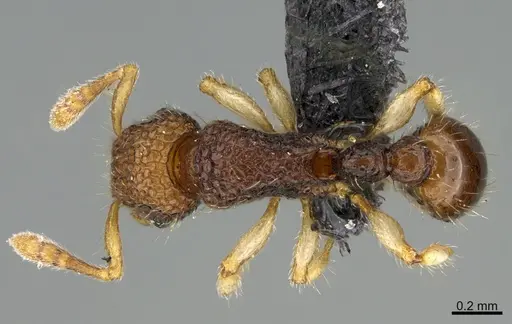
CASENT0901096
Ver en AntWeb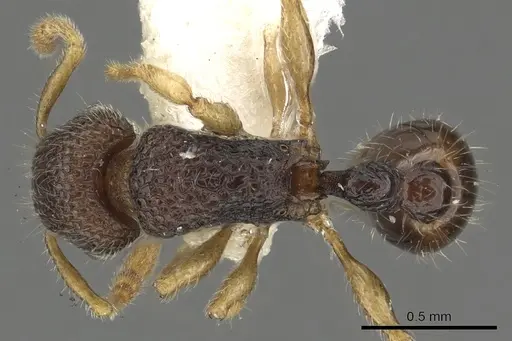
Literatura
Cargando mapa de distribución...Cargando productos...