
Tetramorium orientale
- Nom. cient.
- Tetramorium orientale
- Tribu
- Crematogastrini
- Subfamilia
- Myrmicinae
- Autor
- Forel, 1895
- Distribución
- Encontrado en 0 países
Introducción
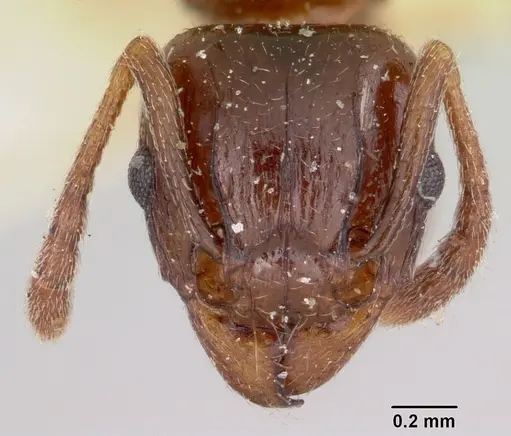
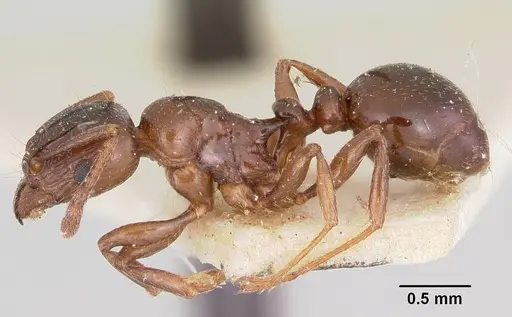
Tetramorium orientale is a small, brown ant species known only from a single location in Madagascar. Workers are about 3-4mm long, with a head that's slightly wider than long, long propodeal spines, and a high, blocky petiolar node. They have no standing hairs on the waist or first gastral tergite, which gives them a very smooth, polished look. This species belongs to the Tetramorium bessonii group and has only ever been found in the Imerina region of the Central Plateau . Because so little is known about its biology, this ant is essentially unstudied in the wild and completely unknown in captivity.
Quick Summary
- Difficulty: Expert
- Origin & Habitat: Endemic to Madagascar, specifically the Imerina region on the Central Plateau. The exact collection site is unclear because 'Imerina' historically referred to a large area [1].
- Colony Type: Unconfirmed, based on typical Tetramorium patterns, likely single-queen (monogyne) colonies.
- Size & Growth:
- Queen: Size data unavailable, inferred from Tetramorium genus (~5-7 mm).
- Worker: Approximately 3-4 mm, inferred from related Tetramorium species. No direct body measurements are recorded.
- Colony: Unknown, based on related species, likely up to several hundred workers.
- Growth: Unknown, estimated Moderate based on genus patterns.
- Development: Unknown, estimated 6-10 weeks based on related Tetramorium species at 24-26°C. (Development time is unconfirmed. Monitor brood development at stable warm temperatures.)
- Antkeeping:
- Temperature: No specific data. Start around 24-26°C and observe activity. Related Malagasy Tetramorium prefer warm conditions. Avoid temperatures below 20°C or above 32°C until you understand their preferences.
- Humidity: Keep the nest substrate moderately moist but not waterlogged. Provide a humidity gradient by having one area slightly drier. Adjust based on colony behavior.
- Diapause: Unknown, as a species from tropical Madagascar, it likely does not require true hibernation. However, it may show reduced activity during cooler periods. Keep warm year-round and monitor.
- Nesting: No specific data. Related Tetramorium are ground-nesters. Start with a test tube setup for a founding queen. For established colonies, use Y-tong, plaster, or soil nests with small chambers scaled to worker size.
- Behavior: Not documented, based on related Tetramorium species, likely non-aggressive, forages for small insects and honeydew. Workers are small (3-4mm), so escape prevention is important, use fine mesh or fluon barriers. They are not known to bite or sting humans meaningfully.
- Common Issues: no established care protocols, you'll need to experiment with conditions and accept potential colony loss, extremely limited availability in the hobby, may be impossible to obtain legally, small worker size makes them vulnerable to dehydration, ensure nest retains moisture without flooding, wild-caught colonies may carry parasites or diseases due to unknown origin, unknown growth rate may lead to disappointment if colony fails to thrive
Appearance and Identification
Tetramorium orientale workers are small ants, about 3-4mm long. They have a head that is slightly wider than long, short antennae, and relatively small eyes. The propodeal spines are long and sharp. The petiolar node is tall and blocky, with the front and back faces nearly parallel. A key identification feature is the complete absence of standing hairs on the waist segments and the first gastral tergite, only very short, flattened hairs are present. The entire body is uniformly brown and smooth, with a polished shine [1]. The promesonotal suture (a groove between the pronotum and mesonotum) is well-developed and easy to see [1].
Distribution and Habitat
This species is only known from the type locality: Imerina, a broad region on the Central Plateau of Madagascar. Because 'Imerina' historically covers a large area, the precise collection site cannot be pinned down [1]. The natural habitat is likely tropical forest, but no specific microhabitat data exists.
Taxonomy and Classification
Tetramorium orientale was originally described by Forel in 1895 as a variety of Tetramorium bessonii. It was later synonymized with T. bessonii by Bolton in 1979,then resurrected and raised to full species status by Hita Garcia and Fisher in 2012. It belongs to the Tetramorium bessonii species group, which includes several other Malagasy endemics [1].
Housing and Nesting
No captive nesting data exists for this species. Based on related Tetramorium, they are presumably ground-nesters. For a founding queen, a test tube setup with a water reservoir works well. For an established colony, use a nest with small chambers, Y-tong (AAC), plaster, or a soil nest are good choices. Ensure the nest material retains some moisture without becoming waterlogged. Because the workers are about 3-4mm, make sure chambers are not too large.
Feeding and Diet
Diet is undocumented. Like other Tetramorium, they likely hunt small insects and tend aphids for honeydew. In captivity, offer small protein sources like fruit flies, tiny mealworms, or pinhead crickets. Provide sugar water or honey water for energy. Start with prey items small enough for 3-4mm workers to handle and see what they accept.
Temperature and Care
No specific temperature requirements are known. As a tropical species from Madagascar, it probably prefers warm, stable conditions. Start with a temperature of 24-26°C and watch colony activity, if they are foraging and brood is growing, conditions are likely good. Avoid letting temperatures drop below 20°C or rise above 32°C until you learn their preferences.
Frequently Asked Questions
How long does it take for Tetramorium orientale to go from egg to worker?
The development time is unconfirmed. Based on related Tetramorium species, estimate 6-10 weeks from egg to first worker at optimal warm temperatures around 24-26°C.
What do Tetramorium orientale ants eat?
Diet is unconfirmed. Based on related species, they likely accept small live prey like fruit flies and tiny insects, as well as honeydew or sugar water. Offer small protein sources and sugar sources and see what they take.
Can I keep Tetramorium orientale in a test tube?
Yes, a test tube setup is suitable for founding a colony. Use a small test tube with a water reservoir for the queen. The tube should be sized for the tiny workers (3-4mm). Make sure the opening is small enough to keep moisture in.
What temperature do Tetramorium orientale ants need?
No specific data exists. Start around 24-26°C based on related Malagasy species. Monitor colony activity and adjust as needed. They likely prefer warm, stable conditions.
How big do Tetramorium orientale colonies get?
Colony size is unconfirmed. Based on related species, they likely reach several hundred workers. Growth may be moderate over several years.
Is Tetramorium orientale a good species for beginners?
No. This species is not recommended for beginners because almost nothing is known about its captive care and it is extremely rare in the hobby. Stick to well-documented species like Tetramorium caespitum or Lasius niger if you're new to antkeeping.
Do Tetramorium orientale ants sting?
They belong to the subfamily Myrmicinae, which means they have a stinger. However, in the tribe Crematogastrini the stinger is modified for smearing venom onto enemies rather than piercing skin. Their sting is generally not considered painful to humans.
Where is Tetramorium orientale found?
This species is endemic to Madagascar, specifically the Imerina region on the Central Plateau. The exact locality is unclear because 'Imerina' historically referred to a large area.
Does Tetramorium orientale need hibernation?
Diapause requirements are unconfirmed. As a species from tropical Madagascar, it likely does not require a true hibernation period. Keep it warm year-round, it may show reduced activity during cooler months but should not be exposed to cold temperatures.
How many queens does Tetramorium orientale have?
Colony structure is unconfirmed. Based on typical Tetramorium patterns, they likely form single-queen (monogyne) colonies.
Report an Issue
The current care sheet is based fully on literature. See inconsistencies, or something that's incorrect? Please , it will be resolved after review from an admin. Contributing to the blogs tab also helps providing information, to make us be able to further improve the caresheets. Thank you for your support!
References

Esta ficha de cuidados está bajo licencia CC BY-SA 4.0 .
Blogs de la comunidad
CASENT0101744
Ver en AntWeb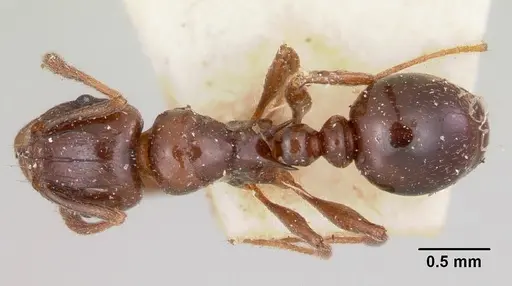
Literatura
Cargando mapa de distribución...Cargando productos...