
Tetramorium galoasanum
- Nom. cient.
- Tetramorium galoasanum
- Tribu
- Crematogastrini
- Subfamilia
- Myrmicinae
- Autor
- Santschi, 1910
- Distribución
- Encontrado en 0 países
Introducción
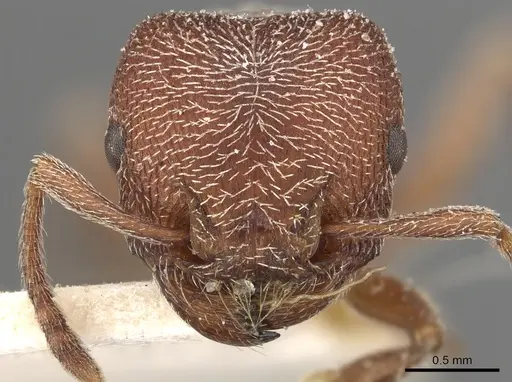
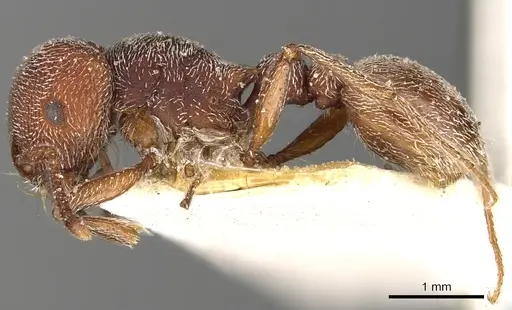
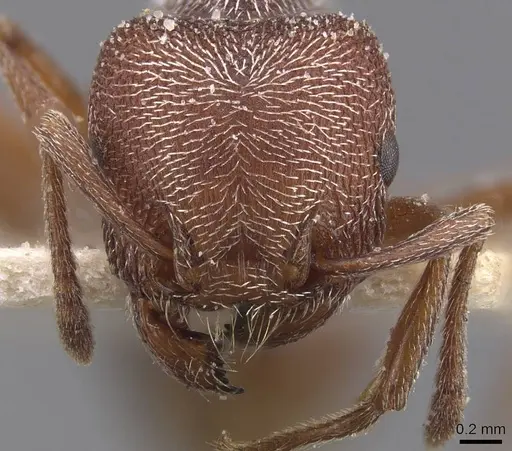
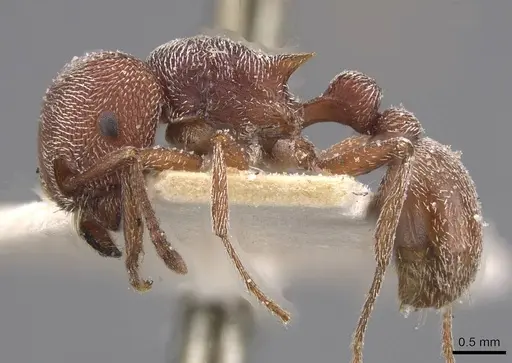
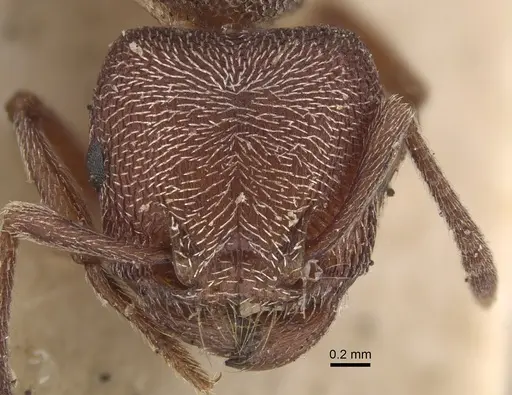
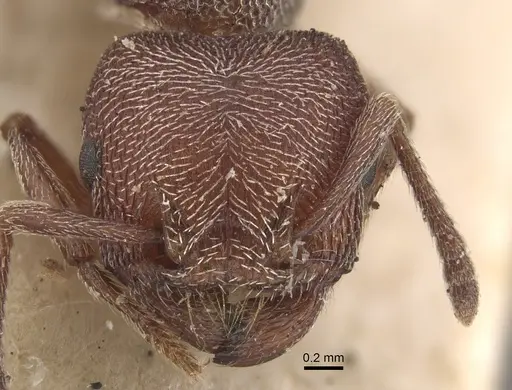
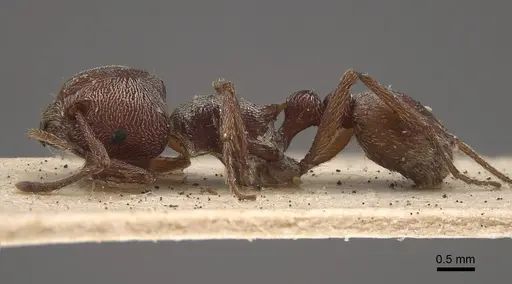
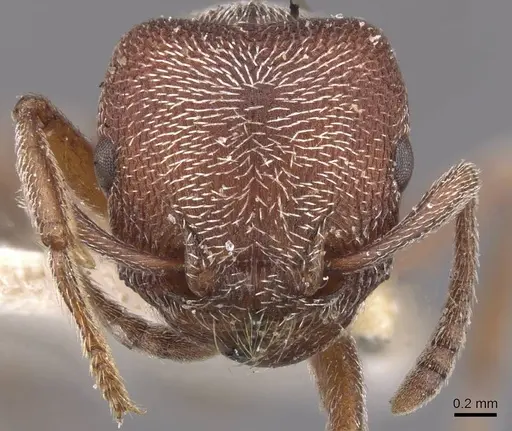
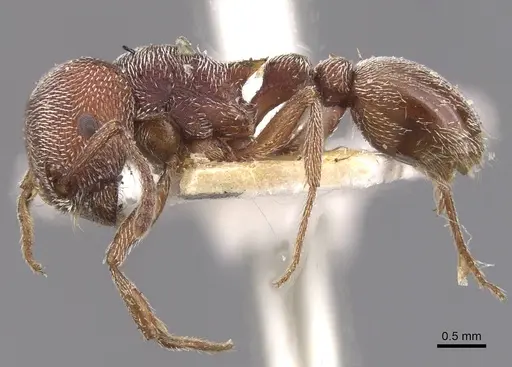
Tetramorium galoasanum is a medium-sized ant from the Congo region in Central Africa. Workers measure 5.1-6.0mm in total length and are a uniform red color . The species is easy to recognize by its dense covering of appressed silvery hairs that glitter in light - these hairs are much denser than its close relatives, often overlapping each other . It belongs to the Tetramorium solidum group, a group of seed-harvesting ants . The species has only been recorded from four locations in the Congo (Brazzaville, M'Bounion, Mindouga, and Comba-Ibre), and virtually nothing is known about its biology or natural history in the wild .
Quick Summary
- Difficulty: Unknown, likely Medium based on genus patterns
- Origin & Habitat: Congo region in Central Africa (Afrotropical). The exact habitat is unknown, but the area includes tropical rainforests and savanna [3].
- Colony Type: Unknown, no colony data exists. Based on typical Tetramorium patterns, likely single-queen (monogyne) colonies.
- Size & Growth:
- Queen: No documented measurements available [2]
- Worker: 5.1-6.0mm total length [2]
- Colony: No data available, colony size is unknown
- Growth: Unknown
- Development: Unknown, no species-specific data. Based on typical tropical Tetramorium, estimate 6-10 weeks at optimal temperatures. (No direct development data exists. Estimate is based on genus patterns.)
- Antkeeping:
- Temperature: Based on its tropical Congo distribution, aim for 24-28°C. Avoid temperatures below 20°C. Provide a gentle temperature gradient if possible. These are estimates, no documented preferences.
- Humidity: Based on the humid tropical climate of the Congo, maintain moderate to high humidity (rough guideline: 60-80%). Keep the nest substrate consistently moist but not waterlogged. Adjust based on colony behavior.
- Diapause: Unlikely, tropical distribution suggests no hibernation needed. Maintain consistent warm temperatures year-round.
- Nesting: Unknown in the wild. Standard setups for medium-sized Myrmicinae should work: Y-tong (AAC) nests, plaster nests, or test tube setups. Provide moist substrate and moderate nest size.
- Behavior: No specific behavioral observations exist. Based on genus patterns, Tetramorium are seed-harvesting ants with moderate aggression. Workers (5-6mm) can be contained with standard barriers but may explore gaps. They are likely ground-nesting and may show typical foraging and trail-laying behaviors.
- Common Issues: no confirmed founding method, queen may fail without proper setup, colony size and growth rate completely unknown, slow growth may frustrate keepers, humidity and temperature needs are inferred, not documented, monitor crop closely, no information on escape risk, check barriers regularly, seed diet assumed but not confirmed, may reject offered foods
Species Identification and Range
Tetramorium galoasanum belongs to the Tetramorium solidum group, which includes only three species with appressed silvery hairs: T. galoasanum, T. clunum, and T. setuliferum. T. galoasanum has the densest hair coverage, the hairs often overlap each other [1]. Workers are notably larger than its relatives, and have a massive head that is slightly broader than long [2]. The species was originally described as a variety of T. setuliferum by Santschi in 1910,but Bolton raised it to full species status in 1980 based on distinct morphology [2]. It is only known from four locations in the Congo: Brazzaville, M'Bounion, Mindouga, and Comba-Ibre [1][3]. No other distribution records exist.
Housing and Nest Setup
Since nothing is known about this species' natural nesting preferences, you'll need to rely on standard setups that work well for medium-sized Myrmicinae ants. A Y-tong (AAC) nest with narrow chambers works well, as does a plaster nest or a simple test tube setup. Chambers should be scaled for 5-6mm workers, not too tight, not too spacious. Provide a water tube or moisture source to maintain humidity in the outworld. Keep the nest substrate consistently moist, as this is a tropical species. A small outworld for foraging is sufficient. Escape prevention should be standard for ants of this size, they are large enough that normal barriers work, but check for gaps.
Feeding and Diet
As a member of the Tetramorium solidum group, this species is classified as a seed harvester [2]. However, no direct observations of their diet exist. In captivity, offer a mix of seeds (grass seeds, millet, cracked sunflower seeds) as a primary food source. Supplement with protein sources like small insects (fruit flies, small crickets, mealworms). Sugar water or honey can be offered occasionally, though seed harvesters often rely more on seeds than sugar. Feed seeds continuously and protein 2-3 times per week. Remove uneaten seeds to prevent mold. Be prepared to experiment, this species has never been kept in captivity before.
Temperature and Humidity
This species is known only from the Congo, which has a hot, humid tropical climate year-round [3]. Aim to keep temperatures in the range of 24-28°C, avoiding prolonged exposure below 20°C. A heating cable on one side of the nest can create a temperature gradient, allowing the ants to self-regulate. For humidity, maintain moderate to high levels (rough guideline: 60-80%) by keeping the nest substrate moist. The Congo environment is consistently humid, so err on the side of more moisture rather than less. Monitor for condensation and mold, some moisture is good, but standing water should be avoided. Adjust based on colony activity.
Colony Development and Growth
No data exists on colony development for this species. The first workers (nanitics) will likely emerge 6-10 weeks after founding if the queen is claustral, based on typical development times for tropical Tetramorium, but this is a pure guess. Colony growth will likely be slow initially. Expect the first batch of workers to be smaller than mature workers, which is normal for claustral founding. Once the colony establishes, growth should gradually accelerate but remain slower than fast-growing genera. Be patient, this species has never been documented in captivity, so growth rates are uncertain. Monitor your colony closely and adjust care based on observed behavior.
Behavior and Temperament
No specific behavioral observations exist for T. galoasanum. Based on genus-level knowledge, Tetramorium are typically moderate foragers that maintain scent trails and defend their nest. They are not particularly aggressive toward humans but will bite or sting if provoked. Workers are large enough (5-6mm) that they are easily visible. Since this species has never been kept in captivity, unexpected behaviors are possible. Observe colony activity and adjust environment accordingly. If they seem overly inactive, check temperature and humidity. If they escape frequently, improve your barrier system.
Frequently Asked Questions
How long does it take for Tetramorium galoasanum to produce first workers?
No species-specific data exists. Based on typical Tetramorium development in tropical conditions, expect first workers (nanitics) approximately 6-10 weeks after the queen lays eggs, assuming optimal temperature (24-28°C). This is an estimate, actual times may vary.
What do Tetramorium galoasanum ants eat?
As seed harvesters (based on the group classification), their primary diet should be seeds (grass seeds, millet, cracked sunflower seeds). Supplement with protein sources like small insects (fruit flies, small crickets, mealworms). Sugar water or honey can be offered occasionally. This is based on genus patterns since no species-specific feeding observations exist.
Can I keep multiple Tetramorium galoasanum queens together?
No data exists on colony founding behavior for this species. Combining unrelated queens is not recommended, most Tetramorium species establish single-queen colonies. If you obtain a multi-queen colony from the wild, monitor closely for aggression and separate if needed.
What temperature is best for Tetramorium galoasanum?
Aim for 24-28°C based on their tropical Congo distribution. Avoid temperatures below 20°C. Provide a gentle gradient if possible so ants can self-regulate. This is inferred from their geographic origin rather than documented studies.
Do Tetramorium galoasanum ants need hibernation?
No, they come from the Congo's tropical climate where temperatures remain warm year-round. No diapause or hibernation period is needed or recommended. Maintain consistent warm temperatures throughout the year.
How big do Tetramorium galoasanum colonies get?
No colony size data exists for this species. Based on related Tetramorium species, colonies likely reach several hundred workers at maturity, but this is an estimate. Growth will be slow, expect many months to reach even 50 workers.
Is Tetramorium galoasanum good for beginners?
This species is not recommended for beginners. Almost no biological data exists, everything about their care is inferred from genus patterns. They require specific tropical conditions and patience during slow colony growth. Experienced antkeepers interested in rare species may have better success.
Do Tetramorium galoasanum ants sting?
Tetramorium belongs to the Myrmicinae subfamily, which includes many species with functional stingers. While no specific observations exist for T. galoasanum, they likely can sting. The sting would be mild for an ant of this size, comparable to other medium Myrmicinae. They may also use a smearing defense typical of Crematogastrini (the tribe), applying venom rather than stinging directly.
What size nest do I need for Tetramorium galoasanum?
Use a nest with chambers appropriately scaled for 5-6mm workers. Y-tong (AAC) nests, plaster nests, or test tube setups all work well for medium-sized Myrmicinae. Start with a basic setup, you can upgrade as the colony grows. A small outworld is sufficient for foraging.
Why is my Tetramorium galoasanum colony not growing?
Without documented care data, troubleshooting is difficult. Check: temperature (24-28°C), humidity (moist but not wet), food availability (seeds + protein), and queen health. Slow growth is normal for this species, if the queen is alive and producing brood, the colony may simply need more time. Consider consulting experienced keepers of related Tetramorium species.
Report an Issue
The current care sheet is based fully on literature. See inconsistencies, or something that's incorrect? Please , it will be resolved after review from an admin. Contributing to the blogs tab also helps providing information, to make us be able to further improve the caresheets. Thank you for your support!
References

Esta ficha de cuidados está bajo licencia CC BY-SA 4.0 .
Blogs de la comunidad
CASENT0901178
Ver en AntWeb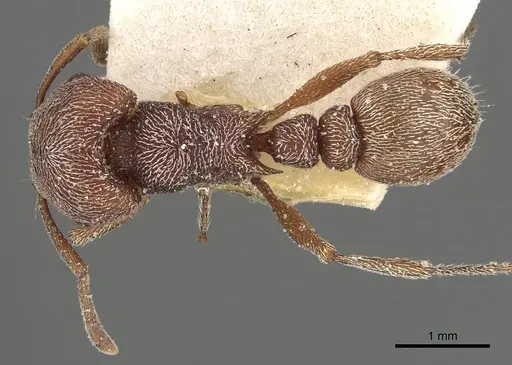
CASENT0915015
Ver en AntWeb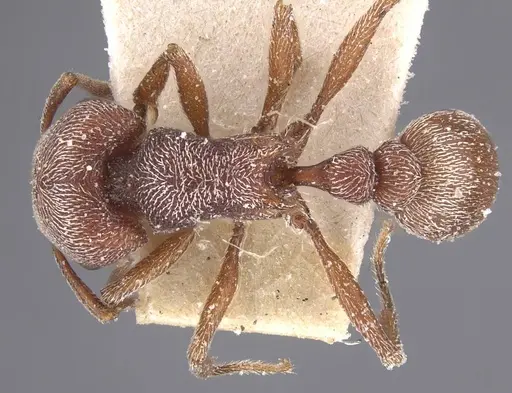
CASENT0917837
Ver en AntWeb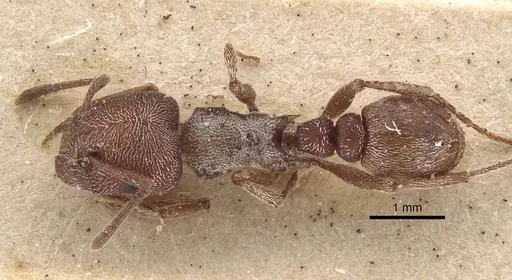
RMCAENT000017787
Ver en AntWeb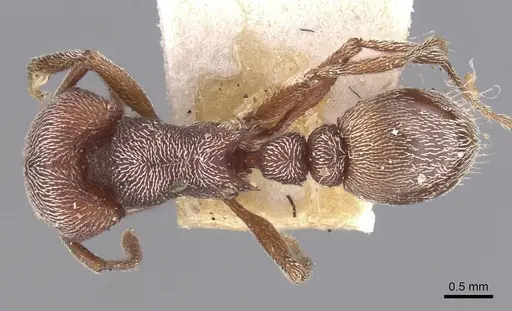
Literatura
Cargando mapa de distribución...Cargando productos...