
Temnothorax oxianus
- Nom. cient.
- Temnothorax oxianus
- Tribu
- Crematogastrini
- Subfamilia
- Myrmicinae
- Autor
- Ruzsky, 1905
- Distribución
- Encontrado en 0 países
Introducción
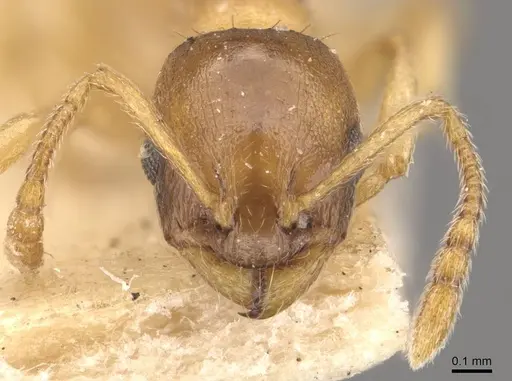
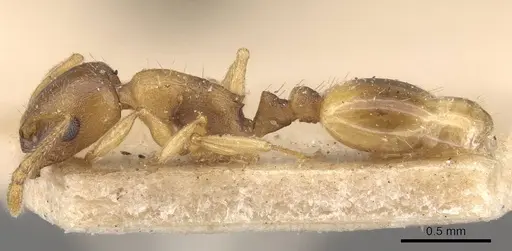
Temnothorax oxianus is a small ant native to Central Asia, found in Kyrgyzstan and Uzbekistan . It was described as a subspecies of Leptothorax tuberum before being raised to full species. Workers are tiny, typically around 2-4 mm (inferred from the Temnothorax genus), with the slender build typical of acorn ants. This species belongs to the Palearctic clade and the bulgaricus group . Its habitat is dry and harsh: it was collected at 1620 m altitude in a desert area with Ephedra shrubs . As a Palearctic species, it experiences cold winters and warm summers.
Quick Summary
- Difficulty: Easy
- Origin & Habitat: Kyrgyzstan and Uzbekistan in Central Asia. Found at 1620 m altitude in desert habitat with Ephedra shrubs [4][1].
- Colony Type: Based on typical Palearctic Temnothorax, likely monogyne (single queen). Colony size probably stays under a few hundred workers.
- Size & Growth:
- Queen: ~5-7 mm, inferred from the Temnothorax genus (TL). No direct measurements are available.
- Worker: ~2-4 mm, inferred from the Temnothorax genus (TL). No direct measurements are available.
- Colony: Likely up to 300 workers, typical for small Temnothorax species.
- Growth: Moderate
- Development: Estimated 6-10 weeks at room temperature, based on related Palearctic species. (Development time depends on temperature, cooler conditions slow it down.)
- Antkeeping:
- Temperature: Room temperature (18-24°C) with a slight gradient. They tolerate cooler conditions well due to their Central Asian origin. A winter dormancy period is needed.
- Humidity: Moderate, these desert-adapted ants prefer drier conditions than many other Temnothorax. Keep the nest substrate slightly moist but allow some drying between waterings. Avoid constant saturation.
- Diapause: Yes, as a Palearctic species, they need 2-3 months of winter dormancy at 5-10°C to match their natural cycle.
- Nesting: Y-tong (AAC) or plaster nests work well because they can be kept dry. Test tubes are fine for founding. Avoid acrylic nests. Ensure good ventilation to prevent mold.
- Behavior: Generally peaceful and non‑aggressive. Workers are active foragers that search for small prey and honeydew. They show mild alarm responses but rarely attack. Their modified stinger is used for smearing venom, not piercing, so they cannot sting humans. Escape risk is moderate due to small size, use standard barriers like fluon and fine mesh.
- Common Issues: mold growth from overwatering, their desert origin means they prefer drier conditions., escape through small gaps, use fine mesh and tight‑fitting lids., colonies may stall without a proper winter dormancy period., slow founding phase, queens may take several weeks to produce first workers., test tube flooding, small colonies can drown if the water reservoir is too large.
Housing and Nest Setup
Temnothorax oxianus is a small ant that does well in compact housing. Y-tong (AAC) or plaster nests are ideal because they provide narrow chambers and can be kept dry. Test tube setups also work well for founding colonies, use a small water reservoir (5-10 cm) with a cotton plug, not too large to avoid flooding risk. Because they come from desert habitats, ensure good ventilation to prevent moisture buildup and mold. A shallow outworld allows easy foraging. Avoid overly moist conditions. [4]
Feeding and Diet
Based on typical Temnothorax, they are omnivorous. Offer small protein sources like fruit flies, pinhead crickets, or small mealworms. They also accept sugar water or diluted honey. Feed small amounts twice weekly and remove uneaten food after 24 hours. The claustral queen does not eat during founding, she relies on fat reserves. Once workers arrive, they will forage actively.
Temperature and Seasonal Care
Keep the colony at room temperature (18-24°C) with a slight gradient. They tolerate cooler conditions than tropical species. The critical aspect is providing winter dormancy: 2-3 months at 5-10°C simulates their natural cycle and is essential for long-term health. Place the colony in an unheated room, garage, or refrigerator set appropriately. [4]
Colony Founding
Newly mated queens likely found claustrally, sealing themselves in a small chamber and raising the first brood without foraging. The founding phase can take several weeks before the first nanitic workers emerge. During this time, do not disturb the queen. Provide stable, moderate conditions to improve success. Founding behavior is inferred from typical Temnothorax, as no specific data exists for this species.
Behavior and Temperament
Temnothorax oxianus is a peaceful species. Workers are small but active, readily exploring their outworld for food. They show mild alarm responses when disturbed but rarely behave aggressively. They belong to tribe Crematogastrini, which uses a smearing defense: a modified stinger wipes venom onto enemies rather than piercing. As a result, they cannot sting humans. Their small size means they can squeeze through small gaps, use standard barrier methods like fluon on container rims and fine mesh on ventilation holes.
Frequently Asked Questions
How long does it take for Temnothorax oxianus to produce first workers?
Expect around 6-10 weeks from egg to first worker at room temperature, based on related Palearctic Temnothorax. The claustral founding phase alone takes several weeks before workers appear.
Do Temnothorax oxianus ants need hibernation?
Yes, as a Palearctic species, they require a winter dormancy period of 2-3 months at 5-10°C. This is essential for their natural cycle and helps trigger spring activity. Without it, colonies may become sluggish or fail to thrive.
What do Temnothorax oxianus ants eat?
They are omnivorous. Offer small protein sources like fruit flies, tiny crickets, or mealworms. They also accept sugar sources like honey water. Feed small amounts twice weekly and remove uneaten food promptly.
Can I keep Temnothorax oxianus in a test tube?
Yes, test tubes work well for founding colonies. Use a small water reservoir (5-10 cm) and ensure the cotton plug is secure but not too tight. Monitor for flooding, these small ants can drown easily in excess water.
Are Temnothorax oxianus ants aggressive?
No, they are peaceful and non‑aggressive. Workers may show mild alarm responses when disturbed but they do not attack. They cannot sting humans.
How big do Temnothorax oxianus colonies get?
Based on typical Temnothorax, colonies probably reach up to 300 workers at maturity. These small ants maintain moderate colony sizes compared to other genera.
What temperature is best for Temnothorax oxianus?
Room temperature (18-24°C) is suitable. They can tolerate cooler conditions than tropical species due to their Central Asian origin. A slight temperature gradient allows ants to choose their preferred spot.
Do Temnothorax oxianus ants escape easily?
They have moderate escape risk due to their small size. Use standard barriers like fluon on container rims and fine mesh on ventilation. Check for gaps regularly, especially around tubing connections.
When should I move my colony to a formicarium?
Move to a formicarium (like a Y-tong nest) once the colony has at least 20-30 workers. For test tube setups, ensure the water reservoir is still functioning and the tube is clean. A formicarium provides more space for growth.
Is Temnothorax oxianus good for beginners?
Yes, this species is beginner-friendly. They are small, peaceful, and have modest care requirements. The main considerations are providing proper hibernation and avoiding overwatering, which causes mold issues.
Report an Issue
The current care sheet is based fully on literature. See inconsistencies, or something that's incorrect? Please , it will be resolved after review from an admin. Contributing to the blogs tab also helps providing information, to make us be able to further improve the caresheets. Thank you for your support!
References

Esta ficha de cuidados está bajo licencia CC BY-SA 4.0 .
Blogs de la comunidad
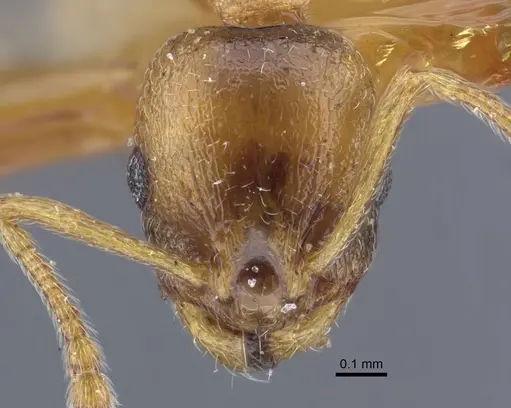
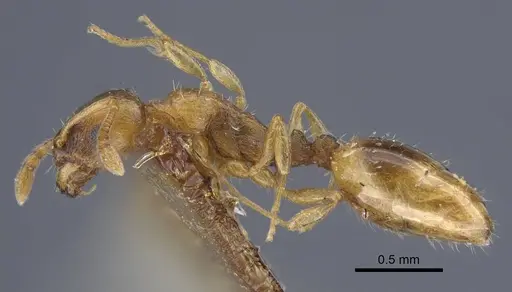
CASENT0909044
Ver en AntWeb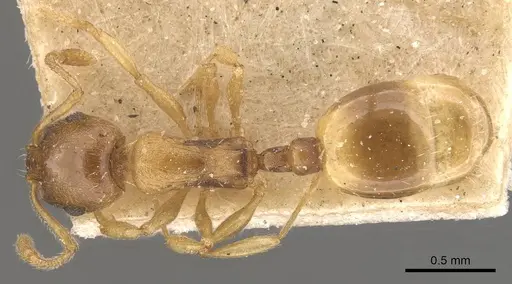
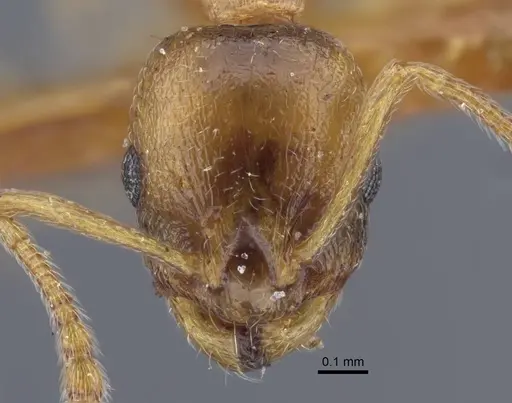
CASENT0917442
Ver en AntWeb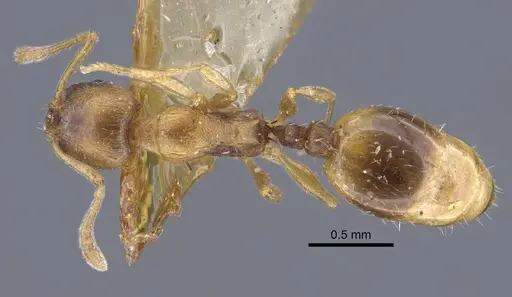
Literatura
Cargando mapa de distribución...Cargando productos...