
Temnothorax lereddei
- Nom. cient.
- Temnothorax lereddei
- Tribu
- Crematogastrini
- Subfamilia
- Myrmicinae
- Autor
- Bernard, 1953
- Distribución
- Encontrado en 0 países
Introducción
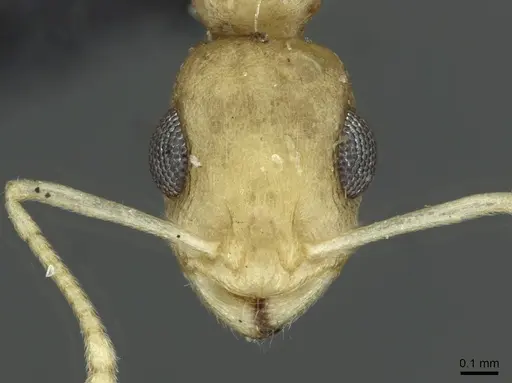
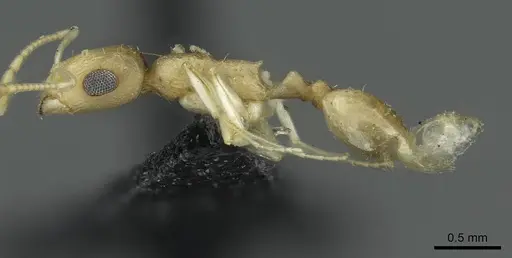
Temnothorax lereddei is a tiny ant from the Tassili des Ajjer mountains of Algeria, at around 1500m altitude . Workers measure 2.8 to 3.2mm and have a dull, dirty light brown body with very pale whitish clypeus, mandibles, and appendages . Their head is noticeably elongated - about one‑third longer than wide - and their eyes are large, each with at least 115 facets . The species nests in very narrow, vertical burrows dug deep into the ground, an adaptation against flooding in its native oued (dry riverbed) habitat . They emerge after light rain, which suggests they are well‑adapted to arid Saharan conditions with sporadic rainfall.
Quick Summary
- Difficulty: Hard
- Origin & Habitat: Native to Algeria in the Palaearctic region. Found in the Tassili des Ajjer mountains at approximately 1500m altitude, nesting in narrow vertical burrows in oued habitats [1]. Adapted to arid Saharan conditions with seasonal rainfall.
- Colony Type: Likely monogyne (single queen) based on typical Temnothorax colony structure, but unconfirmed for this species. Ergatoid replacement reproductives have not been recorded.
- Size & Growth:
- Queen: Unknown, no direct measurements. Based on related Temnothorax species, queens are likely around 4-5mm.
- Worker: 2.8-3.2mm [1]
- Colony: Maximum unknown, typical Temnothorax colonies reach up to 200 workers. Specific data for this species is unavailable.
- Growth: Moderate
- Development: Unknown, estimated 6-10 weeks at moderate temperature based on related Temnothorax species (Development time inferred from genus‑level data, specific timing unconfirmed for this species)
- Antkeeping:
- Temperature: Keep at moderate room temperature, roughly 20-25°C. Avoid extremes below 15°C or above 30°C. Specific optimal range is unknown, observe colony response and adjust accordingly.
- Humidity: Low to moderate humidity. These ants come from arid Saharan conditions. Keep the nest substrate slightly moist but allow drying periods between waterings. Provide a moisture gradient so ants can choose their preferred zone. Avoid constant saturation.
- Diapause: Unknown, may benefit from a mild winter rest period (2-3 months at 10-15°C) but not confirmed. If you attempt a diapause, reduce feeding gradually.
- Nesting: Provide a small nest with tight chambers scaled to their tiny size. Y‑tong (AAC), plaster, or soil nests work well. A test tube with a small diameter mimics their natural narrow burrows [1]. Avoid tall, open spaces. Acrylic nests are not recommended.
- Behavior: Generally peaceful and non‑aggressive. Workers are small but active foragers. Their primary defense is a modified spatulate stinger that smears venom onto attackers (typical of the Crematogastrini tribe). They rely heavily on escape and chemical alarm signals. Their large eyes suggest good visual navigation. Escape risk is high due to their tiny size, use standard barrier methods (e.g., fluon or oil) and ensure all gaps are sealed.
- Common Issues: colonies may struggle if kept too humid, they prefer drier conditions than many tropical species, slow growth can frustrate beginners, these are small ants with moderate development rates, unknown founding behavior and exact care requirements make this species challenging for inexperienced keepers, tiny workers can squeeze through very small gaps, inspect housing thoroughly, overfeeding can lead to mold in such small colonies
Housing and Nest Setup
Because Temnothorax lereddei is so tiny, you need housing scaled to its size. In the wild they nest in very narrow vertical burrows [1], so they feel safest in snug chambers. A test tube with a small diameter works well for founding colonies, use a cotton‑plugged water reservoir. For larger colonies, choose a Y‑tong (AAC), plaster, or soil nest with narrow tunnels and small chambers. Avoid acrylic nests and any large open spaces. Keep the nest relatively dry, as these Saharan ants naturally live in arid conditions. A small outworld for foraging is sufficient. Ensure all cracks are sealed, as workers can squeeze through tiny gaps.
Feeding and Diet
Feeding behavior has not been studied for this species. Based on typical Temnothorax habits, offer a constant sugar source (honey or sugar water) and small protein prey such as fruit flies, pinhead crickets, or small mealworms. Because the workers are tiny, prey must be appropriately sized. Feed small amounts two to three times per week and remove uneaten food after 24 hours to prevent mold. Ensure fresh water is always available.
Temperature and Seasonal Care
Specific temperature requirements for Temnothorax lereddei are unknown. The species originates from the Saharan mountains at 1500m altitude [1], which suggests it can tolerate moderate fluctuations. Aim for a stable room temperature around 20-25°C. Avoid prolonged exposure below 15°C or above 30°C. It is unclear whether this species requires a winter diapause, if you wish to attempt one, reduce the temperature to 10-15°C for two to three months (e.g., November to February) and reduce feeding. Return to normal temperatures in spring to stimulate activity.
Behavior and Colony Dynamics
Temnothorax lereddei workers are active but peaceful. Their primary defense is a modified spatulate stinger that smears venom onto attackers, a common trait in the Crematogastrini tribe (smear defense). They also use chemical alarm signals and escape. Their large eyes, each with at least 115 facets [1], suggest enhanced visual abilities. Colony structure is likely monogyne (single queen) but this has not been confirmed. Workers are 2.8-3.2mm [1]. The colony grows slowly from a founding queen to a mature colony of unknown size (probably under 200 workers, based on related species). These ants are not aggressive and make good observational subjects for patient keepers.
Frequently Asked Questions
How long does it take for Temnothorax lereddei to produce first workers?
The exact timeline is unconfirmed. Based on related Temnothorax species, first workers (nanitics) may appear in 6-10 weeks after the queen lays eggs, at moderate temperatures (20-25°C). This is an estimate, actual development time is unknown.
What size colony does Temnothorax lereddei reach?
Maximum colony size is unknown. Based on typical Temnothorax patterns, mature colonies possibly hold up to 200 workers, but specific data for this species is lacking.
Do Temnothorax lereddei ants sting?
Yes and no. Like other members of the Crematogastrini tribe, they have a modified spatulate stinger that is used to smear venom onto enemies, not to pierce like a typical sting. Their primary defense is this smearing action plus alarm signals and escape.
Can I keep Temnothorax lereddei in a test tube?
Yes. Test tubes work very well for founding colonies. Use a small‑diameter tube with a cotton‑plugged water reservoir, the narrow space mimics their natural vertical burrows [1]. Transfer to a larger nest once the colony reaches about 30-50 workers.
What temperature do Temnothorax lereddei need?
The ideal temperature is unknown. Based on their mountain origin, maintain a moderate room temperature (roughly 20-25°C) and avoid extremes. Observe the colony and adjust gradually if needed.
Do Temnothorax lereddei need hibernation?
It is not confirmed. Their native habitat (North African mountains at 1500m) experiences cooler winters, so a mild rest period may be beneficial. If you choose to provide one, reduce temperature to 10-15°C for 2-3 months and reduce feeding. This is experimental.
Are Temnothorax lereddei good for beginners?
No, this species is not recommended for beginners. Care requirements are poorly understood, the ants are tiny and escape‑prone, and their founding behavior and needs are unconfirmed. Only experienced keepers with a willingness to experiment should attempt this species.
What do Temnothorax lereddei eat?
They likely accept sugar water or honey as an energy source and small insects (fruit flies, pinhead crickets, small mealworms) for protein. Feed small amounts two to three times per week and remove leftovers to prevent mold.
Why are my Temnothorax lereddei dying?
Common causes may include: excessive humidity (they prefer drier conditions), mold from overfeeding, temperatures outside their tolerance, or stress from handling. Ensure good ventilation, keep the nest substrate barely moist, and avoid disturbing the colony frequently. Specific reasons are not well documented for this species.
When should I move my colony to a formicarium?
Transfer from a test tube to a small nest (Y‑tong, plaster, or soil) once the colony reaches 30-50 workers. These ants do not need large spaces, a compact nest with narrow chambers works best. Use a gentle method (e.g., connecting tubes and letting them move at their own pace).
Report an Issue
The current care sheet is based fully on literature. See inconsistencies, or something that's incorrect? Please , it will be resolved after review from an admin. Contributing to the blogs tab also helps providing information, to make us be able to further improve the caresheets. Thank you for your support!
References

Esta ficha de cuidados está bajo licencia CC BY-SA 4.0 .
Blogs de la comunidad
CASENT0913633
Ver en AntWeb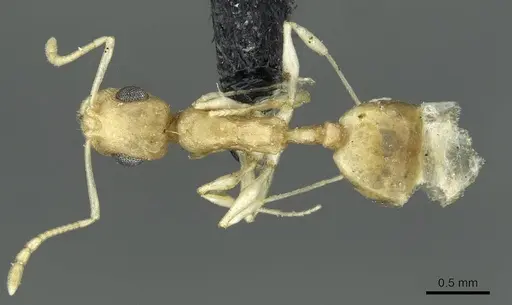
Literatura
Cargando mapa de distribución...Cargando productos...