
Temnothorax indra
- Nom. cient.
- Temnothorax indra
- Tribu
- Crematogastrini
- Subfamilia
- Myrmicinae
- Autor
- Terayama & Onoyama, 1999
- Distribución
- Encontrado en 0 países
Introducción
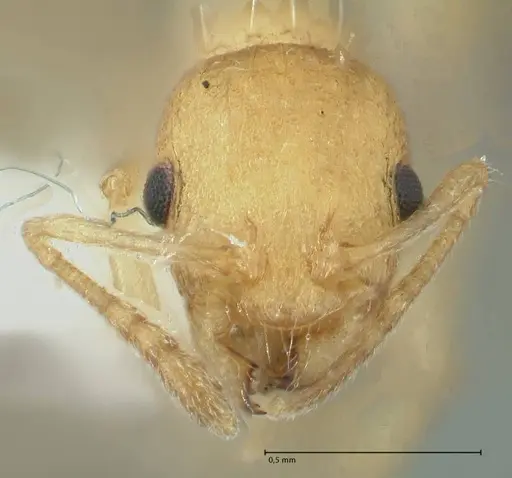
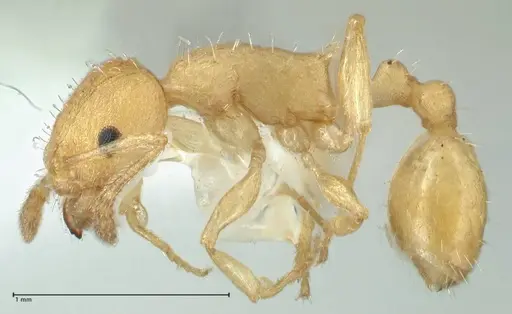
Temnothorax indra is a tiny yellow ant native to the Nansei Islands (Ryukyu Islands) of southern Japan . Workers measure 2.5-3 mm in length and have a distinctive yellow coloration throughout their head, body, and appendages . The species is characterized by long scapes that reach the posterior margin of the head, slender propodeal spines about four times longer than their basal width, and a long petiole with a reverse U-shaped node . This species nests in dead twigs on standing trees, which is typical for many Temnothorax species . T. indra is similar to Temnothorax basara but can be distinguished by the mesosomal dorsum having longitudinal rugulae . Field surveys on Okinawa Island recorded only 4 total individuals across sampling sites, indicating it is rarely encountered in its natural range .
Quick Summary
- Difficulty: Medium
- Origin & Habitat: Nansei Islands (Ryukyu Islands), Japan, nests in dead twigs on standing trees [2][1]
- Colony Type: Colony structure is unconfirmed. Based on typical Temnothorax patterns, likely single-queen colonies.
- Size & Growth:
- Queen: Not documented, no measurements available for queens [2]
- Worker: 2.5-3 mm [1][2]
- Colony: Unknown, only 4 individuals recorded in field surveys [3]
- Growth: Unknown, likely moderate based on typical genus patterns
- Development: Unconfirmed. Based on typical Temnothorax development, estimated 6-10 weeks at optimal temperature. (No direct development data available for this species.)
- Antkeeping:
- Temperature: This subtropical species from Okinawa likely prefers moderate warmth around 20-24°C. No specific temperature data available, avoid extremes below 18°C or above 28°C.
- Humidity: Nests in dead twigs on trees, suggesting moderate humidity. Provide a gradient with moist and dry areas. No specific data.
- Diapause: Probably not required. This is a subtropical species where winters are mild. A brief cool period (15-18°C for 4-6 weeks) during winter may be beneficial but is not confirmed.
- Nesting: Provide dead twig sections or a Y-tong (AAC) nest with narrow chambers scaled to their tiny size. They naturally nest in dead twigs on standing trees [2].
- Behavior: This is a calm, non-aggressive species typical of the genus Temnothorax. Workers are small and relatively slow-moving. They forage individually rather than in large trails. Escape prevention is critical due to their tiny 2.5-3 mm size, they can squeeze through standard test tube openings and require fine mesh barriers. They have a stinger used for smearing venom rather than piercing, but this poses no danger to keepers.
- Common Issues: escape prevention is critical, their tiny 2.5-3 mm size means they can slip through standard gaps and mesh, very rare in the wild, so wild-caught colonies are difficult to obtain, slow colony growth means keepers need patience, colonies may take months to establish, no documented colony size data makes it hard to predict maximum development, limited natural history data means keepers are essentially pioneering captive care for this species
Housing and Nesting
Temnothorax indra naturally nests in dead twigs on standing trees, so providing appropriately sized nesting material is essential [2][1]. In captivity, you can use sections of dead twigs (like those sold for stick insects or natural history displays) or a Y-tong (AAC) nest with narrow chambers scaled to their tiny 2.5-3 mm workers. The chambers should be tight-fitting, these small ants feel insecure in large open spaces and may refuse to nest in chambers that are too big. A test tube setup can work for founding colonies, but ensure the cotton is packed tightly to prevent escapes. Because they nest in twigs, consider providing a small piece of dried wood or cork bark as a founding chamber option. The nest should be placed in a dark area, as these ants prefer dim conditions like what they would find inside a tree twig.
Temperature and Heating
This species comes from Okinawa Island in the Ryukyu Islands, a subtropical environment with mild winters. Keep the nest area at 20-24°C for optimal colony health and activity, this is inferred from its subtropical origin, as no specific temperature data exists. A heating cable or mat on one side of the nest creates a temperature gradient that allows the ants to regulate their own conditions. Avoid temperatures below 18°C as this species is not cold-hardy. During summer months, room temperature in most homes should be suitable, but monitor for overheating if temperatures exceed 28°C. The Nansei Islands experience warm temperatures year-round (average winter temperatures around 15-17°C), so this species does not require true hibernation but may benefit from a brief cool period in winter.
Feeding and Diet
Like other Temnothorax species, T. indra likely accepts a standard ant diet of small insects and sugar sources. Feed small prey items like fruit flies, pinhead crickets, or small mealworms, appropriately sized to their tiny 2.5-3 mm workers. Sugar water, honey, or diluted honeydew can be provided as an energy source. Given their small size, prey items should be very small. Feed every 2-3 days, removing any uneaten prey after 24 hours to prevent mold. Since this species nests in twigs on trees, they may also tend aphids for honeydew in captivity if given the opportunity. Observe your colony's preferences and adjust feeding accordingly.
Escape Prevention
Excellent escape prevention is absolutely critical for this species. Workers are only 2.5-3 mm long [1], meaning they can easily slip through standard test tube cotton, lid gaps, and even some mesh barriers. Use fine mesh (at least 0.5 mm or smaller) on any ventilation holes. When using test tubes, pack the cotton very tightly and consider using a cotton stopper with a smaller diameter than the tube. For formicarium setups, ensure all connections between outworld and nest are sealed with fluon or similar barriers. Check for escapes daily, especially during the first few weeks of establishing a colony. These tiny ants are expert escape artists when given the chance.
Colony Establishment and Growth
This is a rarely documented species in the wild, field surveys on Okinawa Island recorded only 4 total individuals across multiple sampling sites [3]. This means wild-caught colonies are extremely difficult to obtain, and most captive colonies will likely come from established breeders. Colony growth is expected to be moderate but slow initially. Founding colonies may take several months to produce their first workers (nanitics), and significant growth to dozens of workers may take a year or more. Be patient with this species, they are not fast growers like some tropical ants. The limited natural history data means keepers are essentially pioneering captive care for this species, so careful observation and documentation of your colony's behavior will contribute valuable information to the antkeeping community.
Frequently Asked Questions
How long does it take for Temnothorax indra to produce first workers?
The exact timeline is unconfirmed for this species, but based on typical Temnothorax development patterns, expect 6-10 weeks from egg to first worker at optimal temperature (20-24°C). Nanitics (first workers) will likely be smaller than fully developed workers.
What size colony does Temnothorax indra reach?
Colony size is unknown, this is one of the least documented Temnothorax species. Field surveys found only 4 total individuals, suggesting naturally small colonies [3]. Any estimate of maximum colony size is speculative, no data is available.
Do Temnothorax indra ants sting?
They have a stinger, but it is modified for smearing venom rather than piercing. It is not painful to humans and poses no danger to keepers. They may bite if handled roughly, but their small size makes this ineffective.
What temperature do Temnothorax indra need?
Keep them at 20-24°C, this is inferred from their subtropical origin, as no specific temperature data is available. Avoid temperatures below 18°C or above 28°C.
Can I keep Temnothorax indra in a test tube?
Yes, test tubes work well for founding colonies. However, you must use excellent escape prevention, pack cotton tightly and consider fine mesh over any ventilation. Their tiny 2.5-3 mm size means they can slip through standard setups [1].
Do Temnothorax indra need hibernation?
Probably not. This is a subtropical species from Okinawa Island where winters are mild (average 15-17°C). A brief cool period at 15-18°C for 4-6 weeks during winter may be beneficial but is not required.
What do Temnothorax indra eat?
Feed small insects like fruit flies, pinhead crickets, or tiny mealworms appropriately sized to their 2.5-3 mm workers. Also provide sugar water or honey as an energy source. Remove uneaten prey after 24 hours.
Are Temnothorax indra good for beginners?
This species is not ideal for beginners due to their tiny size (escape risk), slow growth, and limited available care information. The escape prevention requirements alone make them challenging. Experienced antkeepers interested in rare Japanese species will find them more suitable.
Where is Temnothorax indra found?
This species is endemic to the Nansei Islands (Ryukyu Islands) of southern Japan, particularly Okinawa Island. They nest in dead twigs on standing trees [2][1].
Why is my Temnothorax indra colony dying?
Common causes include: escape (check for tiny workers outside the nest), temperature stress (too cold below 18°C or too hot above 28°C), improper humidity (too dry or waterlogged), or stress from excessive disturbance. Also ensure prey is appropriately sized, too-large prey can overwhelm these tiny workers.
Report an Issue
The current care sheet is based fully on literature. See inconsistencies, or something that's incorrect? Please , it will be resolved after review from an admin. Contributing to the blogs tab also helps providing information, to make us be able to further improve the caresheets. Thank you for your support!
References

Esta ficha de cuidados está bajo licencia CC BY-SA 4.0 .
Blogs de la comunidad
FOCOL1859
Ver en AntWeb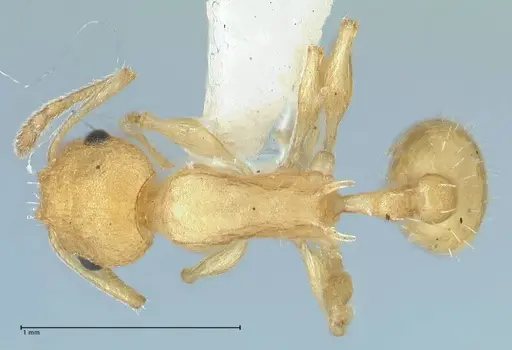
Literatura
Cargando mapa de distribución...Cargando productos...