
Temnothorax cuneinodis
- Nom. cient.
- Temnothorax cuneinodis
- Tribu
- Crematogastrini
- Subfamilia
- Myrmicinae
- Autor
- Radchenko, 2004
- Distribución
- Encontrado en 0 países
Introducción
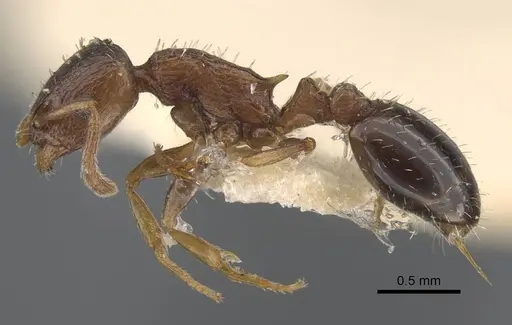
Temnothorax cuneinodis is a tiny ant species known only from North Korea, first described in 2004 from a single worker specimen collected in 1959 . Workers have a compact body with a distinctive wedge-shaped petiole (the waist), which gives the species its name - 'cuneinodis' means wedge-shaped node. The head, thorax, and waist are dark reddish, while the abdomen is reddish-brown. Their body surface is unusually smooth and shiny compared to many related Temnothorax species . The only known specimen was found on a dry open slope of a hill near a stream valley in sparse, young mixed forest . Because the species is only known from one individual, essentially nothing is known about its colony structure, queen, or behavior in the wild.
Quick Summary
- Difficulty: Unknown, this is one of the rarest ant species, with no captive husbandry information available
- Origin & Habitat: Native to North Korea (Palaearctic region). The single specimen was collected on a dry open slope of a hill near a stream valley in sparse, young mixed forest [1].
- Colony Type: Unconfirmed. Based on typical Temnothorax patterns, it is likely monogyne (single queen), but no colony data exists for this species.
- Size & Growth:
- Queen: Unknown, no queen has been described. Estimated 5-7mm based on genus patterns.
- Worker: Size not directly measured. Estimated around 3-5mm based on genus patterns (typical Temnothorax worker size).
- Colony: Unknown, likely under 500 workers based on typical Temnothorax colony sizes.
- Growth: Unknown, likely moderate like other Temnothorax species.
- Development: Unconfirmed, estimated 6-10 weeks based on typical Temnothorax development (educated guess). (No development data exists for this species. All estimates are inferred from related species.)
- Antkeeping:
- Temperature: Keep around 20-24°C. Based on the temperate climate of North Korea, they likely prefer cooler conditions and should not be overheated. Avoid temperatures above 28°C.
- Humidity: Moderate humidity, keep the nest substrate lightly moist but not waterlogged. The habitat was a dry slope near a stream valley, suggesting they need access to moisture but also some airflow.
- Diapause: Likely yes, North Korea has cold winters. Provide 2-3 months of hibernation at 5-10°C during winter, based on typical temperate ant requirements.
- Nesting: Use small nests with tight chambers, test tubes work for founding, Y-tong (AAC) or plaster nests suit established colonies. They likely nest in small cavities under stones or in rotting wood.
- Behavior: Typical Temnothorax behavior, these are small, generally peaceful ants that forage quietly. They are not aggressive. Their tiny size means excellent escape prevention is essential, they can squeeze through remarkably small gaps. They likely use a smearing defense: a modified, flattened spatulate stinger that wipes venom onto enemies rather than piercing (based on subfamily/tribe patterns).
- Common Issues: escape prevention is critical due to their very small size, use fine mesh and tight-fitting lids., only one specimen has ever been collected, so no captive history exists, all care is estimated., extreme rarity: no suppliers exist, cannot be obtained legally., possible stress and failure from wild-caught colony attempts (if ever found)., lack of queen description means founding behavior is entirely unknown.
Appearance and Identification
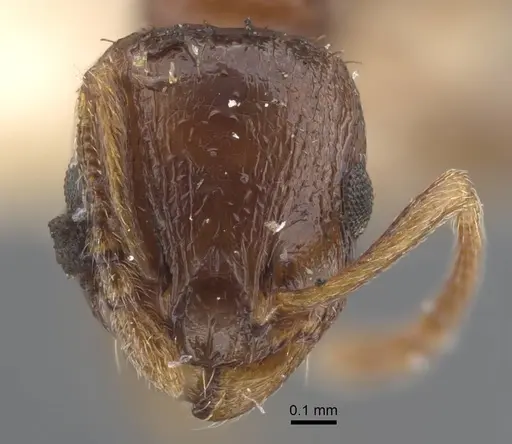
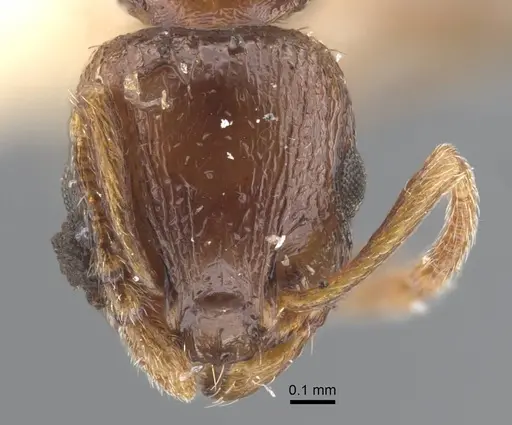
Temnothorax cuneinodis workers are tiny (estimated 3-5mm). Their most notable feature is the high, short, wedge-shaped petiole (the waist segment), the species name 'cuneinodis' means 'wedge-shaped node' [1]. The head is roughly rectangular with parallel sides, and the body has a dark reddish head, thorax, and waist, with a reddish-brown abdomen. The body surface is unusually smooth and shiny because the head has reduced sculpture, only fine lines near the eyes and forehead. This smooth head helps distinguish it from related species like Temnothorax alinae, which has a densely sculptured head [1]. The antennae have 12 segments, and the propodeal spines are moderately long and blunt [1].
Natural Habitat and Distribution
This species is known only from North Korea, the single specimen was collected in 1959 and described in 2004 [1]. The collection site was a dry open slope of a hill near a stream valley in sparse, young mixed forest [1]. This habitat suggests they prefer areas with some moisture nearby (stream) but also dry, well-drained soil. The region has a temperate climate with cold winters, so the species is likely adapted to seasonal temperature changes. No other specimens have been found in subsequent surveys, making it one of the rarest ant species in the world [1].
Housing and Nesting
For such tiny ants, use nests with appropriately small chambers. Test tube setups work well if you ever obtain founding queens. For established colonies, Y-tong (AAC) or plaster nests with narrow spaces are suitable. The key is tight chambers, these small ants can escape through remarkably tiny gaps. Use fine mesh on any ventilation. Keep the nest area moderately humid with a water tube, but allow a dry area so ants can choose their preferred moisture level. A small outworld allows foraging space. Escape prevention must be excellent, even small gaps in lid seals can allow escape. No specific nesting preferences are known for this species, they likely nest in small cavities under stones or in rotting wood, typical of Temnothorax.
Feeding and Diet
Like other Temnothorax species, they likely accept small protein sources such as fruit flies, springtails, and other tiny arthropods. They probably also consume honeydew and may accept sugar water or honey occasionally. Feed small prey items appropriate to their tiny size, oversized prey will be ignored. Offer protein 2-3 times per week and provide constant access to sugar sources. Remove uneaten prey to prevent mold.
Temperature and Seasonal Care
Keep nest temperatures around 20-24°C. They likely tolerate cooler conditions better than overheating, North Korea has cold winters, so they are adapted to temperate conditions. During summer, room temperature is likely appropriate. In winter, expect to provide a hibernation period of 2-3 months at 5-10°C, similar to other temperate ant species. This diapause period is important for colony health. Do not hibernate in a refrigerator unless you can maintain stable temperatures, a cold garage or basement often works.
Availability and Acquisition
This species is extremely rare in the antkeeping hobby. Only a single worker has ever been collected (in 1959), and there are no documented captive colonies. You are extremely unlikely to find this species available from suppliers. If you encounter what appears to be T. cuneinodis, verify the identification carefully, misidentification is common with tiny ants. For most keepers, a more commonly available Temnothorax species would be a better choice [1].
Difficulty Assessment
This species cannot be recommended for any keeper level due to complete lack of captive husbandry information and extreme rarity. If you are interested in Temnothorax ants, consider more commonly available species like Temnothorax unifasciatus or Temnothorax nylanderi, which have established care protocols. The complete absence of documented captive colonies means all care recommendations are educated guesses based on genus patterns, not proven requirements.
Frequently Asked Questions
Is Temnothorax cuneinodis available for purchase?
No. This is one of the rarest ant species in existence, only a single worker has ever been collected, described in 2004. There are no documented captive colonies and no known suppliers. You are extremely unlikely to find this species available [1].
How do I keep Temnothorax cuneinodis ants?
Care is unconfirmed since this species has never been kept in captivity. Based on typical Temnothorax requirements: keep at 20-24°C, moderate humidity, provide small protein prey, and expect winter hibernation. However, do not attempt to keep this species, it is not available and no husbandry protocol exists.
What does Temnothorax cuneinodis look like?
Workers are tiny (estimated 3-5mm) with a distinctive wedge-shaped petiole (waist). They have a dark reddish head and middle body, reddish-brown abdomen, and an unusually smooth, shiny body surface compared to related species. The 12-segmented antennae and angulate humeri are distinguishing features [1].
Where does Temnothorax cuneinodis live?
Only known from North Korea. The single specimen was collected on a dry open hill slope near a stream valley in sparse, young mixed forest. This is the entire known global range of the species [1].
How big do Temnothorax cuneinodis colonies get?
Unknown. Based on typical Temnothorax litter ant colonies, they likely reach a few hundred workers at most. No colony size data exists for this species.
Do Temnothorax cuneinodis ants sting?
Temnothorax ants have stingers but rarely use them. These are small, peaceful ants not known for aggressive behavior. Their defense strategy is likely smearing venom onto enemies using a modified spatulate stinger (based on subfamily/tribe patterns). The sting, if used, would be very mild due to their tiny size.
What do Temnothorax cuneinodis eat?
Unconfirmed, but likely small arthropods (fruit flies, springtails), honeydew, and sugar sources like other Temnothorax species. Their tiny size means prey must be appropriately small.
Does Temnothorax cuneinodis need hibernation?
Likely yes. North Korea has cold winters, so this species is adapted to seasonal temperature changes. Expect 2-3 months at 5-10°C during winter, similar to other temperate ant species.
Is Temnothorax cuneinodis good for beginners?
No. This species is not available, has no captive care history, and cannot be recommended for any keeper level. For beginners, choose more common Temnothorax species with established care protocols.
How long does it take for Temnothorax cuneinodis to develop from egg to worker?
Unknown for this specific species. Based on typical Temnothorax development, estimate 6-10 weeks from egg to first worker at optimal temperature. This is an educated guess, not a documented fact.
Report an Issue
The current care sheet is based fully on literature. See inconsistencies, or something that's incorrect? Please , it will be resolved after review from an admin. Contributing to the blogs tab also helps providing information, to make us be able to further improve the caresheets. Thank you for your support!
References

Esta ficha de cuidados está bajo licencia CC BY-SA 4.0 .
Blogs de la comunidad
CASENT0917211
Ver en AntWeb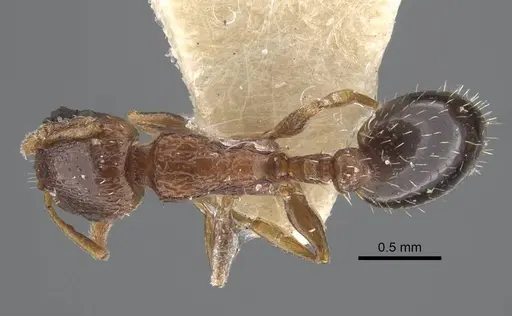
Literatura
Cargando mapa de distribución...Cargando productos...