
Temnothorax bristoli
- Nom. cient.
- Temnothorax bristoli
- Tribu
- Crematogastrini
- Subfamilia
- Myrmicinae
- Autor
- Mackay, 2000
- Distribución
- Encontrado en 0 países
Introducción
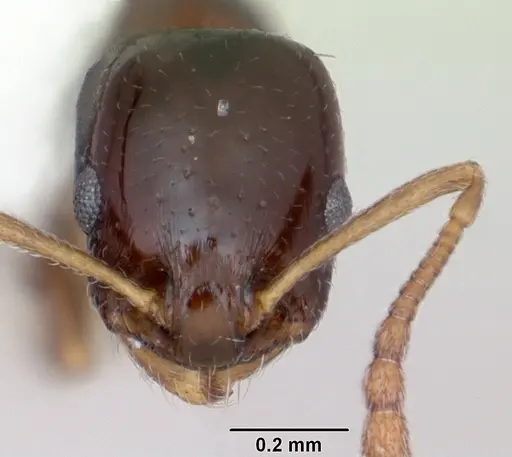
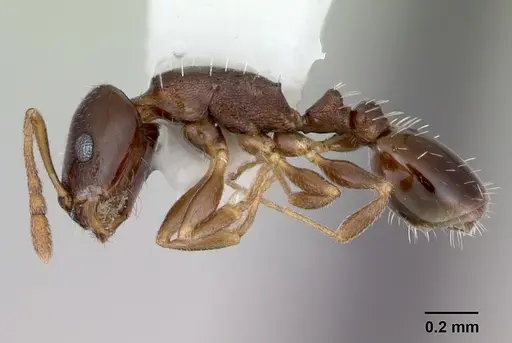
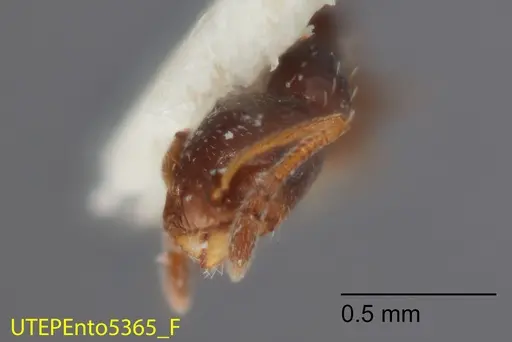
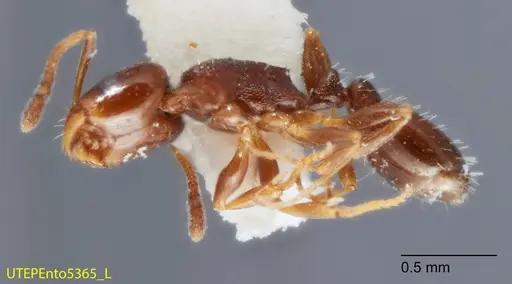
Temnothorax bristoli is a tiny black ant from the southwestern United States and northern Mexico. Its most distinctive feature is a completely smooth and shiny head top, with weak sculpturing on the upper body and densely dotted sides. The propodeal spines are very small, and the petiole node is blunt and rounded in side view . This ant is one of the rarest in North America - only two workers have ever been collected, one from Chihuahuan Desert scrub and another from an arid pine/juniper forest. That means we know next to nothing about its biology or colony life. If you ever find one, you'll be working with essentially no captive-care guide .
Quick Summary
- Difficulty: Expert
- Origin & Habitat: Southwestern Texas and southern Coahuila, Mexico. Occurs in Chihuahuan Desert scrub and arid pine/juniper forest [1][2][3].
- Colony Type: Unknown, only two workers have ever been documented, so no colony has ever been studied.
- Size & Growth:
- Queen: No queens have ever been described or collected [1].
- Worker: No body length data available. Based on the genus Temnothorax, workers are likely under 3 mm total length, but this is inferred.
- Colony: Unknown, only two workers ever found, colony size is completely unrecorded.
- Growth: Unknown
- Development: Unconfirmed, no captive colonies have been studied. Based on related Temnothorax species, the process might take 6-10 weeks at optimal temperature, but this is purely speculative. (Development timeline is estimated from the genus and has no direct evidence.)
- Antkeeping:
- Temperature: Based on its desert and pine/juniper forest habitat, it likely prefers warm conditions around 22-26 °C, but no specific data exists. Provide a gradient so the ants can choose. [1]
- Humidity: Arid to semi‑arid. Keep the nest substrate moderately dry with a small moist area available. Avoid oversaturation, think desert‑edge microhabitats. [1]
- Diapause: Likely yes, as a temperate species it probably needs a winter dormancy. If kept, provide 2-3 months at 10-15 °C during winter (inferred from related species and habitat).
- Nesting: In nature it probably nests in small cavities under stones or in rotting wood, like other Temnothorax. In captivity, a small Y‑tong (AAC) or plaster nest with narrow chambers may work, but no species‑specific data exists. Because of their tiny size, ensure the nest passages are appropriately small.
- Behavior: Temperament is unknown but likely peaceful, like most tiny Temnothorax. Escape risk is high due to its extremely small size, use fine mesh barriers and seal all openings. Defense: This species belongs to the Myrmicinae tribe Crematogastrini, whose members use a smearing venom (they have a modified, flattened stinger to wipe venom onto enemies rather than sting). However, no species‑specific observation is recorded.
- Common Issues: no species-specific care data exists, you must work entirely from related species and careful observation., extremely small size requires excellent escape‑proofing, including sealed seams and fine mesh., unknown founding strategy and colony structure make captive breeding uncertain., desert‑adapted, likely sensitive to excess moisture and poor ventilation.
Discovery and Rarity
Temnothorax bristoli was described in 2000 by William Mackay from a single worker collected near the Indio Mountain Research Station in Texas. Only two workers have ever been found, one in Chihuahuan Desert scrub (pitfall trap) and another at a ground bait in arid pine/juniper forest. The species is named after Dr. John “Jack” Bristol, professor emeritus at the University of Texas at El Paso. Its extreme rarity means we have almost no biological data [1].
Identification and Distinction
The most reliable field mark is the completely smooth and shining top of the head. The sides of the body (mesosoma) are densely dotted with tiny pits, while the front part (pronotum) is nearly smooth. This combination separates it from similar species: Temnothorax manni has rough, wrinkled sides, and Temnothorax punctithorax has a rough pronotum. Workers have 12 antennal segments and very small propodeal spines. The petiole node is blunt and rounded in side view [1].
Housing Recommendations
No species-specific housing data exists. Based on typical Temnothorax preferences, a small Y‑tong (AAC) or plaster nest with narrow chambers is a reasonable starting point. The nest should be kept moderately dry, with a small water source available via a test tube or water feeder. Because the ants are extremely tiny, escape prevention is critical: use fine metal mesh on all ventilation holes and seal any gaps with silicone or tape. Avoid acrylic nests, as they often have oversized openings. Provide a foraging area with low height so the ants can easily access food. [1]
Feeding and Diet
Like other Temnothorax, this species likely eats small live prey and sugary liquids. In captivity, offer tiny insects such as fruit flies or pinhead crickets, along with a sugar water or honey source. Because no direct observations exist, start with small amounts and adjust based on what the ants take. Remove uneaten food after 24 hours to prevent spoilage. Provide food in the outworld, not inside the nest. [1]
Seasonal Care and Overwintering
Temnothorax bristoli comes from a region with distinct seasons, including cold winters. Most temperate Temnothorax require a winter diapause, so this species likely does too. Provide a cool period of 2-3 months at 10-15 °C (roughly November to February in the Northern Hemisphere). Reduce feeding during this time but keep water available. No species‑specific studies exist, so follow patterns from related southwestern Temnothorax. In summer, they can likely tolerate warmer temperatures, but always offer a temperature gradient.
Frequently Asked Questions
How rare is Temnothorax bristoli?
Extremely rare, only two workers have ever been documented in scientific collections. This makes it one of the rarest Temnothorax species in North America [1].
What does Temnothorax bristoli look like?
It is a tiny black ant with a completely smooth and shiny head top. The upper body has weak sculpturing, the sides are dotted, the propodeal spines are very small, and the petiole node is blunt. No body length measurements are available, but it is clearly very small. [1]
Where does Temnothorax bristoli live?
It is known from southwestern Texas and southern Coahuila, Mexico. Its habitat includes Chihuahuan Desert scrub and arid pine/juniper forest [1][2][3].
Can I keep Temnothorax bristoli in a test tube?
A test tube setup can work for a small colony, but because the ants are so tiny, you must use a cotton plug that leaves no gaps. Transition to a small Y‑tong or plaster nest as the colony grows. No species‑specific advice exists, so adapt from other small Temnothorax.
What do Temnothorax bristoli eat?
Like other Temnothorax, they likely accept tiny live prey (fruit flies, small crickets) and sugary liquids (sugar water or honey). No direct observations are recorded, so start with small amounts of protein 2-3 times per week and keep sugar water available. Remove uneaten food promptly.
Do Temnothorax bristoli ants sting?
All Myrmicinae have a stinger, but this tribe uses a smearing venom rather than a piercing sting. Because of the ant’s tiny size, any sting would be negligible to humans. They are generally peaceful.
How fast do Temnothorax bristoli colonies grow?
Growth rate is completely unknown. Based on related Temnothorax, colonies are small (probably under 100 workers) and development from egg to worker may take 6-10 weeks, but this is speculation. No captive colonies have been observed.
Do Temnothorax bristoli need hibernation?
Likely yes, most temperate Temnothorax require a winter diapause. Provide 2-3 months at 10-15 °C during winter for natural seasonal rhythm. This is inferred from related species and habitat, no species‑specific data exists.
Are Temnothorax bristoli good for beginners?
No, this is an expert‑level species due to its extreme rarity, tiny size, and complete lack of captive‑care information. Beginners should start with common Temnothorax species like T. rugatulus or T. unifasciatus.
What temperature do Temnothorax bristoli need?
Based on its desert and pine/juniper forest habitat, it likely prefers warm conditions around 22-26 °C with a gradient. It can probably tolerate warmer temperatures than many temperate species, but always provide options to move to cooler areas. No specific data exists.
How do I distinguish Temnothorax bristoli from similar species?
Look for the completely smooth, shiny head top. The sides of the body are densely dotted (punctate), unlike Temnothorax manni which has rough, wrinkled sides. The pronotum (front part of the body) is nearly smooth, unlike Temnothorax punctithorax which has a rough pronotum. [1]
Why is so little known about Temnothorax bristoli?
Only two workers have ever been collected, both in remote desert regions. Their tiny size and likely low colony numbers make them extremely hard to find. This extreme rarity means there has been no opportunity for biological study [1].
Report an Issue
The current care sheet is based fully on literature. See inconsistencies, or something that's incorrect? Please , it will be resolved after review from an admin. Contributing to the blogs tab also helps providing information, to make us be able to further improve the caresheets. Thank you for your support!
References

Esta ficha de cuidados está bajo licencia CC BY-SA 4.0 .
Blogs de la comunidad
CASENT0172987
Ver en AntWeb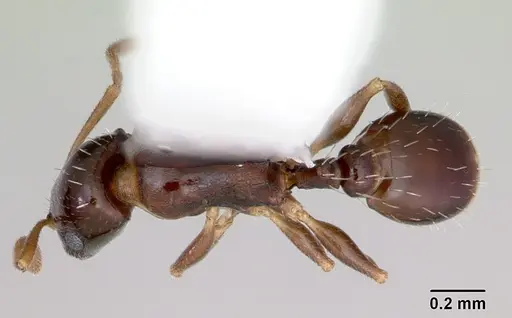
UTEPENTO5365
Ver en AntWeb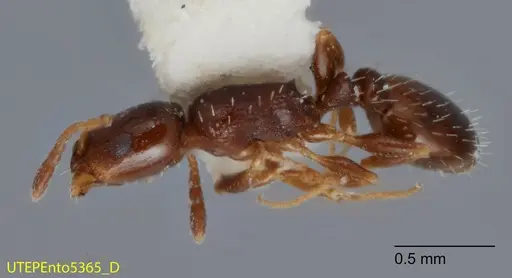
Literatura
Cargando mapa de distribución...Cargando productos...