
Temnothorax birgitae
- Nom. cient.
- Temnothorax birgitae
- Tribu
- Crematogastrini
- Subfamilia
- Myrmicinae
- Autor
- Schulz, 1994
- Distribución
- Encontrado en 0 países
Introducción
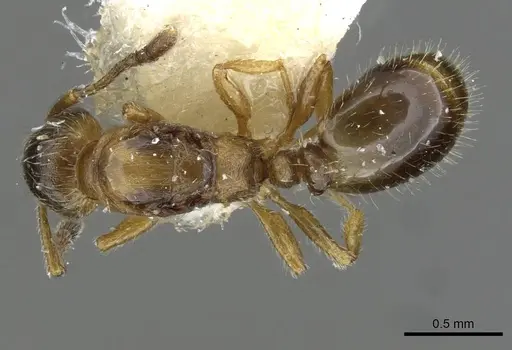
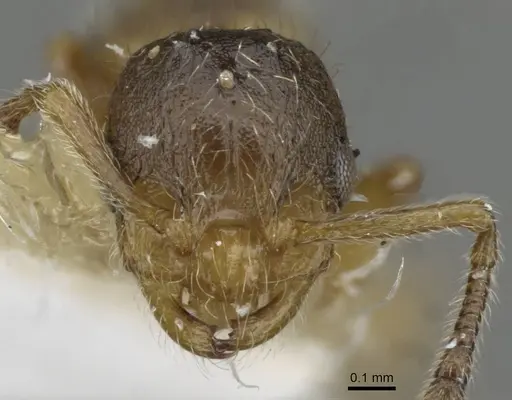
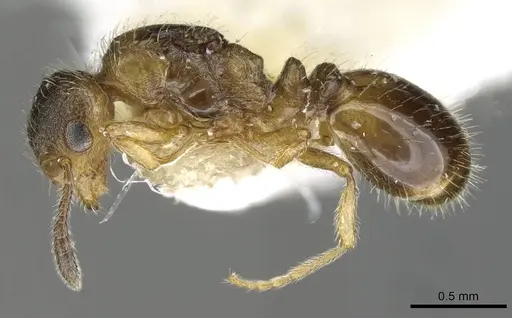
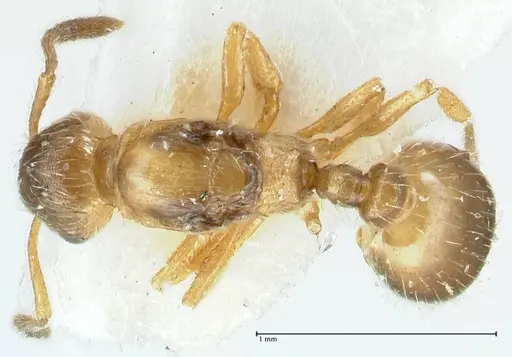
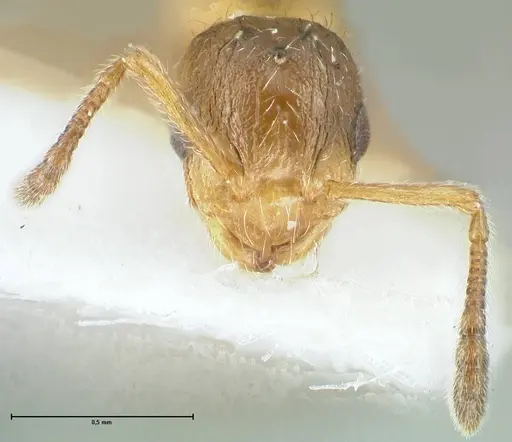
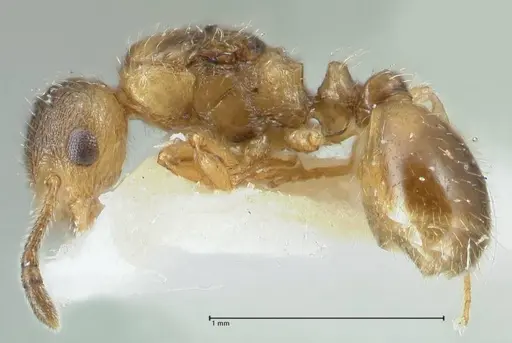
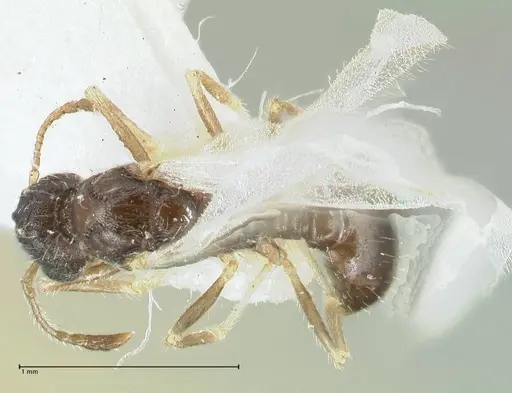
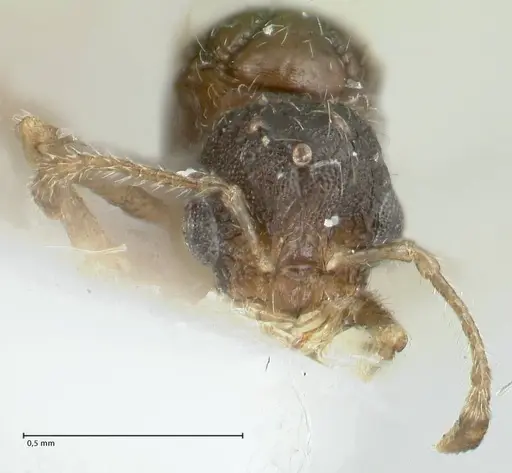
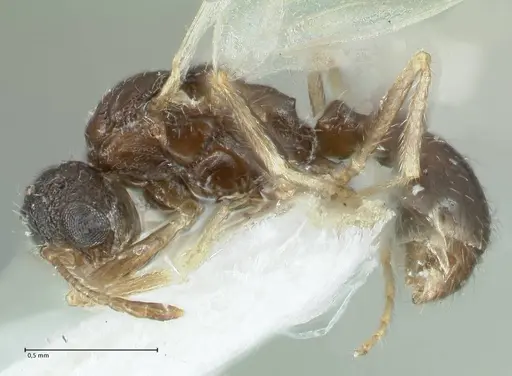
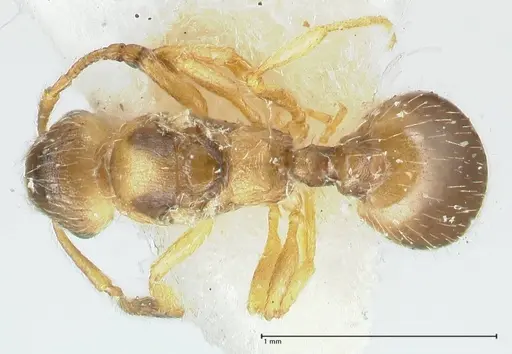
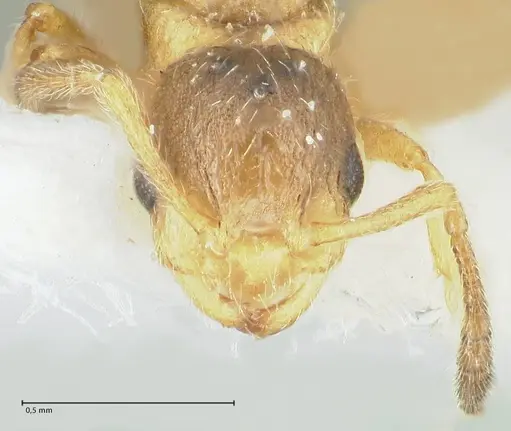
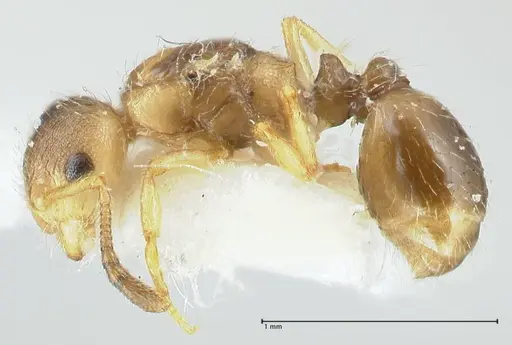
Temnothorax birgitae is a tiny, workerless social parasite endemic to Tenerife in the Canary Islands . Originally described in 1994 as Epimyrma birgitae, it was later moved to the genus Temnothorax . Queens are obligate parasites that cannot survive on their own - they must invade a nest of their host species, Temnothorax gracilicornis nivarianus, to reproduce . The type locality is in the Valle de la Orotava at about 1,200 meters elevation on Tenerife, associated with Canary Island pine (Pinus canariensis) . This species has no worker caste and produces only new queens and males .
Quick Summary
- Difficulty: Expert
- Origin & Habitat: Endemic to Tenerife in the Canary Islands, found at approximately 1,200m elevation in pine forest habitats (Pinus canariensis) [2].
- Colony Type: Workerless permanent social parasite, queens cannot survive without a host colony of Temnothorax gracilicornis nivarianus [1]. The species produces only reproductive castes, never workers [1].
- Size & Growth:
- Queen: ~3-4 mm, inferred from Temnothorax genus (body length not directly measured)
- Worker: Workerless species, no workers are produced [1]
- Colony: Unknown, entirely dependent on host colony size
- Growth: Unknown
- Development: Not applicable, this is a workerless parasitic species that produces only new queens and males [1] (No worker caste exists. The parasite relies entirely on host workers to raise its brood.)
- Antkeeping:
- Temperature: Unknown, no specific data. The host species likely prefers cool to moderate temperatures typical of high elevation Tenerife pine forest.
- Humidity: Unknown, no data.
- Diapause: Unknown, no documented hibernation data [1]
- Nesting: Parasitic, queen must enter and take over a nest of the host species Temnothorax gracilicornis nivarianus [1]. In captivity, would require cohabitation with a host colony, but no established protocol exists.
- Behavior: This is a workerless social parasite. Queens do not forage, care for brood, or defend territory. They must infiltrate a host colony and replace the host queen to exploit host workers [1]. The subfamily uses a smear defense mechanism (applying venom with modified stinger), but since the species lacks workers, this is rarely relevant.
- Common Issues: workerless obligate parasite cannot survive without a host colony of a specific Temnothorax species [1]., no workers to forage or care for brood, entirely dependent on host workers [1]., host specificity means you must first establish and maintain a healthy colony of Temnothorax gracilicornis nivarianus [1]., no established protocol exists for successfully introducing a parasitic queen to a host colony in captivity., endemic to Tenerife with very limited distribution, collection from the wild is ecologically harmful.
Species Overview and Biology
Temnothorax birgitae is a workerless social parasite endemic to Tenerife, Canary Islands [1]. Queens are obligate parasites cannot survive independently, they must infiltrate a nest of their host species, Temnothorax gracilicornis nivarianus, and replace the host queen [1]. Once established, host workers raise the parasite's brood, which produces only new queens and males, never workers [1]. The species was first described in 1994 by Schulz and later moved to the genus Temnothorax in 2015 [1]. The type locality lies in the Valle de la Orotava at about 1,200 meters elevation on Tenerife, in Pinus canariensis forest [2].
Captive Care Challenges
Keeping Temnothorax birgitae in captivity is practically impossible for most keepers. This is not a typical ant species, it has no worker caste, so the queen cannot establish a colony, forage, or care for brood [1]. She is completely dependent on host workers. To keep this species, you would first need a thriving colony of its specific host, Temnothorax gracilicornis nivarianus [1]. Both species are endemic to Tenerife and not available through any legal trade. Even if you had both, there is no reliable method to introduce the parasitic queen to the host colony without losing both. The parasite produces only new queens and males, you would never see worker ants of this species.
Host Species Requirements
The only possible way to keep Temnothorax birgitae would be with its host, Temnothorax gracilicornis nivarianus [1]. This host is also endemic to Tenerife and lives in similar habitats. It would require a typical Temnothorax setup: small nest chambers, moderate humidity, and cool to warm temperatures. However, even if you managed to establish a host colony, the parasite introduction is undocumented and high-risk. The parasite queen must kill or replace the host queen, which could destabilize the colony. No successful captive introductions have been reported [1]. For these reasons, this species is not recommended for any antkeeper.
Ecological and Ethical Considerations
Temnothorax birgitae is known only from a tiny area on Tenerife, at one elevation band in pine forest [1][2]. Its entire world population is limited to this small region. Collecting queens from the wild would destroy host colonies and threaten the species' survival. There is no legal trade for this species, and it should not be collected or imported. Releasing it elsewhere would be ecologically irresponsible and likely illegal. This species belongs in its natural habitat, not in captivity.
Frequently Asked Questions
Can I keep Temnothorax birgitae as a pet ant?
No. It is not possible to keep this species as a pet. It is a workerless obligate social parasite that requires a specific host colony (Temnothorax gracilicornis nivarianus) to survive [1]. No reliable captive protocol exists, and neither species is available through legitimate channels.
Does Temnothorax birgitae have workers?
No. This is a workerless species, it produces only new queens and males, never workers [1]. The species is completely dependent on host workers from the invaded colony to survive.
What do Temnothorax birgitae ants eat?
As a workerless parasite, the queen does not forage. She relies on host workers to feed her and her brood. The host colony would require a standard Temnothorax diet (small insects, sugar sources), but this is purely theoretical, no successful captive setup exists [1].
How do I start a Temnothorax birgitae colony?
You cannot start a standalone colony. The queen must invade an existing host colony to survive [1]. Even if you had both species, there is no known method to reliably introduce the parasite to the host in captivity. This species is not available legally and should not be attempted.
Where is Temnothorax birgitae found in the wild?
This species is endemic to Tenerife in the Canary Islands, found only at about 1,200 meters elevation in the Valle de la Orotava area [2]. It is associated with Pinus canariensis forest and exists nowhere else in the world.
Is Temnothorax birgitae dangerous or does it sting?
No. It is a tiny parasitic species with no workers, so it poses no threat to humans. Like other members of its subfamily, it has a modified stinger used to smear venom onto enemies, but this defense is rarely relevant for a solitary parasitic queen [1].
What temperature and humidity does Temnothorax birgitae need?
These have not been studied. Based on its high-elevation Tenerife habitat, the host species likely prefers cool to moderate conditions, but this is speculative. Since the parasite cannot be kept independently, focus on the host species requirements, which are also poorly documented [1].
Why does Temnothorax birgitae have no workers?
This is a permanent social parasite, it has evolved to rely entirely on host workers rather than producing its own. It belongs to a group of ants (formerly Myrmoxenus) that have lost the worker caste [1]. The parasite queen invades a host nest, kills or replaces the host queen, and tricks host workers into raising only her reproductive offspring (new queens and males).
Is Temnothorax birgitae good for beginners?
No. This species is not suitable for any antkeeper, beginner or expert. It is a workerless obligate parasite that cannot survive without a specific host [1]. No captive protocol exists, and neither species is available legally. This is the most challenging type of ant to keep, and it is not recommended at all.
Report an Issue
The current care sheet is based fully on literature. See inconsistencies, or something that's incorrect? Please , it will be resolved after review from an admin. Contributing to the blogs tab also helps providing information, to make us be able to further improve the caresheets. Thank you for your support!
References

Esta ficha de cuidados está bajo licencia CC BY-SA 4.0 .
Blogs de la comunidad
Literatura
Cargando mapa de distribución...Cargando productos...