
Technomyrmex rusticus
- Nom. cient.
- Technomyrmex rusticus
- Tribu
- Tapinomini
- Subfamilia
- Dolichoderinae
- Autor
- Santschi, 1930
- Distribución
- Encontrado en 0 países
Introducción
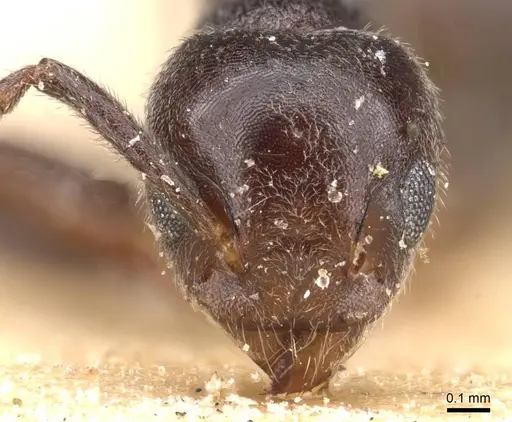
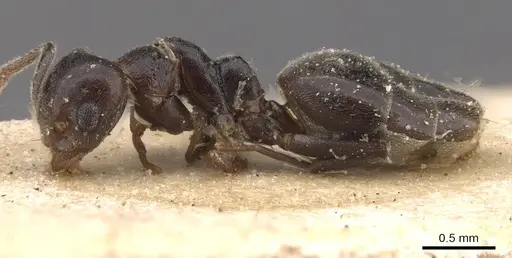
Technomyrmex rusticus is an extremely rare ant known only from two specimens collected in 1921 in what is now the Democratic Republic of Congo . The known individuals are worker-queen intercastes, measuring about 3.7 mm in total length . They have a uniform dark brown color across the head, body, and legs. This species belongs to the subfamily Dolichoderinae, which means it relies on sticky, foul-smelling anal secretions for defense instead of a sting. Virtually nothing is known about its natural behavior, colony structure, or ecology. All practical care guidance is inferred from better-studied relatives in the genus Technomyrmex.
Quick Summary
- Difficulty: Unknown, species too poorly documented to assess
- Origin & Habitat: Only known from Kunungu, Mai-Ndombe province, Democratic Republic of Congo [3][1]. Its natural habitat is likely tropical forest, based on the genus rather than direct observation.
- Colony Type: Unknown, only intercaste specimens have been documented, with no data on natural colony structure
- Size & Growth:
- Queen: Unknown, the only known related specimens are intercastes (3.7 mm) [2], no true queens have been recorded
- Worker: Size data unavailable for true workers, the known intercastes measure 3.7 mm [2]. True worker length is unknown
- Colony: Unknown, no colony data exists for this species
- Growth: Unknown, no development data available
- Development: Unknown, estimated 4 to 8 weeks based on typical tropical Dolichoderinae development patterns (This is a rough estimate using genus-level data. Species-specific information is lacking.)
- Antkeeping:
- Temperature: Estimated 24 to 28 °C based on tropical African origin. Provide a warm nest with a slight gradient around 26 °C.
- Humidity: Estimated 60 to 80 % based on typical tropical forest ant needs. Keep the nest substrate damp but not waterlogged.
- Diapause: Unlikely, being a tropical species from the DRC, it probably does not require a true hibernation period. A slight cool-down to about 20 °C during the dry season might be optional.
- Nesting: Based on typical Technomyrmex nesting preferences, they likely use rotting wood, under stones, or wall cavities. In captivity, a Ytong (AAC) or plaster nest with moderate humidity would be a reasonable starting point [2].
- Behavior: Behavior is unconfirmed for this species. Based on genus patterns, Technomyrmex ants are generally not aggressive and rely on anal gland secretions for defense rather than stinging. They are likely to forage moderately for honeydew and small insects. Since they are small (around 4 mm), standard escape prevention with fine mesh is recommended.
- Common Issues: this species is virtually unknown in captivity, no established husbandry protocols exist, lack of documented biology means all care recommendations are estimates based on genus patterns, the extremely limited type specimen data (two individuals ever found) makes it impossible to confirm any species-specific requirements, wild-caught colonies may be unobtainable since the species has only been recorded from a single historical location
Species Overview and Identification
Technomyrmex rusticus was described by Santschi in 1930 from specimens collected at Kunungu in the Democratic Republic of Congo [3][1]. The original description mistakenly identified them as workers, but later examination by Bolton in 2007 revealed they are worker-queen intercastes [2]. The only known individuals measure approximately 3.7 mm total length and display a uniform dark brown color [2]. Distinctive features include three small ocelli on the head, a clearly separated mesoscutum and mesoscutellum, and the absence of setae on the first three gastral tergites [2]. This species remains one of the most poorly known ants, with no confirmed records of true workers, queens, or colonies since the original collection.
Taxonomy and Classification
Technomyrmex rusticus belongs to the subfamily Dolichoderinae. Unlike many other ants, dolichoderines lack a functional sting. Instead, they produce sticky, foul-smelling defensive compounds from an anal gland. The genus Technomyrmex is primarily tropical and includes species that often nest in rotting wood or human structures, though T. rusticus appears to be a wild forest species, as no association with buildings has been reported. Its closest relatives are poorly studied, and no molecular data are available for this species.
Housing and Nesting
No nesting data exists for T. rusticus itself. Based on genus-level information, Technomyrmex species typically nest in rotting wood, under stones, or in pre-existing cavities [2]. In captivity, a Ytong (AAC) or plaster nest with moderate to high humidity (damp substrate, not waterlogged) would be a reasonable starting point. Maintain a temperature of 24 to 28 °C with a gradient so the ants can choose. Provide a water source and good ventilation to prevent mold.
Feeding and Diet
Based on the feeding habits of other Technomyrmex ants, this species is likely to consume honeydew from aphids and scale insects, along with small dead insects. In captivity, provide a constant supply of sugar water or honey as a carbohydrate source, and offer small prey (e.g., fruit flies, small mealworms) two to three times per week. Remove uneaten prey after 24 hours to avoid mold. Generalist Diet [2].
Behavior and Temperament
Behavior has never been observed for T. rusticus. Based on genus patterns, Technomyrmex ants are generally non‑aggressive and rely on defensive anal secretions rather than stinging. They typically forage in trails and are not known to bite hard. Because they are small (around 4 mm), fine escape-proofing (e.g., fluon barriers and tight lids) is needed to prevent escapes.
Seasonal Care and Reproduction
Reproductive biology, nuptial flight timing, and colony founding are completely undocumented for this species. As a tropical ant, it probably does not require a true hibernation period. If you want to simulate seasonal cues for alate production, you could try a few months at slightly cooler temperatures (about 20 °C) to mimic a dry season. Any successful captive breeding would be a significant step for research.
Frequently Asked Questions
How do I care for Technomyrmex rusticus ants?
Care recommendations for T. rusticus are estimates since this species has never been kept in captivity. Based on typical Technomyrmex requirements, provide a warm nest (24 to 28 °C), moderate humidity (60 to 80 %), a constant sugar water source, and small insects two to three times per week. Use a Ytong or plaster nest with appropriately sized chambers [2].
What do Technomyrmex rusticus ants eat?
Based on genus patterns, they likely accept honeydew and small insects. In captivity, offer sugar water or honey as a constant carbohydrate source, and supplement with small prey like fruit flies or tiny mealworms [2].
How big do Technomyrmex rusticus colonies get?
Colony size is unknown for this species. Based on typical Technomyrmex colony sizes, they probably reach a few hundred workers at most, but this is purely speculative.
Do Technomyrmex rusticus ants need hibernation?
Unlikely. Being a tropical species from the Congo basin, they probably do not require true hibernation. A slight cool-down to around 20 °C during the dry season might be beneficial but is not required.
Are Technomyrmex rusticus good for beginners?
This species is not recommended for beginners. It is virtually unknown in the antkeeping hobby, and all care recommendations are estimates based on genus-level information rather than species-specific data.
Where is Technomyrmex rusticus found?
Only known from the Democratic Republic of Congo, specifically the Mai‑Ndombe province around Kunungu. The species has only been recorded from specimens collected in 1921 [3][1].
How long do Technomyrmex rusticus take to develop from egg to worker?
Unknown, no development data exists for this species. Based on typical tropical Dolichoderinae development, estimate 4 to 8 weeks from egg to worker at optimal temperatures, but this is a rough guess.
Can I keep multiple Technomyrmex rusticus queens together?
Unknown, colony structure has never been documented for this species. Without data on whether they are monogyne (single queen) or polygyne (multiple queens), combining queens is not recommended.
Why is Technomyrmex rusticus so rare?
This species is known from only two specimens collected in 1921. It may be genuinely rare in the wild, or it may have been overlooked by researchers. The Democratic Republic of Congo is a vast and biologically underexplored region [2].
Report an Issue
The current care sheet is based fully on literature. See inconsistencies, or something that's incorrect? Please , it will be resolved after review from an admin. Contributing to the blogs tab also helps providing information, to make us be able to further improve the caresheets. Thank you for your support!
References

Esta ficha de cuidados está bajo licencia CC BY-SA 4.0 .
Blogs de la comunidad
CASENT0911592
Ver en AntWeb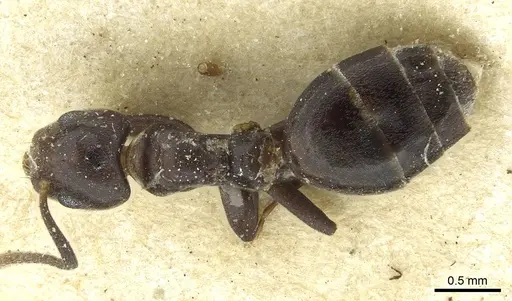
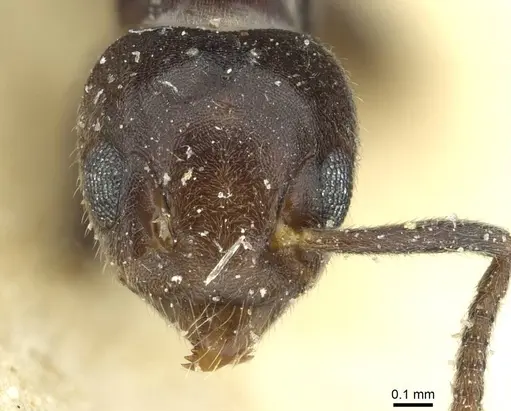
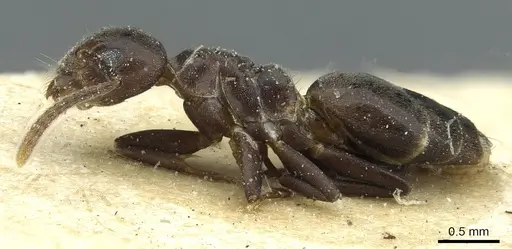
RMCAENT000017800
Ver en AntWeb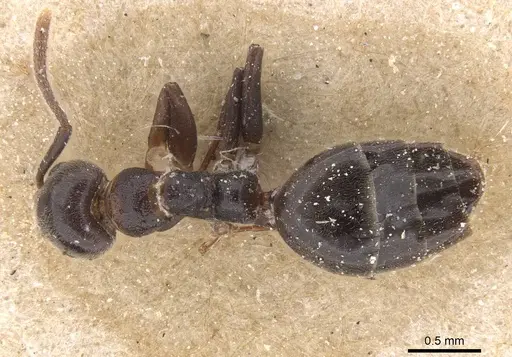
Literatura
Cargando mapa de distribución...Cargando productos...