
Tapinoma breviscapum
- Nom. cient.
- Tapinoma breviscapum
- Tribu
- Tapinomini
- Subfamilia
- Dolichoderinae
- Autor
- Forel, 1908
- Distribución
- Encontrado en 0 países
Introducción
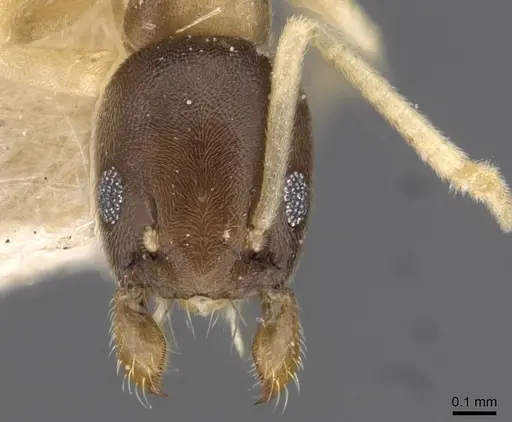
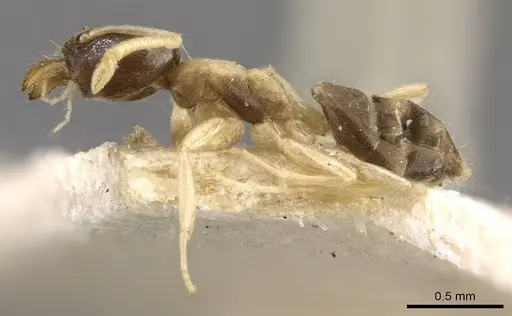
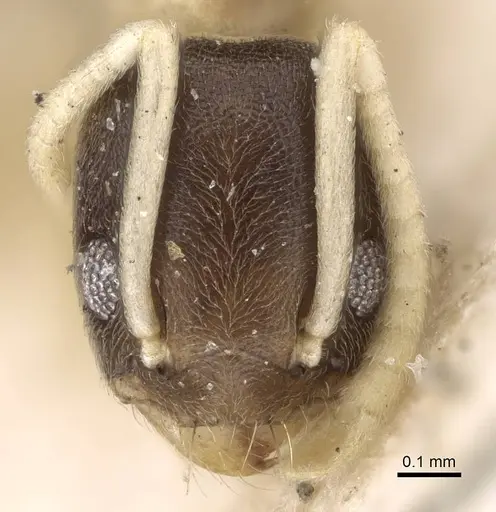
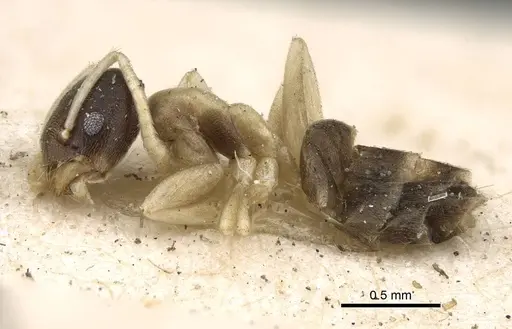
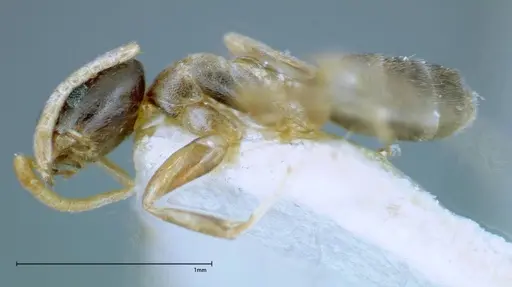
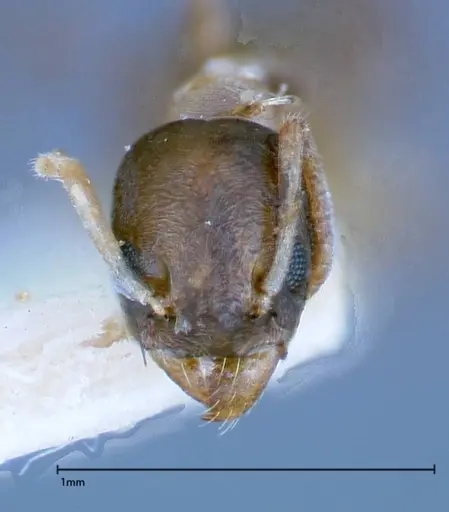
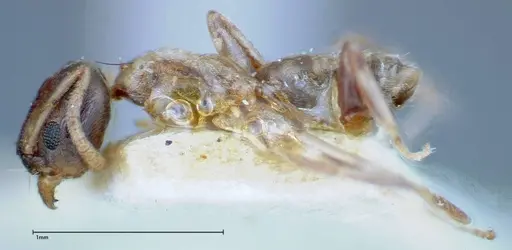
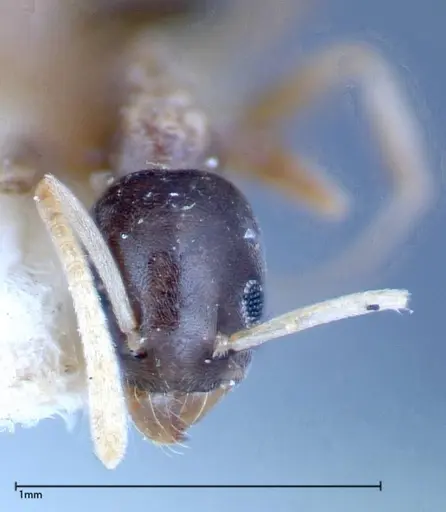
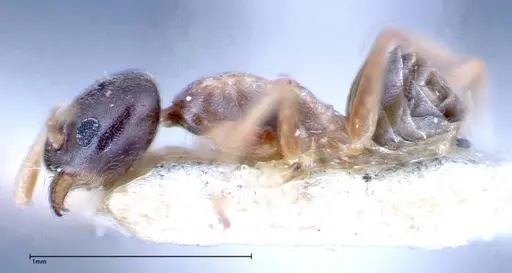
Tapinoma breviscapum is a tiny, bicolored arboreal ant native to the Atlantic Forest of southeastern South America, found in Brazil and Argentina . Workers are very small, characteristic of the genus, with a distinctive appearance: the head and gaster are medium brown while the antennae, mesosoma, legs, and petiole range from pale whitish-yellow to bright orange . The species name 'breviscapum' refers to its notably short antennal scapes, a key feature separating it from the very similar Tapinoma atriceps . What makes this species unusual is its nesting biology. Unlike most ants that nest in soil or rotten wood, T. breviscapum has been found living inside galls of the fern Microgramma squamulosa . This suggests a specialized arboreal niche. The species was only elevated to full species status in 2021,after genetic and morphological analysis showed it is distinct from T. atriceps .
Quick Summary
- Difficulty: Expert
- Origin & Habitat: Atlantic Forest biome of southeastern Brazil (Minas Gerais, Rio de Janeiro, São Paulo) and Argentina (Misiones). Found living arboreally inside plant galls of Microgramma squamulosa, a fern species [1][2].
- Colony Type: Unconfirmed, colony structure (single queen vs multiple queens) has not been documented in scientific literature
- Size & Growth:
- Queen: ~4-5 mm, inferred from Tapinoma genus
- Worker: ~2-3 mm, inferred from Tapinoma genus
- Colony: Unknown, no colony size data available
- Growth: Unknown
- Development: Unknown, no development data exists for this species. Estimates based on similar tropical Tapinoma species suggest 4-8 weeks at optimal temperature, but this is speculative. (No direct studies on development. Related Tapinoma species typically complete development in 4-8 weeks under warm conditions.)
- Antkeeping:
- Temperature: Likely 22-28°C based on tropical arboreal ant patterns and Atlantic Forest climate. Provide a gentle gradient and monitor colony activity.
- Humidity: Moderate to high, arboreal species typically prefer humid conditions. Keep nest substrate lightly moist but allow some drying between waterings.
- Diapause: Unknown, no data on overwintering requirements. Atlantic Forest has mild winters, so prolonged cold may not be necessary.
- Nesting: Arboreal specialist, requires vertical space and climbing surfaces. Likely accepts setups with cork, branches, or plant material. Y-tong or plaster nests with vertical orientation may work.
- Behavior: Generally calm temperament typical of Tapinoma genus. Workers are small but active foragers. Escape prevention is critical due to their tiny size, they can squeeze through remarkably small gaps. They lack a functional stinger, defense is via exuding sticky, foul-smelling compounds from an anal gland (a 'smear' defense typical of Dolichoderinae).
- Common Issues: escape prevention is critical due to tiny worker size, use fine mesh and tight-fitting barriers, virtually no species-specific care information exists, you are essentially pioneering captive care, colony structure unknown, you may get a single queen or multiple depending on what you find, arboreal nesting means they need vertical space and climbing surfaces, not standard horizontal nests, no data on founding behavior, queen may be claustral or semi-claustral, unknown
Discovery and Taxonomy
Tapinoma breviscapum was originally described as a variety of Tapinoma atriceps by Forel in 1908,and later treated as a subspecies [1]. It was not until 2021 that Escárraga and Lattke used both morphological analysis and genetic sequencing (COI, EPIC, Wg markers) to demonstrate that T. breviscapum is a distinct species, with a genetic distance of 9.4% in COI from T. atriceps [1]. The two species can be distinguished by scape length: T. breviscapum workers have relatively short scapes (SI 93) [1]. This species belongs to the subfamily Dolichoderinae, which includes other common ants like the invasive Tapinoma melanocephalum.
Natural History and Nesting
The most distinctive aspect of T. breviscapum biology is its arboreal nesting in plant galls. Researchers found a colony living inside a gall of Microgramma squamulosa, a fern species, a highly unusual nesting site for ants, which more typically nest in soil, rotting wood, or under stones [1][2]. The gall provides a pre-formed cavity that the ants inhabit without excavating. This suggests the species may have evolved to exploit a niche that few other ants use. In the Serra do Cipó region of Minas Gerais, researchers observed that T. breviscapum colonies show bright orange coloration on the antennae, mesosoma, legs, and petiole, contrasting with the pale whitish-yellow of T. atriceps in the same area [1][2]. This color difference may help with species recognition where both occur together. The Atlantic Forest biome where this species lives is characterized by high humidity and warm temperatures year-round.
Identification and Similar Species
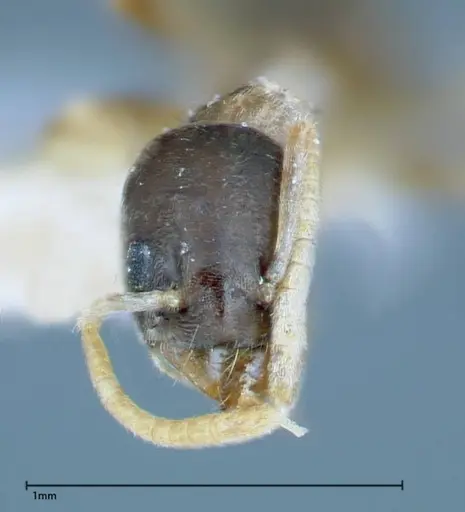
Correct identification of T. breviscapum depends on its short antennal scapes (they hardly extend beyond the back of the head) and its bicolored pattern: medium brown head and gaster with pale yellow to orange antennae, mesosoma, legs, and petiole. Most other Tapinoma species in the region are either mostly pale yellow or uniform brown [1][2]. Two species can cause confusion. Tapinoma melanocephalum, a common invasive, has dark brown head and mesosoma with a pale yellow gaster, the opposite color pattern [1]. Linepithema leucomelas can be distinguished by having a well-developed petiolar scale and different mandibular teeth [1]. If you are in North America and think you have T. breviscapum, it is almost certainly T. melanocephalum, T. breviscapum has never been documented as invasive outside its native range.
Housing and Captive Care
Since T. breviscapum is an arboreal species that naturally lives in plant galls, your captive setup should reflect this unusual ecology. A vertical-oriented nest with climbing surfaces will likely work better than traditional horizontal formicaria. Consider setups with cork bark, small branches, or plant material that allows the colony to establish in elevated chambers. No captive care studies exist for this species, so the following recommendations are based on general ant-keeping practices for arboreal tropical species. Start with temperatures around 24-27°C, provide both moist and dry areas, and feed a varied diet of sugar sources (honey, sugar water) and small protein items (flightless fruit flies, small mealworms). Escape prevention is absolutely critical, workers are tiny and can slip through gaps you might not even see. Use fine mesh (at least 0.5 mm) on all openings. The biggest challenge is the lack of basic knowledge: colony structure, development rate, and reproductive triggers are all unknown. Be prepared to experiment and document your observations, any successful captive breeding would be a significant contribution.
Behavior and Defense
Like all Dolichoderinae ants, T. breviscapum lacks a functional stinger. When threatened, they exude a sticky, foul-smelling secretion from an anal gland (cyclopentanoid monoterpenes) that helps immobilize or deter predators, this is known as a 'smear' defense. You may notice a mild odor when handling them. The genus Tapinoma is generally calm compared to more aggressive ants, but workers are persistent foragers. Their small size means they are unlikely to cause any pain, though individuals with sensitivity to these compounds should take standard precautions. Their arboreal lifestyle suggests they are active climbers and may prefer exploring elevated spaces. In captivity, expect workers to explore vertical surfaces and perhaps establish satellite chambers at different heights.
Frequently Asked Questions
How do I identify Tapinoma breviscapum ants?
Look for the short antennal scapes (they barely extend past the back of the head) and the distinctive bicolored pattern: medium brown head and gaster with pale yellow to orange antennae, mesosoma, legs, and petiole. Workers are very small, total length estimated around 2-3 mm (no direct measurements available). The species name 'breviscapum' literally means 'short antenna' [1][2].
What do Tapinoma breviscapum ants eat?
While no specific feeding studies exist for this species, Tapinoma genus ants are typically generalist feeders. Offer sugar sources (honey, sugar water) for energy and small protein items (flightless fruit flies, small mealworms, pinhead crickets). Their small size means prey should be appropriately sized, anything larger than themselves may be ignored.
What temperature do Tapinoma breviscapum ants need?
No specific thermal studies exist for this species. Based on their tropical Atlantic Forest origin and arboreal lifestyle, aim for 24-27°C with a slight gradient. Avoid temperatures below 18°C or above 32°C. Monitor colony activity, if workers cluster consistently in warmer areas, increase heating slightly.
Do Tapinoma breviscapum ants need hibernation?
Unknown, no data exists on overwintering requirements. The Atlantic Forest region has mild winters without prolonged cold periods. It is possible they do not require a true diapause. Consider providing a slight temperature reduction (a few degrees) during winter months rather than a full hibernation protocol.
Can I keep multiple Tapinoma breviscapum queens together?
Unknown, colony structure has not been documented for this species. We do not know whether they are monogyne (single queen), polygyne (multiple queens), or something in between. If you capture a founding queen, keep her alone until you confirm she has workers. Combining unrelated queens is not recommended without evidence they tolerate each other.
How long does it take for Tapinoma breviscapum to raise first workers?
Unknown, no development data exists for this species. Based on typical tropical Tapinoma patterns, expect 4-8 weeks from egg to worker at optimal temperature (around 25°C), but this is purely an estimate with no direct evidence.
What size colony do Tapinoma breviscapum ants reach?
Unknown, no colony size data has been published. Related Tapinoma species typically reach hundreds to a few thousand workers. Given their small worker size and unusual arboreal/gall-nesting biology, expect smaller colonies than ground-nesting species, possibly under 500 workers even at maturity.
Are Tapinoma breviscapum ants good for beginners?
No, this species is not recommended for beginners. It is extremely poorly studied with virtually no species-specific care information available. You will be pioneering captive husbandry with no established protocols. Additionally, their tiny size makes them challenging to house and feed properly. Consider starting with more established species like Tapinoma melanocephalum or Lasius niger.
What type of nest should I use for Tapinoma breviscapum?
No established protocol exists. Given their arboreal gall-nesting biology, consider vertical-oriented setups with cork bark, small branches, or plant material. A Y-tong nest with narrow chambers or a plaster nest with vertical orientation may work. They likely need climbing surfaces and elevated chambers rather than traditional horizontal nests.
Why is my Tapinoma breviscapum colony dying?
Without species-specific data, diagnose by process of elimination. Check escape prevention first, their tiny size means they can escape through gaps you might miss. Then evaluate temperature (24-27°C ideal), humidity (60-80%), and food quality. Wild-caught colonies may carry parasites. Consider that this species may have specific requirements we simply do not know yet.
Report an Issue
The current care sheet is based fully on literature. See inconsistencies, or something that's incorrect? Please , it will be resolved after review from an admin. Contributing to the blogs tab also helps providing information, to make us be able to further improve the caresheets. Thank you for your support!
References

Esta ficha de cuidados está bajo licencia CC BY-SA 4.0 .
Blogs de la comunidad
CASENT0909768
Ver en AntWeb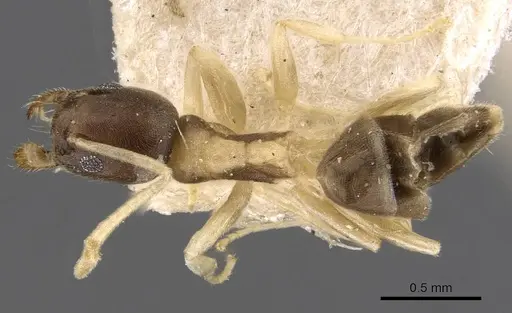
CASENT0922450
Ver en AntWeb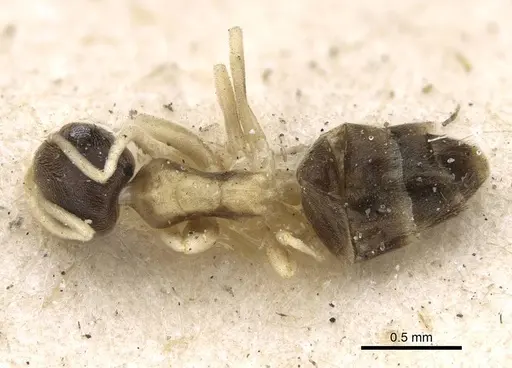
FOCOL0184-1
Ver en AntWeb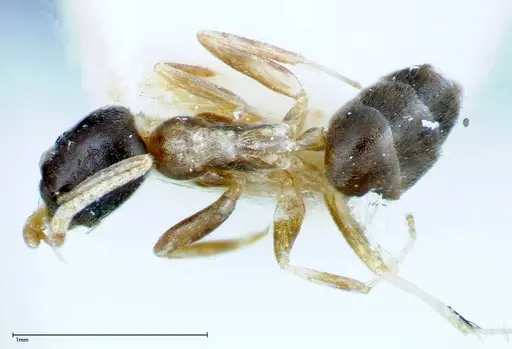
FOCOL0184-2
Ver en AntWeb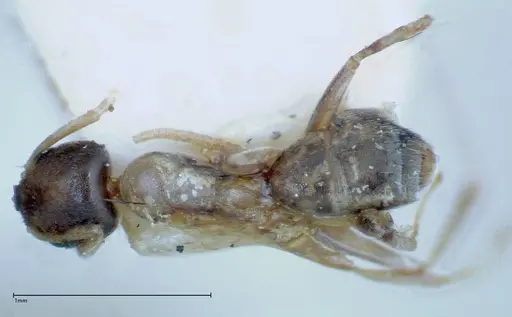
FOCOL0184-3
Ver en AntWeb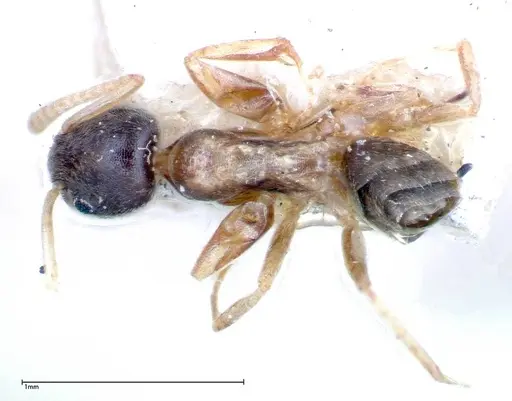
Literatura
Cargando mapa de distribución...Cargando productos...