
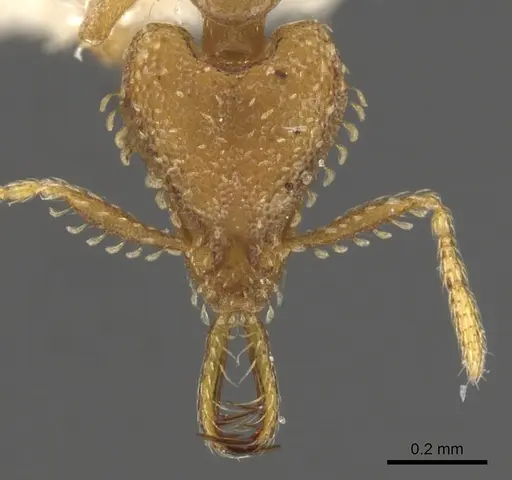
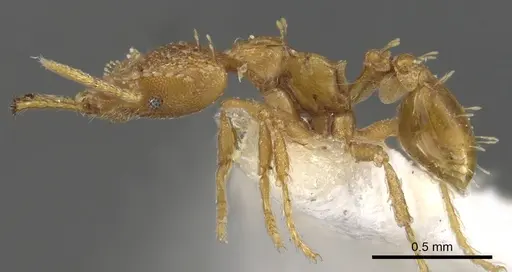
Strumigenys xenohyla
- Nom. cient.
- Strumigenys xenohyla
- Tribu
- Attini
- Subfamilia
- Myrmicinae
- Autor
- Bolton, 1983
- Distribución
- Encontrado en 0 países
Introducción
Strumigenys xenohyla is a small predatory ant species recorded from the Democratic Republic of Congo, specifically the IT province (likely Ituri) . It belongs to the dacetine tribe, whose members are known for their trap‑jaw mandibles that snap shut very quickly to capture tiny prey. Workers of this genus are tiny, typically 2-4 mm, with elongated mandibles lined with teeth. The species’ biology is almost unstudied, so most care information comes from what is known about other Strumigenys species.
Quick Summary
- Difficulty: Hard
- Origin & Habitat: Recorded from IT province (likely Ituri) in the Democratic Republic of Congo [1]. As with other Strumigenys, they probably inhabit humid forest leaf litter and rotten wood, but species‑specific habitat data is unavailable.
- Colony Type: Unknown. Based on genus patterns, Strumigenys are typically monogyne (single queen), but this has not been confirmed for this species.
- Size & Growth:
- Queen: ~3.5-5 mm, inferred from the Strumigenys genus.
- Worker: ~2-4 mm, inferred from the Strumigenys genus.
- Colony: Unknown. Genus patterns suggest small colonies, likely up to 200 workers at most.
- Growth: Slow (inferred from related species).
- Development: Unknown, based on related Strumigenys species, development may take 8-12 weeks at optimal temperature, but this is an estimate. (Growth is slow. Queens likely seal themselves in to raise the first brood, but this is unconfirmed.)
- Antkeeping:
- Temperature: Not specifically known for this species. A starting range of 22-26 °C with stable conditions is suggested, observe the ants and adjust if needed.
- Humidity: High humidity is almost certainly needed, provide a moist substrate and a nest that retains water. Specific targets are unknown.
- Diapause: Unknown. Because the species comes from a tropical region (Congo), it probably does not require hibernation, but no data confirms this.
- Nesting: Naturalistic setups with moist soil/peat mix, plaster, or 3D‑printed nests that hold humidity well. Avoid dry environments. Tight, small chambers are preferred.
- Behavior: Based on genus knowledge, Strumigenys are specialized springtail hunters that use a rapid trap‑jaw strike. They are docile toward humans and rarely sting. Escape prevention is critical because of their tiny size, they can squeeze through very small gaps.
- Common Issues: specialised diet, live springtails are likely essential, standard ant foods are ignored, high humidity needs can lead to mold if ventilation is poor, very small size makes escape prevention difficult, use fine mesh or fluon barriers, colonies grow very slowly, which may discourage keepers expecting faster development, founding colonies are fragile and may fail if the queen is disturbed too often
Housing and Nest Setup
Because Strumigenys xenohyla is almost unstudied, nest recommendations are based on what works for other leaf‑litter Strumigenys. Use a setup that keeps high humidity, a small test tube with a damp cotton plug works for founding colonies. For larger colonies, a naturalistic nest with a moist soil/peat mix, a plaster nest, or a 3D‑printed formicarium with a built‑in water reservoir is best. The chambers should be tight and dark, these ants feel secure in snug spaces. Avoid any dry nest or one with large open areas. Connect a small foraging outworld via tubing and keep the whole system sealed against escape.
Feeding and Diet
Based on the feeding habits of other Strumigenys, this species is a specialised predator that lives on springtails (Collembola). Culture your own springtails to ensure a constant supply. Other tiny live prey, booklice, fruit fly larvae, or minute mites, may also be accepted. They almost certainly will not eat sugar water, honey, or dead insects. Offer small live prey every 2-3 days and adjust based on how quickly the colony takes them. A well‑fed colony will show active, successful hunting.
Temperature and Seasonal Care
No specific temperature data exists for this species. A safe starting point is 22-26 °C, kept stable. Avoid placing the nest near windows, air vents, or drafty spots. Because this ant comes from the Congo region, it probably does not need any hibernation or diapause. Activity may slow naturally during cooler periods, but do not cool the nest intentionally. If your room drops below 20 °C, use a gentle heating cable on one side of the nest to create a warm gradient, leaving a cooler area so the ants can move away if they get too hot.
Behavior and Observation
Strumigenys are famous for their trap‑jaw hunting. Workers patrol with their mandibles held wide, and when a springtail touches the trigger hairs, the mandibles snap shut in a fraction of a second. This species is likely non‑aggressive to keepers, they rarely use their sting. Foraging is mostly solitary, you won’t see heavy recruitment trails. Colonies are quiet and do not produce the constant activity of larger ant species. Because of their small size, you will need a magnifying glass or a good camera to watch them closely.
Colony Founding
Although not directly observed for this species, Strumigenys queens are typically claustral, they seal themselves in a small chamber and raise the first workers without leaving to feed. The queen uses her fat reserves to produce eggs and feed the larvae. Place a newly caught queen in a test tube with a damp cotton plug for humidity, keep it in the dark, and leave it completely undisturbed for several weeks. Checking too often can stress the queen and cause her to eat her brood. After the first tiny workers (nanitics) appear, you can start offering live springtails.
Common Problems
The biggest challenge is diet, without live springtails the colony will starve. You must culture them. Next comes humidity: too dry and the ants desiccate, too wet and mold grows. Aim for consistent, moderate moisture. Their tiny size makes escape likely through any gap, use fine mesh and fluon on all connections. Finally, be patient: colonies grow extremely slowly, and many keepers give up too early. Stick with it and the colony will eventually reward you with fascinating hunting behaviour.
Frequently Asked Questions
Can I keep Strumigenys xenohyla in a test tube?
Test tubes are the standard way to found Strumigenys colonies. Use a tube with a damp cotton plug for humidity, keep it dark, and do not disturb the queen for several weeks. Once the first workers appear, you may eventually need a larger setup, but for a long time a test tube is sufficient. Species‑specific guidance is lacking, so follow general Strumigenys practices.
What do Strumigenys xenohyla eat?
Based on genus habits, they require live springtails (Collembola). Their trap‑jaw mandibles are built to catch moving prey, and they typically ignore dead food. Culture your own springtails or buy them from pet shops. Other tiny live prey like booklice and fruit fly larvae may be accepted, but springtails should be the staple.
How long until first workers in Strumigenys xenohyla?
No data exists for this species. Related Strumigenys take 8-12 weeks from egg to worker at around 22-26 °C. The queen raises the brood alone during that time. Do not disturb her. The first workers (nanitics) will be smaller than mature workers.
Are Strumigenys xenohyla good for beginners?
No. Their specialised live‑prey diet, high humidity needs, very small size, and slow growth make them challenging. They are best left to experienced keepers who can culture springtails and maintain stable conditions.
How big do Strumigenys xenohyla colonies get?
Unknown, but based on genus patterns, colonies are small, likely no more than 200 workers at maturity. Growth is very slow, so the colony may take 1-2 years to become noticeable.
Do Strumigenys xenohyla need hibernation?
No data exists, but since the species originates from tropical Congo, it almost certainly does not need hibernation. Keep the nest warm (22-26 °C) all year round.
Why are my Strumigenys xenohyla dying?
Common causes include: not providing live springtails, humidity that is too low or too high (with mold), temperature fluctuations, or too much disturbance. Check your setup against the recommendations and try to correct any problem. Avoid using sugar water or dead insects, they won’t eat them.
When should I move Strumigenys xenohyla to a formicarium?
Move them when the test tube becomes crowded and the colony has at least 15-20 workers. A naturalistic setup with moist substrate is best. Make the switch gradually by attaching the new nest and letting the ants move on their own. Species‑specific timing is unknown, watch the colony’s size and behaviour.
Can I keep multiple queens together?
This has not been studied for this species. Strumigenys are typically monogyne, but occasional polygyny occurs in some species. Without data, it is safest to keep each queen separately.
Report an Issue
The current care sheet is based fully on literature. See inconsistencies, or something that's incorrect? Please , it will be resolved after review from an admin. Contributing to the blogs tab also helps providing information, to make us be able to further improve the caresheets. Thank you for your support!
References

Esta ficha de cuidados está bajo licencia CC BY-SA 4.0 .
Blogs de la comunidad
CASENT0900602
Ver en AntWeb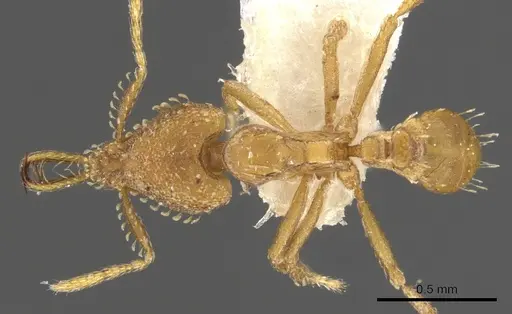
Literatura
Cargando mapa de distribución...Cargando productos...