
Strumigenys alecto
- Nom. cient.
- Strumigenys alecto
- Tribu
- Attini
- Subfamilia
- Myrmicinae
- Autor
- Bolton, 2000
- Distribución
- Encontrado en 0 países
Introducción
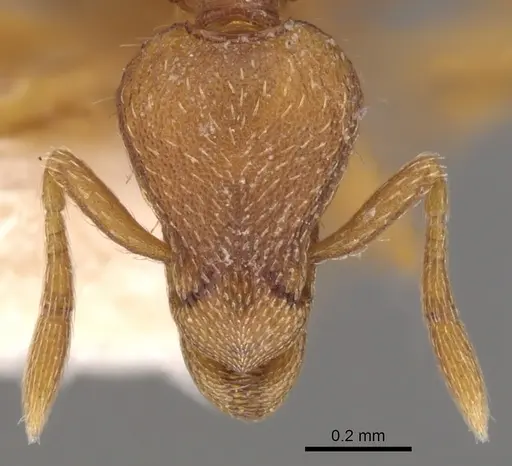
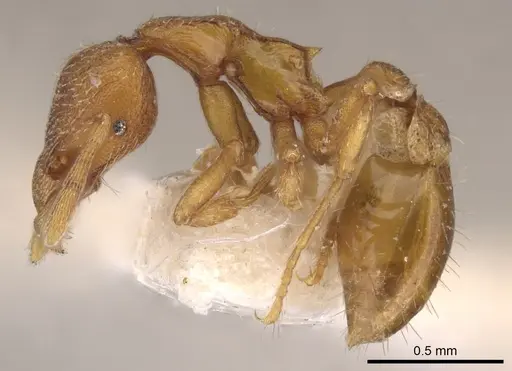
Strumigenys alecto is a tiny predatory ant measuring just 2.6-2.7 mm in total body length . Workers are dark orange with a distinctive hair pattern: in profile, standing hairs run from the occipital margin to just in front of the highest point of the head vertex, which separates them from similar species like Strumigenys benten and Strumigenys formosimonticola . This species belongs to the Strumigenys leptothrix-group and was originally described from Kyoto, Japan . The queen has not been described. This ant is a member of the tribe Attini (subfamily Myrmicinae) and, like many Strumigenys, has specialized trap-jaw mandibles used to capture tiny arthropods. It has been recorded from Japan, Korea (Geoje Island), Indonesia, Malaysia, and Thailand .
Quick Summary
- Difficulty: Medium
- Origin & Habitat: Native to East Asia (Japan, Republic of Korea) and parts of Southeast Asia. In Korea, workers were collected from forest floor leaf litter on Mt. Nojasan, Geoje-do Island at 158 m altitude using a Berlese trap [1]. The type locality is Kyoto, Japan [1]. The species likely inhabits leaf litter and rotting wood in forested areas.
- Colony Type: Colony structure is unconfirmed. Based on related Strumigenys species, they are likely single-queen (monogyne) colonies, though this has not been directly documented for S. alecto.
- Size & Growth:
- Queen: Unknown, queen has not been described for this species [1]
- Worker: 2.6-2.7 mm total body length [1][2]
- Colony: Unknown, no colony size data exists for this species
- Growth: Unknown, no development data exists. Based on related Strumigenys species, growth is likely moderate.
- Development: Unknown, no direct data. Related Strumigenys species typically take 6-10 weeks under warm conditions. (Development timeline is unconfirmed for S. alecto.)
- Antkeeping:
- Temperature: Keep at 22-26°C. This range is inferred from the species' distribution across warm-temperate Japan/Korea and tropical Southeast Asia. Adjust based on colony activity.
- Humidity: High humidity is essential, these are forest-floor ants that prefer damp conditions. Keep nest substrate consistently moist but not waterlogged, and provide a gradient from damp to slightly drier areas so ants can self-regulate.
- Diapause: Likely required. The species occurs in temperate Japan and Korea, which have cold winters. Related Strumigenys from such regions need a winter rest period. Provide 2-3 months of reduced temperatures (10-15°C) during winter.
- Nesting: Natural nesting occurs in forest floor leaf litter and rotting wood. In captivity, a naturalistic setup with moist soil/peat mix works well. A Y-tong or plaster nest with good moisture retention is also suitable. Chambers should be small to match the ants' tiny 2.6 mm size.
- Behavior: These are tiny, slow-moving predatory ants that hunt small arthropods using trap-jaw mandibles. They are not aggressive toward keepers. They have a functional stinger, but it is too small to be of medical concern. Escape prevention is critical, at 2.6 mm they can squeeze through remarkably small gaps, use fine mesh and tight lids. Activity is moderate.
- Common Issues: escape prevention is critical due to their tiny 2.6 mm size, they can squeeze through gaps that seem impossible., no specific biology data exists, keepers must rely on genus-level care guidelines., humidity management is challenging, too wet causes mold, too dry causes desiccation., prey acceptance may be difficult, they prefer live springtails and tiny arthropods., slow growth means colonies develop gradually, patience is required.
Housing and Nest Setup
Because Strumigenys alecto workers are only 2.6-2.7 mm, your nest must be scaled to their size. A naturalistic setup with a moist soil/peat layer mimics their forest floor habitat [1]. Add pieces of rotting wood, bark, or leaf litter for hiding places and hunting grounds. For a more controlled environment, use a Y-tong (AAC) or plaster nest with narrow chambers. The key is high humidity without flooding, use a water reservoir that wicks moisture into the substrate gradually. Place the reservoir at one end to avoid waterlogging the chambers. Escape prevention is essential: use tight-fitting lids, apply Fluon or similar barriers to the outworld rim, and cover ventilation holes with fine mesh (at least 200 mesh).
Feeding and Diet
Strumigenys alecto is a specialist predator of tiny arthropods. No specific dietary data exists for this species, but related Strumigenys thrive on live springtails, which are the ideal prey size and movement triggers their hunting. Other small live prey like booklice (psocids) or micro-arthropods may also be accepted. Do not rely on sugar sources, these ants are primarily predatory and typically ignore honey or sugar water. Feed every 2-3 days, offering appropriately sized prey. Remove uneaten prey after 24-48 hours to prevent mold.
Temperature and Seasonal Care
Maintain Strumigenys alecto at 22-26°C. This range is based on the species' occurrence in warm-temperate Japan/Korea and tropical Southeast Asia [3]. A slight temperature gradient in the outworld allows workers to self-regulate. During winter (November-February in the Northern Hemisphere), provide a diapause period: reduce temperature to 10-15°C for 2-3 months. This mimics the cold season in their native range. Reduce feeding during diapause. Do not skip the rest period, especially for colonies from wild sources in Korea or Japan, as it supports long-term health.
Handling and Observation
These ants are a joy to watch but require careful handling. They are not aggressive, and while they do have a functional stinger, it is too small to harm humans. When observing, watch how they use their trap-jaw mandibles to snap up live prey. Use a magnifying glass or macro lens for close-up views. The standing hairs on their head, extending from the occipital margin to just in front of the vertex, are a key identification feature [1]. Avoid disturbing the nest frequently to reduce stress.
Growth and Colony Development
No development data exists for Strumigenys alecto. Based on related species, expect slow growth: the first workers (nanitics) may appear after 6-10 weeks at optimal temperatures. Colony size in the wild is unknown, related Strumigenys usually have modest colonies of a few hundred workers at most. Keep detailed notes on your colony's development to contribute to knowledge of this poorly studied species. [1]
Frequently Asked Questions
How long does it take for Strumigenys alecto to produce first workers?
The exact timeline is unknown. Based on related Strumigenys species, expect approximately 6-10 weeks from egg to first worker at 22-26°C. This is an estimate, actual time may vary.
Can I keep Strumigenys alecto in a test tube?
Test tubes can work for founding but are difficult long-term. The tiny 2.6 mm workers need very small water reservoirs to prevent flooding, and high humidity is tricky to maintain. A small plaster or Y-tong nest with a naturalistic outworld is better for established colonies.
What do Strumigenys alecto ants eat?
They are predatory and eat live small arthropods. Springtails are ideal. They typically ignore sugar sources like honey. Other small live prey such as booklice may also be accepted.
Are Strumigenys alecto good for beginners?
This species is rated Medium difficulty. They require careful humidity control, escape-proof housing, and live prey, challenges that may frustrate beginners. Experienced keepers will find them rewarding.
How big do Strumigenys alecto colonies get?
Colony size is unknown. Based on related Strumigenys species, mature colonies probably reach a few hundred workers at most. They do not form large colonies.
Do Strumigenys alecto need hibernation?
Likely yes. They occur in temperate Japan and Korea, which have cold winters. Provide a winter rest period of 2-3 months at 10-15°C to maintain natural cycles and long-term health.
Why are my Strumigenys alecto dying?
Common causes: escape due to tiny size, improper humidity (too dry leads to desiccation, too wet leads to mold), lack of live prey, or mite infestations. Check each of these factors.
When should I move my colony to a formicarium?
Wait until the colony has at least 15-20 workers and is actively foraging in an outworld. Moving too early can stress the colony. A small naturalistic setup with a plaster or Y-tong nest works well.
Can I keep multiple Strumigenys alecto queens together?
This has not been documented. Based on related Strumigenys, they are likely single-queen (monogyne). Combining unrelated queens is not recommended.
Report an Issue
The current care sheet is based fully on literature. See inconsistencies, or something that's incorrect? Please , it will be resolved after review from an admin. Contributing to the blogs tab also helps providing information, to make us be able to further improve the caresheets. Thank you for your support!
References

Esta ficha de cuidados está bajo licencia CC BY-SA 4.0 .
Blogs de la comunidad
CASENT0900130
Ver en AntWeb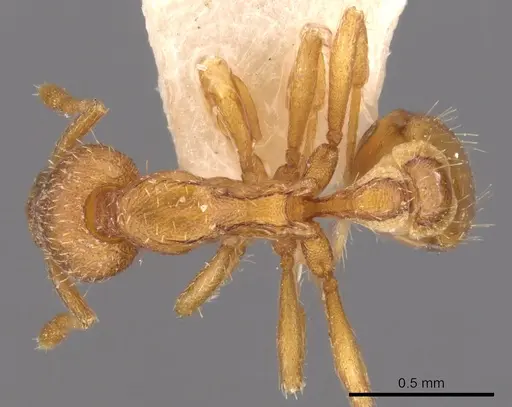
Literatura
Cargando mapa de distribución...Cargando productos...