
Stenamma koreanense
- Nom. cient.
- Stenamma koreanense
- Tribu
- Stenammini
- Subfamilia
- Myrmicinae
- Autor
- Lyu <i>et al.</i>, 2002
- Distribución
- Encontrado en 0 países
Introducción
Stenamma koreanense is a small myrmicine ant endemic to the Korean Peninsula . Workers measure 4.36-4.69 mm with a distinctive brown body, dark brown alitrunk, and yellowish-brown appendages and gaster tip . It belongs to the *Stenamma owstoni* species group and is most closely related to *Stenamma ussuriense*, differing in its shorter petiole and more pronounced apical mandibular teeth . Queens are slightly larger at 5.18 mm and were found with 31 workers in the type colony . This is the second *Stenamma* species recorded from the Korean peninsula, the first was *S. owstoni* from North Korea . *Stenamma* ants are cryptic ground-nesters that are rarely seen by casual observers.
Quick Summary
- Difficulty: Medium
- Origin & Habitat: Endemic to the Korean Peninsula in the Palearctic region. The type colony was found about 5 m from an intermittent stream at 260 m elevation on Mt. Odae. The nest was under a rock in an exposed, sunny area, shaded only in early morning and late afternoon by surrounding mountains [2].
- Colony Type: Single-queen colonies (monogyne). The type colony had one queen and 31 workers [2]. Colony structure beyond this is unconfirmed.
- Size & Growth:
- Queen: 5.18 mm [2]
- Worker: 4.36-4.69 mm [2]
- Colony: Unknown, the type colony had 31 workers, but maximum colony size is unstudied [2]
- Growth: Moderate, inferred from typical *Stenamma* patterns
- Development: Unknown, no direct data exists for this species. Based on related temperate Myrmicinae, expect 8-12 weeks at optimal temperature. (Development timeline is unconfirmed. Estimate based on genus-level patterns for temperate *Stenamma*.)
- Antkeeping:
- Temperature: Keep at room temperature, roughly 18-22 °C. As a Palearctic species from Korea [3], they likely tolerate cooler conditions than tropical ants. Avoid prolonged temperatures above 25 °C.
- Humidity: The type colony nested near a stream, suggesting moderate to high humidity. Keep the nest substrate consistently moist but not waterlogged. Provide a moisture gradient so ants can choose their preferred zone.
- Diapause: Yes, as a Palearctic species from Korea, they require a winter dormancy period. Keep colonies at 5-10 °C for 3-4 months during winter, mimicking natural seasonal cycles [3].
- Nesting: Natural nesting is under rocks near streams. In captivity, use a naturalistic setup with soil and flat stones, or a Y-tong (AAC) / plaster nest with moisture retention. They prefer tight, enclosed chambers scaled to their small size.
- Behavior: *Stenamma* ants are cryptic and not aggressive. Workers are small and slow-moving, typically foraging on the ground surface. They are not known to sting and pose no danger to keepers. Escape risk is moderate due to their small size, use standard barrier methods. They are ground-nesting ants that prefer dark, humid nest conditions.
- Common Issues: lack of available stock, this is a rarely kept species with limited availability., no species-specific care information, keepers must adapt from related *Stenamma* species., cold tolerance is uncertain, Palearctic origin suggests they need cool periods but exact requirements are unknown., slow colony growth may frustrate beginners expecting rapid development., humidity balance is critical, too dry causes colony decline, too wet promotes mold.
Origin and Natural History
Stenamma koreanense is endemic to the Korean Peninsula [1]. It belongs to the Stenamma owstoni species group and is most closely related to Stenamma ussuriense from the Russian Far East [2]. The type colony was collected from Mt. Odae in Gangwon Province, South Korea, at about 260 m elevation. This ant was found about 5 m from an intermittent stream, under a rock that was partially buried 15-20 cm in the soil [2]. The nest area was mostly sunny and exposed during the day, only shaded in early morning and late afternoon by surrounding mountains. The nest chambers for the queen and brood were located near the center of the nest structure, which ran parallel to the stream [2]. This is only the second Stenamma species ever recorded from the Korean peninsula, the first was S. owstoni from Gaesung, North Korea in 1976 [2].
Appearance and Identification
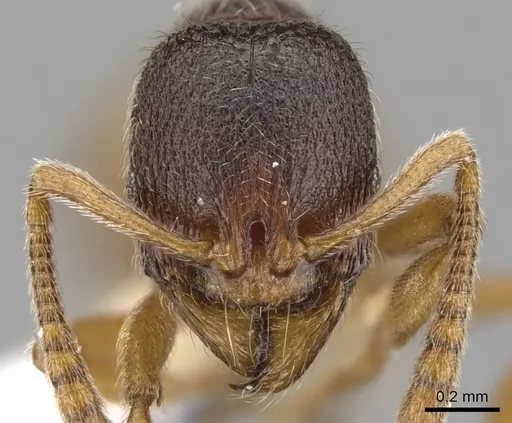
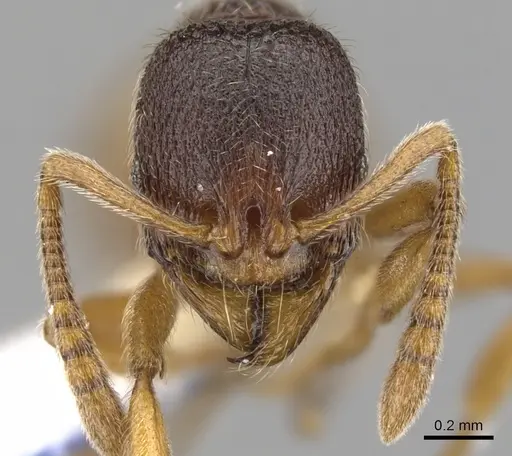
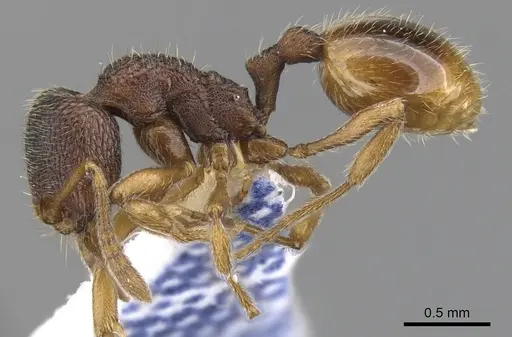
Workers of Stenamma koreanense are small, measuring 4.36-4.69 mm total length [2]. They have a distinctive brown body: the alitrunk is dark brown, and the appendages plus the tip of the gaster are yellowish brown [2]. Compound eyes are black, and the body has yellow setae (short hairs). The mandible has 7-8 teeth, with the apical two being prominent [2]. Propodeal spines are moderate in length, about one-third the length of the declivitous face. The petiole is pedunculate with a stalk about half the length of the node. Queens are larger at 5.18 mm, have three ocelli, and wing scars indicating they were once winged [2]. This species can be distinguished from similar S. ussuriense by its shorter petiole and more pronounced apical mandibular teeth [2].
Housing and Nest Preferences
In the wild, S. koreanense nests under rocks near intermittent streams. The type colony was found under a rock about 30 cm in diameter, with the nest running parallel to the stream [2]. For captive care, a naturalistic setup with a soil-filled container and flat stones on top mimics their rock-nesting behavior. Alternatively, a Y-tong (AAC) nest or plaster nest with good moisture retention works well. Provide tight chambers scaled to their small worker size (~4.5 mm). They prefer dark, humid nest conditions and will avoid brightly lit areas. Because they nest near water in the wild, maintain moderate humidity, the substrate should feel damp but never waterlogged.
Temperature and Seasonal Care
As a Palearctic species from Korea (around 37.75° N latitude), Stenamma koreanense experiences distinct seasons [3]. Keep colonies at room temperature, roughly 18-22 °C, during the active season. During winter, provide 3-4 months of cold dormancy at 5-10 °C to mimic natural conditions [3]. Avoid keeping them above 25 °C for extended periods, as they are adapted to temperate conditions. A heating cable on one side of the nest can create a temperature gradient if your room runs cool, but always provide cooler areas the ants can retreat to.
Feeding and Diet
Specific dietary information for S. koreanense is not documented. Based on typical Stenamma behavior, they are likely generalist foragers that collect small invertebrates and honeydew from aphids. In captivity, offer a varied diet including small live prey like fruit flies, pinhead crickets, or mealworms. Sugar sources like honey water or sugar water are typically accepted. Feed protein prey 2-3 times per week and provide constant access to sugar water. Remove uneaten prey after 24-48 hours to prevent mold.
Colony Development and Growth
The type colony consisted of one queen and 31 workers, collected in May [2]. This gives a baseline for colony size but no information on maximum size or development speed. Based on related temperate Myrmicinae, expect moderate growth, colonies likely develop over several years. The queen had wing scars, indicating she had mated and shed her wings [2]. First workers (nanitics) will be smaller than normal workers, typical for ants. Patience is essential, Stenamma are not fast-growing, and a newly founded colony may take months to produce its first workers. Development from egg to worker likely takes 8-12 weeks at optimal temperature, but this is an estimate.
Frequently Asked Questions
How long does it take for Stenamma koreanense to produce first workers?
The exact development timeline is unconfirmed. Based on typical Stenamma and related Myrmicinae patterns, expect 8-12 weeks from egg to first worker at optimal temperature (around 20 °C). Patience is essential as this is not a fast-growing species.
What temperature do Stenamma koreanense ants need?
Keep them at room temperature, roughly 18-22 °C. As a Palearctic species from Korea, they prefer cooler conditions than tropical ants [3]. Avoid temperatures above 25 °C for extended periods.
Do Stenamma koreanense ants need hibernation?
Yes. As a Palearctic species from the Korean Peninsula, they require a winter dormancy period. Keep colonies at 5-10 °C for 3-4 months during winter to mimic natural seasonal cycles [3].
Are Stenamma koreanense good for beginners?
This species is rated as medium difficulty. While not overly demanding, the lack of species-specific care information and slow growth may challenge beginners. The need for winter dormancy also requires planning.
What do Stenamma koreanense ants eat?
Specific diet is unconfirmed, but based on typical Stenamma behavior, offer small live prey (fruit flies, pinhead crickets, small mealworms) and sugar sources (honey water, sugar water). Feed protein 2-3 times weekly with constant sugar access.
How big do Stenamma koreanense colonies get?
Maximum colony size is unknown. The documented wild colony had 31 workers, but this was likely not a mature colony. Expect moderate-sized colonies over several years of growth [2].
Can I keep multiple Stenamma koreanense queens together?
This is not recommended. The type colony shows single-queen (monogyne) structure, and combining unrelated queens has not been documented [2].
Do Stenamma koreanense ants sting?
Stenamma ants are not known for stinging and pose no danger to keepers. They are cryptic, ground-nesting ants that avoid confrontation.
What size nest do I need for Stenamma koreanense?
Use a nest with small, tight chambers scaled to their worker size (~4.5 mm). A naturalistic setup with soil and flat stones works well, or a Y-tong (AAC) / plaster nest with good humidity retention [2].
Where can I get Stenamma koreanense ants?
This is a rarely kept species with limited availability. It is endemic to the Korean Peninsula and not commonly available in the antkeeping hobby [1]. Check with specialized Asian ant breeders.
Report an Issue
The current care sheet is based fully on literature. See inconsistencies, or something that's incorrect? Please , it will be resolved after review from an admin. Contributing to the blogs tab also helps providing information, to make us be able to further improve the caresheets. Thank you for your support!
References

Esta ficha de cuidados está bajo licencia CC BY-SA 4.0 .
Blogs de la comunidad
CASENT0900944
Ver en AntWeb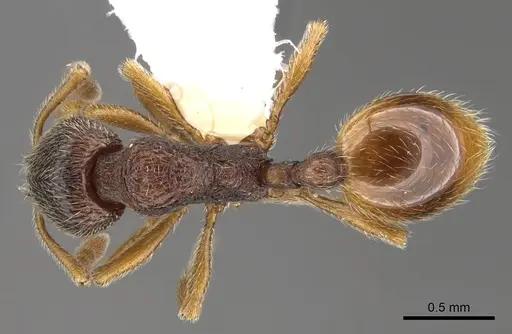
Literatura
Cargando mapa de distribución...Cargando productos...