
Solenopsis marxi
- Nom. cient.
- Solenopsis marxi
- Tribu
- Solenopsidini
- Subfamilia
- Myrmicinae
- Autor
- Forel, 1915
- Distribución
- Encontrado en 0 países
Introducción
Solenopsis marxi is a tiny ant species originally described from Java, Indonesia. It has been recorded from lowland dipterocarp forest in Brunei and also from Tabasco in southern Mexico , suggesting a scattered or potentially wider distribution. As a member of the Myrmicinae subfamily and tribe Solenopsidini, it possesses a functional stinger used to subdue prey and defend the colony. Very little specific biology is known about this species - most aspects of its life cycle and colony structure have not been studied.
Quick Summary
- Difficulty: Medium, but many basic care parameters are unknown, so be prepared to experiment.
- Origin & Habitat: Found in lowland dipterocarp forest in Brunei [1] and also recorded from Tabasco, Mexico [2]. Probably inhabits warm, humid tropical forest environments.
- Colony Type: Unconfirmed, no published data on whether colonies are monogyne or polygyne.
- Size & Growth:
- Queen: Unknown, size data unavailable.
- Worker: Unknown, size data unavailable (likely very small, judging from the synonym 'pygmaea' meaning 'dwarf').
- Colony: Unknown.
- Growth: Unknown.
- Development: Unknown, no published data. (Development likely depends on warm, stable temperatures typical of tropical lowland forests.)
- Antkeeping:
- Temperature: Unknown, as a tropical lowland forest species, likely requires warm conditions. Aim for 25-28°C and avoid dropping below 20°C.
- Humidity: Unknown, likely high, similar to its native forest floor. Keep the nest substrate consistently moist but not waterlogged.
- Diapause: No, this is a tropical species that does not experience cold winters. Maintain warmth year-round.
- Nesting: No specific data. Based on small size, test tubes or small chambers with narrow passages are recommended to make the ants feel secure.
- Behavior: Gentle and non-aggressive. They possess a stinger, but due to their very small size any sting would be extremely mild and barely noticeable. Their main challenge is escape, they can squeeze through tiny gaps, so excellent escape prevention is critical [3].
- Common Issues: escape prevention is critical due to their tiny size, standard mesh may not stop them., very little is known about their care, most guidance must be inferred from general tropical Solenopsis patterns., tropical species requires stable warmth and high humidity, cold or dry conditions can halt development., their small size makes them sensitive to disturbance and difficult to observe without magnification., if housed inappropriately, they may fail to thrive or escape unnoticed.
Housing and Nest Setup
Because specific nesting preferences are unknown, start with a small test tube setup. Their tiny size means narrow spaces help them feel secure. For established colonies, use small chambers (plaster, Y-tong, or 3D-printed nests) with narrow corridors. Avoid large, open areas that could make them feel exposed. Keep the nest moist, their natural habitat is humid lowland forest. A small outworld with a tight lid is essential to prevent escapes [3].
Feeding and Diet
No specific dietary data exists, but like most ants they are likely omnivorous. Offer small protein sources (fruit flies, pinhead crickets, small pieces of mealworm) and sugar water or honey. Their tiny size means prey must be very small. Feed small amounts of protein 2-3 times per week and keep a sugar source available. Remove uneaten protein after 24 hours to prevent mold in humid conditions.
Temperature and Seasonal Care
This is a tropical lowland forest species. Maintain warm temperatures year-round, avoid any cooling period. Optimal range is likely around 25-28°C, but this is inference from habitat studies [1]. A gentle gradient (22°C on one side) can be provided. Temperatures below 20°C may stress or kill the colony. Heating cables or mats can be used if room temperature is insufficient.
Handling and Colony Behavior
These ants are docile and pose no significant threat to humans. They have a functional stinger (typical of the Myrmicinae subfamily), but due to their tiny size, any sting would be very mild. They will not attack unless directly handled. The main challenge is their ability to escape through tiny gaps. Use tight-fitting lids, fluon, or other barriers at all openings. Because they are small and the colony may grow slowly, minimize disturbances and avoid frequent nest inspection.
Growth and Development
No published data on growth rate or development timing. As a tropical species, colony growth likely proceeds steadily under warm, stable conditions. Be patient, small colonies may take many months to reach even a few dozen workers. The queen's founding method is unknown: do not assume claustral or semi-claustral. Observe her behavior after catching to determine feeding needs.
Frequently Asked Questions
How long does it take for Solenopsis marxi to have first workers?
Unknown, no published data. Based on typical small myrmicine ants, it may take several weeks at warm temperatures, but this is speculation.
What do Solenopsis marxi eat?
Exact diet unknown. Offer small insects (fruit flies, small crickets) and sugar water. Remove uneaten food to prevent mold.
Can I keep Solenopsis marxi in a test tube?
Yes, test tubes are ideal for starting a colony. Their small size makes narrow tubes feel secure. Use a cotton-plugged water reservoir for humidity.
Do Solenopsis marxi need hibernation?
No, they are a tropical species and do not require any cooling period. Keep warm year-round.
How big do Solenopsis marxi colonies get?
Unknown, no data on colony size. They may remain small (under 100 workers) or grow moderately. Expect uncertainty.
Are Solenopsis marxi good for beginners?
They are moderate difficulty because little is known about their care. Their small size requires excellent escape prevention and controlled conditions. Not recommended for absolute beginners.
Why are my Solenopsis marxi escaping?
Their tiny size lets them fit through very small gaps. Check all seals, use fine mesh, apply fluon or petroleum jelly around openings. Use airtight containers if necessary.
What temperature do Solenopsis marxi need?
Unknown exactly. As a tropical lowland forest species, keep warm, ideally 25-28°C. Avoid temperatures below 20°C.
When should I move Solenopsis marxi to a formicarium?
Wait until the test tube is clearly too small and the colony has at least several workers. Because specific preferences are unknown, start with a small nest and upgrade slowly.
Report an Issue
The current care sheet is based fully on literature. See inconsistencies, or something that's incorrect? Please , it will be resolved after review from an admin. Contributing to the blogs tab also helps providing information, to make us be able to further improve the caresheets. Thank you for your support!
References

Esta ficha de cuidados está bajo licencia CC BY-SA 4.0 .
Blogs de la comunidad
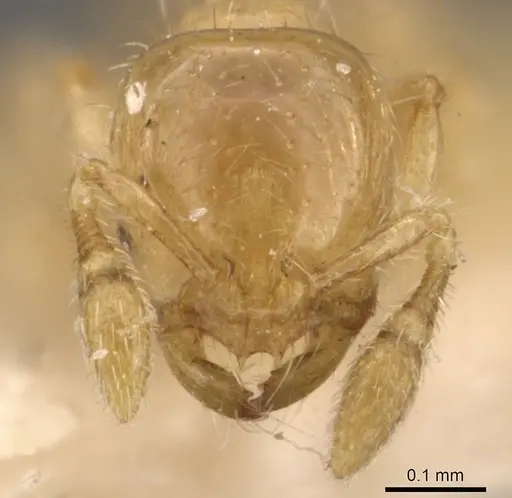
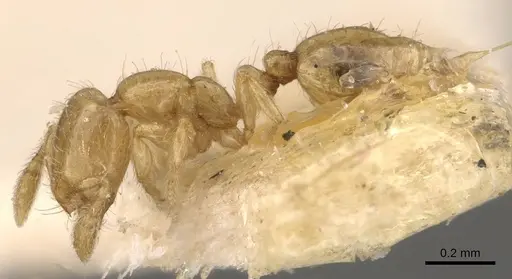
CASENT0908877
Ver en AntWeb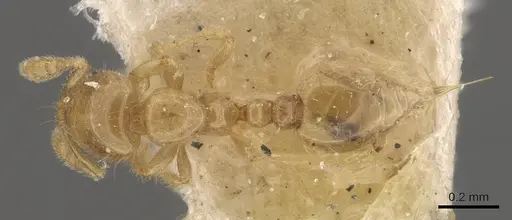
Literatura
Cargando mapa de distribución...Cargando productos...