
Solenopsis johnsoni
- Nom. cient.
- Solenopsis johnsoni
- Tribu
- Solenopsidini
- Subfamilia
- Myrmicinae
- Autor
- Pacheco <i>et al.</i>, 2013
- Distribución
- Encontrado en 0 países
Introducción
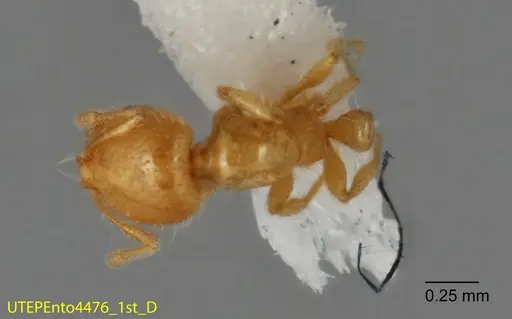
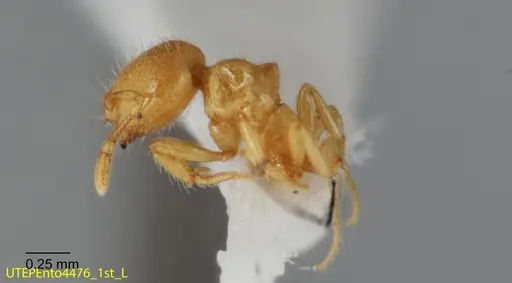
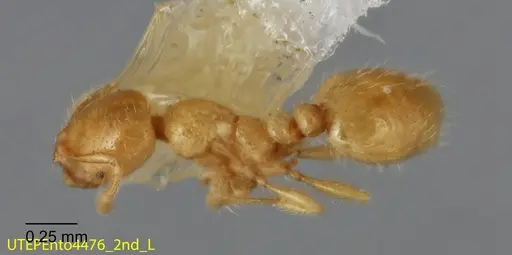
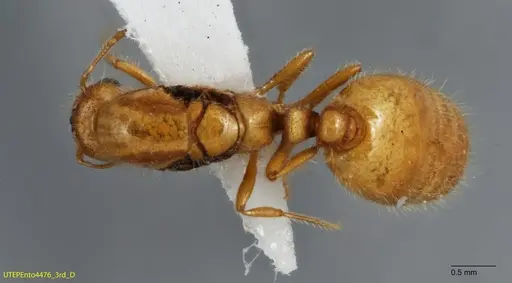
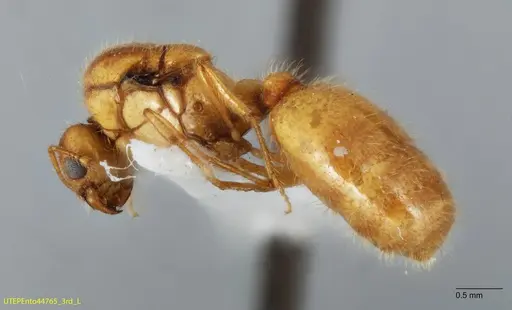
Solenopsis johnsoni is a dimorphic thief ant from Mexico, part of the [Solenopsis fugax species complex] . Minor workers measure about 1.44 mm, majors 1.92-2.52 mm, and queens reach 5.40-5.88 mm . Workers are light yellow and covered in erect hairs, with a square-shaped head. Queens are dark yellow, large, and heavily punctured. This species nests under stones in grassy areas with well-drained, moist soil . What makes S. johnsoni stand out is that it's the only dimorphic thief ant in North America - most thief ants have workers that all look the same size . Colonies naturally have multiple queens (polygynous), with more than 4 queens recorded in the type series .
Quick Summary
- Difficulty: Medium
- Origin & Habitat: Native to Mexico (Baja California Sur, central Mexico). Found under stones in grassy meadows and roadsides, in brown rocky loam soil that stays moist but drains well [2].
- Colony Type: Polygynous, colonies naturally contain multiple queens (over 4 documented) [2].
- Size & Growth:
- Queen: 5.40-5.88 mm [2]
- Worker: Minor: ~1.44 mm, Major: ~1.92-2.52 mm [2]
- Colony: Up to several hundred workers (estimated based on related species)
- Growth: Moderate, estimated from genus patterns
- Development: 6-10 weeks estimated based on typical Solenopsis development (Specific timeline for this species is unconfirmed, based on genus-level data)
- Antkeeping:
- Temperature: Keep warm at 24-28°C. Provide a temperature gradient so ants can choose. Avoid prolonged drops below 20°C. (Inferred from Mexican origin) [2]
- Humidity: Moderate to high, keep nest substrate damp but not waterlogged. Their natural habitat has moist soil, so avoid letting the nest dry out completely. [2]
- Diapause: Likely beneficial, as a temperate Mexican species, a winter rest period (2-3 months at 10-15°C) is probable, but this has not been confirmed. Reduce feeding and disturbance during this time.
- Nesting: Naturalistic setups with a flat stone over moist soil mimic their wild nests. Y-tong (AAC) or plaster nests with narrow chambers work well. Avoid acrylic, they prefer materials that hold humidity. [2]
- Behavior: Secretive and shy, spends most time inside the nest. Major workers can deliver a mild sting if the colony is threatened, but they're not aggressive toward keepers. Not notorious for escaping, but their small size means standard escape prevention is still needed. In the wild they raid other ant colonies for brood, so they appreciate high-protein food. [2]
- Common Issues: slow colony establishment early on due to multiple queens needing to synchronize, be patient., their tiny size makes escape prevention critical, seal all gaps even if they seem calm., high humidity requirements can cause mold if airflow is poor, provide ventilation., drying out kills brood, check nest moisture weekly., major workers can sting if squeezed, use forceps with care.
Housing and Nest Setup
Mimic their wild homes: place a flat stone over moist soil in a small container. Or use a Y-tong (AAC) or plaster nest with small chambers, these materials hold humidity well. Avoid acrylic because it doesn't retain moisture. Make chambers snug: these ants prefer tight spaces. Connect an outworld for foraging. Since workers are tiny, check every joint and lid for gaps. Fluon on the outworld rim helps prevent escapes. [2]
Feeding and Diet
Thief ants need lots of protein. Offer small live prey like fruit flies, pinhead crickets, or mealworm pieces 2-3 times per week. Also provide sugar water or honey. Remove uneaten prey after 24 hours to avoid mold. Vary the prey to keep the colony healthy. In the wild they steal brood from other ant nests, so they're naturally predatory. [2]
Temperature and Seasonal Care
Keep the nest at 24-28°C with a gentle temperature gradient using a heat mat on one side. Ants will move to their preferred spot. Below 20°C they may slow down. During winter, consider a 2-3 month cooling period at 10-15°C, this matches their Mexican origin and likely helps the colony. During diapause, reduce feeding and check moisture less often. In summer, room temperature works fine if it's stable. Watch where workers cluster, if they gather near the heat source, they want it warmer. [2]
Colony Structure and Multi-Queen Dynamics
S. johnsoni is naturally polygynous, the type series included over 4 queens [2]. Unlike single-queen species, multiple queens work together peacefully. You can start with several dealate queens together, they should accept each other. More queens mean faster egg-laying and colony growth. As the colony matures, it will produce many alates, that's normal. Don't worry if you see several large queens in the nest. [2]
Behavior and Defense
These ants spend most time inside the nest, foraging only in short bursts. Major workers develop a mild sting if the colony is disturbed, but they rarely sting keepers. They are not true escape artists, but their tiny size means even a small gap is an escape route. The species is dimorphic: minors do most daily work, majors defend and may help break down larger prey. As thief ants, they're adapted to steal food from other colonies, that's why they go crazy for protein. [1][2]
Frequently Asked Questions
How long does it take for Solenopsis johnsoni to produce first workers?
Based on typical Solenopsis development, expect 6-10 weeks from egg to first worker at 26°C. This is an estimate since specific data for this species is not available. The queen will lay eggs that go through larva and pupa stages before emerging as workers. [2]
Can I keep multiple Solenopsis johnsoni queens together?
Yes, it's natural and recommended. They are polygynous, multiple queens live together in the wild. You can put several dealate queens in the same founding setup. Unlike single-queen species, they won't fight. [2]
What do Solenopsis johnsoni eat?
They need a protein-rich diet. Feed small live prey like fruit flies, pinhead crickets, or tiny mealworms 2-3 times per week. Also provide sugar water or honey. Remove uneaten prey after 24 hours to keep the nest clean. [2]
Are Solenopsis johnsoni good for beginners?
They're medium difficulty. Not the easiest, but not expert-level. They need steady warmth and humidity, plus lots of protein. Their polygynous setup makes founding easier since you can start with multiple queens. Best for keepers who have successfully raised at least one other colony. [2]
How big do Solenopsis johnsoni colonies get?
The exact maximum is unknown. Related species in the fugax complex reach several hundred workers. With good care, you could expect a few hundred over a couple of years. [2]
Do Solenopsis johnsoni need hibernation?
Likely yes. As a Mexican species from temperate elevations, a winter rest period of 2-3 months at 10-15°C is probably beneficial. This is an estimate, there's no direct study on their diapause. Reduce feeding and avoid disturbing the colony during this time. [2]
When should I move Solenopsis johnsoni to a formicarium?
Wait until the colony has at least 50-100 workers and has outgrown the test tube. If workers constantly crowd the cotton, it's time to upgrade. A naturalistic setup with a flat stone over soil or a Y-tong nest works well. [2]
Why is Solenopsis johnsoni called a thief ant?
Thief ants are known for nesting near other ant colonies and raiding them to steal brood. This species likely does the same, which is why they need so much protein. They aren't true social parasites, they just steal food. [2]
What's the difference between minor and major workers in Solenopsis johnsoni?
S. johnsoni is one of the few dimorphic thief ants in North America. Minors (about 1.44 mm) handle most daily tasks: foraging, brood care, nest-building. Majors (1.92-2.52 mm) are defenders with a mild sting and can help process larger prey. [1][2]
Report an Issue
The current care sheet is based fully on literature. See inconsistencies, or something that's incorrect? Please , it will be resolved after review from an admin. Contributing to the blogs tab also helps providing information, to make us be able to further improve the caresheets. Thank you for your support!
References

Esta ficha de cuidados está bajo licencia CC BY-SA 4.0 .
Blogs de la comunidad
Literatura
Cargando mapa de distribución...Cargando productos...