
Simopone vepres
- Nom. cient.
- Simopone vepres
- Subfamilia
- Dorylinae
- Autor
- Bolton & Fisher, 2012
- Distribución
- Encontrado en 0 países
Introducción
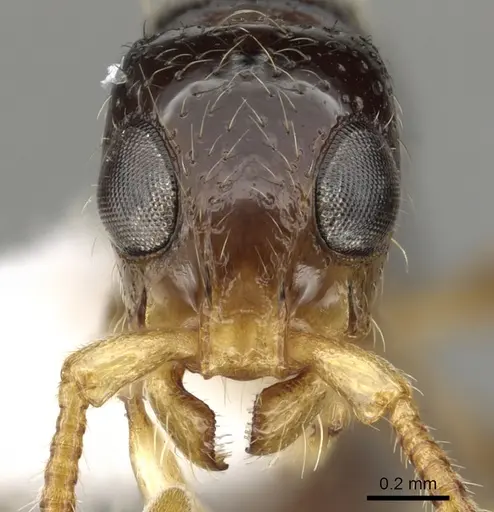
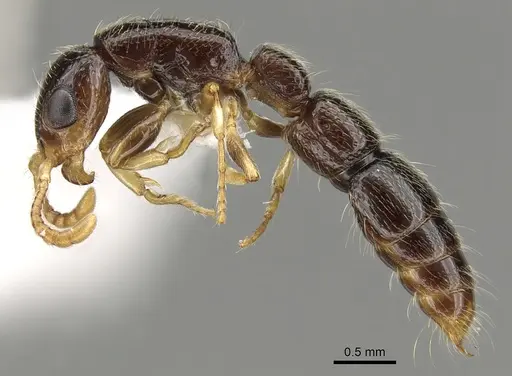
Simopone vepres is an extremely rare predatory ant from the Dorylinae subfamily, known only from two worker specimens collected in Ghana. Workers have a head length of 0.96 mm, making them very small . Their body is glossy brown, with dull yellow antennae and legs, and distinctive large eyes that project beyond the sides of the head . This species belongs to the schoutedeni species group and was formally described in 2012 by Bolton and Fisher . The most notable aspect is its predatory behavior - the type specimens were found in a nest inside rotting cherelles (young cacao pods), preying on brood of Crematogaster ants, indicating this species raids other ant colonies to steal their larvae and pupae for food .
Quick Summary
- Difficulty: Expert
- Origin & Habitat: Ghana, West Africa. Found in the Eastern Region at the Cocoa Research Institute near Tafo, nesting inside rotting cherelles (young cacao pods) in a humid, shaded agricultural environment [1][2].
- Colony Type: Unknown colony structure. Only two workers have ever been collected, so colony size and queen number are unconfirmed. As a Dorylinae ant, they likely form small colonies with potential ergatoid (wingless) queens, but this is unconfirmed.
- Size & Growth:
- Queen: Unknown, queens have never been documented [1].
- Worker: Total body length unknown, head length is 0.96 mm [1].
- Colony: Unknown, only two workers have ever been collected [1].
- Growth: Unknown, no colony development data exists.
- Development: Unknown, no captive colonies studied. (No captive colonies have been documented. All estimates are speculative.)
- Antkeeping:
- Temperature: Based on Ghana's tropical climate, likely need warm conditions around 24-28°C. Provide a temperature gradient allowing workers to self-regulate.
- Humidity: High humidity required, they nest in rotting wood in a humid cocoa plantation environment. Keep nest substrate consistently moist but not waterlogged.
- Diapause: Unknown, Ghana has minimal seasonal temperature variation. They may not require a diapause period, but this is unconfirmed.
- Nesting: Natural nesting: inside rotting cherelles (young cacao pods), soft, damp rotting wood material. In captivity, provide moist nesting media like soil or small chambers in plaster/AAC nests that can hold moisture. The tiny worker size means chambers should be small and passages narrow.
- Behavior: Predatory raiders that target Crematogaster brood. They likely use chemical trails to locate and raid other ant nests, similar to other Dorylinae species [1]. Workers are tiny but fast-moving. Escape prevention is critical due to their minute size, they can easily escape through standard barrier setups. Aggression toward prey is high but toward humans is minimal due to their tiny size.
- Common Issues: escape prevention is critical, workers are extremely tiny and can squeeze through standard barriers., no captive husbandry information exists, all care is speculative., prey acceptance is unknown, they may only accept ant brood from raids., colony failure likely if proper prey is not available., extreme rarity means wild colonies cannot be collected ethically.
Discovery and Rarity
Simopone vepres is known from only two worker specimens, both from the same nest in Ghana, collected in 1976. The holotype and paratype were found nesting inside rotting cherelles (young cacao pods) at the Cocoa Research Institute near Tafo. The nest contained prey consisting entirely of brood from a Crematogaster colony, confirming this species is a specialized predator that raids other ant nests for their larvae and pupae [1]. This extreme rarity makes Simopone vepres essentially impossible to keep in captivity, as no wild colonies have been documented since the original collection over 45 years ago.
Identification and Appearance
Workers have a head length of 0.96 mm, making them among the smallest Simopone species [1]. The most distinctive feature is their large eyes, which visibly project beyond the sides of the head through at least the middle third of their length, this is unusual among Simopone and helps separate them from similar species like Simopone wilburi [1]. The body is glossy brown, while the antennae (scapes and funiculi) are dull yellow, femora are light brown, and tibiae and tarsi are yellow [1]. The abdominal segments (AII-AIV) are broader than long, giving the rear of the ant a somewhat flattened appearance [1]. These ants belong to the schoutedeni species group, which contains several similar-looking African species [1][2].
Predatory Behavior
The type specimens were collected while raiding a Crematogaster nest, with the prey being Crematogaster brood (larvae and pupae). This confirms Simopone vepres is a specialized predator that targets other ant species' colonies, specifically their brood [1]. This is typical behavior for Dorylinae ants, which often raid other ant nests. In captivity, you would likely need to provide live ant brood from species like Crematogaster as their primary food source, standard ant foods like sugar water and insects would probably not be accepted. However, since no captive colonies exist, this is speculative and based on typical Dorylinae behavior [1].
Natural Habitat
This species was collected in a cocoa plantation in Ghana's Eastern Region, nesting inside rotting cherelles (young cacao pods that have fallen from the tree). This indicates they prefer humid, shaded environments with abundant decaying plant material [1]. The cocoa plantation provides a complex, humid microhabitat with plenty of hiding spots and potential prey (other small ants and their brood). In captivity, you would need to replicate these conditions, high humidity, access to soft nesting material that holds moisture, and a constant supply of live ant brood as prey [1].
Why This Species Cannot Be Kept
Simopone vepres is not a species you can keep. It is known from only two workers collected in 1976,and no additional specimens have been reported since then. There are no documented captive colonies anywhere in the world. The species has never been observed in the wild since its original collection, meaning there are no colonies to source from. Additionally, their specialized diet of ant brood would make captive husbandry extremely challenging even if colonies were available. If you are interested in predatory ants, consider more commonly available Dorylinae species or other specialized predators that have established captive populations. This caresheet exists only to document what is known about this mysterious species. [1]
Frequently Asked Questions
Can I keep Simopone vepres ants?
No. Simopone vepres is one of the rarest ants in the world with only two specimens ever collected. No captive colonies exist and no additional wild colonies have been found since 1976. This species is not available in the antkeeping hobby and cannot be kept.
What do Simopone vepres ants eat?
Based on the type specimen data, they prey exclusively on the brood (larvae and pupae) of other ant species, specifically Crematogaster [1]. They are specialized predators that raid ant nests rather than foraging for independent food sources. Standard ant foods would likely not be accepted.
Where does Simopone vepres live?
Only known from Ghana, West Africa, specifically from the Cocoa Research Institute near Tafo in the Eastern Region [1]. They were found nesting inside rotting cherelles (young cacao pods) in a humid agricultural environment.
How big are Simopone vepres workers?
Workers have a head length of 0.96 mm, making them very small [1]. Total body length has not been documented.
Is Simopone vepres dangerous?
No. At less than 1 mm in head length, they pose no threat to humans. Their sting is likely ineffective due to their minute size, and they have no chemical spray defenses like some larger ants.
Why is Simopone vepres so rare?
Only two workers have ever been collected, both from the same nest in 1976. Despite ongoing surveys, no additional specimens have been found. This could indicate genuinely low population density, very specialized habitat requirements, or simply that they are excellent at avoiding detection. Their tiny size and cryptic habits make them extremely difficult to find.
Do Simopone vepres queens exist?
Queens have never been documented for this species. Only two worker specimens exist in museum collections. The colony structure, whether they have ergatoid (wingless) queens, and how they reproduce remain completely unknown [1].
What is the closest species I can keep instead?
If you are interested in predatory Dorylinae ants, consider other Simopone species that have documented captive populations, or explore the army ant genus Dorylus which is more commonly available.
Does Simopone vepres need hibernation?
Unknown. Based on their Ghana origin (tropical climate with minimal seasonal temperature variation), they likely do not require a diapause period. However, since no live colonies have ever been studied, this is speculative.
How do I identify Simopone vepres?
Identification requires expert examination of the large, projecting eyes that extend beyond the head margins, the glossy brown body with yellow antennae and yellow legs, and the specific head measurements (head length 0.96 mm, head width 0.69 mm) [1]. This species can only be identified by trained taxonomists using microscope examination of museum specimens.
Report an Issue
The current care sheet is based fully on literature. See inconsistencies, or something that's incorrect? Please , it will be resolved after review from an admin. Contributing to the blogs tab also helps providing information, to make us be able to further improve the caresheets. Thank you for your support!
References

Esta ficha de cuidados está bajo licencia CC BY-SA 4.0 .
Blogs de la comunidad
CASENT0902704
Ver en AntWeb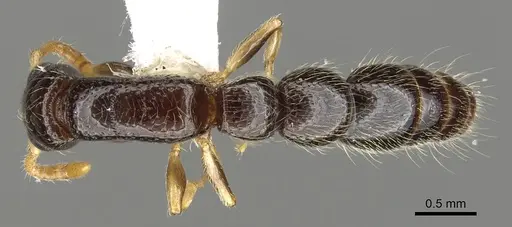
Literatura
Cargando mapa de distribución...Cargando productos...