
Simopone persculpta
- Nom. cient.
- Simopone persculpta
- Subfamilia
- Dorylinae
- Autor
- Bolton & Fisher, 2012
- Distribución
- Encontrado en 0 países
Introducción
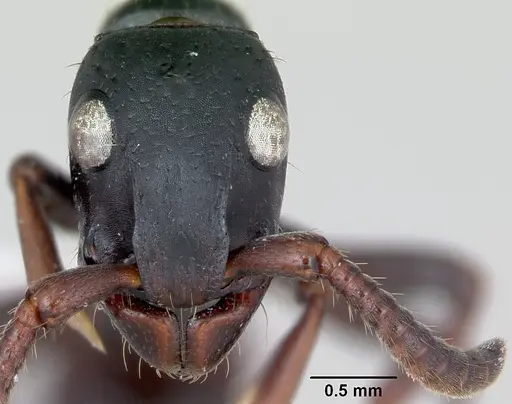
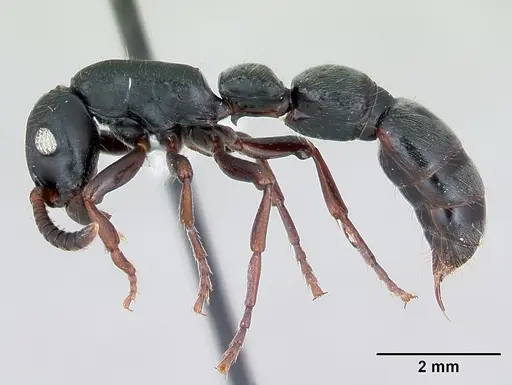
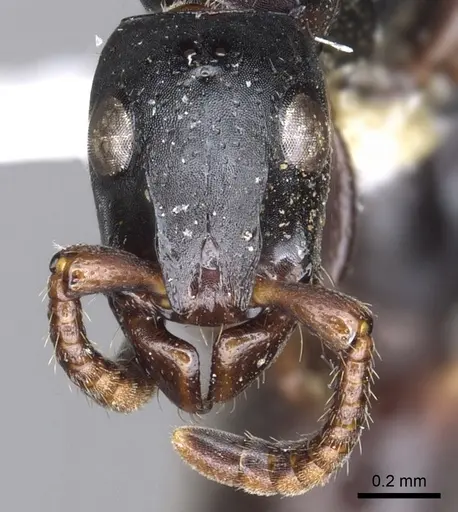
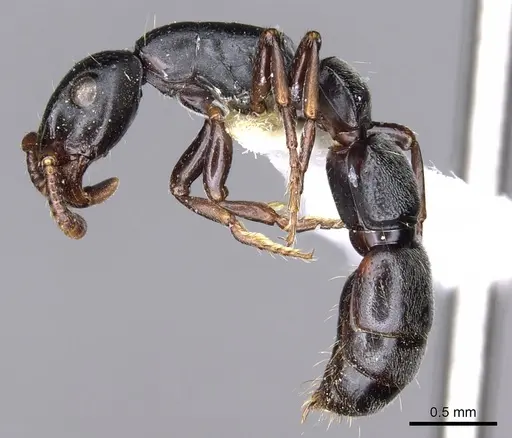
Simopone persculpta is a predatory ant from the Dorylinae subfamily, found in Kenya, Mozambique, South Africa, and Tanzania . Workers are mostly dark brown to black and have a head length of 1.66-1.80 mm ; total body length data is unavailable. They were collected in secondary forest on vegetation, suggesting a predatory lifestyle hunting small invertebrates . This species belongs to the emeryi group and is closely related to Simopone grandis, sharing similar clypeus and petiole shapes but differing in its finely reticulate-punctulate body sculpture .
Quick Summary
- Difficulty: Expert
- Origin & Habitat: Afrotropical region, Kenya, Mozambique, South Africa, Tanzania. Collected in secondary forest, typically on vegetation [1][2].
- Colony Type: Unconfirmed, no colony structure data available for this species.
- Size & Growth:
- Queen: Size data unavailable
- Worker: Size data unavailable
- Colony: Unknown
- Growth: Unknown
- Development: Unknown (No development data exists for this species.)
- Antkeeping:
- Temperature: 24-28°C is an estimate based on its Afrotropical distribution, but optimal temperature is unconfirmed [1]. Provide a thermal gradient so the colony can choose their preferred temperature.
- Humidity: Keep the nest substrate consistently moist but not waterlogged. Specific humidity requirements are unconfirmed, aim for moderate to high humidity based on secondary forest habitat [1].
- Diapause: Unknown, likely not required as an Afrotropical species, but no specific data.
- Nesting: Use a naturalistic setup with moist substrate or a Y-tong/plaster nest that retains humidity well. Provide narrow chambers scaled to the ants' small size.
- Behavior: S. persculpta is a predatory ant that hunts small invertebrates. It has large eyes, suggesting visual hunting. Temperament is likely defensive, many Dorylinae ants can sting when threatened. Escape risk is high due to small body size, use tight seals and barriers.
- Common Issues: lack of available care information makes captive husbandry challenging, constant supply of live small prey required due to predatory diet, humidity control difficult, too dry leads to desiccation, too wet promotes mold, temperature must be maintained in warm range or colony may become sluggish, wild-caught colonies may carry parasites that can devastate a captive setup
Housing and Nest Setup
Due to the lack of specific data, general Dorylinae care practices are suggested. Use a Y-tong (AAC) or plaster nest that can hold moisture well. Keep the nest substrate damp but not soggy. Create a temperature gradient with a heating cable on one side, targeting 24-28°C [1], so the colony can self-regulate. The outworld (foraging area) should be slightly drier. Ensure absolute escape proofing, these ants are small enough to squeeze through tiny gaps. Apply Fluon or similar barrier to the outworld walls.
Feeding and Diet
As a Dorylinae predator, S. persculpta likely requires live prey [2]. Offer small insects such as fruit flies, micro crickets, or small mealworms. Prey should be smaller than the ant's head. Offer prey every 2-3 days and remove leftovers to prevent mold. Whether they accept sugary foods is unknown, focus on protein. Gut-load feeder insects for better nutrition.
Temperature and Seasonal Care
Maintain a warm environment: 24-28°C based on its tropical distribution [1]. Use a heating cable on one side of the nest to create a gradient. Avoid sudden temperature swings. Diapause is unconfirmed, as an Afrotropical species, it likely does not require a cold period. Monitor activity, if workers cluster near heat, raise temperature slightly, if they avoid it, reduce heat.
Behavior and Temperament
This is a predatory ant that hunts visually with its large eyes [2]. Foraging behavior is unconfirmed but typical of Dorylinae, workers may recruit nestmates to large prey when needed. They have a functional stinger and can defend the nest aggressively if disturbed. Their small size makes them adept at escaping through small cracks, ensure escape barriers are maintained.
Colony Establishment
Founding behavior is unconfirmed. If you have a wild-caught queen, place her in a quiet, dark setup with moist substrate and minimal disturbance. Avoid disturbing her until workers appear. Once workers emerge, offer live prey. Growth rate and colony size are unknown. Quarantine wild-caught colonies to monitor for parasites before integrating into a permanent setup.
Frequently Asked Questions
How long does it take for Simopone persculpta to produce first workers?
This is unknown, no development data exists for this species.
Can I keep Simopone persculpta in a test tube setup?
A test tube may work for founding but likely won't provide enough humidity long-term. A Y-tong or plaster nest with a water reservoir is better for established colonies.
Do Simopone persculpta ants sting?
Yes, as a Dorylinae species, they possess a stinger and can deliver painful stings if threatened. Handle with caution.
What do Simopone persculpta eat?
They are predators that need live small invertebrates like fruit flies, micro crickets, or tiny mealworms. They likely do not accept sugary foods, but this is unconfirmed.
Are Simopone persculpta good for beginners?
No. Rated Expert difficulty because care information is almost nonexistent, and they have demanding humidity and predatory diet needs.
Do Simopone persculpta need hibernation?
Hibernation is unknown and likely not required for this Afrotropical species. No cold period is recommended.
How big do Simopone persculpta colonies get?
Colony size is unknown, no data is available for this species.
Can I keep multiple Simopone persculpta queens together?
Colony structure is unconfirmed, Dorylinae are typically monogyne, but combining queens is not recommended as it may cause aggression.
Why is my Simopone persculpta colony dying?
Common causes include incorrect humidity, temperature outside 24-28°C, lack of live prey, parasites from wild-caught colonies, or excessive disturbance. Review each factor carefully.
When should I move Simopone persculpta to a formicarium?
Move to a larger nest when the colony outgrows its founding setup, typically when the test tube shows condensation issues or mold. A Y-tong or plaster nest with humidity control is recommended.
Report an Issue
The current care sheet is based fully on literature. See inconsistencies, or something that's incorrect? Please , it will be resolved after review from an admin. Contributing to the blogs tab also helps providing information, to make us be able to further improve the caresheets. Thank you for your support!
References

Esta ficha de cuidados está bajo licencia CC BY-SA 4.0 .
Blogs de la comunidad
CASENT0173049
Ver en AntWeb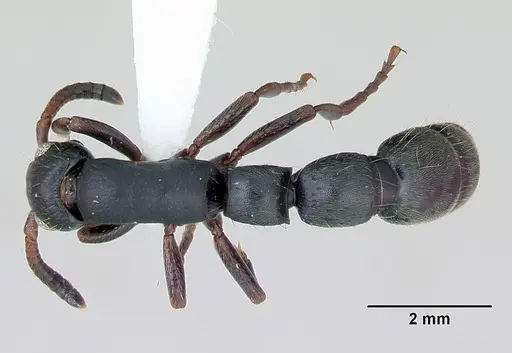
CASENT0902702
Ver en AntWeb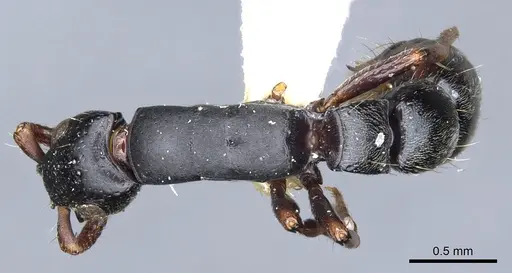
Literatura
Cargando mapa de distribución...Cargando productos...