
Simopone gressitti
- Nom. cient.
- Simopone gressitti
- Subfamilia
- Dorylinae
- Autor
- Taylor, 1965
- Distribución
- Encontrado en 0 países
Introducción
Simopone gressitti is a rare ant from New Guinea, known only from a single collection near Kota Jayapura in Indonesia at 100 meters elevation . Workers measure about 6.4 mm in total length and are nearly black with a strongly shiny body, large eyes, and reduced hair cover . They belong to the grandidieri species group of Simopone . The most notable thing about this species is how little we know - the queen has never been described, no colony has ever been studied, and no biological observations exist beyond the original taxonomy. As a member of the Dorylinae subfamily (relatives of army ants), it is presumed to be predatory, but this is an inference from related species rather than direct observation.
Quick Summary
- Difficulty: Expert
- Origin & Habitat: New Guinea (Irian Jaya, Indonesia), lowland tropical rainforest at 100 m elevation [1]
- Colony Type: Unknown, only worker caste has been described, queen and colony structure unconfirmed
- Size & Growth:
- Antkeeping:
- Temperature: Likely 24-28°C based on tropical lowland origin, no direct data available
- Humidity: High humidity (e.g.,70-80%) presumed from rainforest habitat, unconfirmed
- Diapause: Unknown, tropical species likely does not require diapause, but no data
- Nesting: Unknown, no nesting observations. Based on related Simopone species, likely nests in soil, rotting wood, or under stones in humid forest environments [2]
- Behavior: Behavior is completely unstudied. As a Dorylinae ant, it probably hunts small arthropods and may have a functional sting. Large eyes suggest visual hunting. Temperament unknown, but treat as capable of defensive behavior. Escape risk is moderate for a 6 mm ant, standard containment with fine mesh should work.
- Common Issues: complete lack of biological data makes reliable care recommendations impossible., no confirmed queen or colony structure, cannot determine founding type., wild-caught specimens may have parasites or diseases with no documented treatment., tropical humidity requirements may be hard to maintain consistently., feeding requirements unknown, presumed predator but prey preferences unconfirmed.
Appearance and Identification
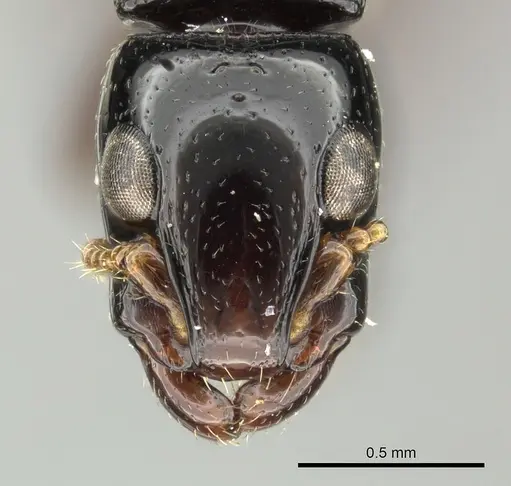
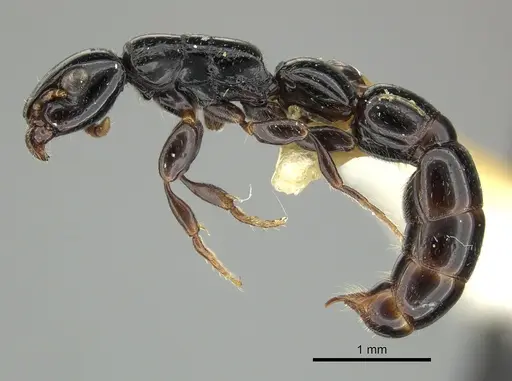
Simopone gressitti workers are around 6.4 mm total length, nearly black in color, and have a smooth, shiny body with scattered minute pits [1]. The eyes are large (about 0.38 times the head width), giving them good vision for an ant [1]. Key features to recognize this species: the scrobe (a groove on the head) bends downward just in front of the eye, a longitudinal groove runs across the metapleuron (side of the middle body), and the second abdominal segment (AII) is almost as wide as long, with a width/length ratio of 0.96 [1][3]. The petiole (waist segment) is trapezoidal when viewed from above, wider behind than in front, and has a ribbed carina across its front [1]. These traits help separate it from similar species like Simopone chapmani.
Distribution and Habitat
This ant is known from just one location in New Guinea: the type locality of Hollandia-Binnen (now Kota Jayapura) in Irian Jaya, Indonesia, at 100 meters elevation [1]. The region is lowland tropical rainforest with high humidity year-round. No further collection records exist, so its true range and habitat preferences are unknown.
Biology and Behavior - What We Don't Know
Almost nothing is known about Simopone gressitti's biology. Described in 1965 from a few worker specimens, no studies on its behavior, colony structure, diet, or ecology have ever been published [1]. Because it belongs to the Dorylinae subfamily, which includes army ants, it is likely predatory on other small invertebrates or possibly other ants. However, this is an inference from related species, not direct observation. Keepers should understand that keeping this species means pioneering its care from scratch.
Inferred Care Recommendations
Since no direct care data exists, here are educated guesses based on its tropical lowland origin. Keep the nest at 24-28°C with high humidity (the substrate should be moist but not wet). Provide a deep layer of soil or rotting wood for nesting, related Simopone species are thought to nest in these materials [2]. For feeding, offer a variety of small live prey: fruit flies, pinhead crickets, small mealworms, and other tiny arthropods. Watch what they accept and adjust. Since founding behavior is unknown, start with a claustral-style test tube setup with a water section and a dark cover. As the colony grows, move to a Y-tong or plaster nest. Be prepared for the possibility that the queen may need to forage (semi-claustral), offer prey in the test tube from the start.
Challenges and Considerations
Keeping Simopone gressitti is extremely difficult because there is no documented husbandry. The queen is unknown to science, so even identifying a founding queen is a challenge [1]. Founding behavior, development times, colony size, and dietary needs are all unstudied. Obtaining colonies would require field collection in remote New Guinea, which involves legal and logistical hurdles. Wild-caught colonies might carry unknown parasites or diseases with no treatments. This species is only for experienced keepers who are willing to experiment and risk losing colonies while learning basic requirements. Consider if contributing to scientific knowledge of this poorly understood ant is worth the difficulty.
Frequently Asked Questions
What do Simopone gressitti ants eat?
Unknown, no diet data exists. Based on Dorylinae relatives, offer small live prey like fruit flies, pinhead crickets, and tiny mealworms. Monitor acceptance. It is not known if they accept sugar sources.
How long do Simopone gressitti live?
Unknown, nobody has documented its lifecycle, queen lifespan, or worker longevity.
Can I keep Simopone gressitti in a test tube?
A test tube setup is a reasonable starting point, but since founding behavior is unknown, it's guesswork. Keep it warm (24-28°C) and humid, and provide prey from the start in case the queen needs to forage. Be ready to move to a larger nest later, though colony size is unknown.
Are Simopone gressitti good for beginners?
Absolutely not. This is one of the hardest ants to keep due to zero captive care history. Only expert keepers willing to experiment should attempt it.
How big do Simopone gressitti colonies get?
Unknown, no colony size has ever been recorded. Only a few individual workers have been collected.
Do Simopone gressitti need hibernation?
Unknown, as a tropical lowland species, they probably don't require a true hibernation period. Keep stable warm conditions year-round until evidence suggests otherwise.
Where is Simopone gressitti found?
Only known from the type locality: Hollandia-Binnen (now Kota Jayapura) in Irian Jaya, Indonesia, at 100 meters elevation [1]. This is a lowland tropical rainforest area.
What temperature do Simopone gressitti need?
No specific data. Based on their tropical origin, aim for 24-28°C. Monitor your colony and adjust if they seem sluggish or avoid the warm area.
Why is so little known about Simopone gressitti?
The species was described in 1965 from a few worker specimens, and no biological studies have been published since [1]. The remote New Guinea location and the ants' likely cryptic habits have kept them unstudied. Even the queen has never been seen.
Can I keep multiple Simopone gressitti queens together?
Unknown, colony structure is unstudied. We don't know if they are monogyne or polygyne. Do not combine queens without more information.
How do I start a Simopone gressitti colony?
This is extremely hard because the queen is unknown to science [1]. Finding a founding queen would mean field collection in remote New Guinea, which involves major practical and legal challenges. For most hobbyists, obtaining this species is not feasible.
Report an Issue
The current care sheet is based fully on literature. See inconsistencies, or something that's incorrect? Please , it will be resolved after review from an admin. Contributing to the blogs tab also helps providing information, to make us be able to further improve the caresheets. Thank you for your support!
References

Esta ficha de cuidados está bajo licencia CC BY-SA 4.0 .
Blogs de la comunidad
CASENT0249114
Ver en AntWeb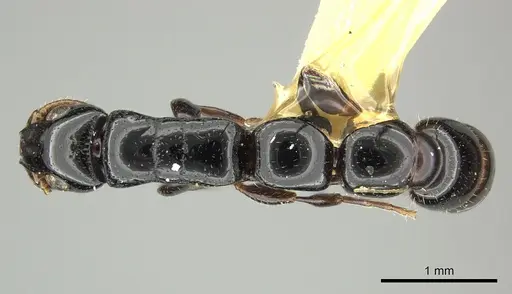
Literatura
Cargando mapa de distribución...Cargando productos...