
Recurvidris proles
- Nom. cient.
- Recurvidris proles
- Tribu
- Crematogastrini
- Subfamilia
- Myrmicinae
- Autor
- Bolton, 1992
- Distribución
- Encontrado en 0 países
Introducción
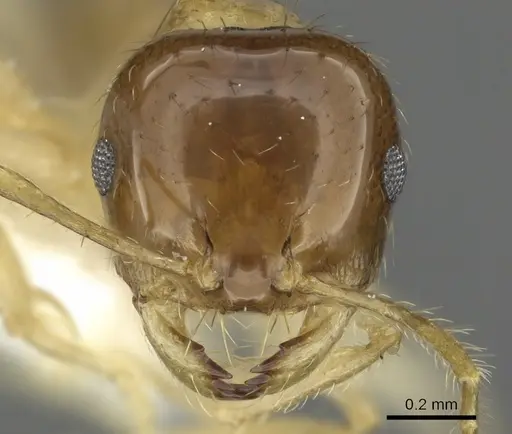
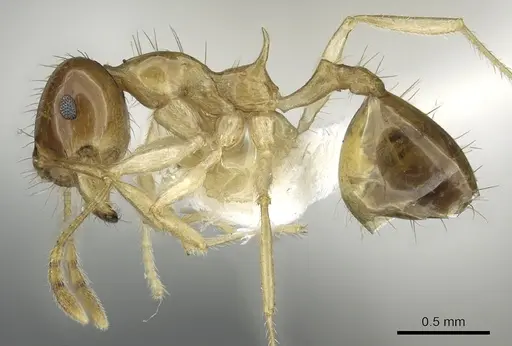
Recurvidris proles is an ant species belonging to the Myrmicinae subfamily, tribe Crematogastrini. Workers are relatively large for the genus, with a distinctive yellow body and brown head and gaster. They belong to the R. kemneri species group and can be identified by the lack of clypeal carinae, a small triangular subpetiolar process, and 1-2 pairs of standing erect setae on the propodeal dorsum. The propodeal dorsum has comparatively long standing hairs rather than short decumbent ones. The species was described by Bolton in 1992 from Sulawesi, Indonesia, and is known only from the Lore Lindu National Park region . Males have not been described.
Quick Summary
- Difficulty: Unknown, likely Hard due to limited distribution and lack of captive breeding data
- Origin & Habitat: Endemic to Sulawesi, Indonesia, specifically the Lore Lindu National Park region. Found in tropical rainforest habitats at moderate elevations [1][2][4].
- Colony Type: Unconfirmed. No data on colony structure, queen number, or reproductive systems.
- Size & Growth:
- Queen: Not described. Size unknown.
- Worker: ~4-5 mm (estimated based on description as 'relatively large' for the genus) [1][2].
- Colony: Unknown. Not documented in the wild or captivity.
- Growth: Unknown. No captive breeding data available.
- Development: Not documented. No specific data on development time. (Development timeline is unstudied for this species.)
- Antkeeping:
- Temperature: Keep warm and stable, roughly 24-28°C based on tropical climate inference. Provide a slight gradient to allow self-regulation. Avoid prolonged temperatures below 22°C.
- Humidity: Keep the nest substrate consistently moist but not waterlogged. High humidity typical of tropical forest floors is needed. Exact requirements unknown.
- Diapause: Unknown, likely not required due to tropical origins, but not studied. A slight temperature drop in winter (to about 22-24°C) may be optional but is not necessary.
- Nesting: Natural nesting habits are undocumented. Based on habitat, they likely nest in soil or under stones. For captivity, use a naturalistic setup with moist substrate or Y-tong/plaster nest that retains humidity. Avoid dry setups.
- Behavior: Behavior is not directly documented. As a member of the Myrmicinae subfamily (Crematogastrini tribe), they use a 'smear' defense: a modified spatulate stinger that wipes venom onto enemies rather than piercing. They are likely generalist foragers, and based on their 4-5 mm size, escape risk is moderate, standard barrier precautions are sufficient. Specific aggression level is unknown.
- Common Issues: lack of captive breeding data makes successful husbandry experimental., tropical humidity requirements are difficult to maintain consistently without precise data., limited natural distribution (only Sulawesi) makes wild colonies rarely available., dietary needs are unknown, must be worked out through observation., potential sensitivity to temperature fluctuations if kept in non-tropical climates.
Appearance and Identification
Recurvidris proles workers are relatively large for the genus, measuring approximately 4-5 mm. The body is predominantly yellow with a brown head and brown gaster. This species belongs to the R. kemneri species group. Key identification features include: lack of clypeal carinae,1-2 pairs of standing erect setae on the propodeal dorsum, a small triangular subpetiolar process, and a small tooth on the basal margin of the mandible. The propodeal dorsum has comparatively long standing setae. Males have not been described [1][2][3].
Distribution and Habitat
This species is endemic to Sulawesi, Indonesia. All known specimens come from the Lore Lindu National Park in central Sulawesi, collected in July 1983. The region features tropical rainforest at moderate elevations with warm, stable temperatures and high rainfall year-round. No records exist from other locations, suggesting a potentially restricted range [1][2][4].
Temperature and Care
As a tropical species from Sulawesi, Recurvidris proles requires warm and humid conditions. Recommended temperatures are around 24-28°C based on typical tropical climate, though exact requirements are unknown. Provide a gradient so workers can self-regulate. Humidity should be high, keep the nest substrate consistently moist but not waterlogged. Unlike temperate species, diapause may not be necessary, but this is not confirmed. All care recommendations are inferred from habitat, as no captive studies exist.
Feeding and Diet
The diet of Recurvidris proles has not been documented. Based on related Myrmicinae, they are likely generalist feeders that accept small live prey such as fruit flies or small crickets, and sugar sources like honey water or sugar water. They probably also collect honeydew from aphids. Offer a varied diet and observe colony acceptance, adjust as needed.
Nesting Preferences
Natural nesting sites are unknown. Based on the Lore Lindu habitat and general Recurvidris patterns, they likely nest in soil or under stones in shaded, humid areas of the forest floor. For captive care, use a naturalistic setup with moist soil-sand mixture, or a Y-tong/plaster nest that retains humidity. Avoid dry setups or excessive ventilation. All nesting advice is inferred.
Colony Structure and Development
Colony structure is entirely unstudied. No data exists on queen number, founding behavior, colony size, or development timeline. Inferences from other Recurvidris species are not reliable because relevant studies are absent. Captive breeding attempts will require experimentation and careful observation.
Frequently Asked Questions
How long does it take for Recurvidris proles to raise first workers?
This is not documented. No reliable estimate can be given. The timeline is unknown.
What do Recurvidris proles ants eat?
Specific dietary studies do not exist. They are likely generalist feeders accepting small live prey and sugar sources, but this is uncertain. Offer a varied diet and observe.
Can I keep Recurvidris proles in a test tube setup?
A test tube may work for the founding stage, but high humidity requirements (keep substrate moist) may be easier to maintain in a humidity-retaining nest like a Y-tong or plaster setup. No captive experience is documented.
Do Recurvidris proles ants sting?
As a member of the Myrmicinae subfamily (Crematogastrini tribe), they have a modified stinger that smears venom rather than piercing. The sting is likely mild and not dangerous to humans. This is based on the subfamily's typical defense mechanism.
What temperature do Recurvidris proles need?
Keep them warm, around 24-28°C based on tropical habitat inference. Provide a gradient. Avoid prolonged temperatures below 22°C. Exact needs are not known.
How big do Recurvidris proles colonies get?
Colony size is undocumented. No reliable estimate can be given.
Do Recurvidris proles need hibernation?
Unlikely, as they originate from a tropical climate without seasonal cold periods. However, this is not confirmed. A slight temperature reduction in winter may be optional but is not necessary.
Is Recurvidris proles good for beginners?
No. This species is not recommended for beginners due to extreme rarity in the hobby, lack of captive breeding data, and unknown care requirements. It is best suited for experienced keepers willing to experiment.
Where is Recurvidris proles found in the wild?
It is endemic to Sulawesi, Indonesia, known only from the Lore Lindu National Park. This limited distribution makes wild collection difficult [1][2][4].
Why is Recurvidris proles so rare in the antkeeping hobby?
It has a very narrow natural range (only Sulawesi), was described relatively recently (1992), and has no documented captive breeding. Most specimens would come from occasional wild collections, which are rare.
Report an Issue
The current care sheet is based fully on literature. See inconsistencies, or something that's incorrect? Please , it will be resolved after review from an admin. Contributing to the blogs tab also helps providing information, to make us be able to further improve the caresheets. Thank you for your support!
References

Esta ficha de cuidados está bajo licencia CC BY-SA 4.0 .
Blogs de la comunidad
CASENT0902053
Ver en AntWeb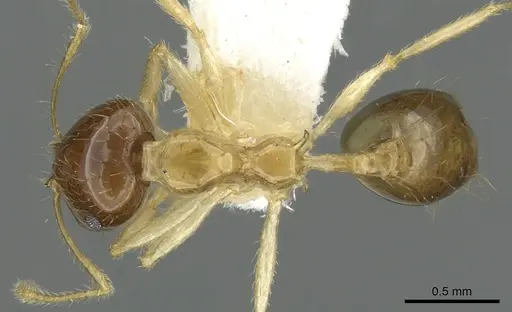
Literatura
Cargando mapa de distribución...Cargando productos...