
Protanilla gengma
- Nom. cient.
- Protanilla gengma
- Tribu
- Leptanillini
- Subfamilia
- Leptanillinae
- Autor
- Xu, 2012
- Distribución
- Encontrado en 0 países
Introducción
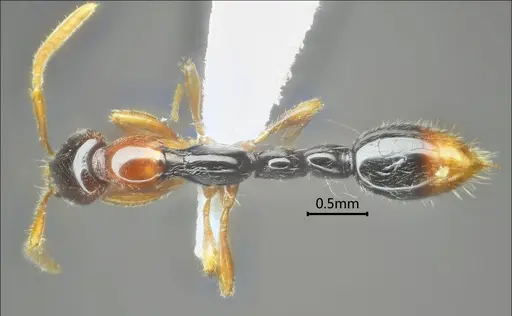
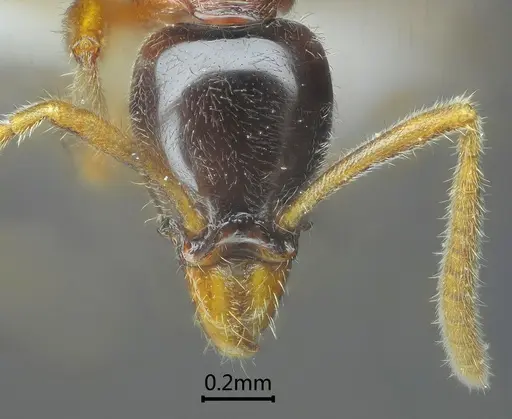
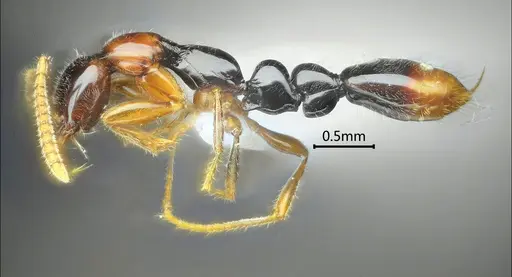
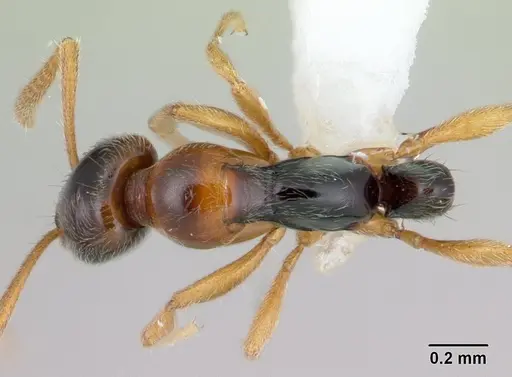
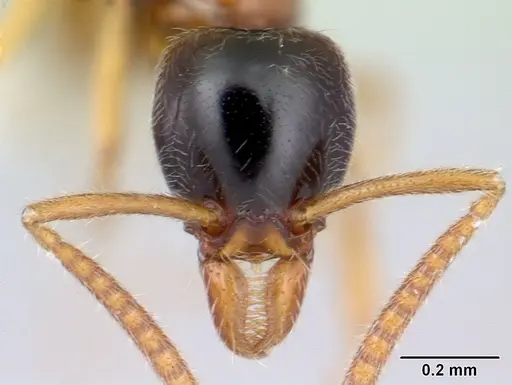
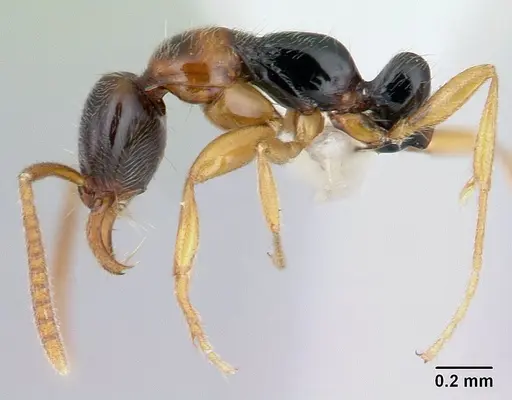
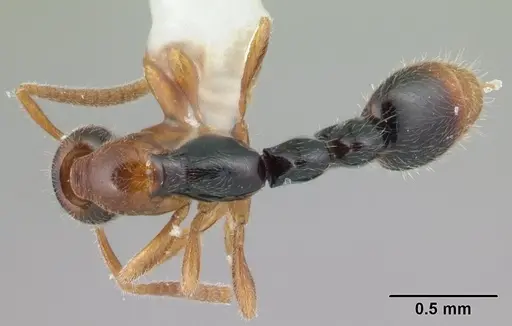
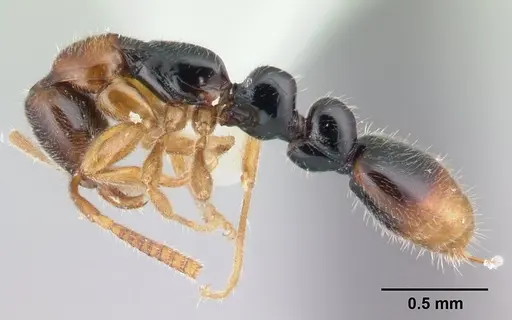
Protanilla gengma is a small, rare ant species belonging to the subfamily Leptanillinae, one of the most obscure and least-studied ant groups in the world. Workers measure 4.1-4.5 mm in total length, making them medium-sized among leaf-litter ants . They have a distinctive bicolored appearance: the head is light black to blackish brown, while the middle portion of the body (mesothorax, metathorax, propodeum, petiole, postpetiole, and first gastral segment) is black; the mandibles, antennae, prothorax, legs, and remaining gastral segments are yellowish brown . In full face view, the front half of the head tapers distinctly forward, and the petiolar node is evenly rounded without clear separation between anterior and dorsal faces . This species has a functional stinger, which is notable for the Leptanillinae subfamily . What makes P. gengma particularly interesting is its predatory nature. Research has observed larvae actively feeding on juvenile scolopendromorph centipedes, making this one of the few ant species with documented predatory larval behavior . The species is found across southern China (Yunnan), northeastern India (Mizoram), and northern Vietnam, typically collected from soil samples or leaf litter in humid forest environments at elevations of 1600-1760 meters .
Quick Summary
- Difficulty: Expert
- Origin & Habitat: Southern China (Yunnan Province), northeastern India (Mizoram), and northern Vietnam. Found in monsoon evergreen broadleaf forest and tropical wet evergreen forest at elevations of 1600-1760 m. Collected from soil samples and leaf litter in shaded areas with dense canopy cover [1][6][2].
- Colony Type: Colony structure is not fully documented. Related species in the P. bicolor group have ergatogyne reproductives (wingless reproductive workers that lack wing buds), suggesting colonies may have multiple reproductive workers rather than a single dealate queen [5]. Further research is needed to confirm the exact colony structure.
- Size & Growth:
- Queen: Undescribed, the queen caste has not been documented in scientific literature [5].
- Worker: 4.1-4.5 mm total length [1][2].
- Colony: Unknown, this is a rarely collected species with no established colony data in captivity.
- Growth: Unknown, no captive breeding data available.
- Development: Unconfirmed, no direct observations of colony development in captivity or scientific literature. (Related Protanilla species suggest development takes several months, but specific timelines are unknown for this species.)
- Antkeeping:
- Temperature: Based on its tropical/subtropical distribution in Yunnan, India, and Vietnam, aim for 22-26°C. No direct temperature studies exist for this species [1][6].
- Humidity: Requires high humidity, collected from leaf litter and soil in humid forest environments with 70% canopy cover. Keep the nest substrate consistently moist but not waterlogged. Provide a humidity gradient so ants can choose their preferred zone [6].
- Diapause: Unknown, no documented overwintering behavior. Given its high-elevation origin in Yunnan (1760 m), some seasonal slowdown may occur, but specific requirements are unstudied.
- Nesting: In nature, they nest in soil and leaf litter. For captivity, a naturalistic setup with moist substrate (like a mix of soil and coco fiber) works best, or a plaster or Y-tong (AAC) nest with high humidity. They are tiny and require excellent escape prevention, use fine mesh barriers [1][6].
- Behavior: This is a cryptic, leaf-litter dwelling species that is rarely encountered in the wild and even more rarely kept in captivity. Workers are small and likely forage individually or in small groups through the substrate. They have a functional stinger and are predatory, with larvae that actively hunt small arthropods like centipedes [5]. The stinger means they can defend themselves if threatened. Escape prevention is critical due to their small size, they can easily slip through standard gaps. Temperament is unknown but likely similar to other Leptanillinae: shy and non-aggressive, avoiding confrontation rather than attacking [1].
- Common Issues: this species is extremely rare in the antkeeping hobby with no established captive protocols, expect a steep learning curve., no documented captive breeding success exists, wild-caught colonies may struggle to adapt., predatory larvae require live prey (small centipedes or similar arthropods) which is difficult to source regularly [5]., high humidity needs create mold risk in enclosed nests, ventilation is essential., their tiny size means escapes are likely without fine mesh barriers., very limited availability, you likely cannot purchase this species commercially.
Natural History and Distribution
Protanilla gengma is known from a scattered range across Southeast Asia: Yunnan Province in southern China, Mizoram in northeastern India, and northern Vietnam [2]. The type locality is Gengma County in Yunnan, at an elevation of 1760 meters in monsoon evergreen broadleaf forest [1]. The Indian specimens were collected from Lengteng Wildlife Sanctuary at 1615 m elevation in a shaded spot with approximately 70% canopy cover in tropical wet evergreen forest [6]. This species is considered rarely collected, most records come from Winkler extraction of sifted leaf litter or soil samples, indicating it lives deep in the forest floor litter layer rather than on the surface. The elevation range of 1600-1760 m suggests it prefers cooler, more humid microclimates found at these altitudes [1][6].
Identification and Distinction from Related Species
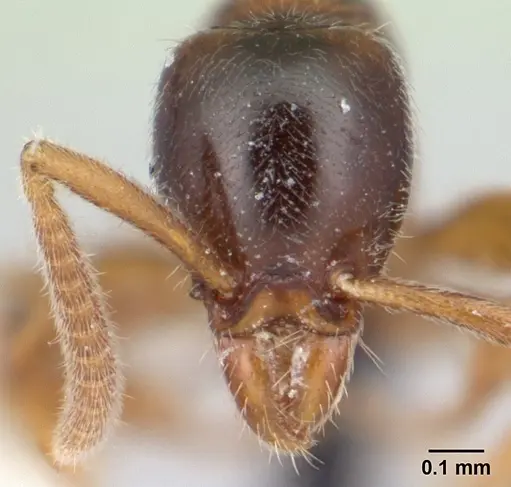
Protanilla gengma belongs to the P. bicolor species group, which contains several very similar species [5]. It is distinguished from the closely related P. bicolor by several key features: the anterior half of the head is distinctly narrowed forward (versus anterior one-third in P. bicolor), the petiolar node is evenly rounded in profile view with no differentiation between anterior and dorsal faces, and the head is light black to blackish brown rather than brownish yellow [6]. Additionally, P. gengma is larger overall (total length 4.1-4.5 mm) compared to P. bicolor (total length 2.7-3.0 mm) [1][6]. Some morphological variation exists between populations, Indian specimens have a medially concave posterior clypeal margin (strongly convex in Yunnan specimens) and three peg-like setae on the labrum apex (four in Yunnan specimens) [6]. Workers have a strong, extruding stinger, which is notable since many Leptanillinae species lack functional stings [1].
Feeding and Diet
This is one of the most important aspects of keeping P. gengma: they are predatory. Scientific observations have documented Protanilla larvae actively feeding on juvenile scolopendromorph centipedes in the wild [5]. This means both adults and larvae require protein-rich live prey, they are not sugar-feeding ants. In captivity, you would need to provide small live arthropods such as springtails, small isopods, or tiny centipedes. The difficulty of sourcing appropriate live prey regularly makes this a challenging species to keep. There is no information on whether they will accept dead prey or protein-based artificial diets. Based on their predatory nature, do not expect them to accept honey water or sugar sources, their diet appears to be entirely carnivorous.
Housing and Nesting
In the wild, P. gengma is collected from soil samples and leaf litter in humid forest environments [1][6]. For captivity, a naturalistic setup with a moist substrate mixture (such as soil mixed with coco fiber or peat) would best replicate their natural habitat. The substrate should be kept consistently damp but not waterlogged. Alternatively, a plaster or Y-tong (AAC) nest with a water reservoir can maintain humidity, but ensure adequate ventilation to prevent mold. Given their tiny size (workers are only about 4 mm), escape prevention is critical, standard formicarium gaps will allow them to escape. Use fine mesh (0.5 mm or smaller) on all openings and consider applying fluon or similar barriers. Provide a foraging area with leaf litter and small hiding spots to reduce stress.
Temperature and Humidity Requirements
Based on its natural range in Yunnan, India, and Vietnam, this species likely requires warm and humid conditions. The Yunnan location sits at 1760 m elevation, suggesting they can tolerate cooler temperatures than true tropical species, but the Indian and Vietnamese populations come from lower elevation tropical wet evergreen forest [6]. Aim for temperatures in the 22-26°C range as a starting point and observe colony activity. Humidity is more critical, they come from environments with dense canopy cover and moist leaf litter. Keep the nest substrate consistently moist, and provide a humidity gradient so ants can self-regulate. A shallow water dish in the outworld helps maintain ambient humidity. Monitor for mold, which is the main risk when keeping leaf-litter ants in enclosed spaces [1][6][2].
Behavior and Defense
Protanilla gengma is a cryptic, substrate-dwelling species that lives in leaf litter and soil. Workers are small and likely forage individually or in small groups rather than forming visible trails. They have a functional stinger, which they can use for defense, this is notable because many Leptanillinae species have reduced or absent stingers [1]. However, given their shy, cryptic nature, they are unlikely to be aggressive toward keepers. Their primary defense is staying hidden in the substrate. When keeping them, expect a quiet colony that spends most of its time in the nest and foraging area rather than climbing on surfaces. Their small size also makes them vulnerable to drying out, so maintaining proper humidity is essential for their welfare [1].
Frequently Asked Questions
Is Protanilla gengma available for purchase in the antkeeping hobby?
No, this species is extremely rare in the antkeeping hobby. It is rarely collected even by researchers, most records come from scientific surveys using Winkler extractors. There are no known commercial sources, and it would be extremely difficult to acquire a colony. Even if available, the specialized care requirements (predatory larvae requiring live centipedes) make it unsuitable for most keepers [6].
What do Protanilla gengma ants eat?
They are predatory ants. Scientific observations show their larvae actively hunt and feed on juvenile scolopendromorph centipedes [5]. Adults likely also capture small arthropods. They are not sugar-feeding ants and likely do not accept honey water or fruit. In captivity, you would need to provide small live prey such as springtails, tiny isopods, or small centipedes regularly. This makes them one of the most difficult ant species to feed in captivity [5].
How big do Protanilla gengma colonies get?
The maximum colony size is unknown. This is a rarely collected species with no published colony size data from the wild or captivity. Based on related species in the genus, colonies are likely small, probably under 100 workers given their cryptic, leaf-litter dwelling lifestyle [5].
Do Protanilla gengma ants sting?
Yes, they have a strong, extruding stinger [1]. This is notable because many Leptanillinae species have reduced stingers. However, given their tiny size (workers are only about 4 mm), the sting is unlikely to be painful to humans. Their primary defense is staying hidden in the substrate rather than attacking [1].
Are Protanilla gengma good for beginners?
No. This is an expert-level species that is not recommended for beginners. There is no established captive breeding protocol, no commercial availability, and extremely limited information about their care in captivity. Their predatory diet (requiring live centipedes for larvae) is exceptionally difficult to provide. Additionally, their tiny size makes them prone to escaping and sensitive to improper humidity. This species is best left to advanced researchers rather than hobbyist keepers [5].
What temperature and humidity do Protanilla gengma need?
Based on their natural habitat in humid forest environments in Yunnan, India, and Vietnam, they need high humidity (think damp forest floor) and warm temperatures around 22-26°C. Keep the substrate consistently moist but not waterlogged. Provide a humidity gradient so ants can choose their preferred zone. The key is replicating the moist, shaded leaf-litter environment they inhabit in the wild [1][6][2].
How long does it take for Protanilla gengma to develop from egg to worker?
This is unknown. No scientific studies have documented the development timeline for this species or related Protanilla species. Given their predatory nature and the complexity of raising carnivorous larvae, development likely takes several months. Without any captive breeding data, providing a specific timeline is not possible.
Can I keep multiple Protanilla gengma queens together?
This is unknown. The colony structure of P. gengma has not been studied in detail. Related species in the P. bicolor group have ergatogyne reproductives (reproductive workers without wings), suggesting colonies may have multiple reproductive individuals rather than a single queen [5]. However, combining unrelated foundresses has not been documented and is not recommended given how rare and poorly understood this species is [5].
What type of nest should I use for Protanilla gengma?
A naturalistic setup with moist substrate works best, a mix of soil, coco fiber, and leaf litter to replicate their natural forest floor habitat. Alternatively, a plaster or Y-tong (AAC) nest with a water reservoir can maintain humidity. Regardless of nest type, escape prevention is critical due to their tiny size, use fine mesh barriers on all openings [1][6].
Do Protanilla gengma need hibernation or diapause?
This is unknown. No documented overwintering behavior exists for this species. The Yunnan population comes from 1760 m elevation, which could suggest some tolerance for cooler temperatures, but specific diapause requirements have not been studied. Without captive data, it is impossible to recommend a hibernation protocol.
Report an Issue
The current care sheet is based fully on literature. See inconsistencies, or something that's incorrect? Please , it will be resolved after review from an admin. Contributing to the blogs tab also helps providing information, to make us be able to further improve the caresheets. Thank you for your support!
References

Esta ficha de cuidados está bajo licencia CC BY-SA 4.0 .
Blogs de la comunidad
Literatura
Cargando mapa de distribución...Cargando productos...