
Polyrhachis semiinermis
- Nom. cient.
- Polyrhachis semiinermis
- Subgénero
- Cyrtomyrma
- Tribu
- Camponotini
- Subfamilia
- Formicinae
- Autor
- Donisthorpe, 1941
- Distribución
- Encontrado en 0 países
Introducción
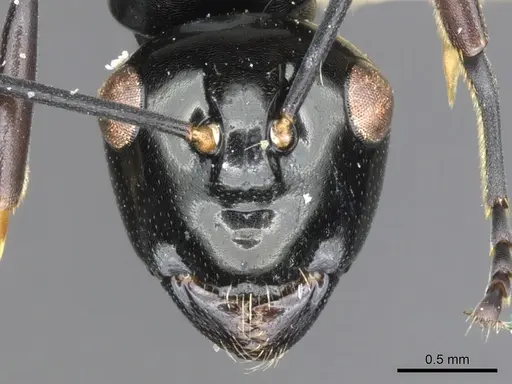
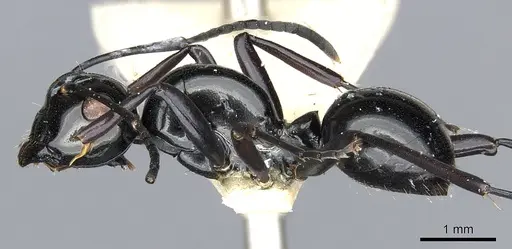
Polyrhachis semiinermis is a rare ant species endemic to the Philippines, specifically found in Luzon and Mindanao islands. Workers are glossy black and measure approximately 6mm in length, with distinctive rounded pronotal shoulders and a petiole that lacks prominent teeth - these features distinguish it from related species like Polyrhachis rastellata . This species belongs to the Cyrtomyrma subgenus and is closely related to Polyrhachis danum from Borneo and Polyrhachis brevinoda from Australia. Known only from a handful of collections, its biology remains largely undocumented in scientific literature . In the wild, colonies have been found nesting in tree cavities, suggesting an arboreal or semi-arboreal lifestyle .
Quick Summary
- Difficulty: Hard
- Origin & Habitat: Endemic to the Philippines, specifically Luzon and Mindanao islands. Found in forested areas, including narra plantations with understory vegetation. Nests in tree cavities [1][2].
- Colony Type: Unknown, only workers have been collected, no queen data available
- Size & Growth:
- Antkeeping:
- Temperature: Specific temperature requirements are unknown for this species. As a tropical ant from the Philippines, maintaining warm temperatures around 24-28°C is a reasonable starting point [1].
- Humidity: Humidity needs are unknown. Based on arboreal nesting habits, provide a humidity gradient with moist substrate [1].
- Diapause: Unknown, as a tropical species, diapause is unlikely, but no data available [1].
- Nesting: Arboreal nesting habits suggest preference for elevated nest sites. Test tubes with cotton water reservoirs or Y-tong nests may work well [1].
- Behavior: Behavior is unstudied. Based on related Polyrhachis species, they may be moderately active foragers with potential for arboreal exploration. Escape prevention should be moderate, workers at 6mm are not tiny but can still escape through small gaps. Polyrhachis species lack a functional sting and use formic acid spray for defense, as typical for Formicinae.
- Common Issues: limited availability, this is a rare species not commonly available in the antkeeping trade, no established care protocols, all recommendations are based on genus-level inference, unknown queen biology, no documented queen size or founding behavior, risk of wild-caught colonies having parasites or disease due to limited collection data, difficulty establishing colonies without known dietary or environmental preferences
Availability and Acquisition
Polyrhachis semiinermis is a rare species in the antkeeping hobby. It is endemic to the Philippines and known only from a few scientific collections [2][1]. You are unlikely to find this species available from commercial ant suppliers. If available at all, it would likely be as wild-caught colonies from the Philippines. Exercise extreme caution with wild-caught colonies, they may carry parasites or diseases that can wipe out the colony in captivity. Always quarantine and observe new colonies carefully before introducing them to any established collection.
Nesting Preferences
In the wild, P. semiinermis has been found nesting in tree cavities, specifically noted as an 'empty cell in back of nest found in tree' and in narra plantations [1]. This suggests an arboreal or semi-arboreal lifestyle. For captive care, consider providing elevated nest options. Test tubes work as a starting point, but you might also try a Y-tong (AAC) nest or a naturalistic setup with vertical elements that mimic tree hollows.
Temperature and Humidity
Specific temperature and humidity requirements are not documented for this species. As a tropical ant from the Philippines, maintaining temperatures around 24-28°C and moderate humidity is a reasonable starting point [1]. Provide a temperature gradient and keep the nest substrate lightly moist but not waterlogged.
Feeding and Diet
The specific diet of P. semiinermis is not documented. Based on general Formicinae ant diets, offer sugar sources like honey water and protein from small insects such as fruit flies or pinhead crickets. Start with small amounts and observe colony acceptance [1].
Growth and Development Expectations
No specific development data exists for this species. Worker size is approximately 6mm [1]. Colony size and growth rate are unknown.
Frequently Asked Questions
Is Polyrhachis semiinermis available for purchase?
No, this is a rare species not commonly available in the antkeeping trade. It is endemic to the Philippines and known only from a handful of scientific collections [2][1].
How do I care for Polyrhachis semiinermis?
Specific care protocols do not exist for this species. Based on genus-level inference, provide a warm (24-28°C), moderately humid environment with access to sugar sources and small insects. Start with test tube setups and adjust based on colony behavior [1].
What do Polyrhachis semiinermis ants eat?
Their specific diet is unstudied. Based on related Formicinae species, offer sugar water or honey for carbohydrates and small insects (fruit flies, pinhead crickets, mealworms) for protein [1].
How long does it take for Polyrhachis semiinermis to develop from egg to worker?
This has not been documented for this species. No specific development data is available [1].
Do Polyrhachis semiinermis queens need to hibernate?
Unknown, as a tropical species, diapause is unlikely, but no data is available [1].
What size do Polyrhachis semiinermis workers reach?
Workers are approximately 6mm in length [1].
Where is Polyrhachis semiinermis found in the wild?
This species is endemic to the Philippines, specifically recorded from Luzon and Mindanao islands. It nests in tree cavities in forested areas [1].
Is Polyrhachis semiinermis suitable for beginners?
No. This species is not recommended for beginners due to extremely limited availability, complete lack of established care protocols, and the high risk associated with keeping rare, poorly understood species.
Can I keep multiple Polyrhachis semiinermis queens together?
Unknown, colony structure has not been documented for this species. No data exists on whether they are monogyne (single queen) or polygyne (multiple queens).
Report an Issue
The current care sheet is based fully on literature. See inconsistencies, or something that's incorrect? Please , it will be resolved after review from an admin. Contributing to the blogs tab also helps providing information, to make us be able to further improve the caresheets. Thank you for your support!
References

Esta ficha de cuidados está bajo licencia CC BY-SA 4.0 .
Blogs de la comunidad
CASENT0903412
Ver en AntWeb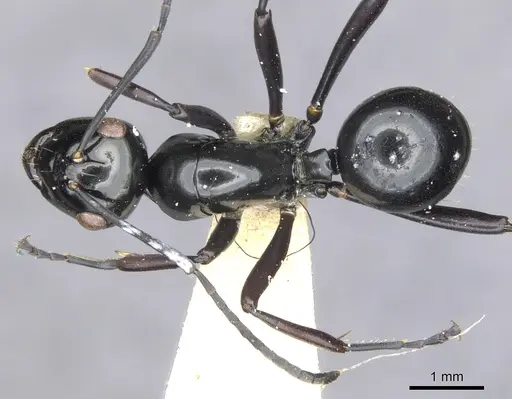
Literatura
Cargando mapa de distribución...Cargando productos...