
Polyrhachis nigripes
- Nom. cient.
- Polyrhachis nigripes
- Subgénero
- Myrmhopla
- Tribu
- Camponotini
- Subfamilia
- Formicinae
- Autor
- Emery, 1897
- Distribución
- Encontrado en 0 países
Introducción
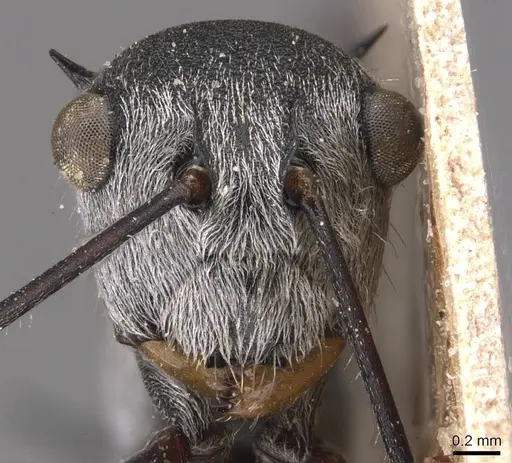
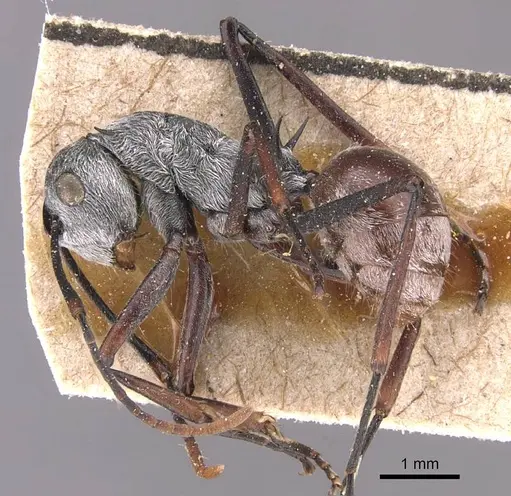
Polyrhachis nigripes is a medium-sized arboreal ant from the Myrmhopla subgenus. Workers are about 5.74-6.25 mm long and queens around 8.52 mm . They have a black body with orange-red gaster and legs, and distinctive spines on the pronotum, propodeum, and petiole . This species is found in New Guinea and northern Australia, specifically along the Gulf of Papua coast and once in Iron Range National Park . What stands out is their nesting behavior: they build nests using silk and vegetation debris, often in trees or on fallen branches . The only recorded wild colony had a queen,19 workers, and brood .
Quick Summary
- Difficulty: Medium
- Origin & Habitat: Native to New Guinea (Gulf of Papua coast) and northern Queensland, Australia, in monsoon rainforest environments [1][2].
- Colony Type: Colony structure is unconfirmed. The single observed wild colony had one queen with 19 workers [1]. Based on typical Polyrhachis patterns, colonies are likely single-queen.
- Size & Growth:
- Queen: ~8.52 mm [1]
- Worker: ~5.74-6.25 mm [1]
- Colony: Up to 19 workers observed in the wild [1]. Colonies likely grow larger based on related species.
- Growth: Moderate, inferred from similar Polyrhachis species
- Development: Estimated 6-10 weeks at optimal temperature, based on related species (Development time is not directly documented. Cocoons are present [3].)
- Antkeeping:
- Temperature: Keep warm and stable, roughly 24-28°C, based on tropical rainforest origin. Use a heating gradient if needed.
- Humidity: Keep nest substrate consistently moist but not waterlogged, as they are from humid environments.
- Diapause: No, as a tropical species from near-equatorial regions.
- Nesting: Arboreal nester that uses silk and vegetation debris [3]. Provide naturalistic setups with plant material or Y-tong nests with silk materials.
- Behavior: Workers are generally calm and non-aggressive. As Formicinae, they lack a stinger but can spray formic acid for defense. Escape risk is moderate due to their medium size, standard barriers like Fluon work well.
- Common Issues: high humidity can lead to mold if ventilation is poor, arboreal nesting needs may be challenging to replicate, slow colony growth may frustrate beginners, wild-caught colonies may have parasites or diseases, silk nest construction requires appropriate materials
Nest Preferences and Housing
Polyrhachis nigripes is an arboreal species that builds nests using silk and vegetation debris [3]. In the wild, they nest in trees or on fallen branches [1]. For captivity, provide a naturalistic setup with twigs, leaves, or artificial plants for silk construction. Alternatively, use a Y-tong nest with narrow chambers and include silk materials. Keep the nest humid but ensure ventilation to prevent mold.
Feeding and Diet
These ants are omnivorous. Offer sugar sources like honey water constantly and protein such as small insects twice weekly. Feed in the outworld and remove uneaten prey after 24-48 hours to avoid mold.
Temperature and Seasonal Care
As a tropical species, keep temperatures around 24-28°C with minimal fluctuations. A heating cable on one side of the nest creates a gradient. No hibernation is needed, but activity may reduce in cooler periods.
Behavior and Defense
Workers are calm and moderately active. They lack a stinger but can spray formic acid from an acidopore for defense, which may irritate skin. Escape risk is moderate, use Fluon barriers for containers.
Colony Founding
Founding behavior is unconfirmed. Based on typical Polyrhachis patterns, queens may seal themselves in a chamber and raise the first brood alone, but this is not documented for this species.
Frequently Asked Questions
How long does it take for Polyrhachis nigripes to produce first workers?
No specific data exists, but based on related species, expect 6-10 weeks from egg to worker at optimal temperature (24-28°C).
Can I keep Polyrhachis nigripes in a test tube?
Test tubes can work for founding, but this species naturally builds silk nests. For long-term success, provide a naturalistic setup with plant material or a Y-tong nest.
What temperature do Polyrhachis nigripes need?
Keep them warm around 24-28°C, based on their tropical origin. Use a heating gradient if needed.
Are Polyrhachis nigripes good for beginners?
They are medium difficulty due to humidity and nesting needs. Not ideal for complete beginners.
How big do Polyrhachis nigripes colonies get?
The only recorded wild colony had 19 workers [1]. Colonies likely grow larger, but exact size is unknown.
Do Polyrhachis nigripes need hibernation?
No, as a tropical species, they remain active year-round.
What do Polyrhachis nigripes eat?
They are omnivorous. Offer sugar sources constantly and protein twice weekly.
Can I keep multiple Polyrhachis nigripes queens together?
This has not been documented. Most Polyrhachis are single-queen, so combining queens is not recommended.
Why is my Polyrhachis nigripes colony dying?
Common causes include low humidity, incorrect temperature, mold from poor ventilation, or inadequate nesting space.
Report an Issue
The current care sheet is based fully on literature. See inconsistencies, or something that's incorrect? Please , it will be resolved after review from an admin. Contributing to the blogs tab also helps providing information, to make us be able to further improve the caresheets. Thank you for your support!
References

Esta ficha de cuidados está bajo licencia CC BY-SA 4.0 .
Blogs de la comunidad
CASENT0905635
Ver en AntWeb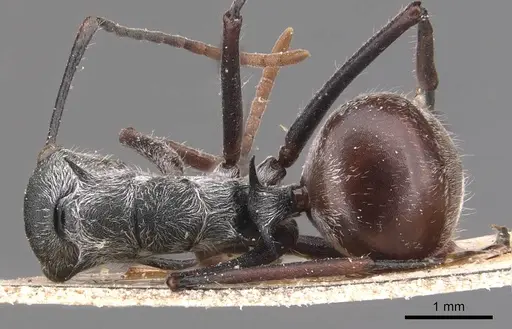
Literatura
Cargando mapa de distribución...Cargando productos...