
Polyrhachis kyawthani
- Nom. cient.
- Polyrhachis kyawthani
- Subgénero
- Cyrtomyrma
- Tribu
- Camponotini
- Subfamilia
- Formicinae
- Autor
- Kohout, 2006
- Distribución
- Encontrado en 0 países
Introducción
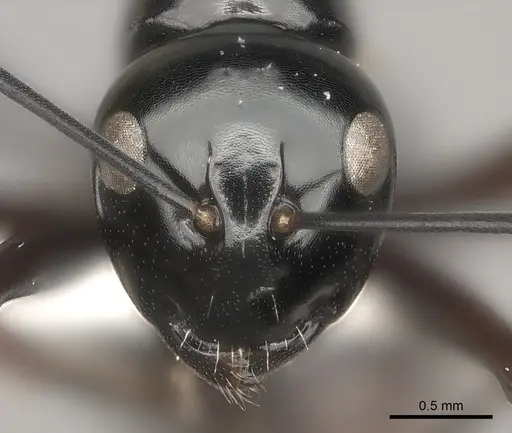
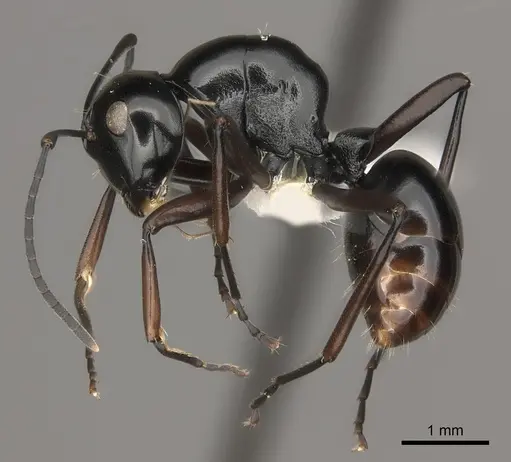
Polyrhachis kyawthani is a medium-sized arboreal ant native to the rainforests of New Ireland, Papua New Guinea. Workers measure 6.35-7.56 mm in total length and are black with reddish-brown leg tips and gaster apex. Queens are larger at approximately 9.32 mm. This species belongs to the subgenus Cyrtomyrma and constructs silk nests attached to the underside of leaves in low trees . It is similar to Polyrhachis aporema but can be distinguished by its biconvex petiole and higher propodeal declivity. Only collected a few times, this species remains poorly known .
Quick Summary
- Difficulty: Hard
- Origin & Habitat: New Ireland, Papua New Guinea, rainforest canopy, silk nests on underside of leaves [1]
- Colony Type: Unconfirmed, only known from wild collections with one queen and multiple workers
- Size & Growth:
- Antkeeping:
- Temperature: Keep around 24-28°C based on rainforest origin [1].
- Humidity: Keep nest substrate consistently moist but not waterlogged, as this is a rainforest species [1].
- Diapause: No, tropical species from near equator [1].
- Nesting: Arboreal silk-nester. Requires vertical setup with attachment surfaces for silk. Use Y-tong or plaster nests with vertical space and foliage [2][3].
- Behavior: As a Formicinae, they lack a sting and use formic acid spray for defense. Temperament is unconfirmed, but arboreal foragers may be moderate in aggression. Escape risk is medium due to size.
- Common Issues: no captive husbandry records exist, this is an extremely rare species with no established care protocols., very limited distribution makes wild collection difficult and potentially ecologically harmful., humidity control is critical, rainforest species prone to desiccation., arboreal nesting requirements differ from typical ground-nesting ants, standard horizontal nests are unsuitable., defense mechanism involves formic acid spray, avoid direct contact.
Nesting and Housing Requirements
Polyrhachis kyawthani is an arboreal species that constructs silk nests in the rainforest canopy. In the wild, colonies nest on the underside of leaves attached to low trees [2][3]. Captive setups must accommodate their arboreal lifestyle with vertical space and attachment surfaces for silk. Use branches, leaves, or cork bark positioned vertically. The nest should have high humidity but good ventilation to prevent mold [1].
Feeding and Diet
Dietary requirements are not documented for this species. As a Polyrhachis ant, they likely accept sugar sources and small insects, but this is unconfirmed. Start with honey or sugar water and protein like fruit flies, and observe acceptance [1].
Temperature and Humidity
Maintain temperatures around 24-28°C based on rainforest origin [1]. Keep humidity high with moist substrate, but avoid waterlogging to prevent mold [1].
Colony Structure and Development
The only known colony data comes from a type series with one queen and up to 58 workers, suggesting monogyne colonies, but this is unconfirmed [1]. Males are unknown, and pupal cocoons are absent [2][3]. Founding behavior is unconfirmed.
Behavior and Temperament
Specific behaviors are not documented. As a Formicinae, they use formic acid spray for defense rather than stinging. Arboreal foragers may be moderate in aggression. Escape prevention is important due to medium size [1].
Frequently Asked Questions
Is Polyrhachis kyawthani available in the antkeeping hobby?
No. This is an extremely rare species known only from a few collections in New Ireland, Papua New Guinea. It is not available in commercial ant trade and has never been kept in captivity [1].
What is the best nest type for Polyrhachis kyawthani?
Standard horizontal nests are unsuitable. This arboreal silk-nesting species requires a vertical setup with attachment surfaces for silk. Use Y-tong or plaster nests with vertical space and foliage [2][3].
How long does it take for Polyrhachis kyawthani to develop from egg to worker?
Unknown, no captive breeding records exist for this species [1].
What do Polyrhachis kyawthani eat?
Diet is unconfirmed. Based on related species, they may accept sugar sources and small insects, but no specific data exists [1].
Are Polyrhachis kyawthani good for beginners?
No. This species has never been kept in captivity, has no established care protocols, and is extremely rare. Their arboreal requirements differ from typical setups, making them suitable only for advanced keepers [1].
Do Polyrhachis kyawthani need hibernation?
No. As a tropical species from near the equator, they do not require formal hibernation [1].
How big do Polyrhachis kyawthani colonies get?
Up to 58 workers are known from a wild collection, but colony size in the wild is unstudied [1].
Can I keep multiple queens together?
Unknown. The single known colony sample had one queen, suggesting monogyne colonies, but this is unconfirmed. Combining queens is not recommended due to lack of data [1].
Where does Polyrhachis kyawthani live in the wild?
Known only from New Ireland, Papua New Guinea, inhabiting rainforest canopies with silk nests on leaf undersides [1].
Report an Issue
The current care sheet is based fully on literature. See inconsistencies, or something that's incorrect? Please , it will be resolved after review from an admin. Contributing to the blogs tab also helps providing information, to make us be able to further improve the caresheets. Thank you for your support!
References

Esta ficha de cuidados está bajo licencia CC BY-SA 4.0 .
Blogs de la comunidad
CASENT0217433
Ver en AntWeb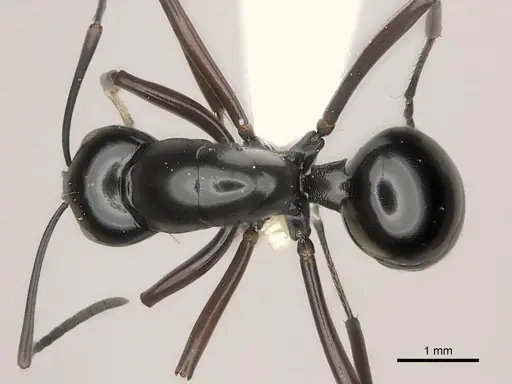
Literatura
Cargando mapa de distribución...Cargando productos...