
Polyrhachis geometrica
- Nom. cient.
- Polyrhachis geometrica
- Subgénero
- Aulacomyrma
- Tribu
- Camponotini
- Subfamilia
- Formicinae
- Autor
- Smith, 1859
- Distribución
- Encontrado en 0 países
Introducción
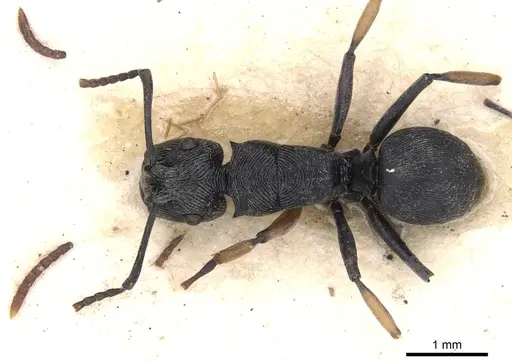
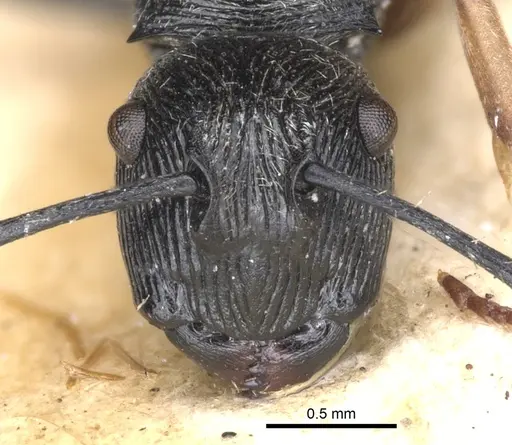
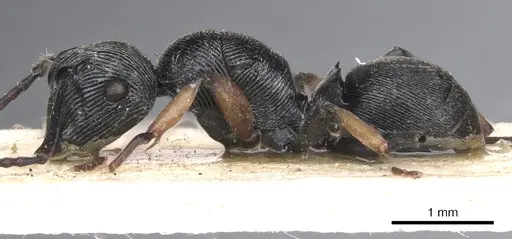
Polyrhachis geometrica is a small ant species native to New Guinea and Indonesia, including the Aru Islands and Sulawesi . Workers measure approximately 4.89-5.14mm and have a black body with pale yellowish-brown front femora, while middle and hind leg femora are entirely black . The species belongs to the subgenus Aulacomyrma and is closely related to Polyrhachis annulata, Polyrhachis breviata, and Polyrhachis monticola . The biology of Polyrhachis geometrica is largely undocumented, making specific care requirements uncertain. As a tropical species, it likely prefers warm, moist conditions, but detailed husbandry protocols are not established.
Quick Summary
- Difficulty: Hard
- Origin & Habitat: Tropical regions of New Guinea and Indonesia, including Aru Islands and Sulawesi [1][2]. Inhabits humid forest environments.
- Colony Type: Colony structure is unconfirmed. Based on Polyrhachis genus patterns, likely single-queen (monogyne) colonies, but this is not confirmed for this species.
- Size & Growth:
- Queen: Size data unavailable for queens. Inferred from Polyrhachis genus (~5-6mm).
- Worker: 4.89-5.14mm [3]
- Colony: Unknown for this species.
- Growth: Moderate, inferred from tropical Formicinae patterns.
- Development: Estimated 6-10 weeks at optimal temperature, based on related species. (Development time is unconfirmed, estimates are based on genus patterns.)
- Antkeeping:
- Temperature: Keep warm, roughly 24-28°C, based on tropical species inference. No specific data available.
- Humidity: Keep nest substrate consistently moist but not waterlogged, based on tropical habitat inference.
- Diapause: No, as a tropical species, they do not require hibernation.
- Nesting: Based on Polyrhachis genus patterns, likely ground-nesting or semi-arboreal. Provide a nest with moist substrate or Y-tong/plaster nest for humidity retention [3].
- Behavior: Temperament is unconfirmed, but Polyrhachis species are typically docile and not aggressive. Escape risk is moderate due to small size.
- Common Issues: lack of documented biology means care is experimental, adjust conditions based on colony behavior., tropical humidity requirements may lead to mold if ventilation is poor., unknown colony structure may result in surprises., slow growth may test patience.
Nest Preferences
Polyrhachis geometrica likely nests in humid forest floor environments in the wild, though specific nesting habits are unconfirmed. In captivity, a naturalistic setup with a moist substrate mixture works well for many Polyrhachis species [3]. Alternatively, a Y-tong or plaster nest with good humidity retention provides excellent conditions, ensure chambers are sized for their 5mm worker size. Maintain consistent moisture in the substrate or water reservoir.
Feeding and Diet
Like most Polyrhachis species, P. geometrica likely accepts a varied diet including sugars and protein sources. Offer honey water or sugar water as a constant sugar source, supplemented with protein-rich foods like small insects. Feed protein 2-3 times per week, removing uneaten prey after 24 hours. Always provide a shallow water dish or cotton ball. [3]
Temperature and Care
As a tropical species, Polyrhachis geometrica requires warm temperatures to thrive. Keep the nest area at roughly 24-28°C, this range supports normal colony activity based on tropical species inference. A heating cable can create a gentle thermal gradient. Avoid temperatures below 22°C for extended periods. They do not require diapause, maintain warm temperatures year-round.
Behavior and Temperament
Specific behavioral observations for Polyrhachis geometrica are not documented, but Polyrhachis species in general are relatively docile and manageable in captivity [3]. Workers are active foragers and not considered aggressive. Escape risk is moderate, use standard barrier methods like Fluon on test tube rims.
Colony Founding
Colony founding behavior is unconfirmed for Polyrhachis geometrica. Queens may seal themselves in a chamber and raise first brood alone, but this is not confirmed. Founding colonies should be kept in a quiet, dark location with minimal disturbance.
Frequently Asked Questions
How long does it take for Polyrhachis geometrica to produce first workers?
The exact development time is unconfirmed. Based on typical Formicinae patterns, expect approximately 6-10 weeks from egg to first worker at optimal warm temperatures (24-28°C).
What do Polyrhachis geometrica ants eat?
While not specifically documented, they likely accept a standard ant diet. Offer sugar water or honey as a constant carbohydrate source, and supplement with protein-rich foods like small insects.
Can I keep Polyrhachis geometrica in a test tube?
Yes, test tubes work well for founding colonies. Use a standard test tube setup with a water reservoir. Keep the tube warm and in a dark, quiet location.
What temperature is best for Polyrhachis geometrica?
Keep them at roughly 24-28°C. This tropical species requires warm conditions year-round.
Do Polyrhachis geometrica need hibernation?
No, they do not require hibernation as a tropical species.
How big do Polyrhachis geometrica colonies get?
The maximum colony size is unconfirmed for this species.
Is Polyrhachis geometrica good for beginners?
This species is not ideal for complete beginners due to lack of documented care information. It is recommended for experienced keepers.
What humidity level do Polyrhachis geometrica need?
Keep the nest substrate consistently moist but not waterlogged, based on tropical habitat inference.
Can I keep multiple Polyrhachis geometrica queens together?
The colony structure is unconfirmed. Start with a single queen colony for best success.
Report an Issue
The current care sheet is based fully on literature. See inconsistencies, or something that's incorrect? Please , it will be resolved after review from an admin. Contributing to the blogs tab also helps providing information, to make us be able to further improve the caresheets. Thank you for your support!
References

Esta ficha de cuidados está bajo licencia CC BY-SA 4.0 .
Blogs de la comunidad
CASENT0901807
Ver en AntWeb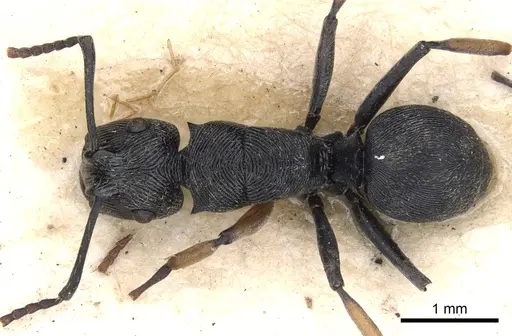
Literatura
Cargando mapa de distribución...Cargando productos...