
Polyrhachis fisheri
- Nom. cient.
- Polyrhachis fisheri
- Subgénero
- Myrma
- Tribu
- Camponotini
- Subfamilia
- Formicinae
- Autor
- Rigato, 2016
- Distribución
- Encontrado en 0 países
Introducción
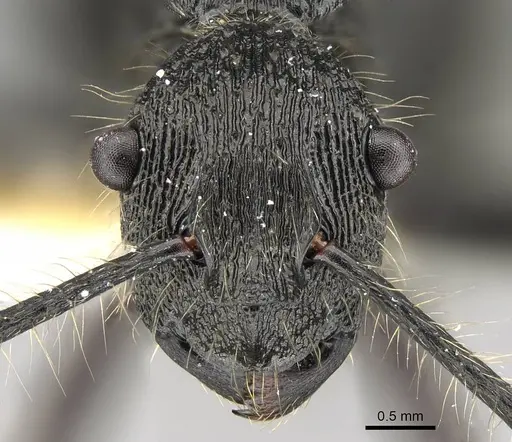
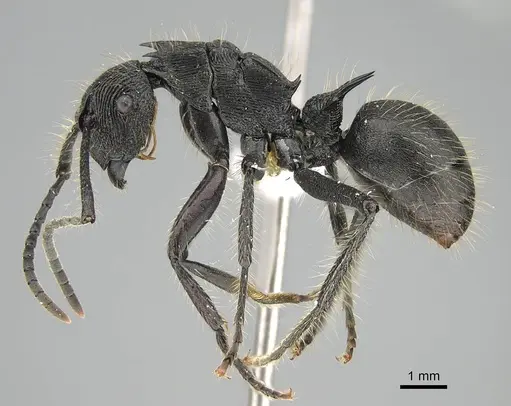
Polyrhachis fisheri is a large, slender ant species in the militaris group, with an elongate oval head, bulging eyes, and longitudinally striate sculpture on the head and mesosoma. It has very long, abundant standing hairs and is mostly black with rust-colored mandible tips. This species was described in 2016 from specimens collected in Gabon . It closely resembles Polyrhachis latispina but can be distinguished by its head shape and longer pronotal spines .
Quick Summary
- Difficulty: Unknown, Insufficient Data
- Origin & Habitat: Known only from Woleu-Ntem province, Gabon, collected at approximately 600 meters elevation [1]. Specific habitat type is undocumented.
- Colony Type: Unknown, colony structure has not been documented for this species.
- Size & Growth:
- Antkeeping:
- Temperature: Unconfirmed, no specific temperature data. Based on Gabon origin, aim for warm conditions around 24-28°C, but this is speculative.
- Humidity: Unconfirmed, no humidity data. As a tropical species, moderate to high humidity is likely appropriate, but provide a gradient with dry and moist areas.
- Diapause: Unlikely, as a tropical species, no diapause required.
- Nesting: Based on typical Polyrhachis behavior, likely nests in rotting wood or arboreal locations. Use Y-tong or naturalistic setups with wood pieces.
- Behavior: Behavior is unstudied. Polyrhachis ants vary in temperament, expect moderate defensiveness but not typically aggressive. Escape prevention should be moderate due to worker size, but always use barriers.
- Common Issues: lack of species-specific care information means trial and error may be required., as a newly described species, wild-caught colonies may be extremely difficult to obtain., no documented diet preferences, keepers must experiment with various foods., tropical humidity requirements may promote mold in captive setups if ventilation is poor., complete absence of documented nuptial flight timing makes captive breeding uncertain.
Species Discovery and Taxonomy
Polyrhachis fisheri was described in 2016 by Fabrizio Rigato, based on specimens from Gabon. It belongs to the militaris species-group within the subgenus Myrma. The species is named after B.L. Fisher, who collected the holotype in 1998. It is similar to Polyrhachis latispina but has a more elongate oval head and longer pronotal spines [1].
Natural History and Distribution
This species is known only from Woleu-Ntem province in northern Gabon, collected at 600 meters elevation. The specific habitat is undocumented, but the region has tropical forests. Nothing is known about its seasonal activity or colony cycle in the wild [1].
Housing and Nesting Recommendations
Since no specific nesting data exists, base recommendations on typical Polyrhachis behavior. Use Y-tong nests or naturalistic setups with rotting wood pieces. Provide a humidity gradient with one small moist area and drier sections. Ensure adequate vertical space for colony expansion.
Feeding and Diet
Diet preferences are undocumented. Polyrhachis ants are generally omnivorous, so offer protein sources like small insects and carbohydrates like honey water. Start with protein twice weekly and adjust based on colony response. Remove uneaten food after 24-48 hours to prevent mold.
Temperature and Seasonal Care
No specific temperature requirements are known. As a tropical species from Gabon, aim for warm conditions around 24-28°C. Use a heating cable on one side of the nest to create a gradient. Diapause is not required, maintain consistent temperatures year-round.
Challenges and Considerations for Keepers
This species is poorly studied, so keepers must observe and document their colony's behavior. Availability is limited due to its recent description and restricted range. Excellent escape prevention is recommended, and any observations contribute to hobby knowledge.
Frequently Asked Questions
How long does it take for Polyrhachis fisheri to develop from egg to worker?
This is unknown, no development data exists. Any timeline would be speculative based on related species.
What do Polyrhachis fisheri ants eat?
Diet is unconfirmed. Based on typical Polyrhachis behavior, they likely accept small insects and carbohydrates like honey water.
Are Polyrhachis fisheri good for beginners?
No, this species is not recommended for beginners due to lack of care data and limited availability.
What temperature should I keep Polyrhachis fisheri at?
No specific data exists. Aim for warm conditions around 24-28°C based on its tropical origin, but observe colony activity to adjust.
Do Polyrhachis fisheri need hibernation?
Unlikely, as a tropical species, no diapause is required. Maintain consistent warm temperatures.
How big do Polyrhachis fisheri colonies get?
Colony size is unknown, no data exists. Based on related species, colonies may reach several hundred workers, but this is speculative.
Can I keep multiple Polyrhachis fisheri queens together?
Unknown, colony structure is undocumented. Polyrhachis species are typically monogyne, but without data, keeping multiple queens is not recommended.
What type of nest should I use for Polyrhachis fisheri?
Based on typical Polyrhachis behavior, use Y-tong or naturalistic nests with wood pieces. Provide a humidity gradient.
Where does Polyrhachis fisheri come from?
This species is known only from Gabon, collected at 600 meters elevation [1].
Is Polyrhachis fisheri aggressive?
Aggression levels are unconfirmed. Polyrhachis ants vary, expect moderate defensiveness but not typically aggressive toward keepers.
How do I start a Polyrhachis fisheri colony?
Founding behavior is unconfirmed. Based on typical Polyrhachis patterns, claustral founding may be likely, but no data exists. Provide a founding chamber and leave the queen undisturbed.
Report an Issue
The current care sheet is based fully on literature. See inconsistencies, or something that's incorrect? Please , it will be resolved after review from an admin. Contributing to the blogs tab also helps providing information, to make us be able to further improve the caresheets. Thank you for your support!
References

Esta ficha de cuidados está bajo licencia CC BY-SA 4.0 .
Blogs de la comunidad
CASENT0919957
Ver en AntWeb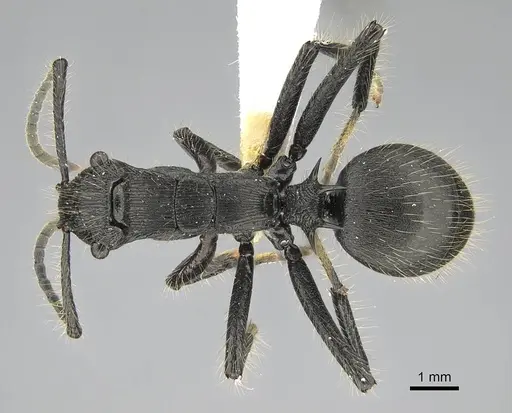
Literatura
Cargando mapa de distribución...Cargando productos...