
Polyrhachis aequalis
- Nom. cient.
- Polyrhachis aequalis
- Subgénero
- Myrmothrinax
- Tribu
- Camponotini
- Subfamilia
- Formicinae
- Autor
- Forel, 1910
- Distribución
- Encontrado en 0 países
Introducción
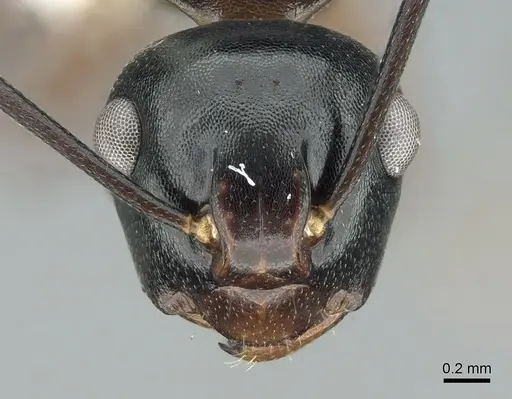
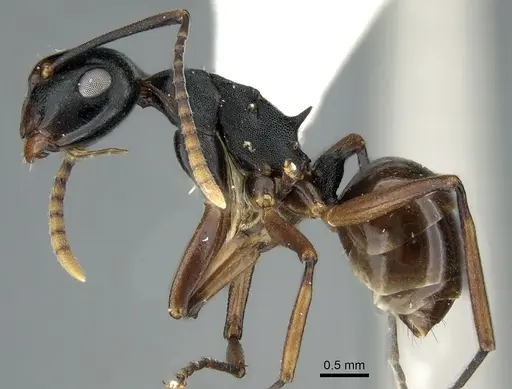
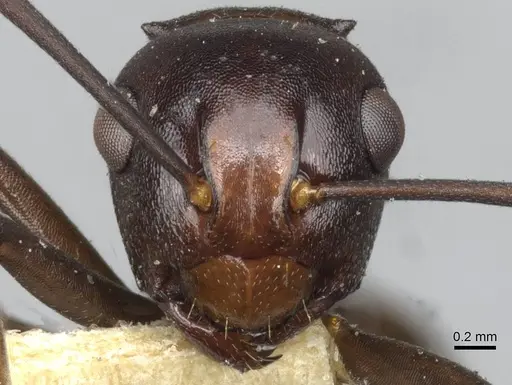
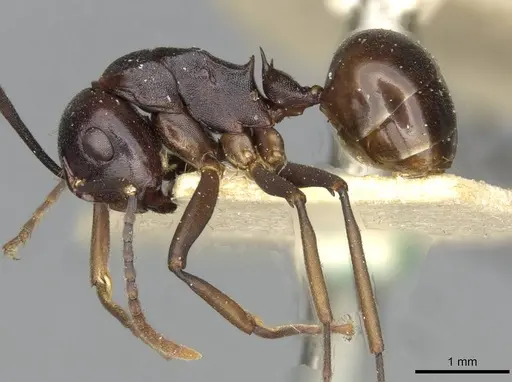
Polyrhachis aequalis is a reddish-brown ant found across the Indomalaya region, including the Philippines, Borneo, Indonesia, and Malaysia . Workers have short but distinct humeral teeth on the pronotum, subequal petiolar spines, and a simply truncate anterior clypeal margin, which separates them from very similar species like Polyrhachis frauenfeldi . Size data is unavailable, but they fall within the typical range for the Polyrhachis genus . This species belongs to the Myrmothrinax subgenus and the aequalis species group . They likely nest in vegetation or under loose bark in tropical forests, following the general habits of their genus. The original type specimens were collected in Luzon and Negros Occidental in the Philippines, though the original types were destroyed .
Quick Summary
- Difficulty: Medium
- Origin & Habitat: Tropical forests across the Indomalaya region, specifically the Philippines, Borneo, Indonesia, and Malaysia [1].
- Colony Type: Colony structure is unconfirmed. Based on typical Polyrhachis patterns, they likely form single-queen colonies.
- Size & Growth:
- Queen: size data unavailable, inferred from Polyrhachis genus (~8-12 mm)
- Worker: size data unavailable, inferred from Polyrhachis genus (~6-10 mm)
- Colony: Unknown
- Growth: Moderate
- Development: Unknown (Development speed is unconfirmed for this species.)
- Antkeeping:
- Temperature: Keep warm and stable, roughly 24-28°C. As a tropical species, they need consistent heat year-round.
- Humidity: Provide a humidity gradient. Keep the nest substrate consistently moist but not waterlogged, and ensure good ventilation to prevent mold.
- Diapause: No, they are a tropical species and do not require winter dormancy.
- Nesting: They prefer vertical or semi-vertical setups that mimic their natural vegetation nesting habits. A Y-tong nest or a naturalistic setup with bark and twigs works well.
- Behavior: Generally calm and non-aggressive. Workers are active foragers and good climbers. Escape risk is moderate due to their climbing ability, so standard barrier methods are sufficient.
- Common Issues: tropical species become sluggish or die if temperatures drop, low humidity causes brood failure and worker desiccation, poor ventilation leads to mold growth in the nest, limited specific care data means you must monitor colony response closely
Housing and Nest Setup
Set up a Y-tong nest or a naturalistic enclosure with cork bark and twigs to match their tropical forest habitat. They likely nest in vegetation or under loose bark, so a vertical or semi-vertical orientation works best. Keep the nest chamber damp but not soaked, and make sure you provide strong airflow to stop mold from taking over. Standard escape prevention like Fluon on the outworld edges is enough since they are not tiny ants [1].
Feeding and Diet
They are omnivorous and will eat both sugar and protein. Keep a constant source of sugar water, honey, or diluted maple syrup available. Offer small insects like fruit flies or crickets two to three times a week. They may also tend to aphids or scale insects in the outworld to collect honeydew. Remove uneaten prey within a day or two to keep the nest clean [1].
Temperature and Seasonal Care
Keep the colony warm and stable at roughly 24-28°C year-round. A heating cable on one side of the nest gives them a gradient to choose their preferred spot. Do not place them near air conditioning vents or in cool rooms, as tropical ants suffer quickly from cold drafts. They do not need a winter rest period [1].
Behavior and Colony Dynamics
Workers are moderately sized and generally calm. They forage actively and explore vertical surfaces. The genus is famous for spiny petioles, and these workers show short but distinct humeral teeth on their shoulders. They lack a functional sting and only spray formic acid if threatened. Colony maximum size is unknown, but they likely grow steadily over time [1].
Frequently Asked Questions
How long does it take to see first workers?
Development time is unknown for this specific species. You should expect a few months based on typical tropical formicine patterns, but keep an eye on the queen and brood without disturbing her too much [1].
What temperature do they need?
Keep them warm at 24-28°C. They are tropical ants from Southeast Asia and need consistent heat without any cold snaps [1].
What do they eat?
They are omnivorous. Provide sugar water or honey constantly, and offer small insects like fruit flies or crickets a few times a week. They may also collect honeydew from aphids if you keep them in the outworld [1].
Can I keep them in a test tube?
A test tube works fine for founding. Once the colony grows, move them to a Y-tong or naturalistic nest with some vertical structures like twigs to match their climbing instincts [1].
Do they need hibernation?
No. They are tropical ants and need warm temperatures year-round. Do not expose them to cold conditions [1].
How big do colonies get?
Maximum colony size is unknown for this species. Related Polyrhachis species often reach several hundred workers, but exact numbers for Polyrhachis aequalis are not recorded [1].
Are they good for beginners?
They are medium difficulty. The main challenge is maintaining warm tropical temperatures year-round. Once you manage the heat, their care is straightforward [1].
What humidity level do they need?
Keep the nest substrate consistently moist but not waterlogged. Provide good ventilation to prevent mold while maintaining adequate humidity [1].
When should I move them to a formicarium?
Move them when the test tube gets crowded and the colony has a few dozen workers. They prefer nests with some vertical orientation, so a Y-tong or naturalistic setup works best [1].
Report an Issue
The current care sheet is based fully on literature. See inconsistencies, or something that's incorrect? Please , it will be resolved after review from an admin. Contributing to the blogs tab also helps providing information, to make us be able to further improve the caresheets. Thank you for your support!
References

Esta ficha de cuidados está bajo licencia CC BY-SA 4.0 .
Blogs de la comunidad
CASENT0906586
Ver en AntWeb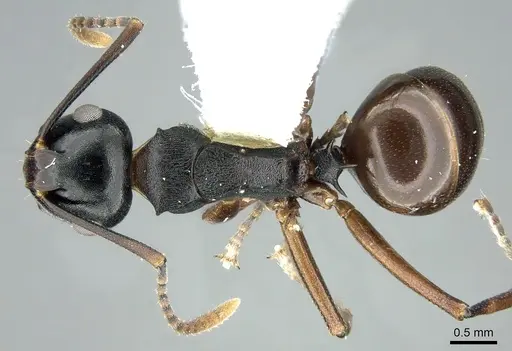
CASENT0910795
Ver en AntWeb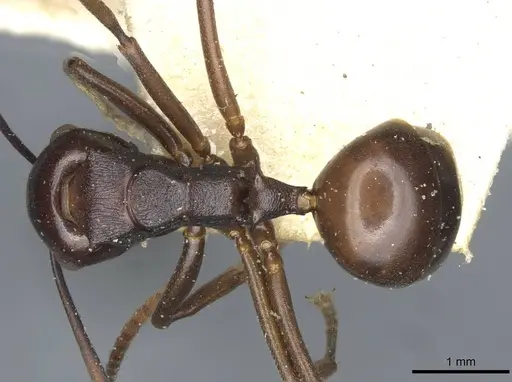
Literatura
Cargando mapa de distribución...Cargando productos...