
Plagiolepis bicolor
- Nom. cient.
- Plagiolepis bicolor
- Tribu
- Plagiolepidini
- Subfamilia
- Formicinae
- Autor
- Forel, 1901
- Distribución
- Encontrado en 0 países
Introducción
Plagiolepis bicolor is a small, yellowish ant species native to the Australasian and Indomalayan regions, including New Guinea, the Philippines, Singapore, and New Britain . Specific body size measurements are unavailable . In the wild, colonies nest under bark or in hollow twigs of mangosteen trees in forested environments . This species is poorly documented, with limited research on its biology and care requirements.
Quick Summary
- Difficulty: Unknown, Insufficient data for reliable assessment
- Origin & Habitat: Native to the Australasian and Indomalayan regions, specifically found in New Guinea, the Philippines, Singapore, and New Britain. In the wild, colonies have been documented under bark and in hollow twigs of mangosteen trees, indicating a preference for arboreal or semi-arboreal nesting sites in forested environments [2][3][1][4].
- Colony Type: Colony structure is unconfirmed. No research documents whether this species forms single-queen (monogyne) or multi-queen (polygyne) colonies.
- Size & Growth:
- Queen: size data unavailable
- Worker: inferred from Plagiolepis genus (~2-4 mm) [5]
- Colony: Unknown, no colony size data exists for this species
- Growth: Unknown, no development timing data available
- Development: Unconfirmed, no direct data. Based on typical Formicinae development patterns, estimated 6-10 weeks at optimal temperature [5] (Development timeline is estimated from genus-level patterns. Actual timing may differ significantly.)
- Antkeeping:
- Temperature: Based on its tropical distribution [1][2][3][4], likely requires warm conditions around 24-26°C. Start at this range and observe colony activity for guidance.
- Humidity: Based on nesting habits in humid forests [2][3], keep nest substrate consistently moist but not waterlogged.
- Diapause: Unknown, as a tropical species, may not require hibernation [5].
- Nesting: Based on field observations [2][3], colonies nest under bark or in hollow twigs. In captivity, use small test tubes for founding, and for established colonies, Y-tong nests with narrow chambers or small plaster nests. Avoid large open spaces.
- Behavior: Based on genus patterns, these ants are likely docile and non-aggressive. Their small size makes escape prevention important, use fine mesh and tight barriers. Formicinae ants may use formic acid for defense [5].
- Common Issues: lack of documented care information makes reliable husbandry challenging., small size creates significant escape risk, fine mesh and tight barriers are essential., no confirmed diet preferences, unknown what foods they readily accept., wild-caught colonies may harbor parasites or diseases not well-understood., very slow growth or colony failure may occur due to mismatched conditions.
Nest Preferences and Housing
In their natural habitat, Plagiolepis bicolor colonies have been found under bark and inside hollow twigs of mangosteen trees [2][3]. This suggests a preference for small, enclosed spaces that mimic these natural cavities. For captive care, small test tubes work well for founding colonies, while established colonies can be moved to Y-tong nests or small plaster nests. The key is providing tight chambers scaled to their tiny size, avoid large, open spaces that may cause stress. Naturalistic setups with small twigs or bark pieces can also work well if you can maintain proper humidity. Ensure excellent escape prevention since their small size allows them to squeeze through tiny gaps.
Feeding and Diet
The specific diet of Plagiolepis bicolor has not been documented in scientific literature. Based on genus patterns and related species, they likely feed on honeydew from aphids and scale insects, small insects, and nectar. For captive care, offer sugar water or honey as a constant energy source, and provide small protein sources like fruit flies or pinhead crickets. Start with small prey items and observe acceptance. Since this species is poorly studied, be prepared to experiment with different food types. Remove uneaten prey within 24-48 hours to prevent mold issues. [5]
Temperature and Environmental Conditions
No specific temperature or humidity requirements have been documented for this species. Based on its tropical origin [1][2][3][4], aim for warm conditions around 24-26°C with moderate humidity. Use a heating cable on one side of the nest if room temperature is below this range, placing it on top of the nest to avoid excessive drying. Monitor colony behavior, if workers cluster together excessively, they may be too cold, if they avoid the heated area, reduce temperature. Maintain consistent conditions without major fluctuations.
Colony Establishment and Growth
Since colony structure and founding behavior are unconfirmed for this species, establishing colonies requires careful observation. If you obtain a founding queen, provide a small test tube with a water reservoir (keep the cotton dry enough to prevent flooding but moist enough to maintain humidity). Place the setup in a dark, quiet location and minimize disturbance for 2-4 weeks until eggs appear. Growth rate is entirely unknown, expect slow development based on typical Formicinae patterns. Be patient and avoid overfeeding, which can lead to mold in small setups. Document your observations carefully to contribute to the limited knowledge of this species. [5]
Handling and Observation
Due to their small size and limited documentation, careful observation is essential when keeping Plagiolepis bicolor. These ants are likely docile and may not pose significant sting risk, though Formicinae ants can spray formic acid as a defense mechanism. Handle setups gently to avoid disturbing the colony. Regular observation helps you understand their specific needs and catch problems early. Since so little is known about this species in captivity, your observations could be valuable to the antkeeping community. Consider documenting colony development, food preferences, and behavior to help future keepers. [5]
Frequently Asked Questions
How long does it take for Plagiolepis bicolor to produce first workers?
The egg-to-worker timeline is unconfirmed for this species. Based on related Plagiolepis species and typical Formicinae development, expect approximately 6-10 weeks at optimal warm temperatures [5]. However, this is an estimate, actual timing could be faster or slower depending on conditions.
What do Plagiolepis bicolor ants eat?
Specific diet is not documented. Based on genus patterns, they likely accept sugar sources (honey, sugar water) and small protein prey (fruit flies, tiny insects) [5]. Start with these basics and observe acceptance. Remove uneaten food promptly to prevent mold.
Can I keep Plagiolepis bicolor in a test tube?
Yes, test tubes work well for founding colonies. This species naturally nests in small cavities like hollow twigs [2][3], so a properly set up test tube with a water reservoir mimics their natural nesting sites. Ensure the cotton is not too wet to avoid flooding.
What temperature do Plagiolepis bicolor ants need?
Exact requirements are unconfirmed. Based on their tropical origin [1][2][3][4], aim for warm conditions around 24-26°C. Adjust based on colony behavior, if they cluster excessively, they may need more warmth, if they avoid heated areas, reduce temperature.
Are Plagiolepis bicolor ants good for beginners?
This species is not recommended for beginners due to the complete lack of documented care information. More established species with known requirements are better choices for those new to antkeeping.
How big do Plagiolepis bicolor colonies get?
Maximum colony size is unknown, no scientific data exists on colony size for this species. Based on related Plagiolepis species, colonies are likely modest in size, possibly reaching dozens to a few hundred workers [5].
Do Plagiolepis bicolor ants need hibernation?
Diapause requirements are unknown. As a tropical species from near-equator regions, they likely do not require true hibernation [5]. Some reduction in activity during cooler months may occur naturally.
When should I move Plagiolepis bicolor to a formicarium?
Move from a test tube setup to a formicarium when the colony reaches several dozen workers and the test tube shows signs of degradation (mold, condensation issues, or space limitations). For this small species, use a setup with small chambers rather than large open spaces.
Can I keep multiple Plagiolepis bicolor queens together?
Colony structure (monogyne vs polygyne) is unconfirmed for this species. Without documented evidence, combining unrelated queens is not recommended as it may result in aggression.
Report an Issue
The current care sheet is based fully on literature. See inconsistencies, or something that's incorrect? Please , it will be resolved after review from an admin. Contributing to the blogs tab also helps providing information, to make us be able to further improve the caresheets. Thank you for your support!
References

Esta ficha de cuidados está bajo licencia CC BY-SA 4.0 .
Blogs de la comunidad
CASENT0909845
Ver en AntWeb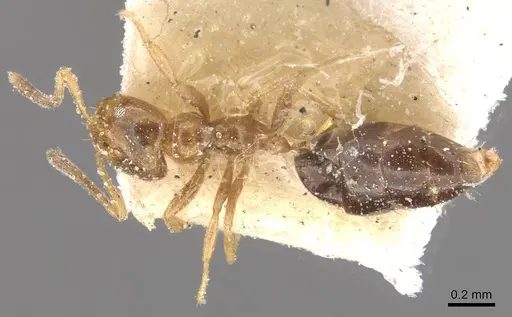
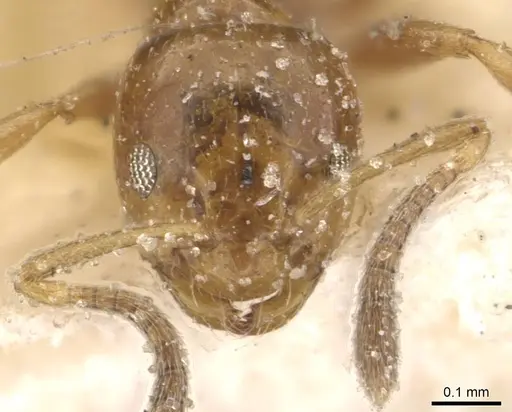
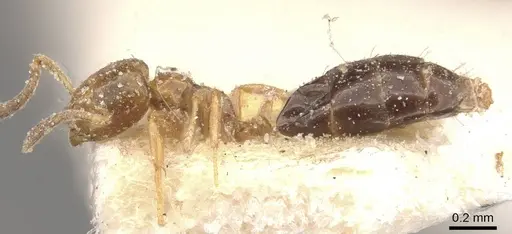
Literatura
Cargando mapa de distribución...Cargando productos...