
Plagiolepis adynata
- Nom. cient.
- Plagiolepis adynata
- Tribu
- Plagiolepidini
- Subfamilia
- Formicinae
- Autor
- Bolton, 1995
- Distribución
- Encontrado en 0 países
Introducción
Plagiolepis adynata is a tiny ant species native to Vietnam and the broader Indomalaya region . Workers are very small, but exact body size data is unavailable; based on Plagiolepis genus patterns, they are typically around 1.5-2.5 mm . The species was originally described as Plagiolepis flava in 1935,but that name was already in use, so it was renamed adynata in 1995 . The most notable aspect is its historical distribution in the Nicobar Islands under the old name Plagiolepis flava , and its poor study in scientific literature.
Quick Summary
- Difficulty: Unknown
- Origin & Habitat: Vietnam and Nicobar Islands in the Indomalaya region [1][2]
- Colony Type: Unconfirmed, no specific data on colony structure
- Size & Growth:
- Queen: Size data unavailable, no total length measurements in literature
- Worker: ~1.5-2.5 mm, inferred from Plagiolepis genus [2]
- Colony: Up to a few hundred workers, inferred from Plagiolepis genus [2]
- Growth: Unknown
- Development: Estimated 6-10 weeks, inferred from Plagiolepis genus patterns [2] (Direct development data unavailable)
- Antkeeping:
- Temperature: Estimated 20-26°C based on tropical origin, inferred from Indomalaya region [1][2]
- Humidity: Keep nest substrate consistently moist but not waterlogged, typical for tropical species [2]
- Diapause: Unknown, tropical origin suggests minimal diapause requirement, but no specific data
- Nesting: Prefers small cavities, test tubes or small nests suitable, inferred from genus patterns [2]
- Behavior: Based on genus patterns, likely docile and non-aggressive. Escape prevention is critical due to tiny size [2].
- Common Issues: escape prevention is critical due to tiny size, use fine mesh and tight-fitting lids, limited scientific data means care is based on genus-level inference, humidity control is important to prevent drying or waterlogging, wild-caught colonies may be difficult to establish due to unknown requirements
Species Background and Identification
Plagiolepis adynata is a small ant species originally described from Vietnam in 1935 as Plagiolepis adynata. However, that name was already occupied by a different species described by Mayr in 1862,so Bolton renamed it adynata in 1995 [2]. The species belongs to the subfamily Formicinae and tribe Plagiolepidini. Workers of Plagiolepis species are typically very small, slender ants with 11-segmented antennae [2]. This particular species has not been extensively studied, and detailed morphological descriptions are limited.
Distribution and Natural Habitat
Plagiolepis adynata is found in the Indomalaya region, with confirmed distribution in Vietnam [1]. Historical records under the old name Plagiolepis adynata also mention the Nicobar Islands [1]. The species appears to be associated with tropical or subtropical environments. In their natural habitat, these ants likely nest in small cavities such as under stones, in rotting wood, or in soil crevices [2].
General Care Based on Genus Patterns
Since specific biological data for Plagiolepis adynata is extremely limited, care recommendations must be based on typical Plagiolepis genus behavior and the species' tropical origin [2]. Keep temperatures in the range of 20-26°C, providing a slight gradient if possible. Humidity should be moderate, aim for substrate that feels slightly moist but allows for some drier areas within the nest. These are tiny ants, so nesting chambers should be appropriately scaled. Test tube setups work well for founding colonies, while small Y-tong nests suit established colonies. Escape prevention is critical due to their minute size.
Feeding and Nutrition
Based on typical Plagiolepis feeding behavior, this species likely forages for honeydew from aphids and scale insects, along with small insects and other protein sources [2]. In captivity, offer sugar water or honey water as a constant energy source. For protein, provide small prey items such as fruit flies or pinhead crickets. Given their tiny size, prey items should be small and easy to handle.
Colony Development and Growth
The exact colony development timeline for Plagiolepis adynata has not been documented. Based on typical Plagiolepis patterns and related small Formicinae species, expect development from egg to first worker to take approximately 6-10 weeks at optimal temperatures [2]. Founding colonies may be slow to establish, as the queen seals herself in and raises the first brood alone. Initial workers will be smaller than mature workers. Colony growth is likely gradual, with colonies remaining small even when established.
Frequently Asked Questions
How long does it take for Plagiolepis adynata to produce first workers?
The exact timeline is unconfirmed, but based on typical Plagiolepis development patterns, expect 6-10 weeks from egg to first worker at optimal temperatures around 22-24°C [2].
What size nest should I use for Plagiolepis adynata?
Use small, appropriately scaled nests. Test tubes work well for founding colonies. For established colonies, small Y-tong nests with narrow chambers are suitable. Avoid large, open spaces [2].
What do Plagiolepis adynata eat?
Based on genus patterns, they likely accept sugar sources like honey water and small protein prey such as fruit flies or pinhead crickets [2]. Offer a varied diet and observe what the colony accepts.
Are Plagiolepis adynata good for beginners?
This species is not well-documented in the antkeeping hobby, making it difficult to recommend specifically for beginners. However, based on genus patterns, they are likely docile and manageable [2]. Start with more established species if possible.
Do Plagiolepis adynata need hibernation?
Given their tropical origin in Vietnam and the Indomalaya region, they likely do not require a true hibernation period [1][2]. Some reduction in activity during cooler months may occur naturally, but formal diapause is probably not necessary.
How big do Plagiolepis adynata colonies get?
Colony size is unconfirmed for this specific species, but Plagiolepis colonies typically remain small, up to a few hundred workers when fully established [2].
Why are my Plagiolepis adynata escaping?
Their tiny size allows them to squeeze through extremely small gaps. Ensure excellent escape prevention with fine mesh barriers, tight-fitting lids, and properly sealed connections. Check for any gaps larger than 1mm [2].
Can I keep multiple Plagiolepis adynata queens together?
Colony structure is unconfirmed for this species. Based on typical Plagiolepis patterns, they likely form single-queen colonies. Combining unrelated queens is not recommended without evidence they can coexist [2].
What temperature is best for Plagiolepis adynata?
Based on their tropical origin, aim for temperatures in the 20-26°C range. Start around 22-24°C and observe colony behavior, if they are active and foraging, the temperature is likely suitable [2].
Report an Issue
The current care sheet is based fully on literature. See inconsistencies, or something that's incorrect? Please , it will be resolved after review from an admin. Contributing to the blogs tab also helps providing information, to make us be able to further improve the caresheets. Thank you for your support!
References

Esta ficha de cuidados está bajo licencia CC BY-SA 4.0 .
Blogs de la comunidad
CASENT0917319
Ver en AntWeb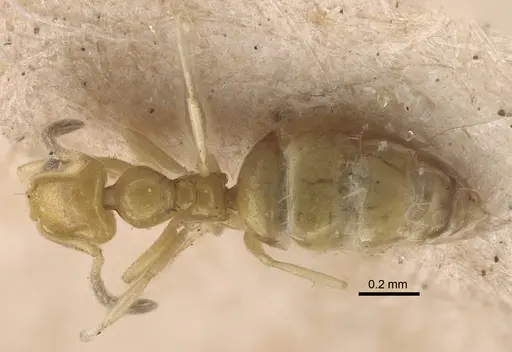
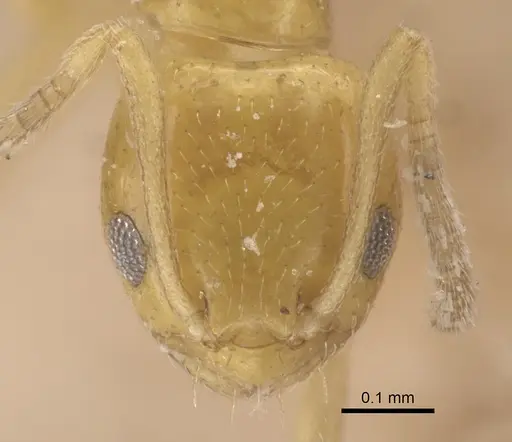
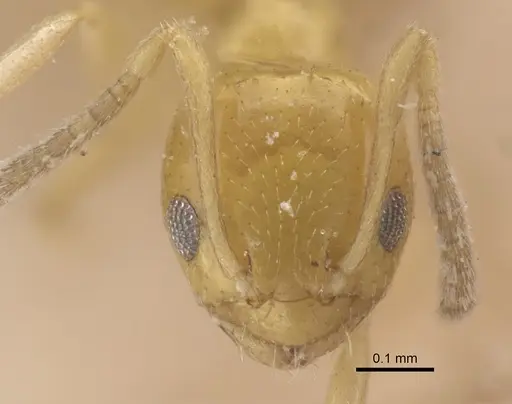
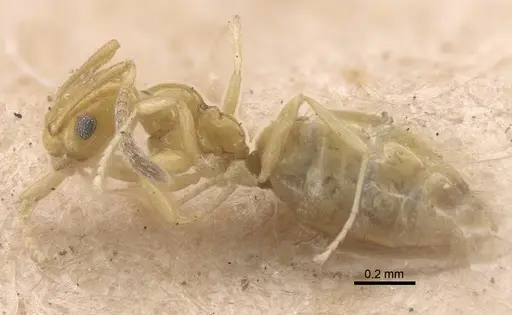
Literatura
Cargando mapa de distribución...Cargando productos...