
Paratopula ankistra
- Nom. cient.
- Paratopula ankistra
- Tribu
- Crematogastrini
- Subfamilia
- Myrmicinae
- Autor
- Bolton, 1988
- Distribución
- Encontrado en 0 países
Introducción
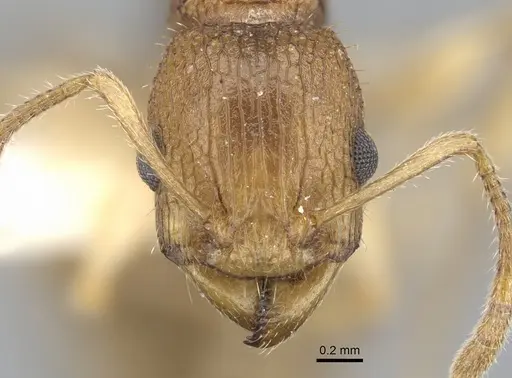
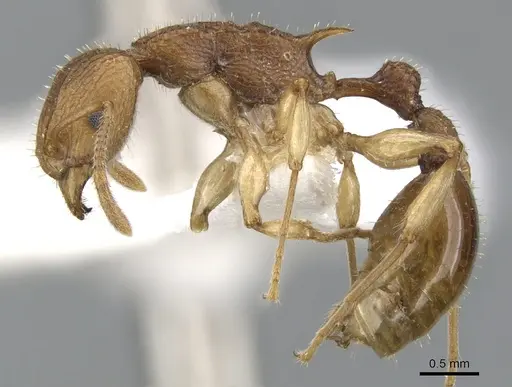
Paratopula ankistra is a rare myrmicine ant from the tropical forests of Borneo . Workers have distinctive morphological features including long, downcurved propodeal spines and sharply hooked propodeal lobes . Size data is unavailable for this species. This arboreal species belongs to the Crematogastrini tribe and is rarely encountered due to its canopy-dwelling habits . The genus Paratopula is known for being rarely collected, with most specimens obtained through fogging techniques in forest canopies .
Quick Summary
- Difficulty: Expert
- Origin & Habitat: Native to Borneo, specifically recorded from Brunei (Bukit Sulang near Lamunin) with additional records from Indonesia, Malaysia, and the Philippines. This is a tropical arboreal species found in forest habitats, typically collected from forest canopies using fogging methods [1][2][3].
- Colony Type: Colony structure is unconfirmed. No data exists on queen number or colony organization.
- Size & Growth:
- Queen: Size data unavailable
- Worker: Size data unavailable
- Colony: Unknown, no colony size data available
- Growth: Unknown
- Development: Unconfirmed (No development data exists for this species.)
- Antkeeping:
- Temperature: As a tropical species from Borneo, keep nest areas around 24-27°C [1][2].
- Humidity: Tropical forest conditions, aim for high humidity. Keep the nest substrate consistently moist but not waterlogged [1][2].
- Diapause: No, as a tropical species from near the equator, they do not require hibernation [1][2].
- Nesting: Arboreal nesting in nature, they likely nest in hollow twigs or branches [1][2]. In captivity, use small formicaria with vertical structures like twigs or bark.
- Behavior: Temperament is unconfirmed, but related Myrmicinae are typically non-aggressive. Escape prevention should be taken seriously due to their small size. Defense mechanism is likely smear-based, as typical for Myrmicinae Crematogastrini, but no specific data exists.
- Common Issues: no captive care documentation exists, this species has never been kept in captivity by hobbyists, so all recommendations are speculative, extreme rarity means wild-caught colonies are essentially impossible to obtain, arboreal nature requires specialized setups that differ from typical ground-nesting ant keeping, lack of development data makes timing predictions uncertain, tropical humidity requirements can be challenging to maintain consistently
Species Overview and Rarity
Paratopula ankistra is an exceptionally rare ant species that has rarely been encountered even by professional ant researchers. First described by Bolton in 1988 from specimens collected in Brunei, the species is known primarily from type specimens. Most Paratopula species are collected through canopy fogging, suggesting they live high in the forest trees rather than on the ground. This arboreal lifestyle makes them fundamentally different from most commonly kept ant species, which are ground-nesting. The genus Paratopula belongs to the tribe Crematogastrini, which includes many arboreal and tropical species. For antkeepers, this species represents a true challenge, not because of difficult temperament, but because virtually no captive care information exists. Unless you have access to wild-caught colonies from Borneo, this species is essentially unavailable to hobbyists. [1][2][3]
Natural History and Distribution
This species is known from the island of Borneo, with confirmed records from Brunei and likely parts of Indonesia and Malaysia. The type locality is Bukit Sulang near Lamunin in Brunei, where specimens were collected through fogging of forest vegetation between August and September 1982. The Indomalayan distribution (Borneo, Brunei, Indonesia, Malaysia, Philippines) suggests they inhabit tropical rainforest environments with high year-round humidity and warm temperatures. As an arboreal species, they likely nest in pre-existing cavities in trees rather than excavating nests in soil. Their small size and canopy-dwelling habits explain why they are so rarely collected, standard ground-level ant collecting methods rarely encounter them. [1][2][3]
Housing and Nest Setup
Because this is an arboreal species, your setup should differ from typical ground-nesting ant enclosures. In captivity, they likely prefer nesting in small cavities that mimic the hollow twigs and branches they use in nature. A Y-tong (AAC) formicarium with narrow, tight-fitting chambers works well, or you could create a naturalistic arboreal setup with small twigs and bark pieces. The nest material should retain moisture well, plaster or water-retentive nests are suitable. Keep the nest chambers small and scaled to their body size. The outworld should include vertical structures like twigs, cork, or plants since they prefer to forage on surfaces rather than across open ground. Ensure excellent escape prevention, use fine mesh and seal all gaps, as small arboreal ants can slip through small openings. [1][2]
Feeding and Diet
Based on typical Myrmicinae patterns, Paratopula ankistra is likely omnivorous with a diet of nectar, honeydew, and small insects. Offer sugar water or honey as a constant energy source. For protein, provide small prey items appropriate to their size, fruit flies, small ants, pinhead crickets, or other tiny arthropods. Since they are arboreal foragers, they may prefer hunting live prey. Feed protein sources 2-3 times per week, and keep sugar water available at all times. Remove uneaten prey after 24-48 hours to prevent mold. The exact prey preferences are unknown, so you may need to experiment with what your colony accepts best.
Temperature and Humidity Management
Being a tropical species from Borneo, these ants need warm and humid conditions. Keep the nest area in the range of 24-27°C, this is typical room temperature for many keepers, but you may need a small heating cable on one side of the nest during cooler months. Use a thermostat with any heating to prevent overheating. Humidity should be high, aim for consistent moisture in the nest substrate without waterlogging. This can be achieved by keeping the nest substrate moist and providing a water tube. Monitor for condensation, which indicates humidity is adequate. Avoid placing the nest near air conditioning vents or in drafty areas, as tropical ants are sensitive to temperature fluctuations and dry air. [1][2]
Challenges and Realistic Expectations
You must understand that this is one of the least documented species in antkeeping. No hobbyist has ever published care guides for Paratopula ankistra because the species is virtually unavailable in the ant trade. All recommendations in this caresheet are based on inference from the species' natural history (tropical, arboreal, Myrmicinae) rather than captive observation. If you somehow obtain a colony, expect a steep learning curve with no fallback resources. Document your observations carefully, you would be contributing genuinely new knowledge to antkeeping. Additionally, consider the legalities of keeping this species if you are in a country where it is protected or where permitting is required for exotic ant species.
Frequently Asked Questions
Can I keep Paratopula ankistra in a test tube?
A test tube setup can work for a founding queen or small colony, but due to their arboreal nature, they will likely do better in a small formicarium with vertical structures. If using a test tube, ensure it has a water reservoir and keep it horizontal with the cotton end serving as a moisture source.
How long does it take for Paratopula ankistra to develop from egg to worker?
This is completely unconfirmed, no development data exists for this species. Based on typical tropical Myrmicinae, estimate 4-8 weeks at optimal temperature (around 25-27°C), but this is a rough guess.
Are Paratopula ankistra good for beginners?
No. This species is not recommended for beginners or even experienced antkeepers due to the complete lack of captive care documentation. There are no resources, guides, or community experience to draw upon. If you want a challenging species, choose one with at least some documented care in the hobby.
Do Paratopula ankistra ants sting?
Most Myrmicinae ants have the ability to sting, though many are too small to penetrate human skin effectively. The sting pain level for this species is unknown, but given their small size, any sting would likely be mild.
What do Paratopula ankistra eat?
Like most Myrmicinae, they likely accept sugar sources (honey, sugar water) and protein (small insects). Feed sugar water constantly and protein prey 2-3 times per week. The exact preferences are unknown and would need to be determined through observation.
Do Paratopula ankistra need hibernation?
No. As a tropical species from Borneo near the equator, they do not experience seasonal temperature drops and do not require hibernation or diapause. Keep them at warm, stable temperatures year-round [1][2].
How big do Paratopula ankistra colonies get?
Unknown. No colony size data exists for this species. Based on related arboreal Myrmicinae, colonies are likely small to moderate, possibly under a few hundred workers.
Where can I get Paratopula ankistra?
This species is essentially unavailable in the antkeeping hobby. It is extremely rare in the wild and has never been documented in commercial ant trade. You would need to collect them yourself in Borneo, which raises significant legal and ethical concerns.
Can I keep multiple Paratopula ankistra queens together?
Unknown. No data exists on their colony structure (monogyne vs polygyne). Do not attempt combining unrelated queens without documentation, as this typically leads to aggression and colony failure.
What temperature should I keep Paratopula ankistra at?
Aim for 24-27°C in the nest area. This is typical room temperature for many homes, though you may need supplemental heating in cooler climates. A small heating cable on one side of the nest can create a gentle gradient [1][2].
Why are my Paratopula ankistra dying?
Without documented captive care, colony failure is extremely likely. Common issues likely include: incorrect humidity (too dry), temperature stress (too cold or temperature swings), inadequate nutrition, or escape leading to death outside the nest. This species should only be attempted by expert antkeepers willing to experiment extensively.
Is Paratopula ankistra aggressive?
No data exists on their temperament, but related arboreal Myrmicinae are typically non-aggressive and docile. They are likely to flee rather than engage when threatened. Their small size makes them low risk for painful stings.
Report an Issue
The current care sheet is based fully on literature. See inconsistencies, or something that's incorrect? Please , it will be resolved after review from an admin. Contributing to the blogs tab also helps providing information, to make us be able to further improve the caresheets. Thank you for your support!
References

Esta ficha de cuidados está bajo licencia CC BY-SA 4.0 .
Blogs de la comunidad
CASENT0901741
Ver en AntWeb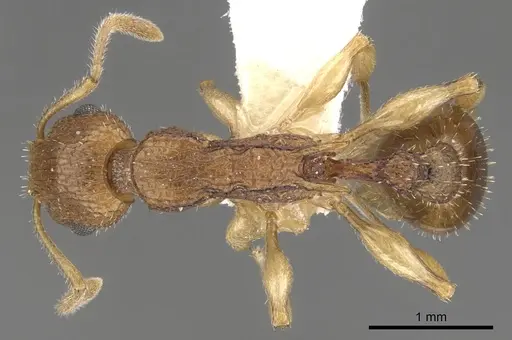
Literatura
Cargando mapa de distribución...Cargando productos...