
Parasyscia shii
- Nom. cient.
- Parasyscia shii
- Subfamilia
- Dorylinae
- Autor
- Chen <i>et al.</i>, 2022
- Distribución
- Encontrado en 0 países
Introducción
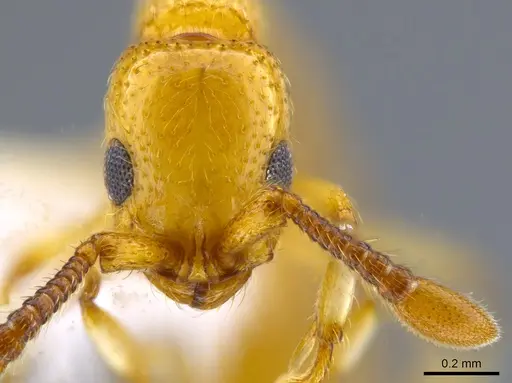
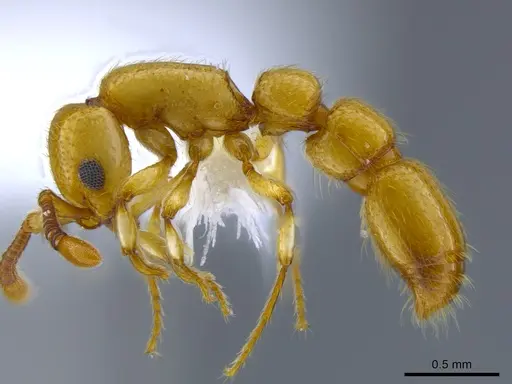
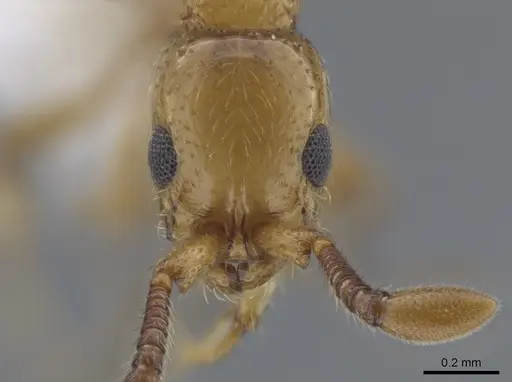
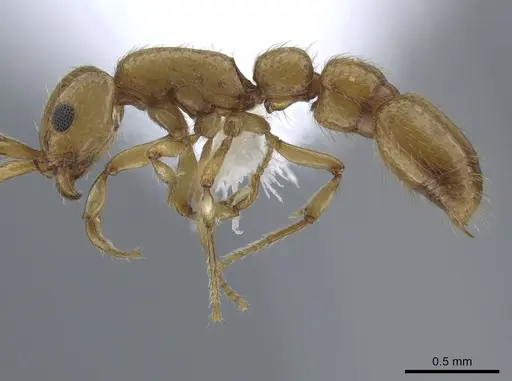
Parasyscia shii is a yellow ant species described in 2022 from Guangxi, China . Workers have a head longer than wide, a smooth shiny body, and are known from only two collections at 949m elevation in Longsheng County . Size data is unavailable for this species . The most notable aspect of this ant is its extreme rarity, with no observed colonies or biological data, making it impossible to assess care requirements.
Quick Summary
- Difficulty: Expert
- Origin & Habitat: Guangxi, China, specifically Guilin City, Longsheng County, Huaping Village at 949m elevation [1][2].
- Colony Type: Colony structure unconfirmed, only worker specimens have been collected, with no queens or colonies observed [1][2].
- Size & Growth:
- Queen: Size data unavailable
- Worker: Size data unavailable
- Colony: Unknown, no colonies have been studied
- Growth: Unknown
- Development: Unknown, no development data exists (No biological observations have been published.)
- Antkeeping:
- Temperature: Unknown, no thermal data. Based on collection location in subtropical mountains, moderate temperatures around 18-25°C are plausible, but start in mid-range and observe [2].
- Humidity: Unknown, no data. Based on mountainous habitat, provide a humidity gradient with moderately moist substrate [2].
- Diapause: Unknown, no seasonal data exists.
- Nesting: Unknown, no natural nesting observations. Based on genus patterns, small soil or wood nests may be suitable, but start with a test tube setup [1].
- Behavior: Completely unstudied. Escape risk is high due to small size, but temperament is unknown [1][2].
- Common Issues: this species has never been kept in captivity, no established care protocol exists., no biological data exists for any aspect of their life history., only a handful of worker specimens have ever been collected., the species may have specific habitat requirements that cannot be replicated., wild-caught colonies may be impossible to obtain.
Species Discovery and Rarity
Parasyscia shii was formally described in 2022 based on worker specimens from Guangxi, China [1]. Only two collections are known, from Huaping Village at 949m elevation [2]. No queens, colonies, or biological observations have been published, making this species extremely difficult to keep [1][2].
Identification and Morphology
Workers are uniformly yellow with a head longer than wide, straight posterior margin, and rounded posterolateral corners [2]. The body is smooth and shiny with sparse punctures [2]. This species resembles Parasyscia muiri but has lighter coloration and a broader first gastral segment [2].
Why This Species Is Not Recommended for Keeping
Parasyscia shii should not be kept due to its extreme rarity and lack of biological data. Only worker specimens exist, with no information on diet, nesting, or colony structure [1][2]. Keeping this species would be experimental and likely unsuccessful.
Genus-Level Information
Parasyscia is a genus in the Dorylinae subfamily, with species primarily in the Oriental region [1]. Most Parasyscia species are small, predatory ants, but specific biology is poorly studied [1].
Frequently Asked Questions
Can I keep Parasyscia shii ants?
No. This species should not be kept due to its rarity and lack of care data [1][2].
Where does Parasyscia shii live?
Only from Huaping Village, Longsheng County, Guangxi, China at 949m elevation [1][2].
What do Parasyscia shii ants eat?
Unknown, no feeding observations exist [1].
What temperature do Parasyscia shii need?
Unknown, no thermal data exists. Based on location, moderate temperatures are plausible but unconfirmed [2].
How long does it take for Parasyscia shii eggs to become workers?
Unknown, no development data exists [1].
Can I find Parasyscia shii in the wild?
Extremely unlikely, only two collections known, and collection may be ecologically questionable [1][2].
Are there similar ant species that are better suited for keeping?
Yes, consider more common Parasyscia species or other well-documented small ants like Strumigenys [1].
Report an Issue
The current care sheet is based fully on literature. See inconsistencies, or something that's incorrect? Please , it will be resolved after review from an admin. Contributing to the blogs tab also helps providing information, to make us be able to further improve the caresheets. Thank you for your support!
References

Esta ficha de cuidados está bajo licencia CC BY-SA 4.0 .
Blogs de la comunidad
CASENT0651433
Ver en AntWeb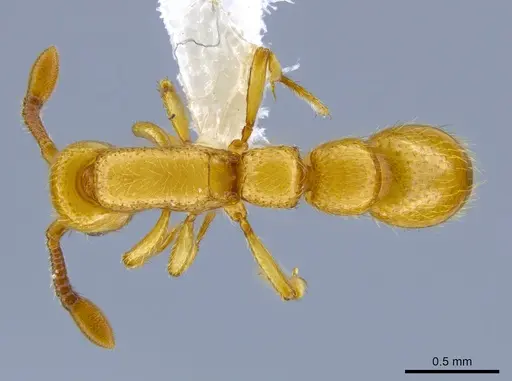
CASENT0651437
Ver en AntWeb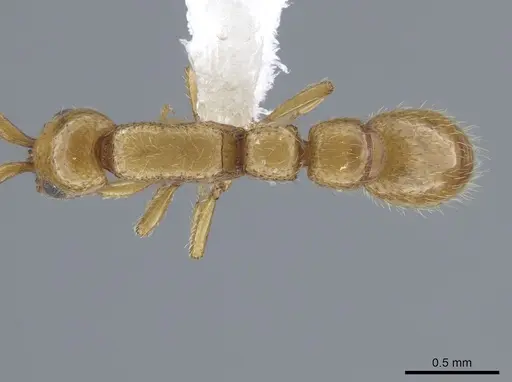
Literatura
Cargando mapa de distribución...Cargando productos...