
Parasyscia arnoldi
- Nom. cient.
- Parasyscia arnoldi
- Subfamilia
- Dorylinae
- Autor
- Forel, 1914
- Distribución
- Encontrado en 0 países
Introducción
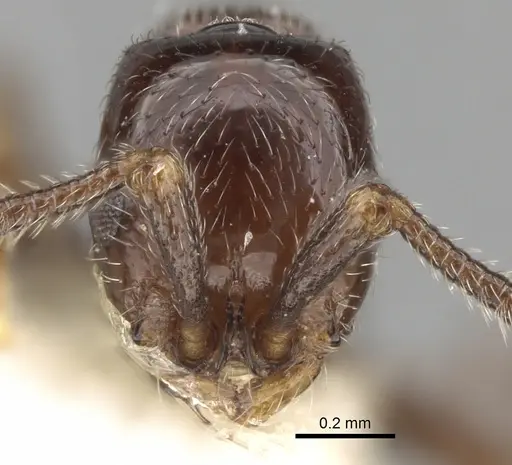
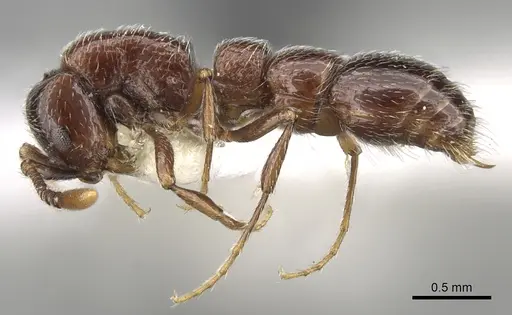
Parasyscia arnoldi is a species in the Dorylinae subfamily, commonly known as army ants. It is found in the Afrotropical region . Size data is unavailable for this species. They are predatory ants that hunt small invertebrates underground using chemical trails and group foraging strategies . This genus contains cryptic, subterranean army ants that are less visible than other species .
Quick Summary
- Difficulty: Hard, care is inferred from Dorylinae patterns due to lack of specific research [2]
- Origin & Habitat: Afrotropical region (sub-Saharan Africa) [1]. In nature, they typically nest in soil, under stones, or in decaying wood in tropical forest habitats [2].
- Colony Type: Based on typical Dorylinae patterns, colonies are likely monogyne with potential ergatoid reproductives. However, specific structure for Parasyscia arnoldi is unconfirmed [2].
- Size & Growth:
- Queen: size data unavailable
- Worker: size data unavailable
- Colony: Colony size data unavailable for this species.
- Growth: Moderate, inferred from typical Dorylinae development [2]
- Development: Estimated 6-10 weeks based on typical tropical ant development [2] (Development timeline is inferred from related species, specific data for Parasyscia arnoldi is not available.)
- Antkeeping:
- Temperature: Keep at 24-28°C based on tropical habitat requirements [2]. A gentle temperature gradient allows ants to regulate exposure.
- Humidity: Maintain moderate to high humidity, keep substrate consistently moist but not waterlogged [2]. These ants prefer damp conditions similar to tropical forest floor microhabitats.
- Diapause: No true diapause required due to tropical origin [2]. Activity may reduce slightly during cooler months.
- Nesting: Use a naturalistic setup with moist substrate or a Y-tong nest with moisture chambers [2]. These ants prefer enclosed, humid spaces.
- Behavior: Parasyscia arnoldi is a predatory army ant species. Workers are active foragers that hunt in groups using chemical pheromone trails [2]. They are not aggressive toward humans but will defend their colony if threatened. Escape prevention is critical due to their small size, use fine mesh and tight-fitting barriers [2].
- Common Issues: humidity control is essential, too dry causes colony failure, too wet causes mold problems [2], predatory diet requires live prey, not suitable for keepers who prefer frozen foods [2], small size makes escape prevention critical, use fine mesh barriers [2]
Housing and Nest Setup
Parasyscia arnoldi does well in naturalistic setups that mimic their subterranean habitat. Use a soil/sand mixture as substrate, kept consistently moist but not waterlogged [2]. A depth of 5-10cm allows for tunnel construction. Alternatively, a Y-tong nest with moisture chambers works well [2]. Ensure excellent escape prevention due to their small size, use tight-fitting lids and fine mesh on ventilation holes [2].
Feeding and Diet
As predatory army ants, Parasyscia arnoldi requires a protein-rich diet of small live invertebrates. Offer fruit flies, pinhead crickets, or small mealworms [2]. They may occasionally accept sugar water, but protein should be the primary food [2]. Feed every 2-3 days and remove uneaten prey after 24 hours to prevent mold.
Temperature and Humidity
Maintain temperatures at 24-28°C, reflecting their tropical origin [2]. Use a heating cable if room temperature is below this range. Humidity should be kept moderate to high, substrate should feel damp to the touch [2]. Mist occasionally or use a water reservoir to maintain moisture.
Colony Development
Colony growth is moderate. Founding colonies develop slowly until first workers emerge. Based on typical patterns, expect 6-10 weeks from egg to worker at optimal temperature [2]. Once workers emerge, foraging begins and growth rate increases. Colonies are rarely available in the hobby, so finding established colonies may be challenging.
Frequently Asked Questions
How long does it take for Parasyscia arnoldi to produce first workers?
Based on typical Dorylinae development, expect 6-10 weeks from egg to first worker at optimal temperatures of 24-28°C [2]. This is an estimate since specific data is not available.
What do Parasyscia arnoldi ants eat?
They are predatory and primarily eat small live invertebrates like fruit flies or crickets [2]. They may occasionally accept sugar water, but protein should be the main food source.
Can I keep Parasyscia arnoldi in a test tube setup?
A test tube setup can work for founding colonies, but these ants prefer more space and naturalistic substrate [2]. Transition to a larger setup once the colony reaches 20-30 workers, ensuring the substrate remains moist.
Are Parasyscia arnoldi good for beginners?
This species is not recommended for beginners due to specific humidity and dietary requirements, and lack of documentation [2]. It is best suited for experienced antkeepers.
Do Parasyscia arnoldi need hibernation?
Given their tropical origin, they do not require true hibernation [2]. A slight temperature reduction in winter may be appropriate if room temperature drops significantly.
How big do Parasyscia arnoldi colonies get?
Colony size data is unavailable for this species [2]. Based on related Dorylinae, colonies may reach several hundred workers, but this is not confirmed.
Why is my Parasyscia arnoldi colony dying?
Common causes include too dry conditions, lack of live prey, or temperature issues [2]. Ensure proper humidity, temperature, and provide regular live prey.
Can I keep multiple Parasyscia arnoldi queens together?
Colony structure is unconfirmed. Based on Dorylinae patterns, they likely form single-queen colonies [2]. Combining unrelated queens is not recommended unless pleometrosis is observed, which is undocumented.
When should I move Parasyscia arnoldi to a formicarium?
Move from a test tube to a larger setup when the colony reaches 20-40 workers and the test tube becomes crowded [2]. Ensure the new setup has appropriate moisture levels.
Report an Issue
The current care sheet is based fully on literature. See inconsistencies, or something that's incorrect? Please , it will be resolved after review from an admin. Contributing to the blogs tab also helps providing information, to make us be able to further improve the caresheets. Thank you for your support!
References

Esta ficha de cuidados está bajo licencia CC BY-SA 4.0 .
Blogs de la comunidad
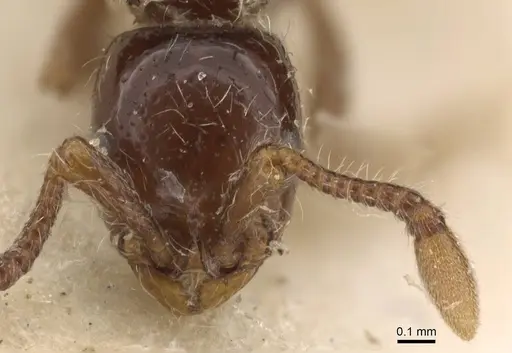
CASENT0281974
Ver en AntWeb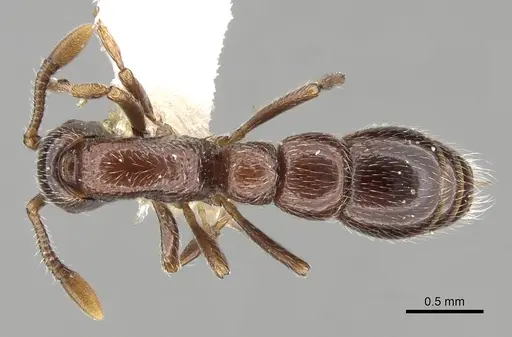
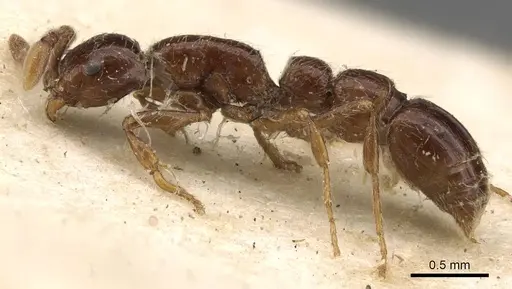
CASENT0907049
Ver en AntWeb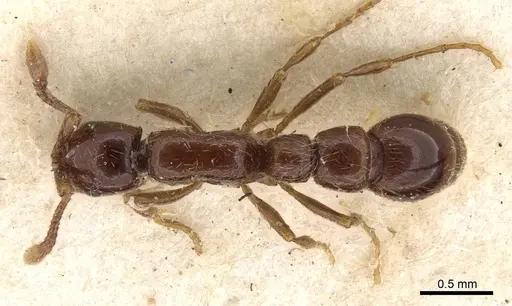
Literatura
Cargando mapa de distribución...Cargando productos...