
Ooceraea pusilla
- Nom. cient.
- Ooceraea pusilla
- Subfamilia
- Dorylinae
- Autor
- Emery, 1897
- Distribución
- Encontrado en 0 países
Introducción
Ooceraea pusilla is a tiny ant native to Papua New Guinea and the Solomon Islands . Workers have 9-segmented antennae and a body covered in fine punctures . The postpetiole is slightly longer than broad . Size data is unavailable, but they are among the smaller ant species. They inhabit tropical forests and nest in rotting wood or soil . This species is part of the Dorylinae subfamily, known for predatory behavior .
Quick Summary
- Difficulty: Expert
- Origin & Habitat: Papua New Guinea and Solomon Islands (Ugi), tropical forest environments [1].
- Colony Type: Colony structure is unconfirmed. Based on related Ooceraea species, likely monogyne (single queen), but not documented for O. pusilla.
- Size & Growth:
- Queen: Size data unavailable
- Worker: Size data unavailable
- Colony: Unknown
- Growth: Unknown
- Development: Unknown, no data available (Development timeline is unconfirmed for this species.)
- Antkeeping:
- Temperature: Keep at warm temperatures, roughly 24-28°C, inferred from tropical origin [5].
- Humidity: Keep nest substrate consistently moist but not waterlogged, inferred from forest habitat [5].
- Diapause: No, tropical species do not require diapause.
- Nesting: Use moist substrate or Y-tong/plaster nests, inferred from habitat preferences [5].
- Behavior: Predatory ants that hunt small invertebrates [5]. Shy and non-aggressive. Escape prevention critical due to tiny size.
- Common Issues: escape prevention is critical due to very small size, they can squeeze through standard barriers., lack of documented care information means trial and error is required., predatory diet may be difficult to sustain, live micro-prey is essential., high humidity requirements can lead to mold problems if ventilation is poor., wild-caught colonies may have parasites that are difficult to treat.
Appearance and Identification
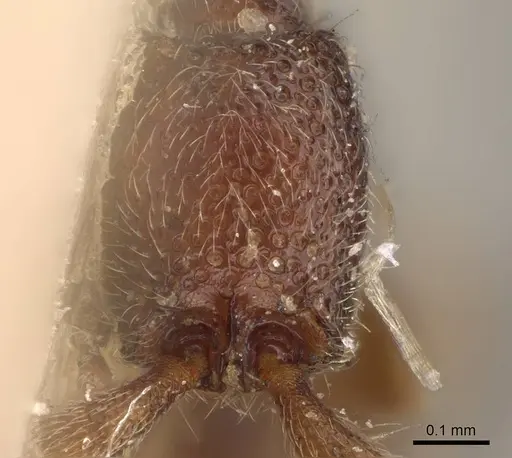
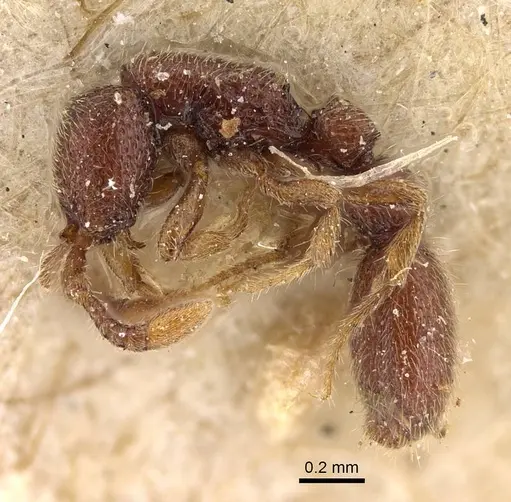
Ooceraea pusilla workers are tiny ants, with size data unavailable. They can be identified by their 9-segmented antennae, a key diagnostic feature of the genus Ooceraea [2][3][4]. The body is covered in fine punctures, giving it a textured appearance [4]. The postpetiole is slightly longer than broad when viewed from above [3]. The overall coloration is typically dark brown to black.
Natural History and Distribution
Ooceraea pusilla is native to the Australasian region, specifically Papua New Guinea and the Solomon Islands [1]. The type locality is the Hansemann Mountains in Papua New Guinea [5]. They inhabit tropical forest environments where humidity remains high year-round. In their natural habitat, they likely nest in rotting wood, under stones, or in soil in shaded forest areas [5].
Housing and Nest Setup
For Ooceraea pusilla, use a naturalistic setup with a moist soil/peat substrate that can hold humidity, or a Y-tong/plaster nest designed for humidity-loving species. The nest chambers should be appropriately scaled to their tiny size, tight passages and small chambers work better than large open spaces. Maintain high humidity by keeping the substrate consistently moist but not waterlogged. A small water reservoir or moisture chamber connected to the nest helps maintain stable humidity. Provide a shallow foraging area with a moist substrate where they can hunt. Escape prevention is critical, their tiny size means they can squeeze through standard barriers. Use fine mesh on all openings and ensure lids fit tightly. [5]
Feeding and Diet
As Dorylinae ants, Ooceraea pusilla is likely predatory, hunting small invertebrates in nature [5]. In captivity, offer small live prey such as springtails, fruit flies, and other micro-arthropods. They may accept protein-rich foods like small mealworms, but live prey should form the primary diet. Sugar sources may be accepted occasionally, but predatory ants typically rely less on carbohydrates. Feed small amounts every 2-3 days, removing any uneaten prey after 24 hours to prevent mold.
Temperature and Humidity Requirements
Keep Ooceraea pusilla at warm temperatures, roughly 24-28°C, inferred from their tropical origin [5]. A slight temperature gradient allows workers to self-regulate. Temperature stability is important, avoid drafts and sudden changes. Humidity should be high, with the nest substrate consistently moist but not saturated. A shallow water dish in the outworld provides drinking water and helps maintain humidity through evaporation. As a tropical species, they likely do not require a diapause period, maintain consistent conditions year-round.
Behavior and Colony Care
Ooceraea pusilla is likely a shy, non-aggressive species that avoids confrontation with larger ants. Workers probably forage individually or in small groups through leaf litter and soil, hunting small invertebrates [5]. They may form small colonies with a single queen, though this is unconfirmed. Colony growth is likely slow, expect small colony sizes even at maturity. When keeping this species, be patient and avoid disturbing the nest frequently. Monitor for mold issues due to their high humidity requirements. Quarantine any wild-caught colonies and watch for parasites.
Frequently Asked Questions
How long does it take for Ooceraea pusilla to produce first workers?
The exact timeline is unknown. No specific development data exists for this species.
What do Ooceraea pusilla ants eat?
They are predatory ants that likely hunt small invertebrates [5]. In captivity, feed small live prey like springtails and fruit flies.
Can I keep Ooceraea pusilla in a test tube setup?
A test tube setup can work if it maintains high humidity, but their tiny size creates escape risks. Ensure the cotton plug is tight and consider adding a fine mesh barrier.
Do Ooceraea pusilla ants need hibernation?
No, as a tropical species, they do not require diapause.
Are Ooceraea pusilla good for beginners?
No. This species is not recommended for beginners due to lack of documented care information, small size requiring excellent escape prevention, and specific humidity and dietary requirements.
How big do Ooceraea pusilla colonies get?
Colony size is unknown, but they likely form small colonies.
Why are my Ooceraea pusilla escaping?
Their tiny size allows them to squeeze through gaps that larger ants cannot. Use fine mesh on all openings and ensure lids fit tightly.
When should I move Ooceraea pusilla to a formicarium?
Move them when the founding setup becomes too crowded or the water reservoir is depleted. For this species, a naturalistic setup with moist substrate works well.
Can I keep multiple queens together?
Not enough is known about their colony structure to recommend combining queens. For safety, keep only one queen per colony.
Report an Issue
The current care sheet is based fully on literature. See inconsistencies, or something that's incorrect? Please , it will be resolved after review from an admin. Contributing to the blogs tab also helps providing information, to make us be able to further improve the caresheets. Thank you for your support!
References

Esta ficha de cuidados está bajo licencia CC BY-SA 4.0 .
Blogs de la comunidad
CASENT0922423
Ver en AntWeb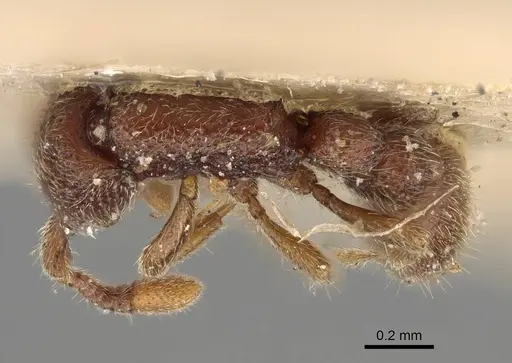
Literatura
Cargando mapa de distribución...Cargando productos...