
Odontomachus xizangensis
- Nom. cient.
- Odontomachus xizangensis
- Tribu
- Ponerini
- Subfamilia
- Ponerinae
- Autor
- Wang, 1993
- Distribución
- Encontrado en 0 países
Introducción
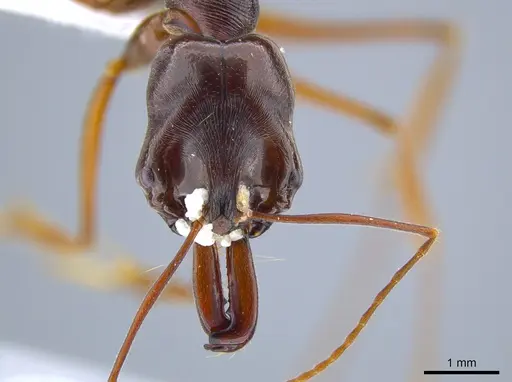
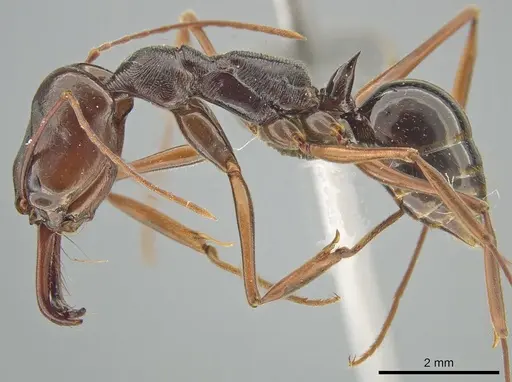
Odontomachus xizangensis is a trap-jaw ant species from the rixosus species group, native to Tibet and southwestern China. Workers are medium-sized ants in the genus Odontomachus, recognizable by their distinctive large mandibles that can snap shut with fast speed - a hunting adaptation that gives them their common name. The species was described in 1993 from specimens collected in Medog County, Tibet at 1100m elevation . The head has a finely striate vertex, a key identification feature for distinguishing it from related species . As a member of the rixosus group, this species is part of a lineage distributed across eastern Asia from Japan through China to northern Indo-China and northeastern India . This is a high-elevation subtropical to temperate species from a relatively cool mountainous region. Trap-jaw ants are active predators with powerful mandibles they use to capture prey. They are less commonly kept in captivity than some other Odontomachus species, making this a more challenging species for collectors.
Quick Summary
- Difficulty: Medium
- Origin & Habitat: Tibet and southwestern China, specifically Medog County at 1100m elevation. This is a high-altitude subtropical region with moderate temperatures and seasonal humidity patterns. The rixosus species group spans Japan, China, northern Indo-China to northeastern India [3].
- Colony Type: Colony structure is unconfirmed. Based on typical Odontomachus patterns, likely single-queen (monogyne) colonies. The rixosus group has not been studied for colony polymorphism.
- Size & Growth:
- Queen: Size data unavailable, inferred from Odontomachus genus (~10-12 mm)
- Worker: Size data unavailable, inferred from Odontomachus genus (~8-10 mm)
- Colony: Colony size data unavailable for this species.
- Growth: Moderate, estimated based on genus patterns
- Development: Estimated 6-10 weeks at optimal temperature, inferred from typical Ponerinae patterns. (Development time is estimated from typical Ponerinae patterns. Higher elevation origin suggests they may develop slightly slower than tropical species.)
- Antkeeping:
- Temperature: Keep around 20-24°C. The high-elevation origin (1100m in Tibet) suggests they can tolerate cooler conditions than purely tropical trap-jaw ants. Provide a temperature gradient so ants can self-regulate.
- Humidity: Maintain moderate humidity with moist substrate in the nest area while allowing some drier areas for variation. Mist periodically and use a water source.
- Diapause: Based on the temperate to subtropical high-elevation origin, they likely experience a winter rest period. Provide 2-3 months of reduced temperatures (around 15-18°C) during winter.
- Nesting: In captivity, they do well in naturalistic setups with soil or in Y-tong/plaster nests. They prefer dark, humid nest chambers. Provide a foraging area with substrate they can dig in.
- Behavior: Trap-jaw ants are active predators. Workers hunt using their powerful mandibles to snap shut on prey. They are generally more cautious than aggressive toward keepers, but will defend the nest if threatened. They are skilled climbers and may attempt escapes, use excellent escape prevention. Workers are moderately sized but can deliver a painful sting if handled roughly. They are primarily nocturnal or crepuscular in activity patterns.
- Common Issues: high escape risk, use tight-fitting lids and fine mesh barriers as they are agile climbers, limited availability, this species is rarely available in the antkeeping hobby, slow colony growth, Ponerinae colonies typically grow slower than many common species, requiring patience, stinging risk, their painful sting means careful handling is required, humidity management, improper humidity can lead to colony decline, balance moisture carefully
Housing and Nest Setup
Odontomachus xizangensis does well in naturalistic setups with a soil-filled foraging area connected to a nest chamber. You can use a Y-tong nest with narrow chambers, or a plaster nest that holds humidity well. They prefer dark nest chambers, cover the nest with an opaque cover or place it in a shaded area. The foraging area should be spacious enough for workers to hunt and explore. Use a substrate they can dig into, like a mixture of soil and sand. Always provide a water source, a test tube with a cotton ball works well. Escape prevention is critical since they are good climbers, use fluon on container edges and tight-fitting lids.
Feeding and Diet
As predatory trap-jaw ants, they need a protein-rich diet. Offer live prey such as small crickets, mealworms, fruit flies, and other small insects. Prey should be appropriately sized, no larger than the ant's head. They typically accept dead prey if moved with forceps to simulate movement. Sugar sources are not their primary food, but you can occasionally offer a drop of honey or sugar water, acceptance varies by individual colony. Feed protein 2-3 times per week, removing uneaten prey within 24 hours to prevent mold. Fresh water should always be available.
Temperature and Seasonal Care
Maintain temperatures around 20-24°C during the active season. The high-elevation Tibetan origin suggests they can tolerate cooler conditions than many tropical ants, room temperature is likely suitable for most keepers. Provide a temperature gradient by placing the heating element on only one side of the nest, allowing workers to move between warmer and cooler areas. During winter, reduce temperatures to around 15-18°C for 2-3 months to simulate their natural seasonal cycle. This winter rest period is important for colony health and may trigger reproductive behavior in spring. Do not feed during deep hibernation but keep a water source available.
Behavior and Handling
Odontomachus xizangensis workers are active hunters using their trap-jaw mandibles to capture prey. They are not typically aggressive toward keepers but will defend their nest if disturbed. The genus is known for their powerful sting, while not dangerously toxic, it can be quite painful. Handle them gently and avoid provoking defensive behavior. Workers are primarily nocturnal or crepuscular, so expect more activity during evening and night hours. They use visual cues and chemical trails to navigate. When hunting, they often ambush prey near the nest entrance rather than foraging far afield. Colony activity increases significantly when brood is present.
Colony Development
Colony growth in Odontomachus species is typically slower than in many common ant genera. The founding queen must leave the nest to hunt for protein during the founding period, this is energetically demanding and many founding attempts fail. After the first workers (nanitics) emerge, the colony grows gradually. Expect the first major workers around 2-3 months after founding under good conditions. Full colony development may take 1-2 years. Colonies are relatively long-lived compared to some genera. The queen is physogastric and continues laying eggs throughout her life. Brood development is temperature-dependent, cooler temperatures slow development.
Frequently Asked Questions
How long does it take for Odontomachus xizangensis to produce first workers?
Based on typical genus patterns, expect first workers (nanitics) around 6-10 weeks after the queen lays eggs, assuming optimal temperatures around 22-24°C. Actual time varies with temperature and feeding. The founding phase means the queen must successfully hunt during colony founding, which adds time and risk compared to fully claustral species.
Can I keep multiple queens together?
Not recommended. Combining unrelated queens of this species has not been documented. In the wild, colonies are typically single-queen. If you acquire a dealate queen, house her alone in a founding setup until workers emerge. Introducing additional queens to an established colony will likely result in fighting.
What temperature range is best for this species?
Keep them around 20-24°C during the active season. The high-elevation Tibetan origin means they can tolerate cooler conditions than tropical species. A slight temperature gradient is ideal so workers can choose their preferred spot. During winter, provide 2-3 months at 15-18°C.
Are Odontomachus xizangensis good for beginners?
This is not an ideal beginner species. They are less common in the hobby, have specific humidity and temperature needs, and the queen must hunt during founding which carries higher failure risk. Additionally, their painful sting requires careful handling. Beginners may have better success with more docile, established species like Lasius or Camponotus.
How big do colonies get?
Colony size is not documented for this specific species. Based on related species in the rixosus group, colonies may reach several hundred workers over 1-2 years, but data is unavailable. Growth is moderate and depends heavily on proper feeding and temperature.
What do I feed Odontomachus xizangensis?
They are predators requiring protein-rich food. Offer live small insects like fruit flies, pinhead crickets, and mealworms. Prey should be appropriately sized, typically no larger than the ant's head. They may accept dead prey if moved with forceps to simulate movement. Occasional honey or sugar water can be offered but is not required.
Do they need hibernation?
Yes, likely a 2-3 month winter rest period. The high-elevation Tibetan origin means they experience seasonal temperature drops in the wild. During hibernation, reduce temperatures to 15-18°C and reduce feeding to almost nothing. Keep water available but not food. This rest period may be important for triggering reproductive behavior in spring.
When should I move them to a formicarium?
Wait until the colony has at least 20-30 workers before moving to a formicarium. Before that, a simple founding setup with a test tube and small foraging area is sufficient. Moving too early can stress the colony. Once they have established workers, you can connect a formicarium to their setup.
Why are my ants dying?
Common causes include: improper humidity (too dry or too wet), temperatures outside their preferred range, stress from excessive disturbance, insufficient protein in diet, or mold from uneaten prey. Also check for escape issues, stressed ants may flee. Ensure fresh water is always available. If the queen dies during founding, the colony cannot recover.
Report an Issue
The current care sheet is based fully on literature. See inconsistencies, or something that's incorrect? Please , it will be resolved after review from an admin. Contributing to the blogs tab also helps providing information, to make us be able to further improve the caresheets. Thank you for your support!
References

Esta ficha de cuidados está bajo licencia CC BY-SA 4.0 .
Blogs de la comunidad
MCZ-ENT00763604
Ver en AntWeb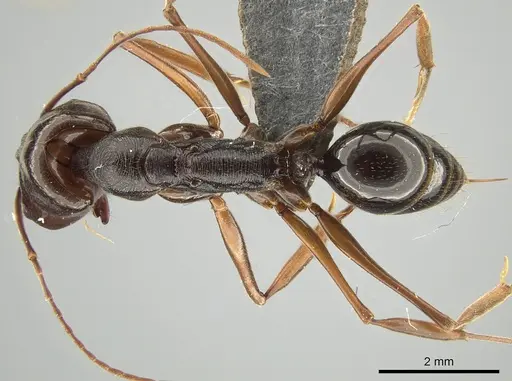
Literatura
Cargando mapa de distribución...Cargando productos...