
Nesomyrmex evelynae
- Nom. cient.
- Nesomyrmex evelynae
- Tribu
- Crematogastrini
- Subfamilia
- Myrmicinae
- Autor
- Forel, 1916
- Distribución
- Encontrado en 0 países
Introducción
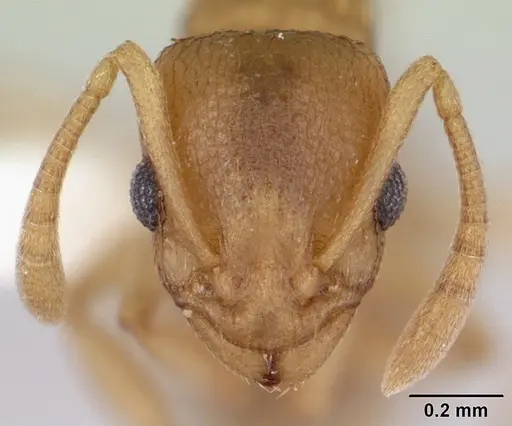
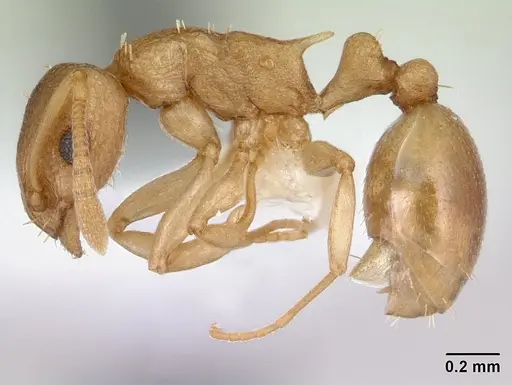
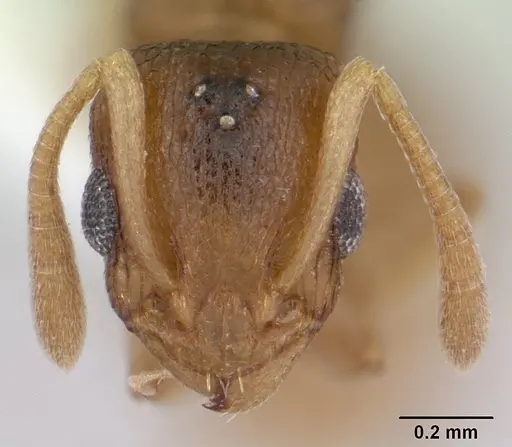
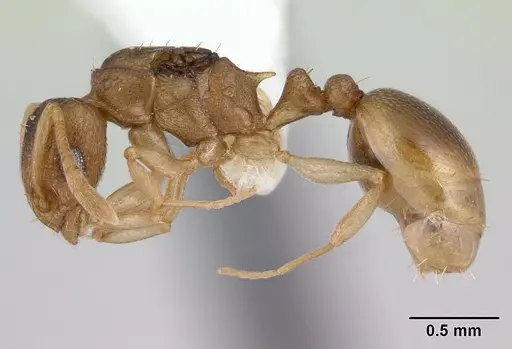
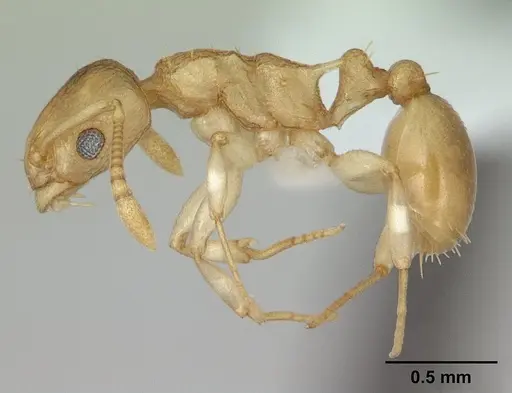
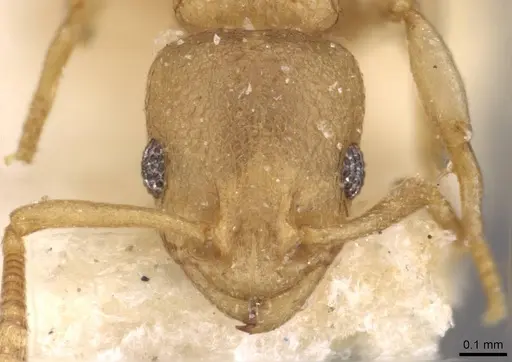
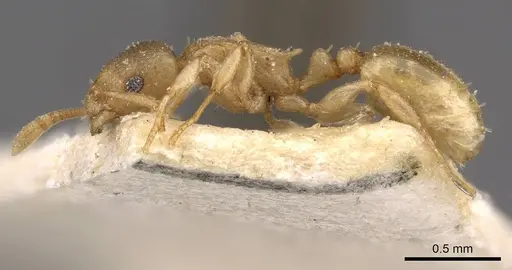
Nesomyrmex evelynae is a tiny yellow ant measuring 2.5-2.9mm in total length, belonging to the Myrmicinae subfamily. This species is part of the angulatus species group and is native to the Afrotropical region, found across equatorial Africa from Burkina Faso and Ghana in the west through the Central African Republic and Democratic Republic of Congo to Uganda and Kenya in the east . The species is easily recognized by its distinctive lack of standing hairs on most of the first gastral tergite and propodeum - a unique feature among its relatives . This is an arboreal species that lives exclusively in the rainforest canopy stratum. Researchers have found them commonly on trees through canopy fogging, though always in small individual numbers, suggesting they form relatively small colonies . This canopy-dwelling lifestyle makes them quite different from most commonly kept ant species, which typically nest on the ground.
Quick Summary
- Difficulty: Medium
- Origin & Habitat: Afrotropical rainforests of equatorial Africa (Burkina Faso, Central African Republic, D.R. Congo, Ghana, Uganda, Kenya). Lives in the canopy stratum, not on the forest floor [1].
- Colony Type: Colony structure is unconfirmed. Based on small individual numbers found in canopy samples, colonies are likely small.
- Size & Growth:
- Queen: Size data unavailable, queen measurements have not been documented in available literature.
- Worker: 2.5-2.9mm total length [1]
- Colony: Likely under 100 workers based on small individual numbers found in canopy samples [1]
- Growth: Moderate, inferred from small colony sizes typical of arboreal species
- Development: Estimated 6-8 weeks at optimal temperature based on typical Myrmicinae development patterns (Development timeline is not directly studied, this is an estimate based on related species in the genus)
- Antkeeping:
- Temperature: Keep warm and stable, roughly 24-28°C, these are tropical rainforest canopy ants that need warm conditions. A heating cable on one side of the nest can create the gradient they prefer.
- Humidity: High humidity is essential, rainforest canopy species need 70-85% humidity. Keep the nest substrate consistently moist but not waterlogged. Mist the outworld regularly and provide a water source.
- Diapause: No diapause required, as a tropical species from equatorial Africa, they do not experience cold winters. Keep them warm year-round.
- Nesting: These tiny arboreal ants prefer tight chambers scaled to their small size. A Y-tong (AAC) nest or test tube setup with narrow passages works well. Provide climbing structures in the outworld since they naturally live in trees.
- Behavior: This is a calm, non-aggressive species that is not known to sting. They are arboreal foragers, likely hunting small prey in the tree canopy. Their small size (under 3mm) means excellent escape prevention is critical, they can squeeze through tiny gaps. They are relatively inactive compared to ground-nesting species.
- Common Issues: escape prevention is critical due to their very small size, use fine mesh and tight-fitting lids, high humidity requirements can lead to mold if ventilation is poor, small colony sizes mean slow population growth, patience is required, arboreal nature means they need climbing structures and vertical space in the outworld, wild-caught colonies may have parasites that kill them in captivity
Housing and Nest Setup
Nesomyrmex evelynae requires a setup that reflects their arboreal canopy-dwelling lifestyle. These tiny ants are best kept in test tubes for founding colonies or small Y-tong (AAC) nests with chambers scaled to their minute size. The nest should have tight passages, these ants are only 2.5-2.9mm and can escape through remarkably small gaps. Use fine mesh on any ventilation holes and ensure all connections are secure.
In the outworld, provide climbing structures since they naturally forage in trees. Small branches, cork, or artificial plants give them paths to explore. A water test tube should always be available. Because they come from humid rainforest canopies, they need more moisture than typical ground-nesting ants, consider a hydration system that maintains consistent dampness in the nest material. [1]
Temperature and Humidity
As a tropical rainforest species from equatorial Africa, Nesomyrmex evelynae needs warm and humid conditions year-round. Keep the nest at 24-28°C, this is warmer than most temperate ant species require. A small heating cable placed on one side of the nest can create a gentle temperature gradient that allows the ants to regulate their own conditions.
Humidity is particularly important. These canopy ants are not adapted to dry conditions. Aim for 70-85% humidity in the nest area. The substrate should feel consistently moist but never waterlogged. You can achieve this by keeping the water reservoir of your test tube or nest adequately filled and misting the outworld regularly. However, balance this with adequate ventilation to prevent mold growth. [1]
Feeding and Diet
Based on typical Myrmicinae feeding patterns and their small size, these ants are likely omnivorous with a preference for small protein sources. Offer small live prey such as fruit flies, pinhead crickets, or small mealworms. They will likely accept sugar water or honey as an energy source, though arboreal ants often rely more on honeydew and small insects than on nectar.
Feed small amounts every 2-3 days, removing any uneaten prey after 24 hours to prevent mold. Because colonies are likely small (probably under 100 workers), overfeeding is a common mistake that leads to mold problems. Start with very small portions and adjust based on how quickly the colony consumes them.
Colony Development and Growth
Nesomyrmex evelynae appears to form small colonies based on canopy fogging samples that consistently found only small numbers of individuals [1]. This suggests slower colony growth compared to ground-nesting species that can reach thousands of workers. Expect your colony to remain modest in size, likely under 100 workers even at maturity.
The development timeline is not directly documented, but based on typical Myrmicinae patterns, expect 6-8 weeks from egg to first worker at optimal temperature. Nanitics (first workers) will be smaller than mature workers. Growth will be gradual, so patience is essential, these are not fast-growing ants that will quickly fill a formicarium.
Behavior and Temperament
This is a calm, non-aggressive species that poses no threat to keepers. They are not known to sting and are generally docile. Their arboreal nature means they are more comfortable climbing than walking on flat surfaces, this is reflected in their preference for vertical space in the outworld.
The most important practical consideration is escape prevention. At only 2.5-2.9mm, these ants can squeeze through unbelievably small gaps. Standard ant farm barriers may not work, use fluon on barrier rims and ensure all lids fit tightly. Even a tiny crack in a connection will likely result in an escape. Check your setup daily and seal any potential escape routes immediately. [1]
Seasonal Care
Unlike temperate ant species, Nesomyrmex evelynae does not require hibernation or winter dormancy. They come from equatorial Africa where temperatures remain warm year-round. Keep them at their preferred temperature range (24-28°C) consistently throughout the year.
There is no documented nuptial flight season for this species, but being from equatorial regions, they may produce reproductives sporadically rather than during specific seasonal windows. If your colony produces alates (reproductives), provide appropriate space and conditions for them to develop.
Frequently Asked Questions
How long does it take for Nesomyrmex evelynae to produce first workers?
The exact timeline is not documented, but based on typical Myrmicinae development patterns, expect 6-8 weeks from egg to first worker at optimal temperature (24-28°C). Growth is relatively slow, and colonies remain small even at maturity.
Can I keep Nesomyrmex evelynae in a test tube?
Yes, test tubes work well for this species, especially for founding colonies. Use a small test tube with a tight-fitting cotton plug for the water reservoir. Ensure the passages are appropriately sized for their tiny 2.5-2.9mm workers.
Do Nesomyrmex evelynae ants sting?
No, this species is not known to sting and is generally docile and calm. They pose no danger to keepers.
How big do Nesomyrmex evelynae colonies get?
Based on canopy fogging data showing small individual numbers, colonies likely reach under 100 workers at maturity. They are not large colony formers.
What temperature do Nesomyrmex evelynae need?
Keep them at 24-28°C. These are tropical rainforest canopy ants that need warm, stable conditions year-round. No hibernation is required.
Are Nesomyrmex evelynae good for beginners?
This species is rated as Medium difficulty. While they are docile and not dangerous, their small size makes escape prevention challenging, and they have specific humidity requirements that may be harder to maintain than for common ground-nesting species.
What do Nesomyrmex evelynae eat?
Based on typical Myrmicinae patterns, they likely accept small live prey (fruit flies, small insects) and sugar sources (honey water). Feed small amounts every 2-3 days and remove uneaten prey promptly.
Why are my Nesomyrmex evelynae escaping?
Their tiny size (2.5-2.9mm) means they can escape through remarkably small gaps. Use fine mesh, apply fluon to barrier rims, and check all connections daily. Even a tiny crack will allow escape.
Do Nesomyrmex evelynae need hibernation?
No, they do not require hibernation. As a tropical species from equatorial Africa, they need warm conditions year-round. Keep them at 24-28°C consistently.
When should I move Nesomyrmex evelynae to a formicarium?
Move them when the test tube water reservoir runs low or the colony has outgrown the tube (typically 20-30 workers). A small Y-tong or acrylic nest with appropriately sized chambers works well.
Report an Issue
The current care sheet is based fully on literature. See inconsistencies, or something that's incorrect? Please , it will be resolved after review from an admin. Contributing to the blogs tab also helps providing information, to make us be able to further improve the caresheets. Thank you for your support!
References

Esta ficha de cuidados está bajo licencia CC BY-SA 4.0 .
Blogs de la comunidad
CASENT0178298
Ver en AntWeb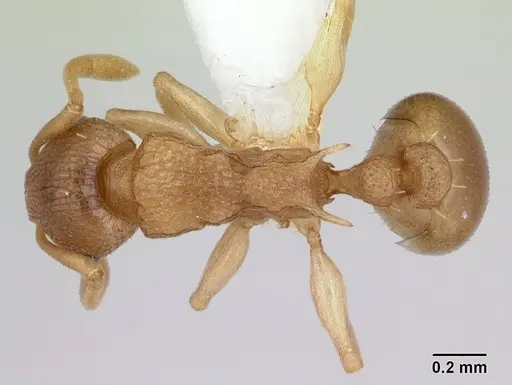
CASENT0178299
Ver en AntWeb
CASENT0413068
Ver en AntWeb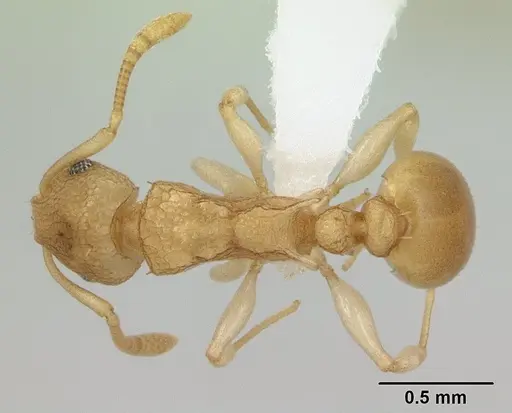
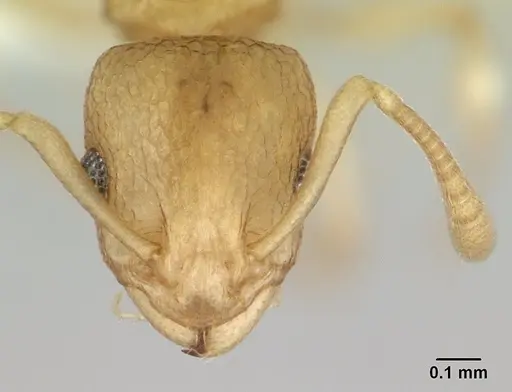
CASENT0908993
Ver en AntWeb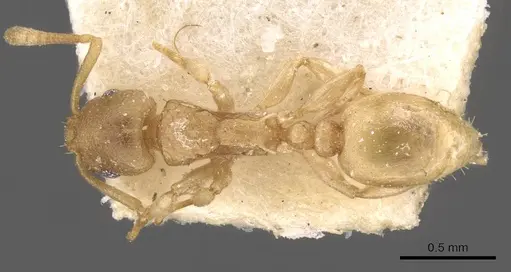
Literatura
Cargando mapa de distribución...Cargando productos...