
Neivamyrmex bohlsi
- Nom. cient.
- Neivamyrmex bohlsi
- Subfamilia
- Dorylinae
- Autor
- Emery, 1896
- Distribución
- Encontrado en 0 países
Introducción
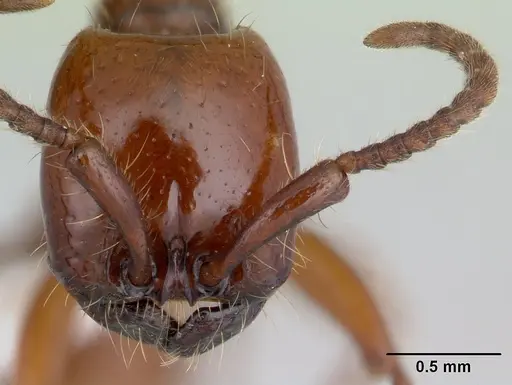
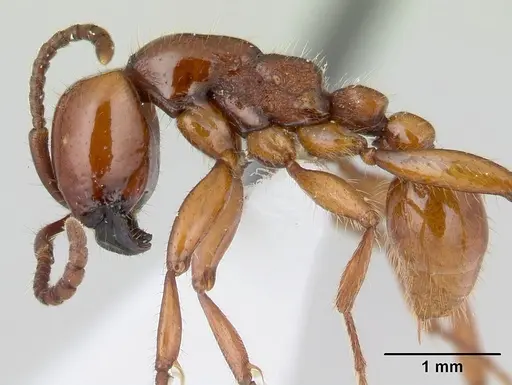
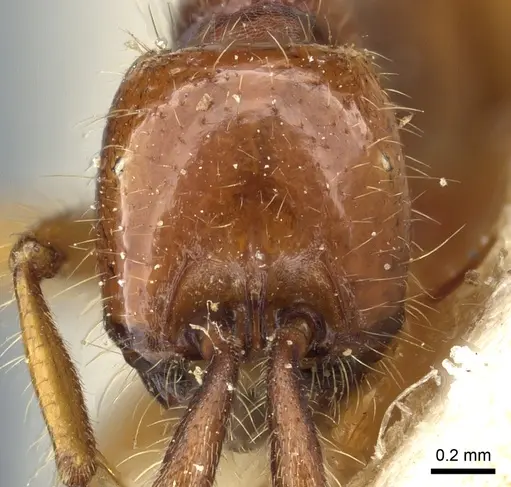
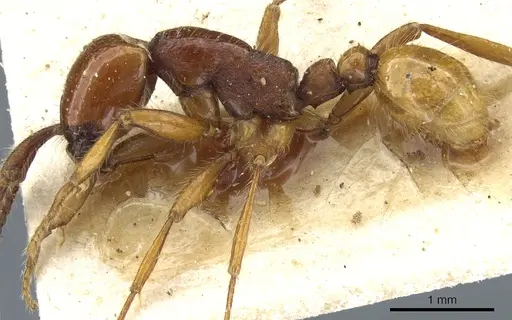
Neivamyrmex bohlsi is a neotropical army ant found across northern South America, from Colombia to Argentina . Workers are small and slender, typical of the genus, with a distinctively sloped propodeum that sits lower than the promesonotal dorsum when viewed from the side . This species belongs to the Dorylinae subfamily, commonly known as army ants, which are famous for their nomadic lifestyle and predatory raiding behavior. Unlike many ants, army ants like this species are strictly predatory, hunting other insects and arthropods rather than collecting honeydew or plant matter. What makes N. bohlsi interesting is its adaptability to different neotropical habitats - it's been documented crossing open savanna patches surrounded by forest in Venezuela, as well as in the Amazon basin . Like all army ants, they form temporary bivouacs rather than permanent nests. This is not a species for beginners due to its specialized predatory diet and nomadic nature, but it offers a fascinating glimpse into the raiding lifestyle that makes army ants unique.
Quick Summary
- Difficulty: Hard
- Origin & Habitat: Neotropical region, found in Argentina, Brazil, French Guiana, Guyana, Paraguay, Peru, Suriname, and Venezuela [3]. In Colombia, documented in the Amazonas department [4]. They inhabit tropical and subtropical forests, including both humid Amazonian areas and more seasonal environments like savanna-forest mosaics [2].
- Colony Type: Single-queen colonies, army ant colonies typically have one queen. The queen is permanently wingless after mating and spends her life deep within the colony's bivouac.
- Size & Growth:
- Queen: size data unavailable, no specific measurements exist for this species
- Worker: size data unavailable, no specific measurements exist for this species
- Colony: several thousand workers at maturity, inferred from typical army ant colony sizes
- Growth: Moderate to fast
- Development: development timeline unconfirmed for this species (Development is temperature-dependent. Army ant colonies typically produce workers relatively quickly compared to many ant species.)
- Antkeeping:
- Temperature: Keep at 24-28°C. Army ants are adapted to consistently warm, humid environments. Use a small heating element on one side of the enclosure to maintain these temperatures, but avoid overheating.
- Humidity: High humidity is essential, aim for 70-85% relative humidity. Army ants naturally live in humid tropical forests. Use a moist substrate and ensure water is always available.
- Diapause: No true diapause, being a neotropical species from lowland forests, they do not require hibernation.
- Nesting: Army ants do not use traditional nests. In captivity, they form bivouacs using test tubes, cotton, or other materials they can cluster around. Provide a dark, humid retreat area where the colony can form its temporary bivouac.
- Behavior: Neivamyrmex bohlsi is a predatory army ant with active raiding behavior. Workers forage in columns, hunting prey including other ants, termites, and various arthropods [2]. They are primarily nocturnal or crepuscular, with raiding activity documented during both morning and evening hours in Venezuela [2]. Workers are blind or nearly so, relying on chemical trails and vibrations to navigate. Colonies are aggressive defenders of their bivouac and will readily attack threats. Escape prevention is important as workers are small and can slip through small gaps. They do not sting but can deliver a mild bite with their mandibles.
- Common Issues: colonies often fail because keepers try to feed them inappropriate foods, army ants need live prey, not sugar water or seed mixes, small worker size means escapes are common without fine mesh barriers and tight-fitting lids, without sufficient prey, colonies can starve rapidly, these ants need constant protein input, bivouacs can be disturbed by excessive handling or light exposure, causing stress and abandonment of the nest site, neotropical species require warm, humid conditions that can be difficult to maintain consistently, especially in temperate climates
Housing and Bivouac Setup
Neivamyrmex bohlsi presents unique housing challenges because army ants do not build traditional nests. In the wild, they form temporary bivouacs, living structures made from the clustered bodies of workers that protect the queen and brood. In captivity, you need to replicate this by providing a dark, enclosed space where the colony can form its bivouac. A small acrylic formicarium with tight chambers works better than large open spaces. Place damp substrate in the outworld to maintain humidity, and provide a retreat box or small test tube setup where the colony can cluster. Cover the bivouac area with a dark cloth to keep it dark and reduce stress. The key is to give them a secure, humid space they can cling to while allowing easy access to the hunting outworld. [2][3]
Feeding and Predatory Behavior
This species is strictly predatory, they do not collect honeydew, seeds, or other plant-based foods. In the wild, workers raid in columns to hunt other ants, termites, springtails, and various small arthropods [2]. In captivity, you must provide a constant supply of live prey. Suitable foods include: live fruit flies, small crickets, mealworm pieces, isopods, and other small insects. Prey should be no larger than the ants themselves. Feed small amounts multiple times per week rather than large infrequent feedings. Remove uneaten prey after 24-48 hours to prevent mold. Unlike many ants, they will not accept sugar water, honey, or fruit, their entire nutrition comes from animal protein. A starved army ant colony can decline rapidly, so consistent feeding is critical.
Temperature and Humidity Requirements
As a neotropical lowland species, Neivamyrmex bohlsi requires warm and humid conditions year-round. Keep temperatures in the range of 24-28°C. Temperatures below 22°C can slow activity and impair brood development, while anything above 32°C risks killing the colony. Use a small heating cable or mat on one side of the enclosure to maintain warmth if your room temperature is below optimal. Humidity should be high, aim for 70-85% relative humidity. Keep the substrate consistently moist but not waterlogged. A water tube connected to the bivouac area helps maintain humidity. Mist the outworld regularly and ensure good ventilation to prevent mold while retaining moisture. These conditions mimic the humid tropical forests where they naturally occur.
Colony Structure and Behavior
Army ant colonies are fundamentally different from typical ant colonies. They are nomadic, periodically relocating their entire bivouac in search of new hunting grounds. The colony centers on a single queen who is permanently wingless and spends her life within the bivouac producing eggs. Workers are blind or nearly so, relying on chemical pheromone trails to coordinate their raids. The species has been observed forming raiding columns crossing open ground in Venezuela, moving between forest patches [2]. This suggests they are flexible about habitat edges and can traverse less ideal terrain when necessary. In captivity, avoid disturbing the bivouac unnecessarily, army ants are sensitive to vibrations and light exposure. When threatened, workers will aggressively bite and may swarm the perceived threat.
Growth and Development
Army ant colonies grow rapidly once established. The queen produces eggs in batches, and larvae develop quickly on a protein-rich diet of prey brought back by workers. The first workers are typically smaller than mature workers and help expand the colony's hunting capacity. Colonies can reach several thousand workers over time, though exact maximum sizes for this specific species are not documented. The nomadic lifestyle means the colony is always on the move, every few days to weeks, they will relocate their bivouac to fresh hunting grounds. This movement is natural and should not be interpreted as distress.
Frequently Asked Questions
Can I keep Neivamyrmex bohlsi in a test tube setup?
Yes, but with modifications. Army ants need a test tube or small chamber for their bivouac connected to a larger outworld for hunting. Use a water tube to maintain humidity, and cover the bivouac area with dark material to reduce stress. A simple setup is a test tube for the bivouac connected to a plastic container outworld via a short tube.
What do Neivamyrmex bohlsi eat?
They eat only live prey. This species is strictly predatory and will not accept sugar water, honey, seeds, or other non-protein foods. Offer live fruit flies, small crickets, mealworms, isopods, and other small arthropods. Feed small amounts multiple times per week and remove uneaten prey after a day or two.
How long does it take for eggs to become workers?
Development timeline is unconfirmed for this species. In general, army ant development is faster than many temperate ant species, reflecting their adaptation to the constantly warm neotropical environment.
Are Neivamyrmex bohlsi good for beginners?
No, this species is not recommended for beginners. They require live prey feeding, high humidity, warm temperatures, and specific bivouac housing. They are also sensitive to disturbance. If you are new to antkeeping, start with a more forgiving species like Lasius niger or Messor barbarus.
Do Neivamyrmex bohlsi need hibernation?
No, they do not require hibernation. As a neotropical lowland species, they expect year-round warm, humid conditions. If your room temperature drops significantly in winter, you may need to use a small heater to maintain 24-28°C.
How big do Neivamyrmex bohlsi colonies get?
Based on typical army ant colony sizes, expect several thousand workers at maturity. Exact maximum size for this specific species is not documented.
Can I keep multiple queens together?
Colony type is unconfirmed for this species. Introducing multiple unrelated queens may result in fighting. Only one queen per colony is recommended.
Why is my army ant colony dying?
Common causes include: starvation (not enough live prey), low humidity (below 70%), temperatures outside 24-28°C, disturbance to the bivouac, or escapes due to inadequate barriers. Army ant colonies decline rapidly when their needs are not met. Review temperature, humidity, and feeding schedules.
When should I move them to a formicarium?
Army ants do not benefit from traditional formicariums. Keep them in a bivouac setup (test tube or small chamber) connected to an outworld for hunting. The colony will naturally form its bivouac in the dark, humid retreat area regardless of container type.
Report an Issue
The current care sheet is based fully on literature. See inconsistencies, or something that's incorrect? Please , it will be resolved after review from an admin. Contributing to the blogs tab also helps providing information, to make us be able to further improve the caresheets. Thank you for your support!
References

Esta ficha de cuidados está bajo licencia CC BY-SA 4.0 .
Blogs de la comunidad
CASENT0178597
Ver en AntWeb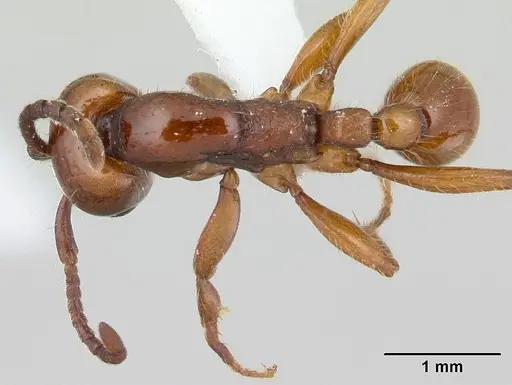
CASENT0903728
Ver en AntWeb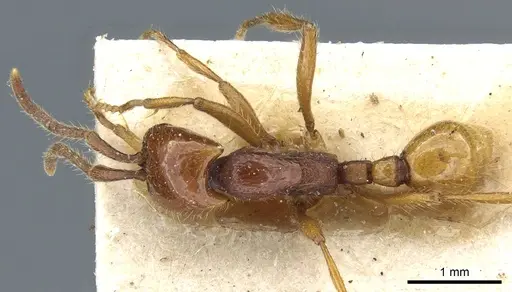
Literatura
Cargando mapa de distribución...Cargando productos...