
Neivamyrmex albacorpus
- Nom. cient.
- Neivamyrmex albacorpus
- Subfamilia
- Dorylinae
- Autor
- Varela-Hernández & Castaño-Meneses, 2011
- Distribución
- Encontrado en 0 países
Introducción
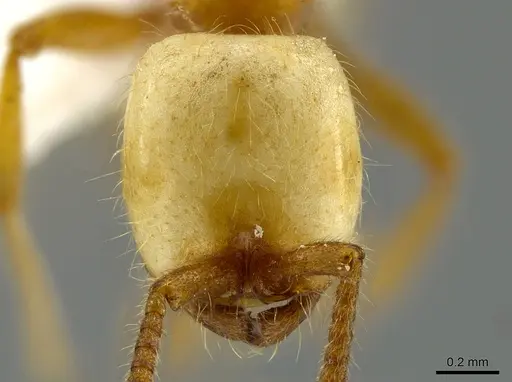
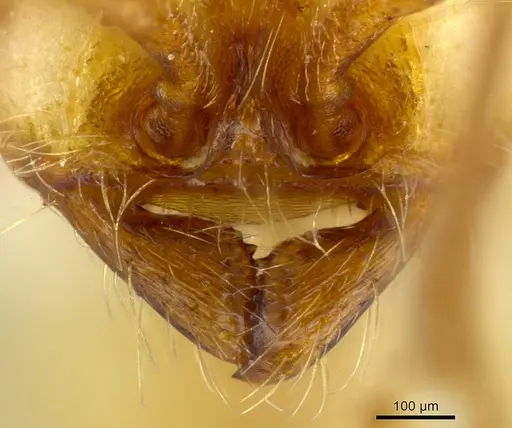
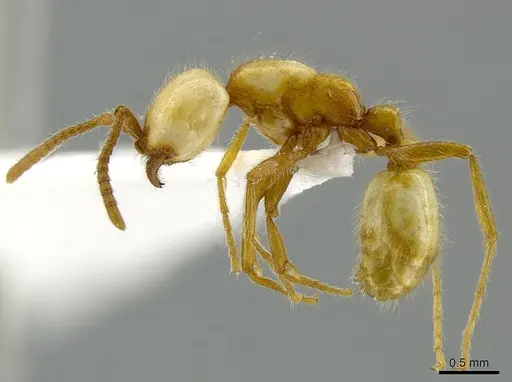
Neivamyrmex albacorpus is a tiny army ant species from the dry forests of central Mexico. Workers measure 3.4mm total length and have a distinctive pale yellowish-white body that is smooth and shiny . The most striking feature is the complete absence of eyes, which strongly suggests this species is an underground predator that hunts in darkness . This species was formally described in 2011 and remains one of the most poorly known ants in both science and antkeeping. The genus Neivamyrmex contains army ants known for their raids, but this particular species appears to be a specialized, cryptic hunter rather than a typical raiding species. It is only known from the Barranca de Metztitlán Biosphere Reserve in Hidalgo, Mexico, making it extremely rare .
Quick Summary
- Difficulty: Expert
- Origin & Habitat: This species is only known from the Barranca de Metztitlán Biosphere Reserve in Hidalgo, Mexico, a semi-arid region where Nearctic and Neotropical vegetation zones meet [1][2]. It was collected in lowland forest using pitfall traps in October 2009 [1]. The area is part of the Hidalgo-queretanoan desert, one of Mexico's four desert regions [2].
- Colony Type: Unknown. Queen and male are completely unknown, so colony structure cannot be determined.
- Size & Growth:
- Antkeeping:
- Temperature: Likely 22-28°C based on the warm, semi-arid climate of their Mexican habitat. Start in the mid-20s and observe colony activity. No direct temperature studies exist for this species.
- Humidity: Unknown. The Barranca de Metztitlán region is semi-arid, suggesting moderate to low humidity needs. Offer a gradient with both damp and dry areas and let the colony choose.
- Diapause: Unknown. The species was collected in October, suggesting some seasonal activity pattern, but whether they undergo true hibernation is unstudied.
- Nesting: Completely unknown. The absence of eyes strongly suggests subterranean or cryptic nesting. In captivity, provide deep soil or a naturalistic setup with multiple chambers. Avoid bright lighting.
- Behavior: Nothing is known about their behavior in captivity. Based on genus patterns, they are likely predatory and may form raiding columns like other army ants, though their eyeless condition suggests they hunt primarily by touch and chemical signals rather than vision. They will almost certainly require live protein prey. Escape risk is moderate, workers are small but not tiny, standard barriers should suffice.
- Common Issues: this species has never been kept in captivity, there is no established husbandry information, queen is unknown, meaning wild colonies cannot be identified or collected, the complete lack of basic biological data makes successful captive breeding extremely unlikely, without a queen, any colony would be short-lived and non-sustainable, the eyeless condition suggests specialized needs that cannot be guessed from related species
Why This Species Is Not Recommended for Most Antkeepers
Neivamyrmex albacorpus is one of the least suitable species for antkeeping that exists. This species was only described in 2011 and has never been observed in captivity. The queen has never been found or described, meaning there is no way to identify a founding queen in the wild or establish a sustainable colony. The complete absence of eyes suggests highly specialized underground hunting behavior that we cannot replicate or even fully understand. Without basic information like colony size, founding behavior, temperature preferences, or diet acceptance, successful captive husbandry would be essentially impossible. Even experienced antkeepers working with rare species should avoid this one until more basic research is conducted. The scientific community knows almost nothing about this ant, and attempting to keep it would be more like a biological experiment than antkeeping. [1]
What We Know About Their Natural History
The scientific data on Neivamyrmex albacorpus is extremely limited. Workers measure 3.4mm total length and have a distinctive pale yellowish-white to white body that is smooth and shiny [1]. The most remarkable morphological feature is the complete absence of eyes, which strongly suggests this species is a specialized underground predator that hunts in complete darkness [1]. The species name literally means 'white body' in Latin, referring to their pale coloration [1]. They were collected in October 2009 in the Barranca de Metztitlán Biosphere Reserve using pitfall traps in lowland forest [1][2]. The region is a semi-arid zone that serves as a biological corridor between Nearctic and Neotropical ecosystems. Nothing is known about their diet, nesting habits, colony size, reproductive behavior, or any other aspect of their biology [1].
Inferences from Related Species
While direct data is absent, we can make educated guesses based on what we know about the genus Neivamyrmex. This genus contains army ants that are typically predatory, forming raiding columns to hunt other invertebrates. However, the complete absence of eyes in N. albacorpus suggests it may be a more specialized, solitary hunter rather than a typical swarm-raiding army ant. Other blind army ant species are known to be subterranean predators. The species was collected in October, suggesting some seasonal activity pattern, though whether they have a true diapause is unknown. The semi-arid climate of their limited range suggests they may tolerate drier conditions than typical rainforest army ants. Any captive setup would be speculative at best. [1]
The Challenge of Described-But-Unknown Species
Neivamyrmex albacorpus represents a category of ant that antkeepers should approach with extreme caution: species that have been scientifically described but remain biologically mysterious. The 2011 description provided detailed measurements and morphological notes, but fundamental questions about their ecology, behavior, and colony structure remain unanswered. This is not unusual for rare, localized species, many ants are described from just a few specimens without any ecological context. For antkeepers, this means there is no established knowledge to draw from. Unlike common species where you can find care guides, forums, and experienced keepers, N. albacorpus exists in a knowledge vacuum. The responsible choice is to appreciate this species from a distance, through scientific literature, rather than attempting to keep it. [1]
Frequently Asked Questions
Can I keep Neivamyrmex albacorpus as a pet ant?
No. This is one of the least suitable species for antkeeping. The queen has never been described, meaning you cannot obtain a founding colony. No captive husbandry information exists, and successful keeping would be extremely unlikely.
Where can I find a Neivamyrmex albacorpus queen?
You cannot. The queen of this species has never been found or described in scientific literature. Without a described queen, there is no way to identify one in the wild, and no breeder would have access to this species.
What do Neivamyrmex albacorpus eat?
Unknown. Based on the genus, they are likely predatory on other insects, but their exact diet has never been studied. The absence of eyes suggests they may hunt using chemical cues rather than visual hunting.
How big do Neivamyrmex albacorpus colonies get?
Unknown. No colony size data exists for this species. Related army ants can have colonies from hundreds to thousands of workers, but N. albacorpus may be an exception given its specialized morphology.
What temperature do Neivamyrmex albacorpus need?
Unconfirmed. Based on their semi-arid Mexican habitat, they likely prefer warm conditions in the 22-28°C range, but no captive trials have been conducted to verify this.
Do Neivamyrmex albacorpus need hibernation?
Unknown. The species was collected in October, suggesting some seasonal activity, but whether they require a true hibernation period is unstudied. The semi-arid climate may mean they have different seasonal patterns than temperate species.
Are Neivamyrmex albacorpus good for beginners?
Absolutely not. This species is unsuitable for all skill levels due to the complete absence of basic biological data. Even expert antkeepers working with rare species would have no foundation for successful care.
Why do Neivamyrmex albacorpus have no eyes?
The absence of eyes strongly suggests they are specialized underground predators that hunt in complete darkness. This is an adaptation to life below the soil surface, where vision provides no advantage. They likely rely on chemical (pheromone) and tactile cues to navigate and locate prey.
Where does Neivamyrmex albacorpus live in the wild?
Only known from the Barranca de Metztitlán Biosphere Reserve in Hidalgo, Mexico. This is a semi-arid region at the convergence of Nearctic and Neotropical ecosystems. They were collected in lowland forest using pitfall traps.
Report an Issue
The current care sheet is based fully on literature. See inconsistencies, or something that's incorrect? Please , it will be resolved after review from an admin. Contributing to the blogs tab also helps providing information, to make us be able to further improve the caresheets. Thank you for your support!
References

Esta ficha de cuidados está bajo licencia CC BY-SA 4.0 .
Blogs de la comunidad
CASENT0629567
Ver en AntWeb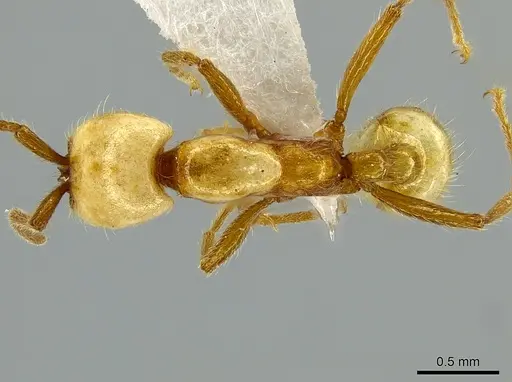
Literatura
Cargando mapa de distribución...Cargando productos...