
Myrmoteras tonboli
- Nom. cient.
- Myrmoteras tonboli
- Subgénero
- Myagroteras
- Tribu
- Myrmoteratini
- Subfamilia
- Formicinae
- Autor
- Agosti, 1992
- Distribución
- Encontrado en 0 países
Introducción
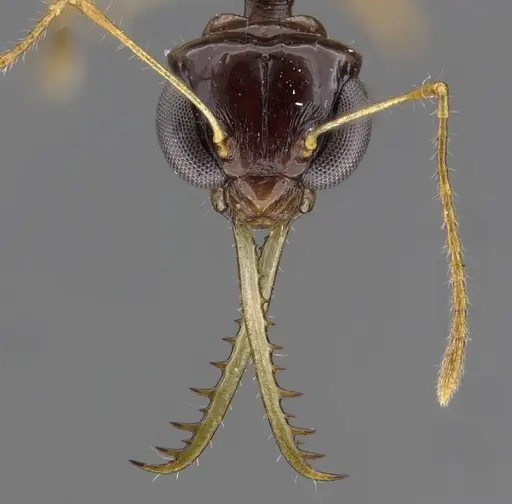
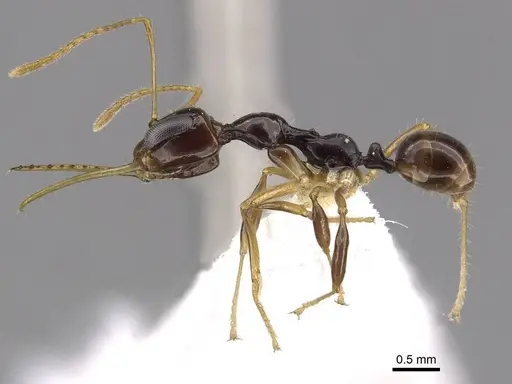
Myrmoteras tonboli is a small, rare ant species native to the highland rainforests of Borneo and Sumatra in Southeast Asia. Workers and queens have a distinctive dark brown body with noticeably paler antennae, mandibles, and legs. The head is smooth and shiny with faint ridges between the antennal insertions, and the mandibles feature 12-13 teeth - a characteristic trait of the Myrmoteras genus. Queens measure approximately 4.1-4.2mm in total length, making them one of the smaller Formicinae queens. This species is known only from highland primary forests at elevations of 1500-2000 meters, where colonies live in leaf litter on the forest floor . This is one of the rarest ants in the hobby, with almost no information available about captive care. The genus Myrmoteras is known for its unusual mandible structure with multiple teeth, though the exact hunting or foraging behavior is not well documented. What makes this species particularly interesting is its extreme rarity in the wild - it's only known from two mountain locations in all of Southeast Asia. If you manage to obtain this species, you're likely working with either wild-caught colonies or very limited stock.
Quick Summary
- Difficulty: Expert
- Origin & Habitat: Highland primary rainforests of Borneo (Mt. Kinabalu,1500-1600m elevation) and Sumatra (Mt. Sago, ca. 2000m elevation) in Southeast Asia. Colonies are found in leaf litter on the forest floor [1].
- Colony Type: Colony structure is unconfirmed. Based on limited collection data, colonies appear to be small, living in leaf litter microhabitats.
- Size & Growth:
- Queen: 4.14-4.16mm [1], from measured specimens
- Worker: ~3-4mm, inferred from genus Myrmoteras patterns
- Colony: Unknown, likely small colonies based on leaf litter nesting habitat
- Growth: Unknown, no captive breeding data available
- Development: Unknown, no development data exists for this species. (No direct data available. Development time is unstudied.)
- Antkeeping:
- Temperature: Highland tropical, aim for 22-26°C with stable conditions. The high elevation habitat suggests they prefer cooler temperatures than typical lowland tropical ants. Avoid overheating.
- Humidity: Highland rainforest, keep substrate consistently moist but not waterlogged. Leaf litter environments are humid but well-drained. Provide a humidity gradient with a moist nesting area and slightly drier foraging area.
- Diapause: Unknown, highland species may have reduced activity during cooler seasons but tropical elevations experience less extreme seasonal variation. Observe colony activity patterns.
- Nesting: Naturalistic setup with leaf litter, small chambers in damp substrate, or a small Y-tong/plaster nest with fine passages. They are tiny ants that need appropriately scaled nesting spaces.
- Behavior: Behavior is undocumented in scientific literature. Based on genus placement in Formicinae, they are likely generalist foragers but the specific diet, activity patterns, and temperament are unknown. Escape prevention should be excellent due to their small size, use fine mesh barriers. Do not expect aggressive defense or stinging.
- Common Issues: no documented captive care means all advice is experimental, high risk of colony loss, extreme rarity means finding compatible colonies or mates for breeding is nearly impossible, highland habitat requirements may be difficult to replicate, they may be sensitive to temperature extremes, small size makes escape prevention critical, they can squeeze through standard barrier gaps, virtually no information on acceptable foods, trial and error required, wild-caught colonies from leaf litter may contain parasites that can devastate captive colonies
Rarity and Collection
Myrmoteras tonboli is one of the rarest ant species in the world, known only from two mountain locations across Borneo and Sumatra. The original description came from specimens collected on Mount Kinabalu in Malaysia at elevations of 1500-1600 meters. More recently, a new population was discovered on Mount Sago in West Sumatra, Indonesia at approximately 2000 meters elevation. All known colonies have been collected from leaf litter in highland primary rainforests, this is a species that lives in the cool, humid microclimate of the forest floor in pristine montane environments. The combination of extreme rarity, specialized habitat, and limited scientific study makes this one of the most challenging ants to keep in captivity. If you obtain this species, you are almost certainly working with wild-caught specimens, and successful captive breeding would be a significant achievement [1].
Housing and Nest Setup
Given that this species nests in leaf litter in highland rainforests, a naturalistic setup works best. Use a small container with a layer of damp substrate (like a mix of soil and peat) topped with leaf litter and small pieces of decaying wood. The substrate should be moist but never waterlogged, these ants aren't aquatic. Alternatively, a small Y-tong or plaster nest with very fine chambers can work, but the passages must be appropriately scaled to their tiny size. Because they come from high elevations, they may be sensitive to overheating, keep them in a cool room and avoid direct heat sources. Room temperature in the low-to-mid 20s Celsius is likely ideal. Provide a humidity gradient so the ants can self-regulate their moisture exposure. Ventilation is important to prevent mold, but avoid excessive airflow that dries out the nest.
Feeding and Diet
The diet of Myrmoteras tonboli has not been documented in scientific literature. As a Formicinae member, they likely have typical ant dietary needs: some form of sugar (honey water or sugar water) for energy, and protein sources for colony growth. However, being a leaf-litter species, they may have specialized feeding habits. Start by offering sugar water and observe acceptance. For protein, offer small live prey appropriate to their size, fruit flies, pinhead crickets, or other tiny insects. Given their small size and unknown specific requirements, be prepared to experiment. Remove uneaten food promptly to prevent mold. The fact that they live in leaf litter suggests they may be predators of small micro-arthropods, but this is speculative.
Temperature and Seasonal Care
This is a highland species from cool tropical elevations. Unlike lowland tropical ants that thrive in warm conditions, Myrmoteras tonboli likely prefers temperatures in the 22-26°C range, essentially room temperature or slightly below for most keepers. Avoid temperatures above 30°C, which could be stressful or fatal. The stable, mild temperatures of a highland environment mean they may not tolerate significant temperature fluctuations. Whether they require a true diapause (winter rest) is unknown, but given their tropical highland origin, they probably don't need hibernation. Simply maintain stable, moderate temperatures year-round. Monitor colony behavior, if workers become sluggish, the temperature may be too low, if they cluster away from heat sources, it may be too warm.
Behavior and Handling
The specific behavior of this species is completely unstudied. We don't know their activity level, whether they are aggressive defenders, or how they respond to disturbance. Being a Formicinae ant, they likely have the ability to spray formic acid as a defense mechanism, though the potency is unknown. Their small size means they are not likely to deliver painful stings even if they have them. For handling, use extreme caution due to their rarity, avoid disturbing the colony unnecessarily. When moving or observing, do so gently and briefly. Escape prevention is critical because of their tiny size, even small gaps that larger ants cannot pass through may allow these ants to escape. Use fine mesh barriers and check all connections regularly.
Frequently Asked Questions
How difficult is Myrmoteras tonboli to keep?
This is an expert-level species due to extreme rarity, complete lack of captive care documentation, and specialized highland habitat requirements. You should have significant antkeeping experience before attempting this species. Most advice will be experimental.
What do I feed Myrmoteras tonboli?
Diet is unconfirmed for this species. Start with sugar water (honey water diluted 1:4 with water) and small live prey like fruit flies or tiny crickets. Monitor for acceptance and remove uneaten food promptly. Be prepared to experiment with different food types.
What temperature do they need?
Keep them at 22-26°C, cooler than typical tropical ants since they come from highland elevations. Avoid overheating. Room temperature is likely ideal for this species.
How big do colonies get?
Colony size is unknown. Based on their leaf-litter nesting habitat, colonies are likely small, probably under 100 workers. This is not a species that produces massive colonies.
Can I keep multiple queens together?
We don't know the colony structure of this species. Combining unrelated queens is not recommended since it hasn't been studied and could result in fighting.
What type of nest should I use?
A naturalistic setup with damp substrate and leaf litter works best given their natural habitat. Alternatively, a small Y-tong or plaster nest with fine chambers scaled to their tiny size can work.
How long does it take for eggs to become workers?
The development timeline is completely unknown for this species. There is no data to make any estimate.
Where does Myrmoteras tonboli come from?
This species is known only from two highland locations: Mount Kinabalu in Borneo (1500-1600m) and Mount Sago in Sumatra (ca. 2000m). They live in leaf litter in primary rainforest.
Why is this ant so rare?
Myrmoteras tonboli has an extremely limited geographic range, only known from two mountain peaks in all of Southeast Asia. Their specialized highland leaf-litter habitat is also uncommon, and they appear to naturally exist in small colonies.
Do they need hibernation?
Diapause requirements are unknown. As a tropical highland species, they likely experience less seasonal temperature variation and probably don't require a true hibernation period. Maintain stable temperatures year-round.
My colony is dying - what went wrong?
Without any documented captive care, troubleshooting is extremely difficult. Common issues likely include: temperature stress (too hot), improper humidity (too dry or too wet), escape leading to lost ants, or parasites from wild-collected colonies. This species has very high mortality risk in captivity.
Report an Issue
The current care sheet is based fully on literature. See inconsistencies, or something that's incorrect? Please , it will be resolved after review from an admin. Contributing to the blogs tab also helps providing information, to make us be able to further improve the caresheets. Thank you for your support!
References

Esta ficha de cuidados está bajo licencia CC BY-SA 4.0 .
Blogs de la comunidad
CASENT0910218
Ver en AntWeb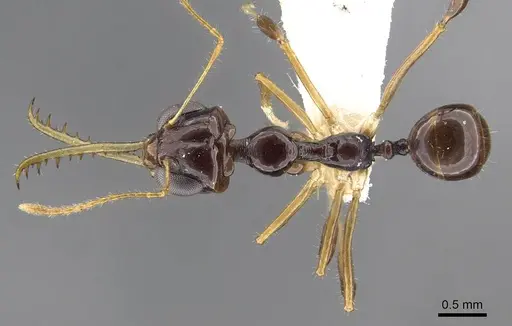
Literatura
Cargando mapa de distribución...Cargando productos...