
Myrmicaria birmana
- Nom. cient.
- Myrmicaria birmana
- Tribu
- Solenopsidini
- Subfamilia
- Myrmicinae
- Autor
- Forel, 1902
- Distribución
- Encontrado en 0 países
Introducción
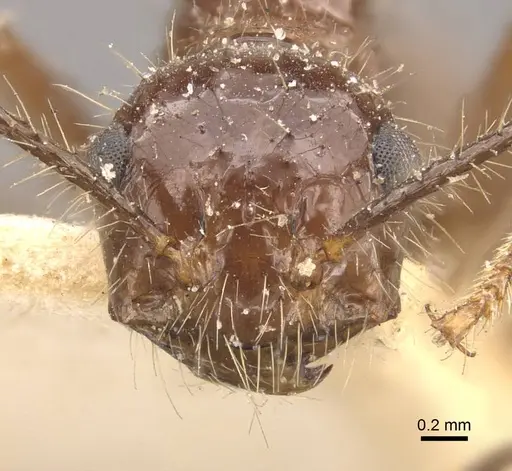
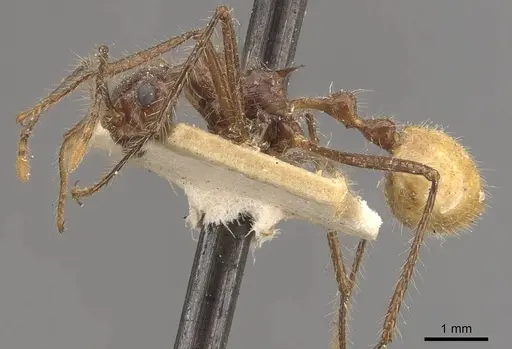
Myrmicaria birmana is a medium-sized ant species native to Southeast Asia, found across Myanmar (type locality), Thailand, Borneo, Indonesia, and Malaysia . Workers have a distinctive appearance with a dark reddish-brown to black body and an elongated gaster that gives them a spider-like look - hence the common name. The genus Myrmicaria is known for this arachnid-like appearance, with long legs and a body shape that sets them apart from typical ants . Queens are winged and have been collected in Brunei in May, indicating nuptial flights occur around late spring . This species belongs to the Myrmicaria arachnoides species group, which contains several lookalike species across Southeast Asia .
Quick Summary
- Difficulty: Medium
- Origin & Habitat: This species is found across the Indomalaya region, including Myanmar, Thailand, Borneo, Indonesia, and Malaysia [1][2]. In Thailand, they have been recorded in eastern regions (Nakhon Ratchasima: Khao Yai) and southeastern regions (Chachoengsao: Khao Ang Reu Nai) [1]. They appear to prefer forested areas and have been collected from various locations in Borneo including Brunei, Sabah, Sarawak, and West Borneo [2]. The natural habitat includes lowland tropical forests where they likely nest in the ground or in rotting wood.
- Colony Type: The colony structure is not fully documented in scientific literature. Winged queens have been collected in May, suggesting annual nuptial flights occur during this period [3]. Based on typical Myrmicaria behavior, colonies likely establish with a single queen that seals herself in to raise the first workers.
- Size & Growth:
- Queen: size data unavailable, inferred from Myrmicaria genus (~10-12mm)
- Worker: size data unavailable, inferred from Myrmicaria genus (~5-8mm)
- Colony: likely reaches several hundred workers based on related species
- Growth: moderate, estimated 6-10 weeks from egg to first worker at tropical temperatures
- Development: 6-10 weeks (estimated based on genus patterns and tropical climate) (Development likely faster than temperate species due to tropical origin. Warm temperatures around 24-28°C will accelerate development.)
- Antkeeping:
- Temperature: Keep at 24-28°C. These are tropical ants that thrive in warm, stable conditions. A heating cable on one side of the nest creates a temperature gradient allowing workers to self-regulate.
- Humidity: Moderate to high humidity (60-80%). Keep the nest substrate consistently moist but not waterlogged. Provide a water tube for drinking water.
- Diapause: No, being a tropical species, they do not require hibernation. Maintain year-round warm temperatures.
- Nesting: In nature, they likely nest in the ground or in rotting wood. In captivity, a Y-tong (AAC) nest or plaster nest works well. Provide moist substrate and ensure good ventilation to prevent mold.
- Behavior: Myrmicaria birmana workers are active foragers and will readily hunt small prey. They are aggressive defenders of their nest and have a functional stinger, expect defensive behavior when the nest is disturbed. Workers are medium-sized and can climb well, so escape prevention is important. They are day-active and maintain visible foraging trails. The elongated gaster contains a stinger, and they are capable of delivering a painful sting if handled roughly or if their nest is threatened.
- Common Issues: colonies can fail if temperatures drop below 22°C, being tropical, they need consistent warmth, mold can become a problem if the nest is too wet with poor ventilation, wild-caught colonies may contain parasites that can decimate the colony in captivity, aggressive defense means handling requires care, they will sting if threatened, slow initial founding phase can cause keepers to overcheck the queen, disturbing the nest
Housing and Nest Setup
Myrmicaria birmana does well in a Y-tong (AAC) nest or a plaster formicarium with narrow chambers scaled to their size. The nest should have a water reservoir to maintain humidity, but avoid flooding. Provide a connected outworld for foraging. Since they are tropical ants, keep the entire setup away from air conditioning or cold drafts. Use a test tube setup for the founding queen, a small test tube with a cotton ball providing water, placed in a dark container, works well for the claustral founding phase. Once the colony reaches 20-30 workers, you can move them to a more elaborate setup. [3][2]
Feeding and Diet
These ants are opportunistic predators and foragers. In captivity, they readily accept protein sources like small crickets, mealworms, fruit flies, and other small insects. They also collect honeydew and sugar water. Feed them small prey items 2-3 times per week, and keep a constant supply of sugar water (honey water or sugar water) available. Remove uneaten prey after 24 hours to prevent mold. Workers will forage actively and can be observed carrying prey back to the nest.
Temperature and Seasonal Care
Being a tropical species from Southeast Asia, Myrmicaria birmana requires warm temperatures year-round. Keep the nest area at 24-28°C. A heating cable placed on top of the nest (never underneath where it could dry out the substrate too quickly) can help maintain optimal temperatures. They do not require hibernation or diapause, maintaining consistent warmth is key. Avoid temperature fluctuations and keep them away from windows with direct sunlight in summer or cold air in winter. Room temperature in a climate-controlled home is usually adequate if it stays around 24°C.
Behavior and Defense
Myrmicaria birmana workers are active foragers and will establish visible trails to food sources. They are defensive of their nest and possess a functional stinger. When threatened, workers will emerge aggressively and may sting. The sting is reportedly painful for humans, though not dangerous unless someone has an allergic reaction. Handle the colony gently and avoid tapping or shaking the nest. When observing, give them space and use red light at night if you want to watch their natural behavior without disturbing them. Workers can climb glass and smooth surfaces, so ensure your formicarium has proper barriers.
Colony Development
A founding queen will seal herself in a small chamber and lay eggs after 1-2 weeks. She will not leave to forage, she lives entirely on her stored fat reserves (claustral founding). The first brood develops over 6-10 weeks depending on temperature. The first workers (nanitics) will be smaller than mature workers. After they emerge, the queen stops foraging and the workers take over all colony tasks. Colony growth is moderate, expect several months before you have a decent number of workers. Patience is key during the founding phase. Do not disturb the queen during this time or you risk her abandoning or eating the brood.
Frequently Asked Questions
How long does it take for Myrmicaria birmana to raise first workers?
The time from egg to first worker is typically 6-10 weeks at optimal tropical temperatures (24-28°C). The queen seals herself in and raises the first brood alone, this is called claustral founding. Be patient and avoid disturbing the nest during this phase.
What temperature do Myrmicaria birmana ants need?
Keep them warm at 24-28°C year-round. These are tropical ants that do not tolerate cold. A heating cable on one side of the nest helps maintain warmth, especially in cooler climates.
Can I keep multiple Myrmicaria birmana queens together?
This is not recommended. While the natural colony structure is not fully documented, Myrmicaria species typically form single-queen colonies. Combining unrelated foundress queens often leads to fighting and colony failure.
How big do Myrmicaria birmana colonies get?
Based on related species, colonies likely reach several hundred workers. Growth is moderate, expect several months to a year before the colony is well-established.
What do Myrmicaria birmana ants eat?
They are predators and foragers. Feed small insects like fruit flies, small crickets, or mealworms 2-3 times per week. Also provide a constant source of sugar water or honey water. Remove uneaten prey after 24 hours.
Do Myrmicaria birmana need hibernation?
No, they do not require hibernation. Being a tropical species from Southeast Asia, they need year-round warm temperatures. Do not expose them to cold temperatures.
Are Myrmicaria birmana good for beginners?
They are rated as medium difficulty. The main challenges are maintaining consistent tropical temperatures and handling their defensive stinging behavior. They are more challenging than simple species like Lasius but achievable for intermediate antkeepers.
When do Myrmicaria birmana have nuptial flights?
Winged queens have been collected in May in Brunei, suggesting nuptial flights occur around late spring in tropical regions [3]. The exact timing in captivity is not well-documented.
What type of nest is best for Myrmicaria birmana?
A Y-tong (AAC) nest or plaster formicarium works well. They need moist substrate but good ventilation to prevent mold. A test tube setup is ideal for the founding queen, then transition to a larger nest as the colony grows.
Report an Issue
The current care sheet is based fully on literature. See inconsistencies, or something that's incorrect? Please , it will be resolved after review from an admin. Contributing to the blogs tab also helps providing information, to make us be able to further improve the caresheets. Thank you for your support!
References

Esta ficha de cuidados está bajo licencia CC BY-SA 4.0 .
Blogs de la comunidad
CASENT0908325
Ver en AntWeb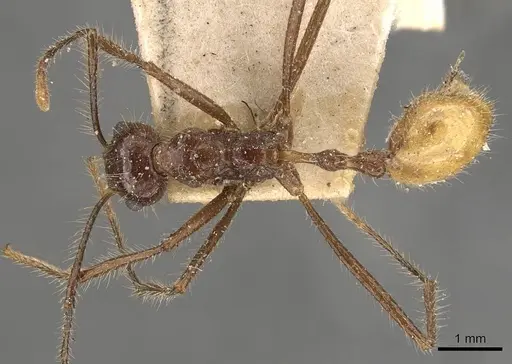
Literatura
Cargando mapa de distribución...Cargando productos...