
Myrmica williamsi
- Nom. cient.
- Myrmica williamsi
- Tribu
- Myrmicini
- Subfamilia
- Myrmicinae
- Autor
- Radchenko & Elmes, 1999
- Distribución
- Encontrado en 0 países
Introducción
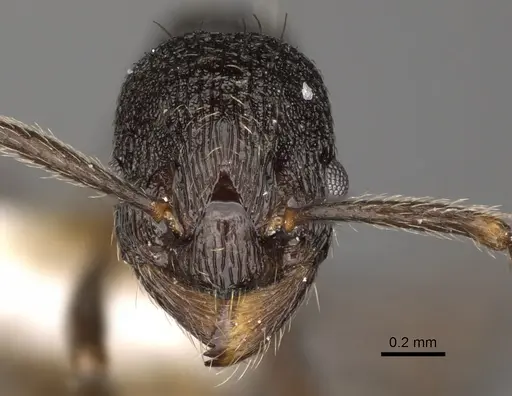
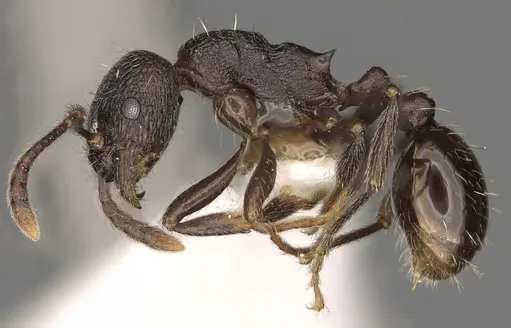
Myrmica williamsi is a small ant species endemic to the high-altitude Himalayan regions of India, specifically found in Jammu & Kashmir and Uttarakhand. Workers are distinguished by their very short, sharp propodeal spines and unusual alitrunk sculpture - the upper body has a coarsely reticulate texture with fine punctations, while the rear portions are densely punctated without rugae. This species was described in 1999 from a single worker specimen and is known exclusively from the worker caste, making it one of the less studied Myrmica species. It inhabits open meadows on mountain slopes at elevations between 2000m and 3500m above sea level, where nests are found under stones .
Quick Summary
- Difficulty: Medium, limited data available but care requirements are inferable from habitat
- Origin & Habitat: High-altitude Himalayan meadows in India (Jammu & Kashmir, Uttarakhand) at 2000-3500m elevation. Nests are located under stones in open meadows on mountain slopes [1][2].
- Colony Type: Unconfirmed, only worker caste has been described. Colony structure is unknown for this species.
- Size & Growth:
- Queen: size data unavailable, no queen specimens have been described
- Worker: approximately 4-5mm, inferred from Myrmica genus patterns
- Colony: unknown, no colony size data available for this species
- Growth: unknown, likely moderate based on typical Myrmica development
- Development: unconfirmed, no development data exists for this species (Development timeline is not directly studied. Estimates based on related Himalayan Myrmica species may apply.)
- Antkeeping:
- Temperature: Keep nest area at 19-23°C based on collection site conditions. This species comes from cool Himalayan altitudes, so avoid overheating. Room temperature around 20-22°C is likely appropriate [1].
- Humidity: Maintain moderate to high humidity (63-75% range based on collection data). Keep nest substrate consistently moist but not waterlogged [1].
- Diapause: Yes, this is a high-altitude Himalayan species that requires winter hibernation. Plan for 3-4 months of cold diapause at temperatures around 5-10°C.
- Nesting: In nature, they nest under stones in open meadows. In captivity, a naturalistic setup with a stone on moist substrate, or a Y-tong/plaster nest with chambers scaled to their small size works well. Avoid dry, heated nests, they prefer cool, damp conditions.
- Behavior: Typical Myrmica temperament, moderately aggressive when disturbed. Workers are active foragers, likely collecting honeydew and small prey. Escape risk is moderate due to their small size, use standard barrier methods.
- Common Issues: limited data makes care requirements uncertain, only worker caste has been described, high-altitude origin means they are sensitive to overheating, keep them cool, hibernation is required for this species, only worker caste is known, finding a queen for captive breeding may be extremely difficult, no colony size data exists for this species
Origin and Natural Habitat
Myrmica williamsi is endemic to the western Himalayan region of India, specifically found in Jammu & Kashmir and Uttarakhand states. This is a high-altitude species, occurring at elevations between 2000m and 3500m above mean sea level [1][2]. In their natural habitat, nests are located under stones in open meadows on mountain slopes. The collection data shows they experience temperatures of 19-23°C and humidity levels of 63-75% in their natural nesting spots [1]. These conditions are relatively cool and moist compared to many other ant species, reflecting the alpine nature of their habitat.
Temperature and Cooling Requirements
This is one of the most critical aspects of keeping M. williamsi. Being a high-altitude Himalayan species, they are adapted to cool conditions and will not tolerate overheating. Keep the nest area at 19-23°C, matching their natural collection site temperature [1]. Room temperature in most homes around 20-22°C should be suitable. Avoid placing the nest near heat sources, on heating mats, or in direct sunlight. If your room runs warm, consider using a small fan or cooling method to maintain appropriate temperatures. Unlike tropical ants that need heating, this species may struggle in warm conditions. A temperature gradient allowing workers to choose cooler areas is ideal.
Humidity and Moisture
Maintain moderate to high humidity levels, targeting the 63-75% range documented at their collection sites [1]. The nest substrate should remain consistently moist but never waterlogged. Myrmica williamsi likely avoids both overly dry and overly wet conditions. Provide a water tube or small water dish for drinking water. Monitor condensation on nest walls as an indicator of humidity levels. If condensation is absent and the substrate feels dry, mist lightly or add a bit of water to the reservoir.
Winter Hibernation
As a high-altitude Himalayan species, M. williamsi requires a winter diapause period. In their natural habitat at 2000-3500m elevation, temperatures drop significantly below freezing during winter months. Plan for 3-4 months of cold hibernation annually, ideally at temperatures between 5-10°C. This can be achieved by placing the colony in an unheated garage, basement, or refrigerator in a proper ant-friendly container during winter. Do not skip hibernation, it is essential for the colony's health and likely triggers reproductive cycles. Reduce feeding during this period and ensure the substrate remains slightly moist but not frozen. [1]
Feeding and Diet
Like other Myrmica species, M. williamsi is likely omnivorous, feeding on honeydew from aphids and small insects. Offer sugar water or honey water as a constant energy source. For protein, provide small live or dead insects. Myrmica are active hunters and will readily take protein prey. Feed protein 2-3 times per week and keep a sugar source available at all times. Remove uneaten prey after 24-48 hours to prevent mold.
Nesting in Captivity
In the wild, these ants nest under stones in open meadows. This tells us they prefer cool, damp, dark locations with stable temperatures. For captivity, a naturalistic setup with a flat stone placed on moist soil or plaster works well. Alternatively, a Y-tong nest with appropriately sized chambers can work, provided humidity is maintained. Avoid dry nests or those with heating elements built in. The nest should have some depth to maintain humidity. Escape prevention is important, use fluon on container edges and ensure any gaps are sealed. [1]
Known Limitations and Challenges
Myrmica williamsi presents significant challenges for antkeepers because it is one of the least studied Myrmica species. Only the worker caste has been described, no queens or males have been documented in scientific literature [3]. This means finding a queen for captive breeding may be nearly impossible. The care recommendations here are largely inferences from related Himalayan Myrmica species and the limited collection data available. Expect some experimentation to be necessary, and monitor your colony closely for signs of stress. This species is best suited for experienced antkeepers who enjoy the challenge of working with poorly documented species.
Frequently Asked Questions
How do I keep Myrmica williamsi ants?
Keep them cool at 19-23°C with moderate to high humidity (63-75%). They nest under stones in nature, so a naturalistic setup with moist substrate or a Y-tong/plaster nest works well. They require winter hibernation at 5-10°C for 3-4 months.
What temperature do Myrmica williamsi need?
Keep them at 19-23°C, this matches their natural collection site conditions in the Himalayan mountains. They are sensitive to overheating and should never be heated above room temperature.
Do Myrmica williamsi need hibernation?
Yes, as a high-altitude Himalayan species, they require a winter diapause period of 3-4 months at temperatures around 5-10°C. This is essential for their health.
What do Myrmica williamsi eat?
Like other Myrmica species, they likely eat honeydew and small insects. Offer sugar water or honey water constantly, and feed small insects for protein.
How big do Myrmica williamsi colonies get?
Colony size is unknown, no colony size data exists for this species.
Where is Myrmica williamsi found?
This species is endemic to the western Himalayas in India, specifically Jammu & Kashmir and Uttarakhand, at elevations of 2000-3500m above sea level.
Is Myrmica williamsi good for beginners?
No, this is not recommended for beginners. It is one of the least studied Myrmica species, with no queen specimens described and limited care data. Finding a queen may be nearly impossible.
Do Myrmica williamsi ants sting?
Myrmica ants have a sting and will use it when threatened. Their sting is not dangerous to healthy humans but can cause mild pain and irritation.
How long does it take for Myrmica williamsi to develop from egg to worker?
The exact timeline is unknown, no development data exists for this species.
Can I keep multiple Myrmica williamsi queens together?
This is unknown. Only worker caste has been described, no queen specimens exist in scientific literature.
What humidity do Myrmica williamsi need?
Maintain 63-75% humidity based on their collection site data. Keep the nest substrate consistently moist but not waterlogged.
When will Myrmica williamsi nuptial flights occur?
Unknown, nuptial flight timing has not been documented for this species.
Report an Issue
The current care sheet is based fully on literature. See inconsistencies, or something that's incorrect? Please , it will be resolved after review from an admin. Contributing to the blogs tab also helps providing information, to make us be able to further improve the caresheets. Thank you for your support!
References

Esta ficha de cuidados está bajo licencia CC BY-SA 4.0 .
Blogs de la comunidad
CASENT0900335
Ver en AntWeb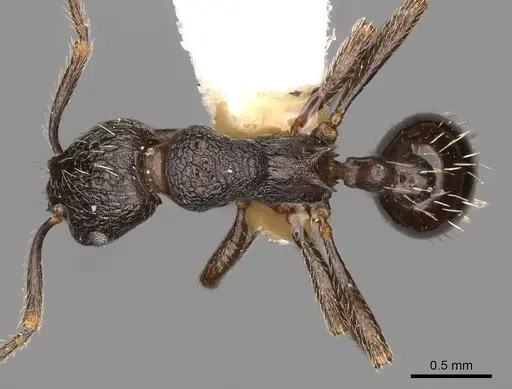
Literatura
Cargando mapa de distribución...Cargando productos...