
Myrmica mirabilis
- Nom. cient.
- Myrmica mirabilis
- Tribu
- Myrmicini
- Subfamilia
- Myrmicinae
- Autor
- Elmes & Radchenko, 1998
- Distribución
- Encontrado en 0 países
Introducción
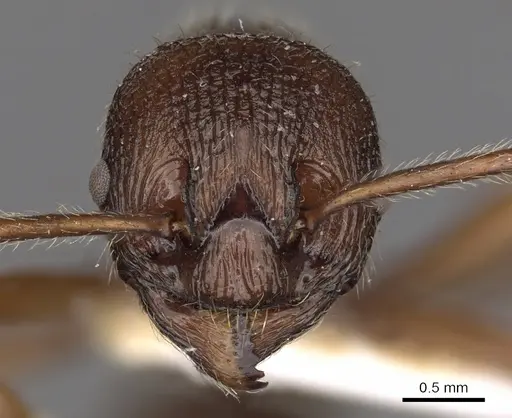
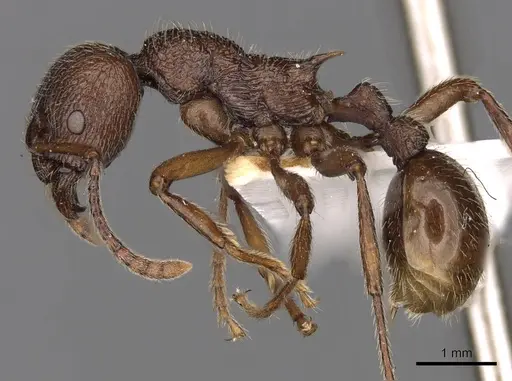
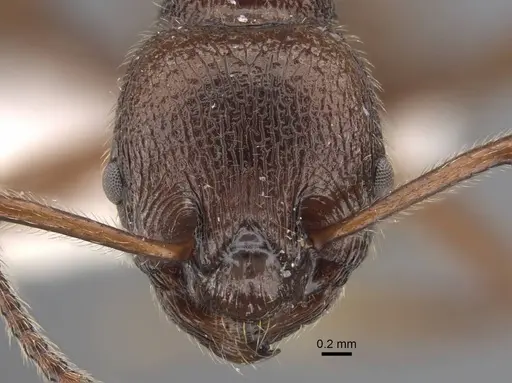
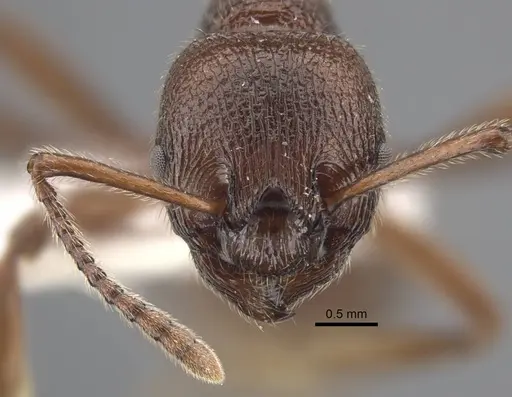
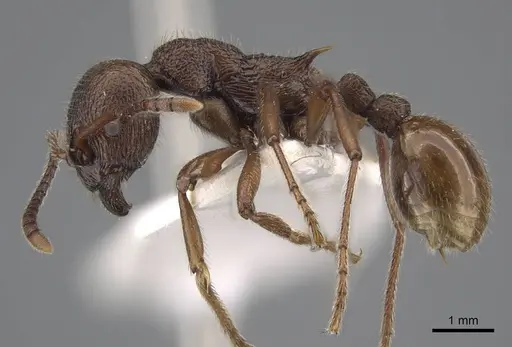
Myrmica mirabilis is an exceptionally large and robust ant species native to the montane regions of Taiwan. This is the second-largest Myrmica species known, surpassed only by Myrmica titanica - however, M. titanica appears smaller because it is much more slender than M. mirabilis . What makes this species truly unusual is its superficial resemblance to Pogonomyrmex ants (a completely different genus), with its stocky build and distinctive features that set it apart from typical Myrmica. The species name comes from the Latin 'mirabilis' meaning 'strange' or 'wonderful', chosen precisely because of its extraordinary characteristics for a Myrmica ant . Unlike its close relative Myrmica luteola (which is a social parasite), M. mirabilis is not a social parasite - it builds its own colonies . Found only in Taiwan's montane forests, this species nests in decaying wood at forest margins. The workers have primitive features including a weak promesonotal suture and a less obvious 4-jointed antennal club, characteristics that link them to older evolutionary lineages within the Myrmicini tribe .
Quick Summary
- Difficulty: Unknown, this is a rarely kept species with limited available care information
- Origin & Habitat: Montane regions of Taiwan, specifically at forest margins. The type colony was found nesting in decaying wood [1][2].
- Colony Type: Colony structure is unconfirmed. Based on typical Myrmica patterns, likely single-queen (monogyne) colonies, but this has not been directly documented.
- Size & Growth:
- Queen: size data unavailable, no specific measurements exist for queens in available literature
- Worker: size data unavailable, only head width and alitrunk length measurements exist in available literature, not total body length
- Colony: Unknown, no wild colony size data available
- Growth: Unknown, no development data available for this species
- Development: Unknown, no species-specific development studies exist (No direct measurements available.)
- Antkeeping:
- Temperature: Unconfirmed. Based on montane Taiwan habitat and related Myrmica species, likely prefers cooler temperatures than tropical ants. Start around 18-22°C and observe colony activity.
- Humidity: Unconfirmed. Based on nesting in decaying wood at forest margins, likely prefers moderate humidity with some damp substrate.
- Diapause: Likely yes, most Myrmica species require a winter dormancy period. Based on montane Taiwan location (subtropical but elevated), expect 2-3 months at reduced temperatures around 5-10°C.
- Nesting: In the wild, colonies nest in decaying wood at forest margins. In captivity, a naturalistic setup with rotting wood or cork, or a Y-tong/plaster nest with moisture provision would be appropriate.
- Behavior: Behavior is not well-documented in available literature. Based on genus-level knowledge, these are likely active foragers with typical Myrmica temperament, not particularly aggressive but will defend the nest if threatened. Their large size makes them more visible than typical Myrmica. Standard escape precautions (fluon barriers) are recommended.
- Common Issues: this species is rarely available in the antkeeping hobby, no species-specific care information exists, keepers must rely on genus-level guidance, hibernation requirements may be critical for colony health but specific parameters are unknown, wild-caught colonies may have collection-related stress and higher mortality risk
Distribution and Habitat
Myrmica mirabilis is known only from Taiwan, specifically from montane regions. The type specimen was collected from a nest found in decaying wood on a forest margin [1]. This is an island with diverse habitats ranging from subtropical lowlands to cool mountainous areas. The montane preference suggests this species prefers cooler, more humid conditions than tropical lowland ants. The forest margin nesting location indicates they prefer shaded, damp areas with access to decaying wood for nesting material.
Identification and Unique Features
This species is remarkable for being one of the largest Myrmica ants known, second only to Myrmica titanica. However, unlike the slender M. titanica, M. mirabilis has a robust, stocky build that superficially resembles Pogonomyrmex ants, a completely different genus native to the Americas [1]. The species has several primitive features including a weak promesonotal suture (visible from above) and a less obvious 4-jointed antennal club. These characteristics link it to older evolutionary lineages [3]. Despite being closely related to Myrmica luteola (a known social parasite), M. mirabilis is NOT parasitic, it forms independent colonies [2]. The species name 'mirabilis' (Latin for 'strange' or 'wonderful') was chosen specifically to highlight these unusual features.
Nest Preferences
In the wild, M. mirabilis nests in decaying wood at forest margins [1]. This suggests they prefer humid, shaded environments with access to rotting wood material. In captivity, a naturalistic setup works best, provide rotting wood, cork, or a well-moistened plaster/Y-tong nest. The decaying wood in their natural habitat provides both shelter and some nutrition (fungi, detritus). For captive care, consider adding small amounts of decaying organic material to the nest area. They likely need consistent moisture but not saturation, the substrate should feel damp but not drip water.
Temperature and Seasonal Care
Specific temperature requirements are unconfirmed for this species, but several factors suggest cooler preferences. First, they come from Taiwan's montane regions where temperatures are lower than lowland areas. Second, the genus Myrmica is generally temperate-adapted. Third, most Myrmica require hibernation. Start with a range of 18-22°C and observe colony behavior, if workers are active and brood is developing, the temperature is appropriate. For winter, provide 2-3 months at reduced temperatures around 5-10°C to simulate natural seasonal cycles. This dormancy period is likely important for colony health and reproduction, as it is for most Myrmica species. A heating cable on one side of the nest can create a temperature gradient allowing ants to self-regulate.
Feeding and Diet
No specific dietary studies exist for M. mirabilis. Based on genus-level knowledge, Myrmica are generalist omnivores that typically consume honeydew, small insects, and occasionally seeds. In captivity, offer a varied diet: sugar water or honey as an energy source, and protein sources like small insects (fruit flies, pinhead crickets, mealworms). Their large size may allow them to tackle slightly larger prey than typical tiny Myrmica. Feed protein 2-3 times per week and keep sugar water available continuously. Remove uneaten prey after 24-48 hours to prevent mold.
Frequently Asked Questions
How long does it take for Myrmica mirabilis to produce first workers?
The egg-to-worker timeline is unconfirmed for this species. Large Myrmica species often develop more slowly than smaller relatives, but no specific data exists for M. mirabilis.
What temperature should I keep Myrmica mirabilis at?
Specific requirements are unconfirmed, but based on their montane Taiwan habitat, aim for 18-22°C. Observe your colony, if they are active and brood is developing, the temperature is suitable. Most Myrmica do best at cooler temperatures than tropical ants.
Do Myrmica mirabilis ants need hibernation?
Likely yes. Most Myrmica species require a winter dormancy period. Based on their montane Taiwan origin, provide 2-3 months at reduced temperatures around 5-10°C during winter months.
What do Myrmica mirabilis ants eat?
Based on genus-level knowledge, they are omnivores. Offer sugar water or honey continuously, and protein sources like small insects (fruit flies, mealworms, small crickets) 2-3 times per week. Their large size may allow slightly larger prey items than typical for small Myrmica.
Are Myrmica mirabilis good for beginners?
This species is not recommended for beginners. It is rarely available in the antkeeping hobby, and no species-specific care information exists. Keeping this ant successfully would require experience with Myrmica genus care and comfort working from genus-level guidance rather than specific species data.
How big do Myrmica mirabilis colonies get?
Wild colony size is unknown. Based on their large worker size and the genus Myrmica, colonies likely reach several hundred to perhaps a thousand workers over several years. They are not likely to reach the massive colony sizes of some tropical species.
Can I keep multiple Myrmica mirabilis queens together?
Colony structure is unconfirmed for this species. Most Myrmica are single-queen (monogyne) colonies, but combining unrelated queens has not been documented for M. mirabilis. Do not attempt multi-queen setups without specific evidence that this species tolerates it.
What type of nest should I use for Myrmica mirabilis?
In the wild, they nest in decaying wood at forest margins. In captivity, a naturalistic setup with rotting wood or cork, or a Y-tong/plaster nest with moisture provision works well. Keep the nest humid but not waterlogged.
Do Myrmica mirabilis ants sting?
Myrmica ants have stingers, but sting pain level is not well-documented for this specific species. Based on genus knowledge, they can sting but are not considered particularly aggressive. Their large size may make any sting more noticeable than from tiny Myrmica species.
Where can I get Myrmica mirabilis ants?
This species is very rarely available in the antkeeping hobby. It is known only from Taiwan and has limited distribution. If available at all, it would likely be from specialized dealers or collectors who work with Asian Myrmica species.
Report an Issue
The current care sheet is based fully on literature. See inconsistencies, or something that's incorrect? Please , it will be resolved after review from an admin. Contributing to the blogs tab also helps providing information, to make us be able to further improve the caresheets. Thank you for your support!
References

Esta ficha de cuidados está bajo licencia CC BY-SA 4.0 .
Blogs de la comunidad
CASENT0900304
Ver en AntWeb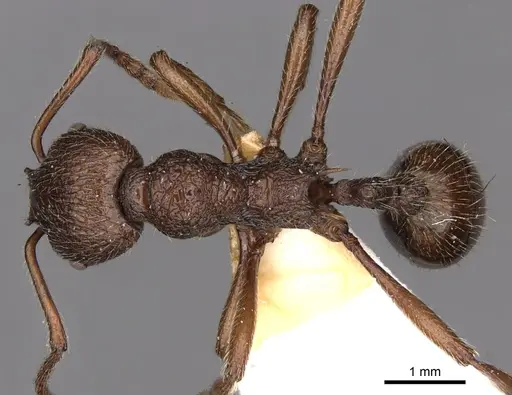
CASENT0917499
Ver en AntWeb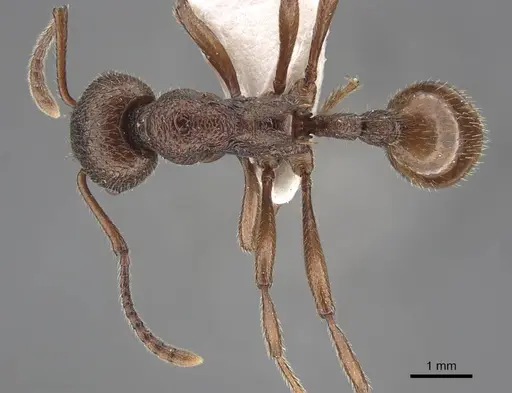
Literatura
Cargando mapa de distribución...Cargando productos...