
Myrmica foreliana
- Nom. cient.
- Myrmica foreliana
- Tribu
- Myrmicini
- Subfamilia
- Myrmicinae
- Autor
- Radchenko & Elmes, 2001
- Distribución
- Encontrado en 0 países
Introducción
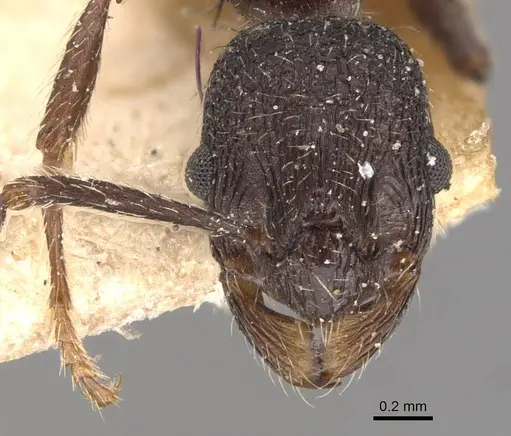
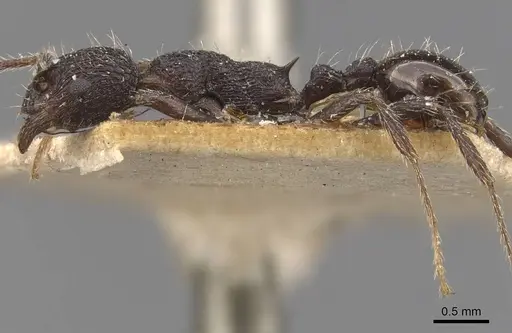
Myrmica foreliana is a small Myrmica ant species endemic to the Himalayan regions of India. Workers are among the smallest in the genus, though exact full body measurements are not available in scientific literature. The species belongs to the rugosa complex within the rugosa species group and was originally described in 1902 before being renamed in 2001 to honor the famous Swiss myrmecologist Auguste Forel. These ants are dark charcoal-colored, reflected in their original name 'carbonaria' (Latin for carbon). They inhabit high-altitude alpine regions with orchids and Rhododendron vegetation, typically found at elevations around 2900 meters in the Chopta Valley of Uttarakhand. This is a rarely encountered species known only from a handful of specimens, making it an unusual find for dedicated antkeepers.
Quick Summary
- Difficulty: Medium
- Origin & Habitat: Himalayan regions of India, specifically recorded from Uttarakhand (Chopta Valley), Jammu & Kashmir, and Madhya Pradesh at altitudes around 2900 meters [1][2]. They inhabit alpine zones with orchids, Rhododendron, and other high-altitude vegetation, typically found under stones in areas with 75% humidity and around 23°C during collection in May [1]. This species is endemic to India [2].
- Colony Type: Unconfirmed colony structure. Based on typical Myrmica patterns, likely single-queen colonies, but this has not been directly studied for this species.
- Size & Growth:
- Queen: size data unavailable, no queen specimens have been described in scientific literature
- Worker: size data unavailable, only head width (0.77mm) and abdomen length (1.46mm) measurements exist, but total body length is not documented
- Colony: Unknown, only a single worker specimen has been described in scientific literature
- Growth: Unknown, no direct development data exists for this species
- Development: Unknown, no direct development data exists for this species (No development data is available. Myrmica species typically take several weeks to months for complete development, but specific timelines for this species are unstudied.)
- Antkeeping:
- Temperature: Keep around 20-24°C, reflecting their alpine Himalayan origin. A slight temperature gradient allowing cooler areas (around 18-20°C) and warmer spots (22-24°C) is ideal. Avoid overheating, these ants are adapted to cooler mountain conditions [1].
- Humidity: Maintain moderate to high humidity, around 60-75%. The Chopta Valley collection data shows 75% humidity at the time of capture [1]. Keep the nest substrate consistently moist but not waterlogged, with some drier areas available for the ants to regulate their own conditions.
- Diapause: Yes, as a Himalayan species, they require a winter dormancy period. Myrmica species from temperate and alpine regions typically need 3-4 months of hibernation at temperatures around 5-10°C during winter.
- Nesting: In nature, they nest under stones in alpine areas. In captivity, a Y-tong (AAC) nest or plaster/naturalistic setup with moisture retention works well. Provide a small nest chamber scaled to their tiny worker size. They likely prefer darker, more enclosed spaces reflecting their natural under-stone nesting behavior.
- Behavior: This is a poorly studied species with limited behavioral observations. Based on Myrmica genus traits, workers are likely active foragers that search for small prey and honeydew. Their tiny size means they are excellent escape artists, use fine mesh and tight-fitting barriers. They are likely not aggressive but will defend their nest if threatened. The species is classified as an opportunist in functional group terms, meaning they can exploit various food resources [3]. This species has been recorded at elevations ranging from 500m to 2900m [3][1].
- Common Issues: escape prevention is critical due to their extremely small size, they can squeeze through standard test tube barriers, limited information makes care challenging, this species is rarely kept and poorly documented in captivity, hibernation failure can kill colonies, they require a proper winter dormancy period, wild-caught specimens may be stressed from collection at high altitude and may not adapt to captivity, slow growth may frustrate keepers expecting rapid colony development
Nest Preferences and Housing
Myrmica foreliana naturally nests under stones in high-altitude Himalayan regions, a behavior consistent with their alpine habitat [1]. In captivity, provide a nest that offers darkness, moisture retention, and protection from vibrations. A Y-tong (AAC) formicarium or a plaster nest with small chambers works well for these tiny ants. The chambers should be appropriately scaled to their minute worker size, avoid large, open spaces that would cause stress. Place the nest in a quiet area away from direct sunlight and vibrations, as these ants originate from quiet under-stone microhabitats. An outworld for foraging should be simple and easy to maintain, with escape prevention being paramount due to their extremely small size.
Feeding and Diet
Based on typical Myrmica feeding behavior and their classification as opportunists, these ants likely accept a varied diet including small insects, honeydew, and sugar sources. Offer small live prey items such as fruit flies, springtails, and other micro-arthropods appropriate to their tiny size. Sugar water or honey can be offered occasionally, though protein-rich foods should form the primary diet. Feed small amounts every 2-3 days, removing any uneaten prey after 24 hours to prevent mold. Given their high-altitude origin, avoid overfeeding, these ants likely have slower metabolisms adapted to cooler conditions. [3]
Temperature and Seasonal Care
As a Himalayan alpine species, Myrmica foreliana requires cooler temperatures than many common ant species. Maintain the nest area at approximately 20-24°C, with the collection data from Chopta Valley showing 23°C during May [1]. A heating cable on one side of the nest can create a gentle gradient, but avoid overheating. During winter, these ants require a proper hibernation period of 3-4 months at temperatures between 5-10°C. This dormancy is essential for their health and likely triggers reproductive cycles. Gradually reduce temperature in autumn to prepare for hibernation, and slowly warm them in spring.
Behavior and Temperament
This species is known from very few specimens, so behavioral observations are limited. Like other Myrmica species, workers are likely active foragers that search for small prey and tend aphids for honeydew. Their tiny size makes them vulnerable to predation, so they will likely be cautious and retreat when disturbed. The species has been recorded at both 500m and 1000m elevation in some surveys, suggesting some adaptability to lower altitudes [3]. However, their primary habitat is much higher (2900m), so they are adapted to cooler, more temperate conditions. Always use excellent escape prevention, their minute size allows them to slip through gaps invisible to the naked eye.
Report an Issue
The current care sheet is based fully on literature. See inconsistencies, or something that's incorrect? Please , it will be resolved after review from an admin. Contributing to the blogs tab also helps providing information, to make us be able to further improve the caresheets. Thank you for your support!
References

Esta ficha de cuidados está bajo licencia CC BY-SA 4.0 .
Blogs de la comunidad
CASENT0907662
Ver en AntWeb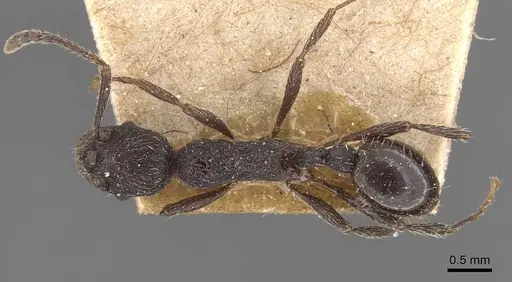
Literatura
Cargando mapa de distribución...Cargando productos...