
Myrmica alperti
- Nom. cient.
- Myrmica alperti
- Tribu
- Myrmicini
- Subfamilia
- Myrmicinae
- Autor
- Elmes & Radchenko, 2009
- Distribución
- Encontrado en 0 países
Introducción
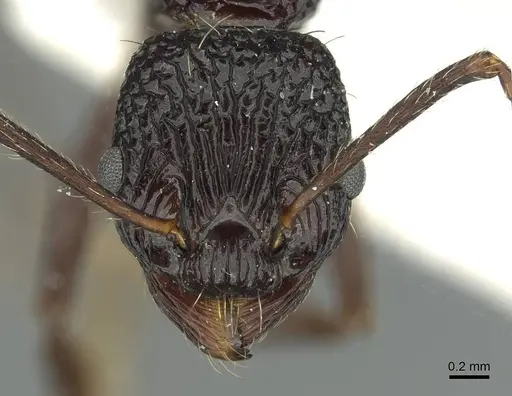
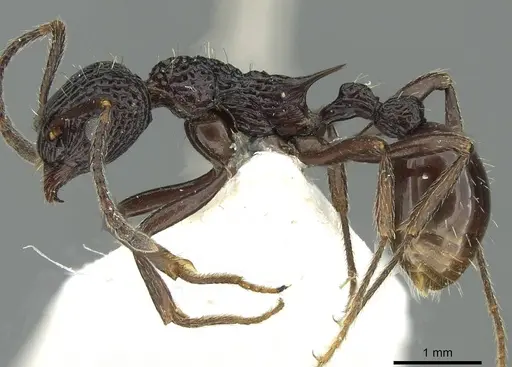
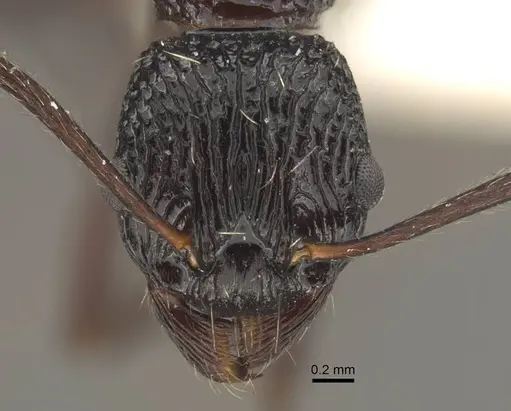
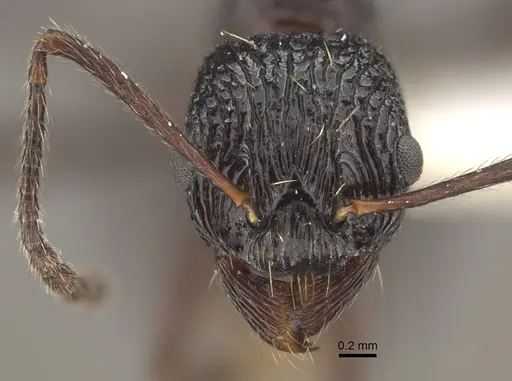
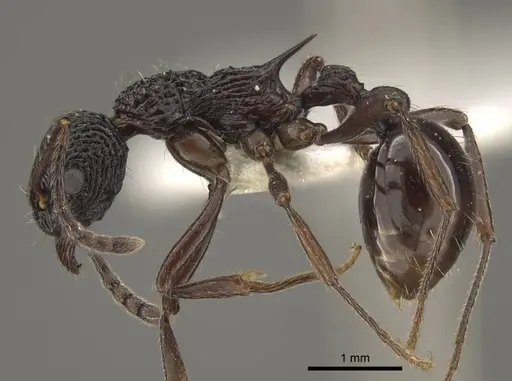
Myrmica alperti is a reddish-brown to dark brown ant species from the high Himalayas of Nepal. Workers have a stocky build with relatively short legs, a head that is longer than wide, and mandibles with 8–9 teeth . The propodeal spines are short and pointed, and the petiole is short and wide with a strongly concave front surface . The body is covered in coarse sinuous rugae and reticulation, with smooth and shiny surfaces between the sculpturing . This species is known only from the Thodung region of Nepal, where it occurs at elevations between 2200 and 3200 meters in conifer forests . Queens and males have never been described, and virtually nothing is known about its ecology or behavior . It belongs to the *ritae*-complex and closely resembles *Myrmica indica*, but differs by its stockier body, shorter appendages, and bluntly rounded propodeal lobes .
Quick Summary
- Difficulty: Expert
- Origin & Habitat: High Himalayan mountains in Nepal, specifically the Thodung region, at elevations between 2200–3200 m in conifer forests [1][2][4].
- Colony Type: Unknown – only workers have been described, queens and males remain unknown [3]. No data on colony structure exists.
- Size & Growth:
- Queen: Unknown – queens have not been described [3]
- Worker: Size data unavailable – only head and mesosoma measurements are known, not total body length [1]
- Colony: Unknown – no colony data exists
- Growth: Unknown – no development data available
- Development: Unknown – no direct data. Based on typical Myrmica patterns in cool climates, possibly 8–12 weeks, but this is speculative (All development information is inferred from related species – no species-specific data exists)
- Antkeeping:
- Temperature: No specific data exists. As a high‑altitude Himalayan species, it likely prefers cool conditions. Start around 15–20 °C and monitor. Avoid prolonged temperatures above 25 °C.
- Humidity: No data exists. Inferred from mountain habitat: keep nest substrate moist but not waterlogged. Provide a water source.
- Diapause: Unknown – likely required given the cold winters at its origin. If kept, provide a winter rest period of 3–4 months at 5–10 °C, but this is speculative.
- Nesting: No natural nesting data exists. Use standard Myrmica setups: test tubes for small groups, Y‑tong (aerated concrete) or plaster nests for larger colonies. Keep the nest dark.
- Behavior: No behavioral observations exist. Based on typical Myrmica patterns, workers may be moderately aggressive when disturbed, have a small stinger, and are active foragers. Escape risk is moderate – workers are not tiny but can climb smooth surfaces. Use standard barrier methods.
- Common Issues: complete lack of species‑specific data means all care is estimated – be prepared to adjust constantly, high‑altitude origin suggests strong sensitivity to heat – keep well below 25 °C, nuptial flight timing is completely unknown, making captive breeding impossible, queens have never been described – only wild‑collected workers or whole colonies are possible, no founding data exists – if you acquire a queen, document everything as it would be a first
Housing and Nest Setup
Since the natural nesting preferences of Myrmica alperti are unknown, follow standard Myrmica husbandry. Test tubes work well for small groups – fill one‑third with water, plug with cotton, and wrap the tube in dark material to simulate the dim forest floor conditions where the type specimens were collected. For larger colonies, use Y‑tong (aerated concrete) or plaster nests. The most important factor is providing a dark, quiet space with stable humidity and temperature. Avoid any nest material that cannot hold moisture, as workers likely need humidity. Given their high‑altitude origin, avoid overheating – room temperature or slightly cooler (around 15–20 °C) is appropriate. All housing advice here is inferred from related Myrmica species, adjust based on your colony’s behavior. [3]
Feeding and Diet
No dietary data exists for Myrmica alperti. Based on typical Myrmica feeding behavior, offer small protein sources such as fruit flies, mealworms, or small crickets, alongside sugar water or honey water. Feed protein 2–3 times per week and keep sugar water available at all times. Remove uneaten prey after 24–48 hours to prevent mold. Since nothing is known about their natural diet, start with a variety of small insects and observe acceptance. This advice is entirely inferred from the Myrmica genus and may not be optimal.
Temperature and Seasonal Care
This is the biggest unknown for Myrmica alperti. The species is recorded from elevations of 2200–3200 m in the Himalayas, which implies cool year‑round temperatures and cold winters [1][2]. Start with temperatures in the 15–20 °C range and monitor activity. If workers cluster near a heat source, lower the temperature, if they become sluggish, a slight increase may help. Avoid any prolonged temperatures above 25 °C. For overwintering, provide a period of 3–4 months at 5–10 °C – a refrigerator or cold cellar works. All temperature recommendations are inferred, you may need to experiment carefully.
Colony Establishment
Because queens of Myrmica alperti have never been described [3], the only way to obtain a colony is through wild collection of entire colonies (workers, brood, and possibly a queen). If you acquire a colony, transfer it to a test tube setup without disturbance. Avoid attempting to found a colony from a captured queen – no queen has ever been observed, so all founding behavior is unknown. Keep the nest in complete darkness and provide stable cool conditions. Be prepared for very slow growth, as is typical of high‑altitude ants. Document everything: any successful rearing of brood would be the first such observation.
Observations and Documentation
Because this species has never been kept in captivity, any observations you make can contribute valuable data. Record the following: egg development time in your conditions, food preferences, activity patterns, and reaction to temperature changes. Take detailed photographs of workers, focusing on the head (especially the rugae pattern), propodeal spines, and petiole shape – these are key identification features [1]. If you ever observe a queen or males, document them thoroughly. Share your findings with the myrmecological community to help fill the knowledge gap.
Frequently Asked Questions
How do I care for Myrmica alperti ants?
Care is largely speculative since the species has never been kept in captivity. Keep temperatures cool (15–20 °C), offer protein and sugar, and use a test tube or plaster nest with moist substrate. Monitor closely and adjust based on colony response. This is an expert‑level species due to the complete lack of captive care data.
What do Myrmica alperti ants eat?
No dietary data exists. Based on related Myrmica species, offer small insects like fruit flies or mealworms for protein, and sugar water for carbohydrates. Remove uneaten food promptly.
What temperature do Myrmica alperti ants need?
No specific data exists. As a high‑altitude Himalayan species, keep them cool – start around 15–20 °C and avoid temperatures above 25 °C. They likely need a winter rest period at 5–10 °C for 3–4 months, but this is inferred from their origin [2].
How big do Myrmica alperti colonies get?
Unknown – no colony size data exists. Related Myrmica species can reach several hundred to a few thousand workers, but this is purely speculative for M. alperti.
Do Myrmica alperti ants sting?
Myrmica ants have small stingers. Based on genus behavior, workers may sting if provoked, but the sting is mild and unlikely to cause more than minor irritation.
Are Myrmica alperti good for beginners?
No – this species is not recommended for anyone. It has never been kept in captivity, queens are unknown, and all care is guesswork. If you are new to antkeeping, choose a well‑studied Myrmica species like Myrmica rubra.
Where is Myrmica alperti found?
Only known from the Thodung region of Nepal, at elevations between 2200–3200 meters in conifer forests [1][2][4].
How long does it take for Myrmica alperti to develop from egg to worker?
Unknown – no species‑specific data exists. Based on other Myrmica from cool climates, the process may take 8–12 weeks, but this is entirely speculative.
Can I keep multiple Myrmica alperti queens together?
Unknown – colony structure has never been studied. Queens have never been observed, so there is no basis to attempt polygyny. Do not combine unrelated colonies.
Do Myrmica alperti need hibernation?
Almost certainly yes, given their high‑altitude Himalayan origin with cold winters. Provide 3–4 months at 5–10 °C during winter, but this is inferred [2].
Report an Issue
The current care sheet is based fully on literature. See inconsistencies, or something that's incorrect? Please , it will be resolved after review from an admin. Contributing to the blogs tab also helps providing information, to make us be able to further improve the caresheets. Thank you for your support!
References

Esta ficha de cuidados está bajo licencia CC BY-SA 4.0 .
Blogs de la comunidad
CASENT0913061
Ver en AntWeb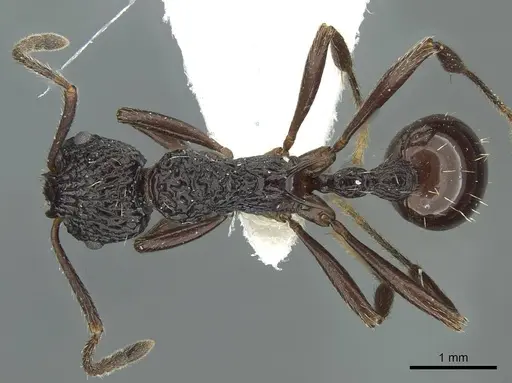
CASENT0917723
Ver en AntWeb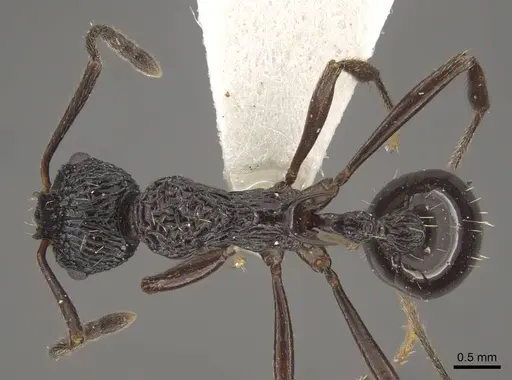
Literatura
Cargando mapa de distribución...Cargando productos...