
Myrmecina sinensis
- Nom. cient.
- Myrmecina sinensis
- Tribu
- Crematogastrini
- Subfamilia
- Myrmicinae
- Autor
- Wheeler, 1921
- Distribución
- Encontrado en 0 países
Introducción
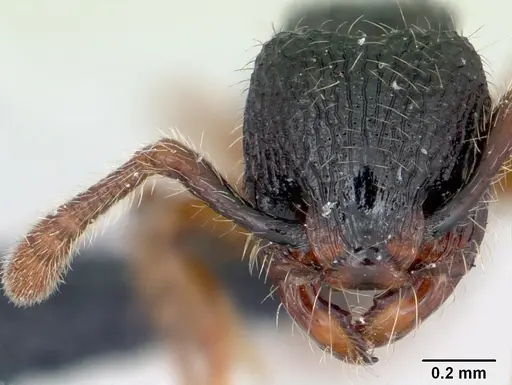
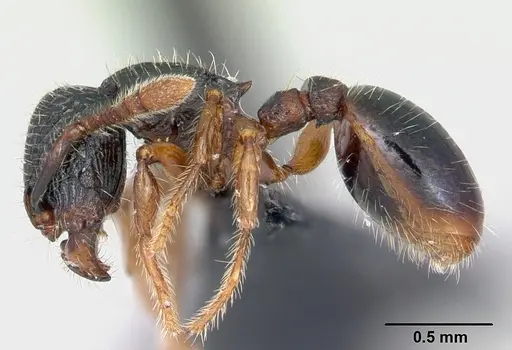
Myrmecina sinensis is a tiny Myrmicinae ant native to southern China. Workers are dark brown to black with a smooth and shining gaster. The species was originally described as a subspecies of Myrmecina graminicola in 1921 but was elevated to full species status in 2008 based on morphological differences, particularly the complete absence of a median tooth on the clypeus and distinctive longitudinal sculpture on the underside of the head . These ants are distinguished by their small size, rounded barrel-shaped petiole, and propodeal spines that are straight rather than curved at the apex . Only the worker caste has been documented in scientific collections . This species forms extremely small colonies, typically with only 30-50 individuals . They are found in leaf litter, soil, rotten wood, and under stones in forested regions across southern China, including Guangxi, Zhejiang, and more recently recorded in Macau in 2017 .
Quick Summary
- Difficulty: Medium-Hard
- Origin & Habitat: Southern China (Zhejiang, Guangxi) and Macau, at elevations around 680m. They inhabit leaf litter, soil, rotten wood, and moss-covered areas in forested regions [1][3][4].
- Colony Type: Small colonies averaging 30-50 workers. Only the worker caste has been documented in scientific collections, colony structure (queen number) is unconfirmed [1][3].
- Size & Growth:
- Queen: Unknown, queen caste has not been described [1]
- Worker: ~2-3mm, inferred from Myrmecina genus
- Colony: Typically 30-50 workers per colony [3]
- Growth: Slow, small colony size limits growth rate
- Development: Unknown, development timeline has not been documented for this species (Based on typical small Myrmicinae, expect several months for first workers at warm temperatures)
- Antkeeping:
- Temperature: Keep at room temperature, roughly 20-25°C, inferred from their subtropical origin in southern China. A gentle gradient allowing them to choose their preferred temperature works best.
- Humidity: High humidity is essential. These ants naturally live in leaf litter and moist soil environments. Keep the nest substrate consistently damp but not waterlogged, with some drier areas available [3].
- Diapause: May require winter diapause based on geographic range in southern China. Reduce temperature to around 10-15°C for 2-3 months during winter.
- Nesting: Naturalistic setups work best, shallow soil setups, leaf litter layers, or small nests with tight chambers. They prefer enclosed spaces and will often nest under stones or in rotting wood [3]. Given their tiny size, use very small chambers and narrow passages.
- Behavior: Myrmecina sinensis is a shy, non-aggressive species. Workers are small and docile, typically foraging quietly through leaf litter rather than actively defending territories. They are not known to sting and pose no danger to keepers. Their tiny size makes them excellent escape artists, they can easily slip through standard test tube cotton and small gaps. These ants are cryptic by nature, spending much of their time hidden in the nest substrate. They are not colony aggressive and will typically retreat rather than engage with threats. As Myrmicinae, they possess a modified stinger used to smear venom onto enemies rather than pierce flesh.
- Common Issues: escape prevention is critical due to their very small size, use fine mesh barriers and tight-fitting lids, small colony size means slow growth and requires patience, do not overfeed or disturb frequently, high humidity needs can lead to mold if ventilation is poor, balance moisture with airflow, they are rarely available in the antkeeping hobby due to limited distribution and small colony sizes, wild-caught colonies may contain parasites that can devastate small colonies
Housing and Nest Setup
Myrmecina sinensis requires careful housing due to their tiny size and preference for humid, enclosed spaces. A small nest with very tight chambers works well, or you can use a naturalistic setup with a shallow soil layer topped with leaf litter to mimic their natural forest floor habitat. The nest should have chambers no more than 3-4mm in height to match their small size. Because they nest under stones and in rotting wood in the wild, providing flat stones or small pieces of rotting wood in the outworld gives them natural foraging opportunities. Test tubes can work but require cotton that is tightly packed to prevent escapes, even then, these tiny ants may squeeze through. A small formicarium with a hydration system works best to maintain consistent humidity without flooding. [3]
Feeding and Diet
Like other Myrmecina species, these ants are omnivorous, feeding on small insects, honeydew, and organic matter found in leaf litter. In captivity, offer small protein sources such as fruit flies, pinhead crickets, or tiny pieces of mealworms. Due to their minute size, prey items should be appropriately scaled, even small fruit flies may be too large. They accept sugar sources like honey water or sugar water, though this should be offered in very small amounts in a shallow container to prevent drowning. Feed sparingly, a small prey item every few days is sufficient for a colony of this size. Remove any uneaten food promptly to prevent mold in the humid setup. [3]
Temperature and Seasonal Care
Keep Myrmecina sinensis at room temperature, ideally around 20-25°C. They come from southern China which has a subtropical climate, so they prefer warmth but not extreme heat. A heating cable on one side of the nest can create a temperature gradient, allowing workers to move to warmer or cooler areas as needed. During winter, reduce temperatures to around 10-15°C for 2-3 months to simulate their natural seasonal cycle. This winter rest period is important for colony health and may trigger reproductive behavior in the spring. Do not cool them suddenly, reduce temperature gradually over 1-2 weeks. [1]
Handling and Temperament
These ants are extremely docile and not suited for keepers who want active, visible colonies. Myrmecina sinensis spends much of its time hidden in the nest substrate and is not aggressive toward keepers. They do not have a functional stinger large enough to affect humans. The biggest challenge is simply observing them, they are cryptic by nature and will quickly retreat when exposed to light. When maintaining the colony, minimize disturbances and use red light for observation if possible. Their small size and docile nature make them more of a observe-than-interact species, best suited for keepers interested in studying natural colony behavior rather than handling their ants. [3]
Frequently Asked Questions
How long does it take for Myrmecina sinensis to produce first workers?
The exact development timeline has not been documented for this species. Based on typical small Myrmicinae, expect several months for first workers at warm temperatures around 22-25°C.
Can I keep Myrmecina sinensis in a test tube?
Test tubes can work but are risky due to their tiny size. Workers may squeeze through loosely packed cotton. If using test tubes, pack cotton very tightly and consider adding a small barrier of fine mesh at the entrance. A small nest with tight chambers is a better choice.
How big do Myrmecina sinensis colonies get?
Colonies are naturally small, typically reaching only 30-50 workers at maturity [3]. This is much smaller than most ant species kept in captivity, so do not expect large, impressive colonies.
Do Myrmecina sinensis ants sting?
They are not known to sting and pose no danger to keepers. Their small size means any sting would be imperceptible to humans anyway.
What do I feed Myrmecina sinensis?
Offer small protein sources like fruit flies, tiny crickets, or small pieces of mealworms. They likely accept sugar water or honey water as well. Scale all food to their tiny size, even a fruit fly is a large prey item for these ants.
Are Myrmecina sinensis good for beginners?
They are not ideal for complete beginners due to their tiny size requiring excellent escape prevention, small colony sizes that grow slowly, and specific humidity needs. However, they are docile and forgiving once their basic needs are met. Consider them a step up from beginner species like Lasius or Camponotus.
Do Myrmecina sinensis need hibernation?
May require a winter rest period based on their geographic range in southern China. Reduce temperatures to 10-15°C for 2-3 months during winter.
Why are my Myrmecina sinensis escaping?
Their tiny size makes them excellent escape artists. They can slip through standard cotton, tiny gaps in lids, and even some mesh. Use fine mesh, tightly packed cotton, and check all seal points regularly. Escape prevention must be excellent.
When should I move them to a formicarium?
Keep them in a small setup for as long as possible given their small colony size. Only consider moving to a larger naturalistic setup once the colony reaches 20+ workers and the test tube becomes crowded.
Can I keep multiple queens together?
This has not been documented for this species. Colony structure (queen number) remains unconfirmed. Keeping multiple unrelated queens together is not recommended.
Report an Issue
The current care sheet is based fully on literature. See inconsistencies, or something that's incorrect? Please , it will be resolved after review from an admin. Contributing to the blogs tab also helps providing information, to make us be able to further improve the caresheets. Thank you for your support!
References

Esta ficha de cuidados está bajo licencia CC BY-SA 4.0 .
Blogs de la comunidad
CASENT0070298
Ver en AntWeb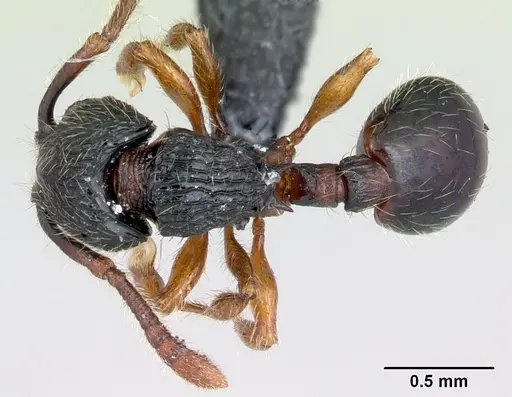
Literatura
Cargando mapa de distribución...Cargando productos...