
Monomorium pergandei
- Nom. cient.
- Monomorium pergandei
- Tribu
- Solenopsidini
- Subfamilia
- Myrmicinae
- Autor
- Emery, 1893
- Distribución
- Encontrado en 0 países
Introducción
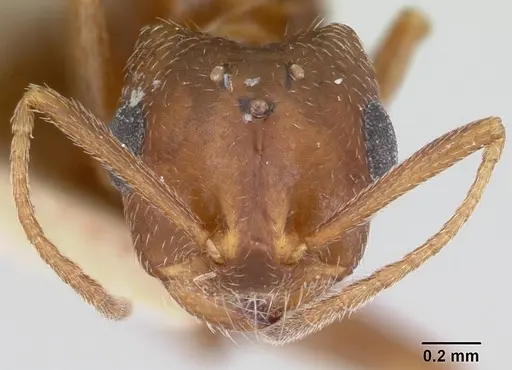
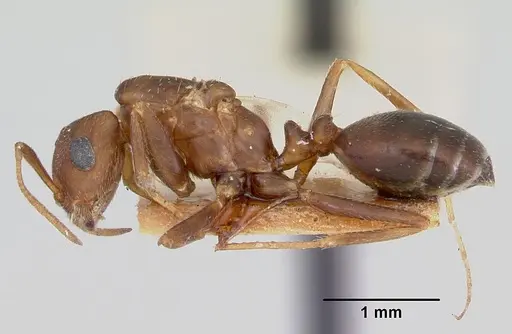
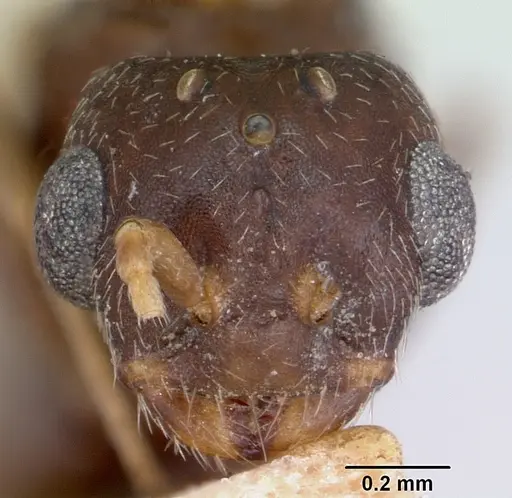
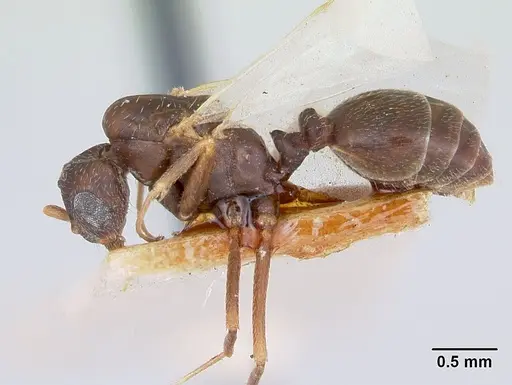
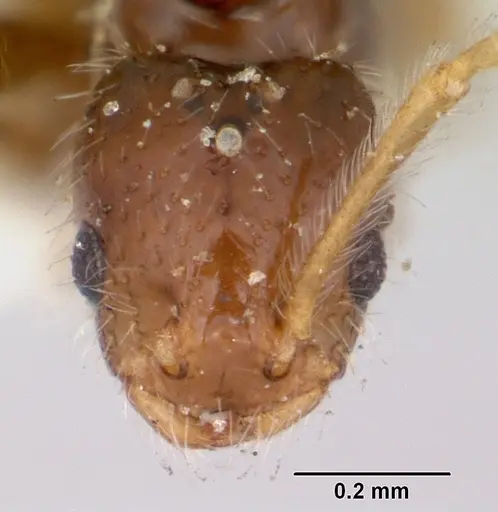
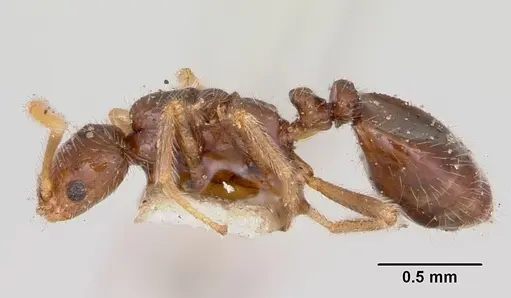
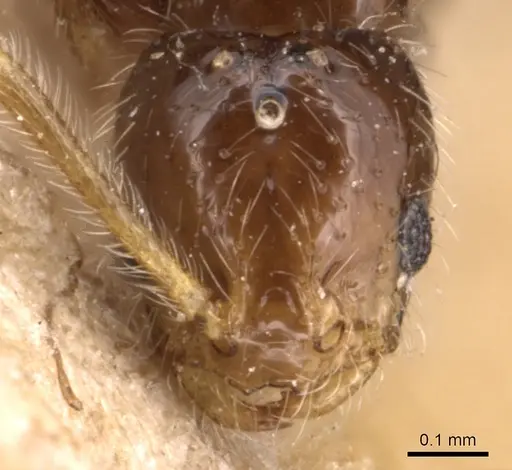
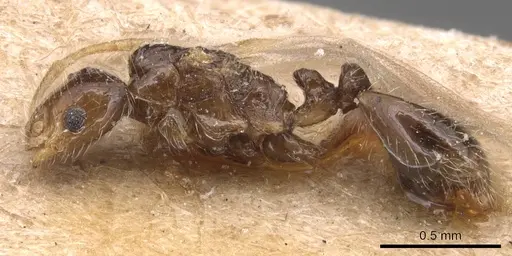
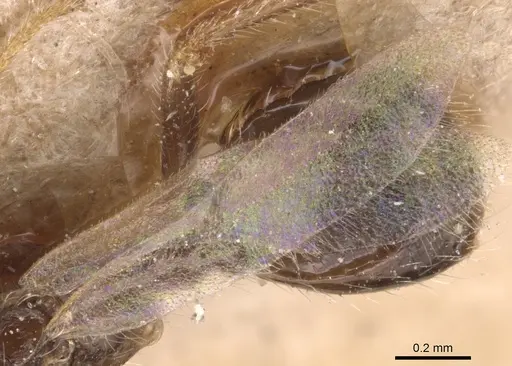
Monomorium pergandei is an extremely rare workerless social parasite ant from Washington D.C., collected only once in the late 1800s and not seen since despite multiple searches. It is likely extinct . These are very small ants (head length under 0.5 mm) with a smooth, shiny body, many erect hairs, and a large depression on the upper surface of the first abdominal segment . The mandibles have only three teeth (reduced from four or five) and the palps are reduced . Unlike many social parasites, the males are fully winged and appear normal . This species shows a less extreme form of parasitic degeneration compared to the workerless parasite Anergates .
Quick Summary
- Difficulty: Expert
- Origin & Habitat: Washington D.C., United States – specifically collected from Rock Creek Park area. In nature, these ants lived as social parasites within colonies of host Monomorium species, likely Monomorium emarginatum rather than M. carbonarium [1]. The host ants are small black species that nest in soil or under stones in urban areas.
- Colony Type: Workerless inquiline social parasite – this species has no workers of its own. Queens live permanently within host colonies and are fed by host workers [5][1]. The colony structure consists of the parasite queen(s), host workers, and host reproductives all living together in the same nest.
- Size & Growth:
- Queen: size unavailable – head length measurements are known but total body length not recorded (very small, under 0.5 mm head) [2]
- Worker: Worker caste absent – this is a workerless species [5][1]
- Colony: Unknown – only one mixed colony ever collected. The host colony would determine overall colony size.
- Growth: Unknown – cannot be established in captivity
- Development: Not applicable – this workerless parasitic species cannot produce workers [5] (Monomorium pergandei produces only sexual forms (males and females), no workers are ever produced [5])
- Antkeeping:
- Temperature: Unknown – cannot be maintained in captivity
- Humidity: Unknown – depends on host colony requirements
- Diapause: Unknown – likely follows host colony seasonal patterns
- Nesting: Cannot be maintained in captivity. As a workerless social parasite, this species requires a living host colony to survive and cannot establish its own colony.
- Behavior: This species is a permanent social parasite that cannot survive without a host colony. The parasite queens are fed by host workers and produce only sexual offspring (males and females), never workers [5]. In laboratory observations, parasite females attacked and killed some host males, though this may have been an artifact of combining two colonies [1]. The species has no defense mechanisms of its own since it lacks a worker caste. Males are fully winged and normal in appearance [3].
- Common Issues: This species is likely extinct and has not been collected since the original 1891 collection – no colonies exist in captivity [1]., Even if found, keeping this species would require maintaining a living host colony, which is extremely complex., The species produces no workers – only sexual forms – so there is no colony to keep., Attempted recollection efforts in the 1980s were unsuccessful [1]., This is not a species that can be kept by any known antkeeping methods.
Why This Species Cannot Be Kept
Monomorium pergandei is one of the rarest ants in North America – in fact, it's likely extinct. This species was only ever collected once, by Theodore Pergande in Washington D.C. in July 1891,and has not been seen despite multiple attempts to recollect it in the 1980s [1]. But beyond its rarity, there is a more fundamental reason: it is a workerless social parasite. This means the species produces NO WORKERS whatsoever – only males and females [5]. The queens cannot establish their own colonies. Instead, they must invade and live permanently within colonies of host ant species (likely Monomorium emarginatum), where they are fed by host workers [1]. Without a host colony, the parasite queens cannot survive. This makes M. pergandei impossible to keep using any standard antkeeping methods. There are no colonies in captivity, and even if a wild colony were found, maintaining it would require also maintaining a healthy host colony – an extremely difficult task that has never been documented.
The Biology of Workerless Parasites
Monomorium pergandei belongs to a rare category of ants called workerless inquiline social parasites. Unlike typical ants where a queen founds a new colony by laying eggs and raising workers, these parasites have lost the worker caste entirely [5]. The queens invade host colonies and integrate themselves among the host workers, who feed them and tend to their eggs [4]. The parasite produces only sexual forms (new queens and males), never workers – this is an evolutionary strategy where the parasite relies entirely on the host's workforce. This is different from slave-making ants (like Formica sanguinea) which raid other colonies to steal workers. M. pergandei is more similar to Tetramorium atratulum, a European workerless parasite of Tetramorium colonies, though M. pergandei represents a less extreme case of parasitic degeneration [4]. The males of M. pergandei are fully winged and morphologically normal, unlike the highly degenerated males seen in some other parasitic ant species [3].
Identification and Distinguishing Features
If you were to find M. pergandei, you would recognize it by several distinctive features. The queens are very small, with a smooth, shiny body surface covered with abundant erect to semi-erect hairs [2]. The most distinctive feature is a large depression or flattening on the upper surface of the first abdominal segment (first gastral tergite) [2]. The mandibles have only 3 teeth (reduced from the typical 4-5 in free-living Monomorium), and the palps are also reduced (1,2 formula) [1]. In lateral view, the front of the thorax (scutum) projects forward as a rounded bulge over the pronotum [1]. These ants are most similar to Monomorium inquilinum, another workerless parasite, but can be distinguished because M. inquilinum has only 2 mandibular teeth and lacks the dorsal abdominal depression [2]. The host species (Monomorium emarginatum, formerly misidentified as M. minimum) are small black ants about 2-3mm in size, so the parasite queens would appear tiny alongside host workers.
Historical Collection and Conservation Status
The only known collection of Monomorium pergandei occurred on July 12,1891,when Theodore Pergande discovered a mixed colony near Washington D.C. [1]. The colony contained both male and female reproductive forms of M. pergandei living alongside workers and reproductives of what was then identified as Monomorium carbonarium (now known as Monomorium carbonarium) [1]. Notably, no M. pergandei workers were found – only the sexual forms (queens and males) [5]. Pergande took the colony to his laboratory and reportedly observed the parasite females attacking and killing some host males, though researchers later suggested this may have been an artifact of accidentally combining two separate colonies [1]. Despite dedicated search efforts in the mid-1980s by ant expert Stefan Cover, no additional specimens have been found [1]. The IUCN status is Vulnerable (VU), though given the lack of records for over 130 years, the species is likely extinct [2]. This makes M. pergandei not just impossible to keep, but potentially one of the first North American ant species to go extinct in modern times.
Frequently Asked Questions
Can I keep Monomorium pergandei ants?
No. This species cannot be kept in captivity. It is a workerless social parasite that has never been collected since 1891 and is likely extinct. Even if found, it requires a living host colony to survive, which makes captive maintenance impossible [1].
Where can I find Monomorium pergandei?
This species has not been seen since its original collection in Washington D.C. in 1891. Multiple attempts to recollect it in the Rock Creek Park area of Washington D.C. during the 1980s were unsuccessful [1]. The species is likely extinct.
Do Monomorium pergandei have workers?
No. This is a workerless species – no worker caste exists. Only sexual forms (winged females/males) are produced. The species survives entirely as a social parasite within host colonies [5][1].
What do Monomorium pergandei eat?
As a social parasite, M. pergandei does not forage or hunt. The parasite queens are fed directly by host workers through trophallaxis (mouth-to-mouth feeding). They do not have workers to gather food for them [4].
What is the host species for Monomorium pergandei?
The original collection listed Monomorium carbonarium as the host, but recent analysis suggests the actual host is likely Monomorium emarginatum based on recent collections from the same area (Rock Creek Park, D.C.) [1]. Both are small black ants in the Monomorium carbonarium species group.
Are Monomorium pergandei dangerous?
No. This species has no workers and therefore cannot defend a colony or sting. The queens are tiny and completely dependent on host workers for survival [5].
How big do Monomorium pergandei colonies get?
Unknown. Only one mixed colony was ever collected, and its size was not recorded in detail. The parasite produces only sexual forms, so there is no 'colony' in the traditional sense – just a queen living among host workers [5].
Can I start a colony from a queen like other ants?
No. Unlike typical ants where a claustral queen seals herself in a chamber and raises her first workers alone, M. pergandei queens cannot found colonies independently. They are obligate social parasites that must invade and live permanently within a host colony [1].
Is Monomorium pergandei extinct?
Likely yes. The species was only collected once in 1891 and has not been found despite multiple search attempts, most notably in the 1980s. The IUCN lists it as Vulnerable, but given the 130+ year gap in records, most researchers consider it probably extinct [1][2].
What makes Monomorium pergandei different from other ants?
This is one of the few workerless social parasites in North America. Unlike typical ants that have queens, workers, and males, M. pergandei produces only males and females – no workers exist [5]. The queens live permanently inside host colonies and are cared for by host workers. This makes them biologically fascinating but impossible to keep in captivity.
Report an Issue
The current care sheet is based fully on literature. See inconsistencies, or something that's incorrect? Please , it will be resolved after review from an admin. Contributing to the blogs tab also helps providing information, to make us be able to further improve the caresheets. Thank you for your support!
References

Esta ficha de cuidados está bajo licencia CC BY-SA 4.0 .
Blogs de la comunidad
CASENT0103382
Ver en AntWeb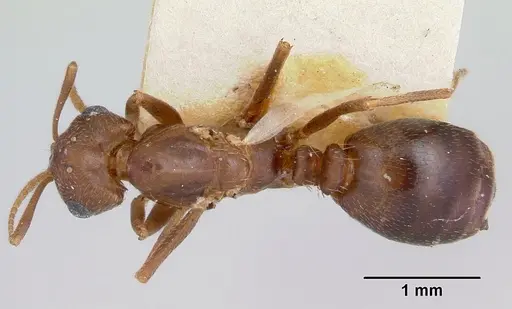
CASENT0103534
Ver en AntWeb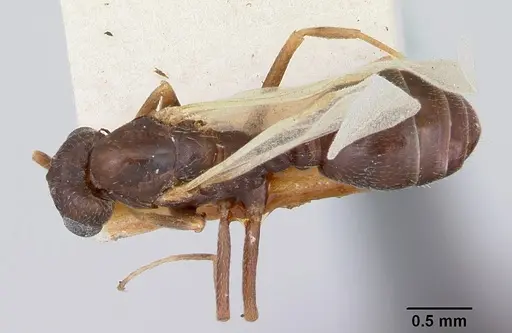
CASENT0105691
Ver en AntWeb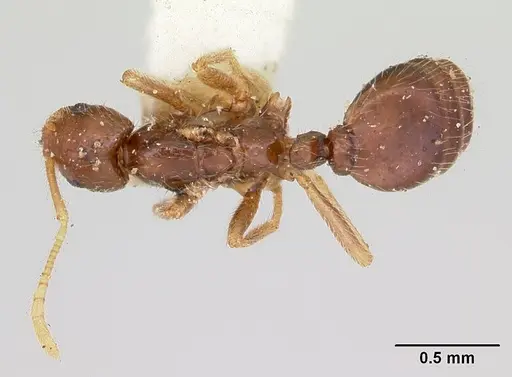
CASENT0904645
Ver en AntWeb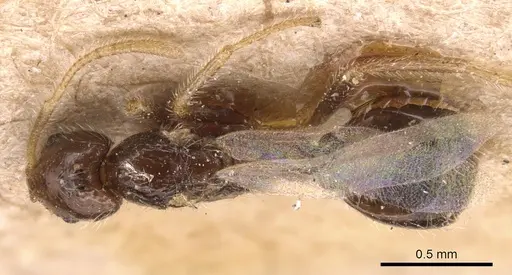
Literatura
Cargando mapa de distribución...Cargando productos...