
Meranoplus minimus
- Nom. cient.
- Meranoplus minimus
- Tribu
- Crematogastrini
- Subfamilia
- Myrmicinae
- Autor
- Crawley, 1922
- Distribución
- Encontrado en 0 países
Introducción
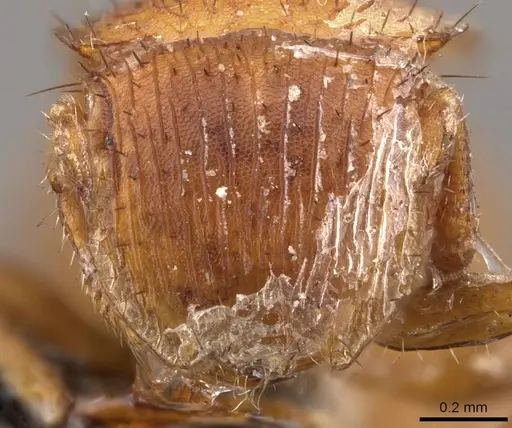
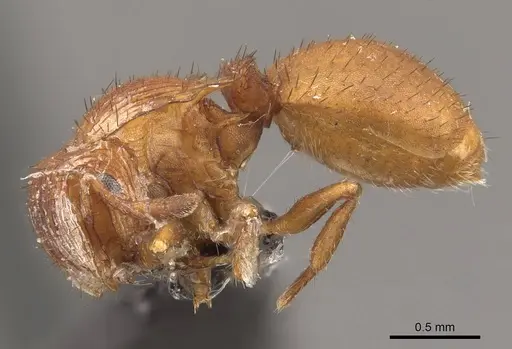
Meranoplus minimus is a medium-sized Myrmicine ant native to northern Australia, specifically the Top End of the Northern Territory and Queensland's Cape York Peninsula. Workers are typically orange-brown with distinctive extensive translucent flanging on the promesonotal shield, giving them a shield-like appearance. They have a reflexed and dorsally flattened post-petiole, the segment directly behind the waist. Workers forage solitarily and primarily collect seeds, making them granivorous ants . This species resembles members of the Meranoplus fenestratus group but lacks that group's unusual clypeal structure.
Quick Summary
- Difficulty: Medium
- Origin & Habitat: Northern Australia, specifically the Top End of the Northern Territory and Queensland's Cape York Peninsula. They inhabit tropical savanna and woodland habitats where they nest in soil or under stones [1].
- Colony Type: Colony structure is not extensively documented in scientific literature. Based on typical Meranoplus genus patterns, likely single-queen colonies.
- Size & Growth:
- Queen: size data unavailable, no specific measurements documented
- Worker: size data unavailable, no specific measurements documented
- Colony: Unknown, no documented colony size studies available
- Growth: Moderate, estimated from related species
- Development: unconfirmed, no specific studies on development timeline (Tropical species typically develop faster than temperate species, but exact timing for M. minimus is unknown.)
- Antkeeping:
- Temperature: Keep warm and stable, roughly low-to-mid 20s°C. Being from tropical northern Australia, they prefer warm conditions. A heating cable on one side of the nest creates a temperature gradient allowing ants to regulate their own temperature.
- Humidity: Moderate humidity. These are not high-humidity rainforest ants, they come from tropical savanna regions with seasonal rainfall. Keep the nest substrate moderately moist but allow some drying areas.
- Diapause: No, being a tropical species from northern Australia, they do not require hibernation or winter dormancy. Maintain consistent warm temperatures year-round.
- Nesting: In captivity, they do well in Y-tong (AAC) nests or plaster nests with channels scaled to their medium size. They will also accept test tube setups. Provide a moisture reservoir to maintain moderate humidity. Avoid overly damp conditions.
- Behavior: Workers are docile and not aggressive. They forage solitarily for seeds and other plant matter rather than hunting live prey. They are not known for stinging and pose no danger to keepers. Escape risk is moderate, they are medium-sized ants but can squeeze through small gaps. Use standard escape prevention with smooth barriers like fluon. They are relatively calm colony residents that don't tend to be overly active or stressful to observe. Defense mechanism involves smearing venom onto enemies using a modified flattened stinger, typical of the Crematogastrini tribe.
- Common Issues: tropical species may decline if kept too cool, maintain warm temperatures consistently, seed-eating ants need appropriate food, offer various seeds alongside protein sources, colonies may be slow to establish initially, patience is required during founding phase, moderate escape risk means standard barriers are usually sufficient but don't neglect prevention
Housing and Nest Setup
Meranoplus minimus does well in standard antkeeping setups. Y-tong (AAC) nests work excellently, the smooth walls prevent escape and the clear design lets you observe colony activity. Plaster nests with moisture reservoirs are also suitable and help maintain moderate humidity levels. For founding colonies, a simple test tube setup with a water reservoir works well. The colony will need an outworld connected to the nest for foraging. Because they collect seeds, provide a small dish or designated area in the outworld where you can offer various seeds. The nest chambers should be appropriately sized for medium-sized ants, not too cramped but not excessively spacious either. [1][2]
Feeding and Diet
As seed-eating ants, Meranoplus minimus primarily collects and stores seeds. In captivity, offer a variety of small seeds, grass seeds, millet, chia, and similar small seeds work well. They will also accept protein sources like small insects (fruit flies, small mealworms, crickets) and can be fed sugar water or honey as an energy source. Unlike purely predatory ants, they are granivores at heart. Offer seeds continuously as a staple food, with protein supplements 2-3 times per week. Remove any uneaten seeds or prey after a few days to prevent mold. Fresh water should always be available. [2]
Temperature and Seasonal Care
Being from tropical northern Australia, these ants need warm conditions year-round. Maintain nest temperatures in the low-to-mid 20s°C range. A heating cable placed on top of the nest (never under, as excessive heat can dry out the nest too quickly) helps create a warm zone. Room temperature may be sufficient if your home stays warm, but monitor colony activity, if workers seem sluggish, increase heat slightly. Unlike temperate species, they do not require hibernation or cooling periods. Keep temperatures stable, sudden drops can stress or kill colonies. They are adapted to tropical conditions with wet and dry seasons rather than cold winters.
Colony Establishment and Growth
Starting a Meranoplus minimus colony requires patience. If you obtain a founding queen, she will likely seal herself into a chamber and raise her first workers alone using stored fat reserves. The initial brood development takes several weeks to months depending on temperature. Once the first workers emerge, the colony will gradually grow. Growth rate is moderate, expect several months to reach a dozen workers, and a year or more to reach significant numbers. The key to success is consistent warmth, appropriate humidity, and not disturbing the founding queen unnecessarily during the initial phase. Avoid overfeeding during founding as this can cause mold problems in enclosed spaces.
Behavior and Temperament
These are calm, docile ants that make excellent observation subjects. Workers forage individually rather than in groups, searching for seeds and other plant-based resources. They are not aggressive and do not pose any stinging threat to keepers. Their medium size and relatively slow movement make them easy to observe. They are not known for being escape artists in the same way as tiny ants, but still benefit from standard barrier prevention using fluon or similar products. The colony will establish a clear separation between nest chambers (for brood and queen) and foraging areas. They are generally low-maintenance once established, requiring only regular feeding and humidity maintenance. [2]
Frequently Asked Questions
How long does it take for Meranoplus minimus to produce first workers?
Specific development timeline for M. minimus is not documented in scientific literature. From egg to first worker typically takes several weeks to months at optimal warm temperatures, similar to related Meranoplus species. The founding queen will remain sealed in her chamber until her first workers emerge.
What do Meranoplus minimus ants eat?
They are primarily seed-eating ants. Offer various small seeds like grass seeds, millet, or chia as a staple. They also accept protein sources like small insects and will drink sugar water or honey. Seeds should be available continuously, with protein offered 2-3 times weekly.
Do Meranoplus minimus ants need hibernation?
No. Being a tropical species from northern Australia, they do not require hibernation. Keep them warm year-round. Cold temperatures can stress or kill these ants.
Are Meranoplus minimus ants aggressive or do they sting?
No, they are docile and not known for aggression. They pose no stinging threat to keepers. They are calm colony residents that are pleasant to observe.
Can I keep multiple Meranoplus minimus queens together?
This is not recommended. Based on typical Meranoplus behavior, they are likely single-queen species. Combining unrelated queens has not been documented and would likely result in aggression.
What temperature is best for Meranoplus minimus?
Keep nest temperatures warm, roughly low-to-mid 20s°C. They are tropical ants from northern Australia and prefer warm conditions. A heating cable on the nest can help maintain optimal temperatures.
How big do Meranoplus minimus colonies get?
The maximum colony size is not documented in scientific literature. Based on related medium-sized Meranoplus species, colonies likely reach several hundred workers over time with moderate growth rates.
Are Meranoplus minimus good for beginners?
They are rated as medium difficulty. They require warm tropical conditions and seed-based feeding, which is straightforward once the temperature requirements are met. They are docile and low-maintenance once established, making them suitable for intermediate antkeepers.
What type of nest is best for Meranoplus minimus?
Y-tong (AAC) nests or plaster nests work well. Provide moderate humidity and appropriately sized chambers for medium-sized ants. Test tube setups are suitable for founding colonies.
Where is Meranoplus minimus found in the wild?
They are native to northern Australia, specifically the Top End of the Northern Territory and Queensland's Cape York Peninsula. They inhabit tropical savanna and woodland habitats.
Report an Issue
The current care sheet is based fully on literature. See inconsistencies, or something that's incorrect? Please , it will be resolved after review from an admin. Contributing to the blogs tab also helps providing information, to make us be able to further improve the caresheets. Thank you for your support!
References

Esta ficha de cuidados está bajo licencia CC BY-SA 4.0 .
Blogs de la comunidad
CASENT0908944
Ver en AntWeb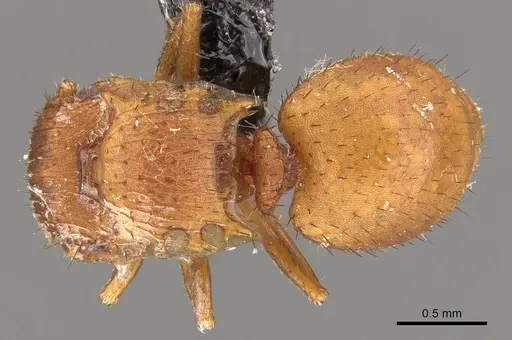
Literatura
Cargando mapa de distribución...Cargando productos...