
Manica yessensis
- Nom. cient.
- Manica yessensis
- Tribu
- Myrmicini
- Subfamilia
- Myrmicinae
- Autor
- Azuma, 1955
- Distribución
- Encontrado en 0 países
Introducción
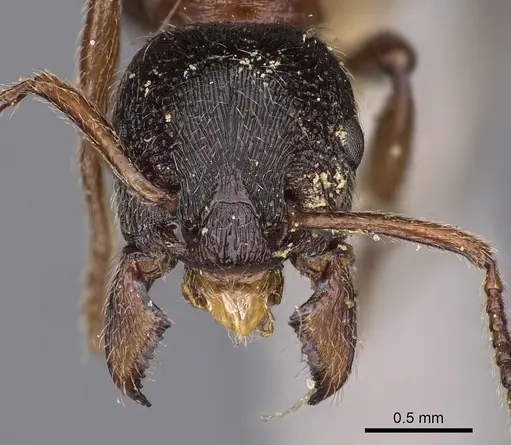
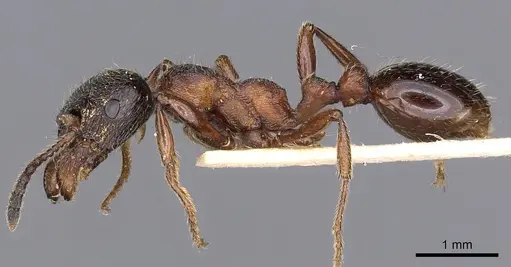
Manica yessensis is a small ant native to northern and central Japan. Workers measure 5-7mm with a distinctive appearance: the head and gaster are black, while the mesosoma and legs range from brown to reddish brown. They have unusually simple tibial spurs on the middle and hind legs compared to other Manica species. These ants nest in the soil of volcanic mountains at gravelly sites with patchy vegetation, or under stones in dry river-beds. Colonies are small and sporadically distributed, likely due to their specific habitat preferences. This species is closely related to the New World Manica bradleyi but is separated by its obtusely angular propodeum and rugose-punctate petiole patterns.
Quick Summary
- Difficulty: Medium
- Origin & Habitat: Northern and central Japan, volcanic mountains with gravelly, patchy vegetation and dry river-beds [1][2][3]
- Colony Type: Small colonies with single queen (monogyne). Semi-claustral founding confirmed, queens must forage during colony establishment [4].
- Size & Growth:
- Queen: Size data unavailable, no confirmed measurements exist. Based on worker size (5-7mm), queens likely exceed 7mm.
- Worker: 5-7mm [1]
- Colony: Small, up to a few hundred workers based on field observations [2]
- Growth: Moderate, semi-claustral founding is slower than claustral species
- Development: Estimated 8-12 weeks based on related Myrmica species development patterns and semi-claustral founding [4] (Semi-claustral founding means slower initial growth, queen must forage while raising first brood)
- Antkeeping:
- Temperature: Keep at 20-24°C. Room temperature is likely suitable for this Japanese mountain species. A slight gradient allows workers to regulate their temperature preference.
- Humidity: Moderate, they nest in soil and under stones in relatively dry mountain habitats. Keep substrate lightly moist but allow drying between waterings. Avoid waterlogging.
- Diapause: Yes, Japanese species requires winter dormancy. Reduce temperature to 10-15°C for 3-4 months during winter, mimicking natural seasonal cycle.
- Nesting: Y-tong or plaster nests work well. They naturally nest under stones or in shallow underground chambers. Provide a moisture source but ensure good ventilation to prevent mold.
- Behavior: Workers are moderately active foragers. They collect insects and honeydew as food. Queens actively forage during founding, this is a key care difference from claustral species. Workers may show some aggression when disturbed but are not particularly aggressive toward keepers. Escape risk is moderate given their 5-7mm size, standard barrier methods are sufficient.
- Common Issues: semi-claustral founding failure, queens that cannot forage often fail to establish colonies, overheating, mountain species prefers cooler conditions than tropical ants, colonies stay small, this is normal, not a sign of problems, hibernation is essential, skipping winter dormancy weakens colonies over time, foraging queen may wander outside the nest during founding, this is normal behavior, not abandonment
Nest Preferences and Housing
Manica yessensis naturally nests under stones or in shallow underground chambers in volcanic mountain habitats. They prefer open areas with low vegetation and patchy ground cover. In captivity, Y-tong nests or plaster nests work well, both hold moisture and provide the dark, enclosed spaces they prefer. The nest should have a small water reservoir or moisture chamber to keep the substrate lightly damp. Avoid overly wet conditions, these ants come from relatively dry mountain habitats. Provide a simple outworld for foraging, a shallow container with soil or sand substrate works fine. Standard escape prevention is adequate since workers are 5-7mm and cannot squeeze through typical barrier gaps. [2][1]
Feeding and Diet
In the wild, Manica yessensis eats insects and honeydew. They are not specialized predators but will hunt small arthropods. In captivity, offer protein sources like small crickets, mealworms, or fruit flies twice weekly. Sugar water or honey should be available continuously, they readily accept sweet liquids like their Myrmica relatives. During founding, the queen herself forages and retrieves insects to feed her larvae, this is a key difference from claustral species. The queen lays two types of eggs: regular reproductive eggs and trophic eggs (non-viable eggs fed to larvae). Trophic eggs can sustain larvae through their early instars, but the queen must continue foraging for the brood to fully develop [4].
Temperature and Seasonal Care
This Japanese mountain species prefers cooler temperatures than many tropical ants. Keep the nest area at 20-24°C, room temperature is often suitable. Avoid temperatures above 26°C, as they come from cool volcanic habitats. A temperature gradient allows workers to choose their preferred zone. Winter dormancy is essential, reduce temperatures to 10-15°C for 3-4 months during winter. This mimics their natural seasonal cycle in northern Japan. Do not skip hibernation as it weakens colonies over time and may prevent proper reproductive cycling. In late summer (August in the wild), winged reproductives emerge for nuptial flights, this is when sexuals appear in established colonies. [1]
Colony Founding and Development
Manica yessensis uses semi-claustral founding, this is unusual and important for keepers to understand. Unlike claustral ants that seal themselves in and live off body fat, semi-claustral queens must leave the nest to hunt for food while raising their first workers. The queen lays both reproductive eggs and trophic eggs. Trophic eggs are fed to the first brood and can sustain larvae through their early development, but the queen must continue foraging for the colony to mature beyond the 4th instar [4]. This makes founding more risky than claustral species, if a queen cannot find enough food, the colony fails. Established colonies remain relatively small, typically up to a few hundred workers. Growth is moderate, expect 8-12 weeks from founding to first workers, then gradual expansion.
Behavior and Temperament
Workers are active foragers that search for insects and honeydew. They are not particularly aggressive but will defend the nest if threatened. Unlike some Myrmica species, they do not have a painful sting, their stingers are present but too small to penetrate human skin effectively. Queens continue foraging during the founding stage, which is visually distinctive, you may see the queen leaving the nest to hunt, which is normal behavior for this species. Colonies are not prone to supercolony formation and remain discrete. Workers have relatively simple tibial spurs compared to other Manica species, this is a morphological identification feature but has no practical impact on care. [1]
Frequently Asked Questions
How long does it take for Manica yessensis to produce first workers?
Expect 8-12 weeks from egg to first worker at optimal temperature (around 22°C). Semi-claustral founding is slower than claustral species because the queen must forage while raising brood. Patience is key during the founding stage.
Do Manica yessensis queens need to forage during founding?
Yes, this is a semi-claustral species. The queen must leave the nest to hunt insects and feed them to her larvae. She cannot survive on stored fat alone like claustral queens. This is normal behavior, do not assume the queen has abandoned her nest.
What do Manica yessensis eat?
They eat insects and honeydew in the wild. In captivity, offer small insects like fruit flies, pinhead crickets, or mealworms as protein. Keep sugar water or honey available constantly. They accept the same foods as Myrmica species.
Do Manica yessensis need hibernation?
Yes, as a Japanese mountain species, they require winter dormancy. Reduce temperature to 10-15°C for 3-4 months during winter. Skipping hibernation will weaken the colony over time.
How big do Manica yessensis colonies get?
Colonies remain small, typically up to a few hundred workers. This is normal for the species. They are not fast-growing colony builders like some Myrmica species.
Can I keep multiple Manica yessensis queens together?
Not recommended. This is a monogyne (single-queen) species. Multiple unrelated queens will likely fight. Only attempt pleometrosis (multiple founding queens) if you have experience and are prepared to separate them.
What temperature should I keep Manica yessensis at?
Keep them at 20-24°C. Room temperature is usually suitable. Avoid temperatures above 26°C, they come from cool volcanic mountain habitats and prefer cooler conditions.
Are Manica yessensis good for beginners?
They are moderate difficulty. The semi-claustral founding requirement makes them slightly more challenging than fully claustral species. However, once established, they are relatively straightforward to care for. Their small colony size and moderate temperature needs are manageable for intermediate antkeepers.
Do Manica yessensis sting?
They have stingers but are not considered dangerous to humans. The stinger is too small to effectively penetrate human skin. They are not aggressive and typically flee from threats rather than attack.
When do Manica yessensis have nuptial flights?
Winged reproductives emerge in August in the wild. If you have an established colony, expect alates (winged sexuals) to appear in late summer. Mating occurs during nuptial flights.
What type of nest is best for Manica yessensis?
Y-tong or plaster nests work well. They naturally nest under stones or in shallow underground chambers. Provide moderate humidity and a moisture source, but ensure good ventilation to prevent mold.
Why is my founding queen leaving the nest?
This is normal semi-claustral behavior, the queen must forage to feed her larvae. She is not abandoning the colony. Ensure prey items are available in the outworld. This foraging behavior continues until the first workers emerge.
Report an Issue
The current care sheet is based fully on literature. See inconsistencies, or something that's incorrect? Please , it will be resolved after review from an admin. Contributing to the blogs tab also helps providing information, to make us be able to further improve the caresheets. Thank you for your support!
References

Esta ficha de cuidados está bajo licencia CC BY-SA 4.0 .
Blogs de la comunidad
CASENT0900372
Ver en AntWeb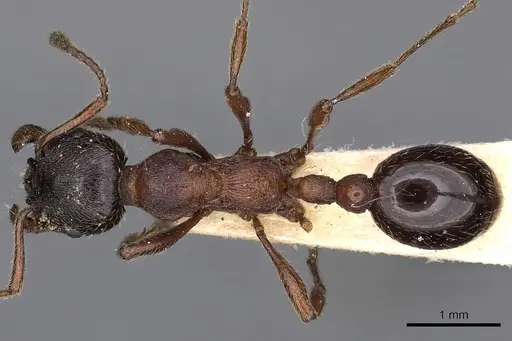
Literatura
Cargando mapa de distribución...Cargando productos...